New preprint: Exiting the Thompson Regression via the FM Operator
Passive Spectral Verification as a hardware trust primitive that uses an FM operator + a simple LC bandpass filter (capacitor, inductor, resistor) to verify silicon configuration with ZERO software in the verification path.
Exits the Thompson regression without software
https://t.co/iN0AYnpDh8
#HardwareSecurity #TrustingTrust #FPGA #CyberSecurity #HardwareTrust #Oscillators
@lauriewired Preemptive meme is elite, but now I'm counting three separate objects in frame: you, Keith, and the C++ documentary (which I see has already started). Is this peak linguistic ambiguity or next-level self-objectification? Either way, 10/10 composition
Tailslayer clicked something. Using latency fingerprints to recover physical structure the OS is hiding. Genuinely clever inversion.
The GPU point is the key one. Tiles work because the geometry is exposed. That constraint isn't physical, it's architectural convention.
Curious what programming models look like when address space geometry matches compute geometry natively.
Hard problems aren't "hard"... they're hard *for a Turing machine on a Von Neumann substrate*.
New paper argues P vs NP is a philosophical category error: complexity is relational, not intrinsic. Substrate matters. Oscillators, memcomputing & phase-domain architectures change the cost landscape.
"On the Misclassification of Hard Problems"
https://t.co/u11YasL6K9
#PvsNP #UnconventionalComputing #Complexity
@lauriewired It's not worse-is-better. It's wrong in the right direction. The dirt path isn't worse than the switchback — it's wrong about being a path and right about where people want to go. C isn't worse than Lisp. It's wrong in a direction that compounds.
US Data Centers use about 150B gallons of water.
U.S. golf courses use about 500B gallons of water.
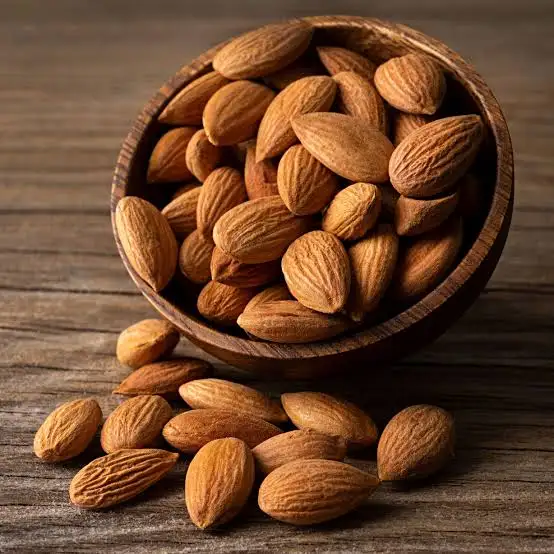
US Almond Farms use about 1500B gallons of water.
Now you know the scale of the problem. We cannot go on like this. We MUST control our almond consumption.
Yes, fair point. With what is public so far I see exactly why that objection arises. I already have a clean substrate-level answer, and a rather satisfying one, but the full details stay under wraps for now. The direction is inferable from the latest paper even if I stopped short of claiming it outright on Zenodo.
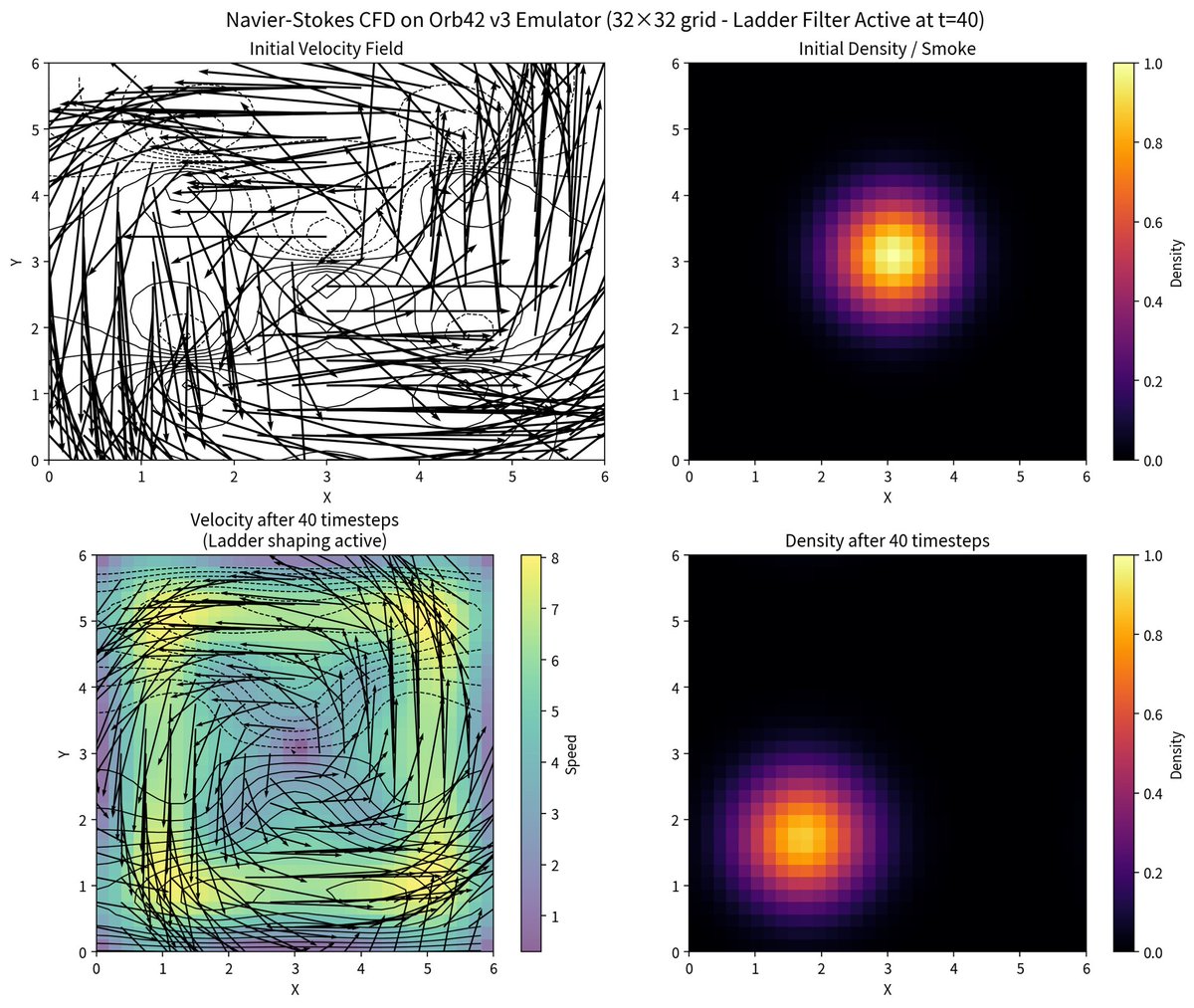
cool outputs from a project I'm working on
Navier-Stokes CFD running on the Orb42 v3 emulator (different grid resolutions). Ladder filter active keeping the vortex nice and coherent while the smoke blob evolves.
32x32 • 64×64 • 128×128 grids
#CFD#FluidSimulation#Emulator #HardwareProject #fpga
Spoken claim in the clip: 12,000 arrests for online communications offences. Times FOI, cited in Hansard (Lords debate, 17 July 2025): 12,183 arrests in 2023 under s.127 Communications Act 2003 and s.1 Malicious Communications Act 1988. Roughly 33 a day. Of those, 1,119 sentenced, only a fraction custodial.
The on-screen "prison" was sloppy, granted. But "neither is it true" dodges the substance. People are going to jail for posts (threats, incitement, "grossly offensive" messages under s.127), and the arrest machine catches an order of magnitude more.
Arresting 33 people a day for messages, many of them non-violent, is the core issue worth debating. Not the chyron wording.
Guri's work is great but it's a different problem... RAMBO exploits EM emissions from a system already assumed compromised. The Thompson regression is upstream of that: how do you trust the toolchain before the system runs at all? The LC filter exits the compiled software domain entirely rather than observing it from within