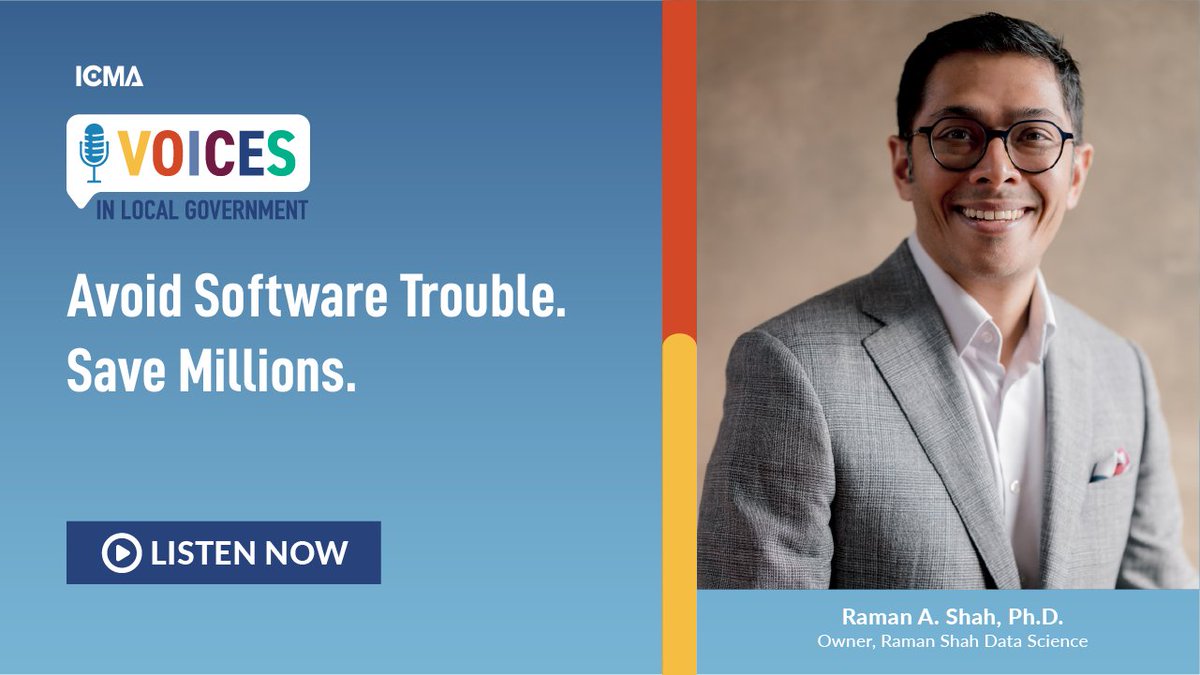
If there's anything I can do to protect institutions from bad software initiatives that go 300-600% over budget and schedule and wreck their human capital, I want to do it. To that end, I sat for my first ever podcast interview (links in thread):
@dieworkwear Interestingly when I was an undergrad in Blacker House at Caltech, a bunch of house members got into sewing their own capes at some point ca 2003-04.
@TaliaRinger How cool! I took linear algebra from Michael Aschbacher about a year before he and Stephen Smith published the last piece of this classification, that of the quasithin groups: alone a ~1200-page two-volume manuscript.
@davepl1968@pdp More recently (this summer), I sporadically tutored an undergrad in intro CS. That reinforced my conviction that the conceptual skill base in tech is going to die off pretty quickly after the concrete coding skill base.
All that will be left is a PowerPoint/Jira shell game.
@davepl1968@pdp You don't learn the concept without a bunch of longhand calculation. I'm willing to go to the mat on this; I've worked as an educator, including as a high school calculus teacher, and have been directly involved in several hundred person-years of kids learning (and not learning).
@mhartl Haha I never met Dario, but he was enemy-roommates with a member of my house, and I dated someone who went to high school with him 😂
He wasn't at Caltech long, minimizing the interaction cross-section.
@PommeTomateRiz@ShriramKMurthi Key quote: "I am 90% sure that, in the current version of Lean4 on Github, there exists a proof of the statement 'True=False' that would be accepted in such a way that the Lean community would call it a bug in need of patching"
@PommeTomateRiz@ShriramKMurthi I'm not in this field but this indeed gives me pause. I was struck by this blog post about how Lean's consistency with generally accepted axiomatic systems is murky, given that LLMs are such effective "fuzzers" for loopholes within logical systems: https://t.co/0gqezcFkUE
@analytichegel@Pitometsu@krismicinski Will add that what the general consumer gets is downright *peachy* compared to what enterprises get. I chalk this to institutions being subject to the crown jewel of anticompetitive games: procurement capture.
@analytichegel@Pitometsu@krismicinski While I'm probably not a representative consumer, I have definitely dropped major software products when they became too painful to use. I feel the slop tolerance is more of a deal where software vendors abundantly play anticompetitive games (data lock-in, network effects, etc).
@Kaju_Nut We already have pretty strong evidence that LLMs are effective "fuzzers" for the "why"/"new ideas"/"deep ideas" part of research. Words and ideas are cheap after all. It's the execution that's the hard part, ever more so when the run rate of fluently wrong BS tends to infinity.
@Kaju_Nut Having fixed many minus signs and done a lot of mentoring, I'm skeptical. I think mentoring will trend toward a nearly intractable motivational interviewing exercise in the hopes that ANYTHING within one's radius will be more than nihilistic slop.
@andrewmccalip Love this. It reminds me of my grad school labmate who did a very nice Ph.D. on superconducting lead nanoparticles. There was a whole buried literature of midcentury Soviet work on them. He unearthed it in year 3-4 and paniced re novelty.
But: we had the electron microscopes.
@TaliaRinger Cool page! I was startled to see Shawn Ligocki's name having solved the exponential Collatz problem. Shawn was two years younger than me in my house at Caltech.