RSEC is open access peer-reviewed journal for novel, multidisciplinary research at the interface between remote sensing science & ecology and conservation
Ground‐based robotic remote sensing for standardized biodiversity monitoring in coastal habitats
New paper by Di Lorenzo et al.
https://t.co/RQAHNpTpaR
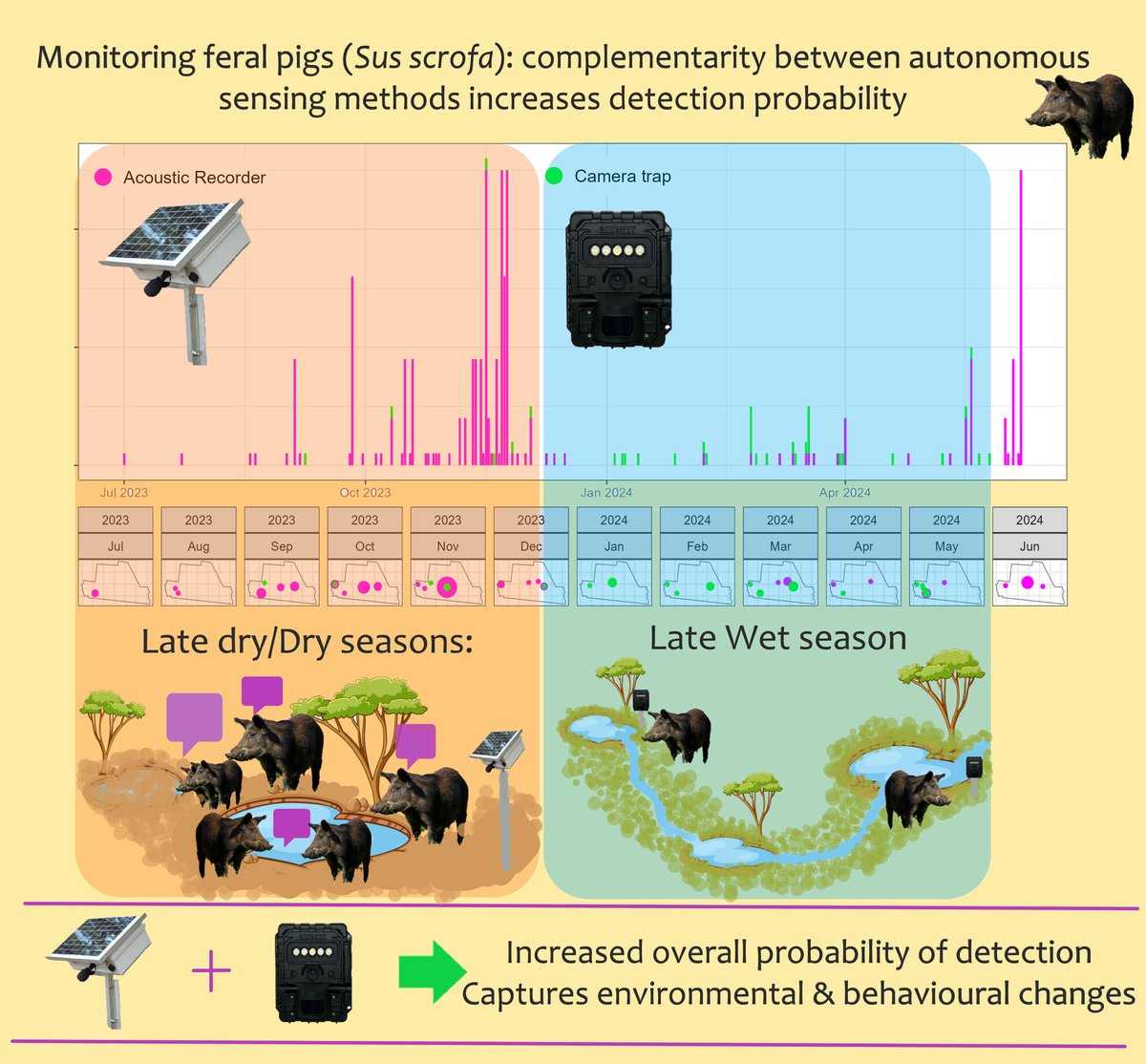
Monitoring feral pigs (Sus scrofa): Complementarity between autonomous sensing methods increases detection probability
Scarpelli et al.
Read the full paper here:
https://t.co/equjOSOkcf
What if sensor equipped drones could autonomously hop around landscapes to survey biodiversity?
Would data be reliable? Could we adapt survey design in real-time?
This and more in our latest @RSECJournal publication led by @PeggyBevan2
https://t.co/KSQ83GdtCN
🚨New paper published in @RSECJournal
👉https://t.co/kNnexBqLJr
📷First study assessing #dugong body condition across the Indo-Pacific using #drone footage
Dugongs from larger populations were 'fatter'
Led by @marbec@ird_fr in partnership with @SelamatIJL
🐆 A new analysis, published in Remote Sensing in Ecology and Conservation, distinguished individual leopards at 93% accuracy, by analysing the unique temporal patterns in their roars.
🔗 Read more:
https://t.co/fzgQlgCAhb
#NatureAfrica@RSECJournal @J_Growcott99
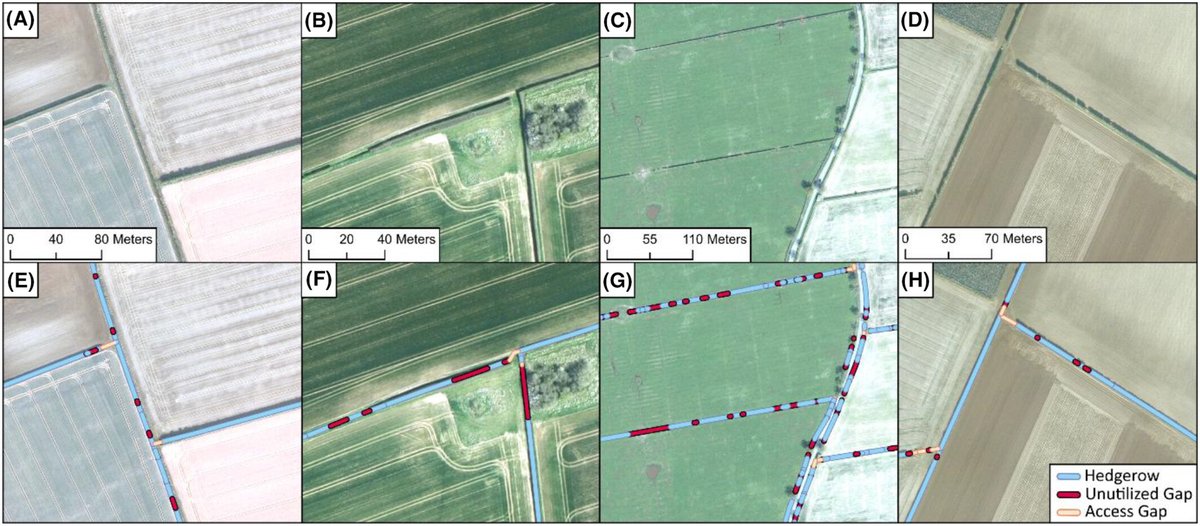
Identifying hedgerow gaps using deep learning reveals potential opportunities for new planting schemes.
Read the new paper by @josh_NFM et al here:
https://t.co/6tbwh6oPeg
Mapping oil palm plantations and their implications on forest and great ape habitat loss in Central Africa.
Ozigis et al.
Read the full paper here:
https://t.co/pavjQt7kde
In honour of Halloween, why not revisit some 'spooky' RSEC papers...
🦇🦇🦇
BatNet: a deep learning-based tool for automated bat species identification from camera trap images. Krivek et al.
🦇🦇🦇
https://t.co/ZdbGGpkcFO
🐀��🐀
Remote sensing-supported mapping of the activity of a subterranean landscape engineer across an afro-alpine ecosystem. Wraase et al.
🐀🐀🐀
https://t.co/1k4UbREtrV