Tesla's global fleet has just crossed 11 billion miles driven on FSD (Supervised) after hitting 10 billion last month.
Tesla owners are collectively driving 1 billion FSD miles every 37 days. With more European countries now getting FSD (Supervised) approval and Tesla's fleet in general growing every day, the average daily FSD miles is growing quickly.
The Patricia Allen Fund, fueled by Bills quarterback Josh Allen’s leadership and over 60,000 donors and Bills fans, announced that in just over five years, more than $17 million now has been raised for Golisano Children’s Hospital of Buffalo.
A SpaceX welder making $28 an hour is about to become a millionaire. 🤯
His name is Juan Hernandez. Immigrated from Mexico. Learned welding for better pay. Joined SpaceX in 2015 through a friend.
When he went full-time, SpaceX gave him $10,000 in stock. He held it.
That stock is now worth approximately $880,000 as SpaceX heads toward its IPO on June 12.
And he's not the only one.
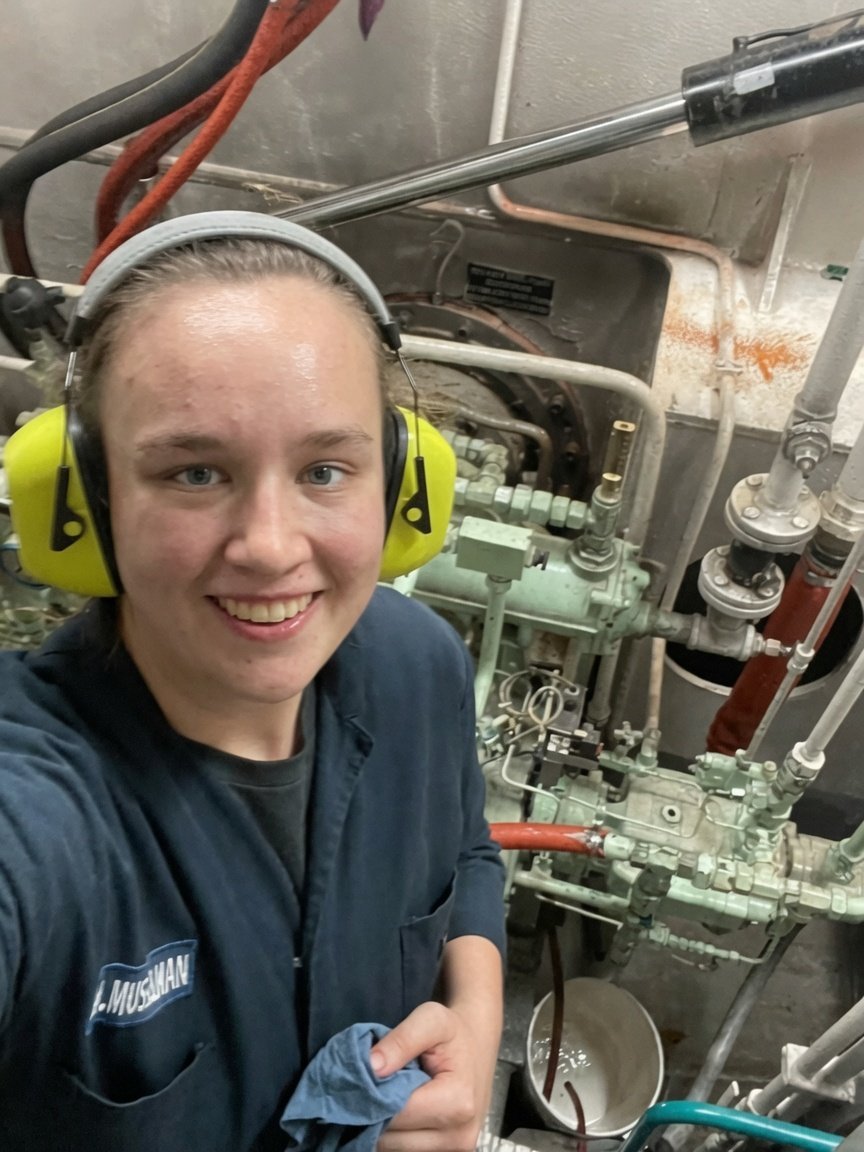
A 27-year-old ship engineer named Maryellyn Musselman spent two years on a SpaceX rocket recovery boat off the Florida coast. Stock was part of her pay something that almost never happens for mariners.
She put 10% of every single paycheck into buying more.
She's planning to use the money to start her own repair business.
SpaceX didn't just give equity to engineers and executives. Welders got it.
Ship crews got it. Technicians got it. Factory workers got it.
The IPO is expected to create roughly 4,000 new millionaires. Not from coding. Not from startups. From building rockets.
A welder. A ship engineer. $28 an hour.
This is what happens when a company lets its people own what they build.
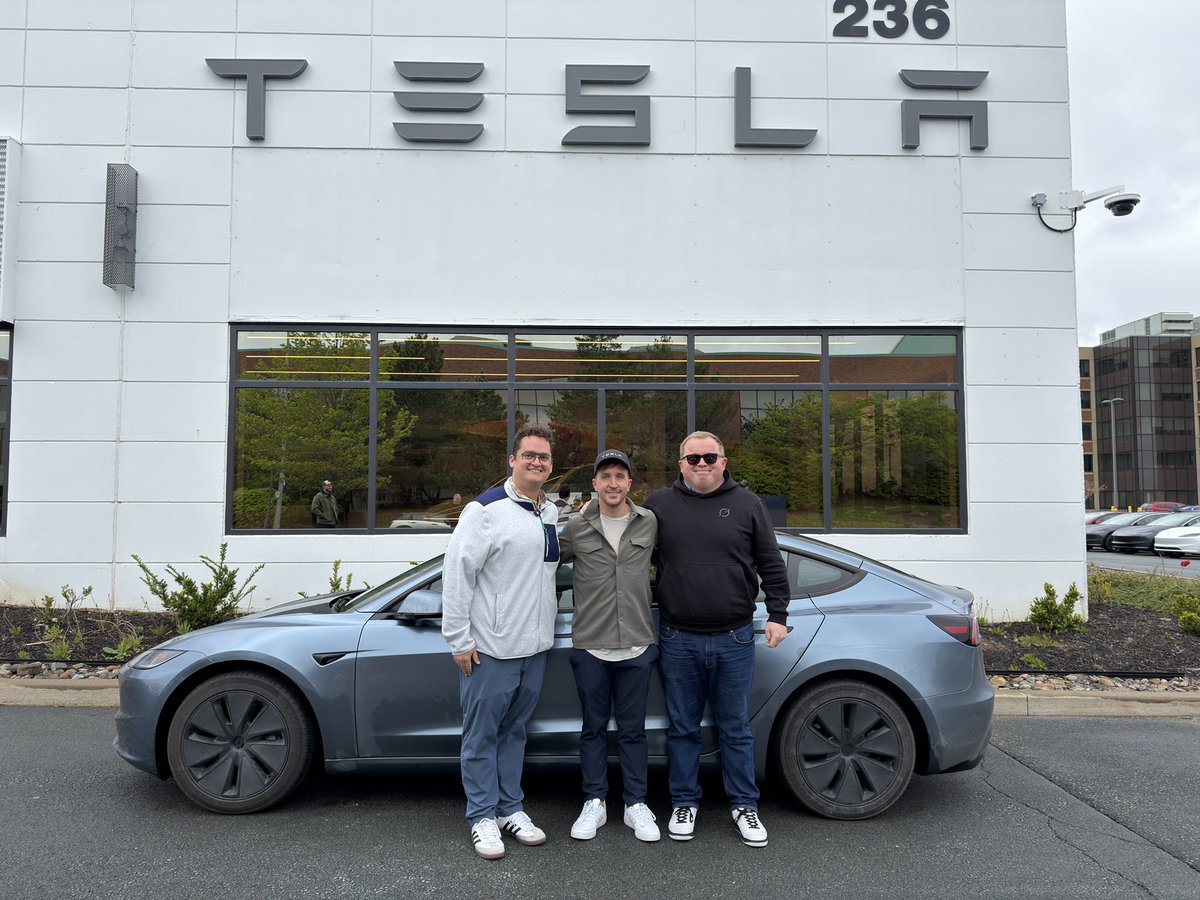
Canadian Coast to Coast with Tesla FSD is done!
@DavidMoss, @DevinOlsenn, and I are proud to announce that we have successfully completed the world’s first Canada coast to coast fully autonomous drive!
We left Horseshoe Bay Terminal in Vancouver. BC 4 days & 21 hours ago, and now have ended in Halifax, NS at the Tesla Showroom
(3,760 miles/ 6,051 km)
This was accomplished with Tesla FSD v14.3.3 with absolutely 0 disengagements even for all parking including at Tesla Superchargers.
@MarioNawfal Thanks for the credit, here's the original article. Follow along for the latest Tesla news:
https://t.co/Dqbxtx1yRw
https://t.co/Dqbxtx1yRw
That water clarity is an engineering decision, and the math behind it is wilder than the video.
Roman aqueducts ran on gravity alone. No pumps, no pressure systems. Engineers carved channels with a gradient so shallow it borders on absurd. The Pont du Gard in southern France drops 2.5 centimeters over 275 meters. That's roughly the thickness of a coin over the length of three football fields. They surveyed that accuracy with plumb lines and wooden leveling instruments.
The clarity you're seeing is a direct product of flow velocity. Too steep and the water erodes the channel walls, picks up sediment, turns brown. Too flat and it stagnates. Roman engineers targeted a slope of about 20 centimeters per kilometer, which kept the water moving fast enough to stay fresh but slow enough to stay clear. Before the water reached the city, it passed through multi-chamber settling tanks where velocity dropped near zero. Suspended particles sank. Clean water flowed out the top into the next chamber. Repeat three or four times.
Pliny specified the minimum slope in writing. Vitruvius published the exact mortar ratio for hydraulic cement: one part lime to two parts volcanic ash for underwater work. The pozzolana from Pozzuoli reacted with water to form a calcium-aluminum-silicate compound that actually gets stronger the longer it sits submerged. Modern concrete degrades in water. Roman concrete bonds with it.
Scale the whole system and it gets harder to process. Eleven aqueducts fed Rome at its peak. Combined output: roughly 1 million cubic meters of water per day. That works out to about 250 gallons per person for a city of one million. Modern New York delivers about 125 gallons per person per day. Ancient Rome had access to double the per capita water supply of the largest city in the United States, running entirely on slope and stone.
The Trevi Fountain in Rome is still fed by one of them. Two thousand years, same source, same gravity, same water.
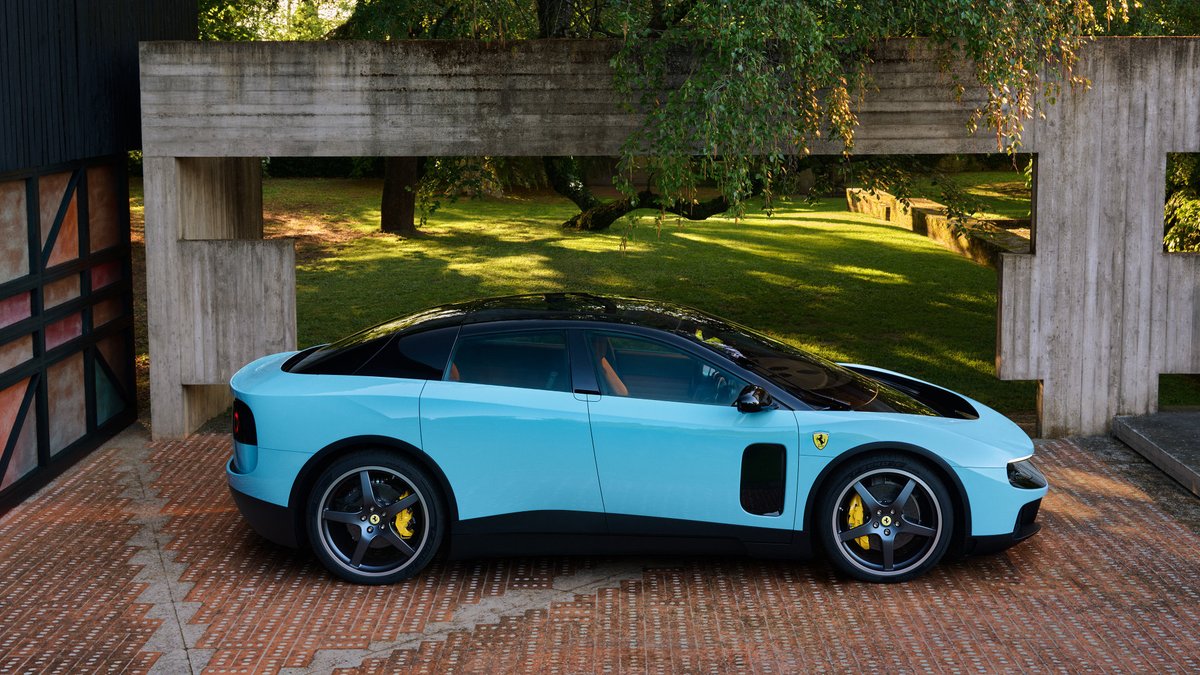
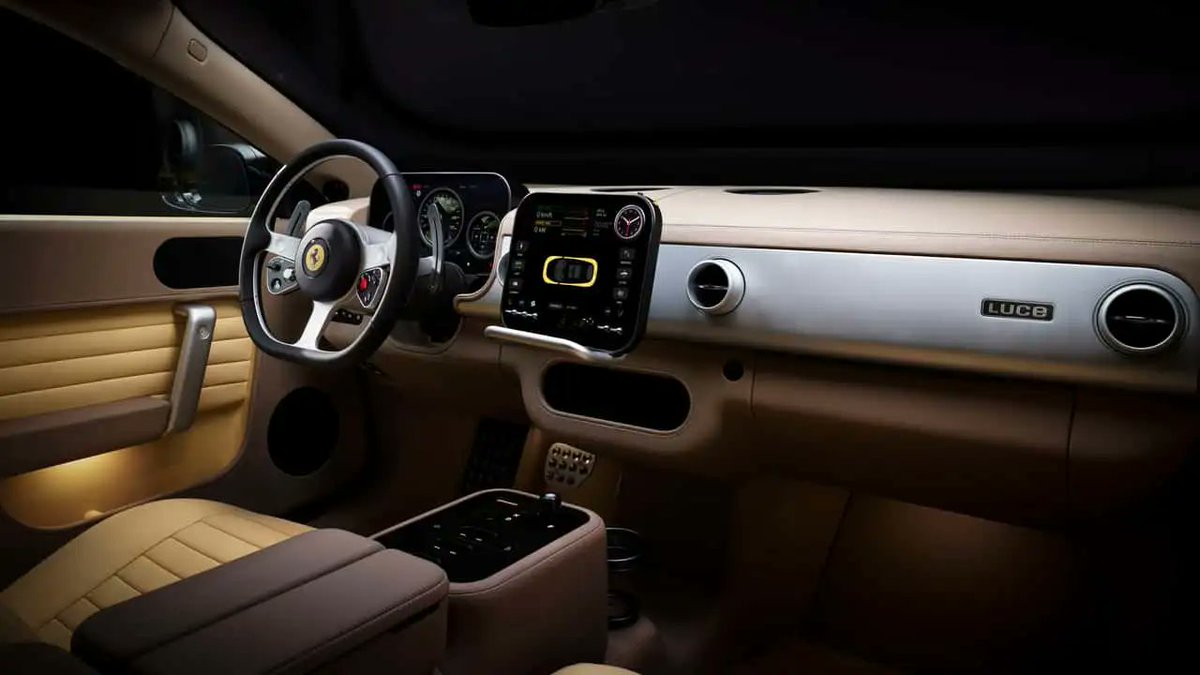
Ferrari has just officially unveiled its first ever all-electric car, called the Ferrari Luce.
• Starting price: $640,000
• Interior co-designed with Apple's former head of design, Jony Ive
• Range: 280 miles (expected EPA)
• Peak charging speed: 350kW
• 122 kWh battery
• 1,050 horsepower
• 0-60mph: 2.4s
• 800v
• Four-door four-seater
• Four electric motors
• OLED screens
• Weight: 4,982 lbs
• Front motors spin to 30,000 rpm, rears hit 25,500 rpm
• Car uses an accelerometer to capture real vibrations from the electric motors & rear chassis. An algorithm filters out unpleasant frequencies and amplifies only the more “musical” sounds. This can be heard inside and outside the car.
• Paddle shifter on steering wheel changes how aggressively torque is delivered, with five different levels
• The trunk has 21.1 cubic feet of space, the largest luggage capacity the company has ever offered
• 197.6 inches long, about as long as a Tesla Model S
U.S. deliveries start in Q2 2027. More photos in the thread below:
In 1897, Campbell’s soup was a luxury.
A single can cost 30 cents nearly half a day’s wage for an industrial worker. Most families couldn’t afford it.
Then a petty family argument changed American food forever.
Arthur Dorrance owned the Campbell factory in Camden, New Jersey. His nephew, John, had just returned from Europe with a chemistry doctorate.
Arthur thought it was useless.
He hired John anyway — at $7.50 a week. Barely more than a laborer’s wage. And if the “college boy” wanted to run experiments, he had to buy his own equipment.
The factory workers laughed at him.
The place was brutally hot, loud, and smelled of boiling cabbage and beef fat. Campbell’s sold canned vegetables, preserves, and heavy soup in giant 32-ounce tins.
The real problem wasn’t the soup.
It was the water.
Railroads charged freight by weight, and soup was mostly liquid. Shipping costs made it expensive before it even reached a grocery shelf.
John had a simple idea:
Remove the water before shipping.
At first, it failed badly.
The broth scorched. Vegetables turned to mush. Fat separated. Beef became rubber. Workers mocked him for “burning lunch.”
But John kept experimenting in a tiny corner lab on the factory floor.
He adjusted temperatures.
Separated ingredients.
Calculated evaporation rates.
Tested batch after batch.
Finally, he cracked it.
He created a concentrated soup that kept its flavor while removing roughly half the water.
Instead of huge tins, he packed it into a small 10½-ounce can.
His uncle hated it.
Arthur thought customers would feel cheated by the tiny can filled with thick paste. He told John to abandon the idea.
John pushed for one small test run anyway.
Price: 10 cents.
Customers took the cans home, added one can of water, heated it up…
…and it tasted like the original 30-cent soup.
Sales exploded.
Freight costs collapsed.
Grocers loved the smaller cans.
Orders multiplied so fast Campbell’s shut down other product lines entirely.
The “useless” chemist took over the company.
And when the Great Depression hit decades later, millions of Americans couldn’t afford luxuries anymore.
But Campbell’s condensed soup still cost 10 cents.
It lasted for months.
It filled stomachs.
It became survival food for struggling families across the country.
John T. Dorrance never became famous like Edison or Ford.
But he quietly built one of the most important food products in American history by realizing something nobody else had:
Sometimes the most profitable innovation is simply removing what people don’t need.
John T. Dorrance:
The man who stopped paying to ship water.
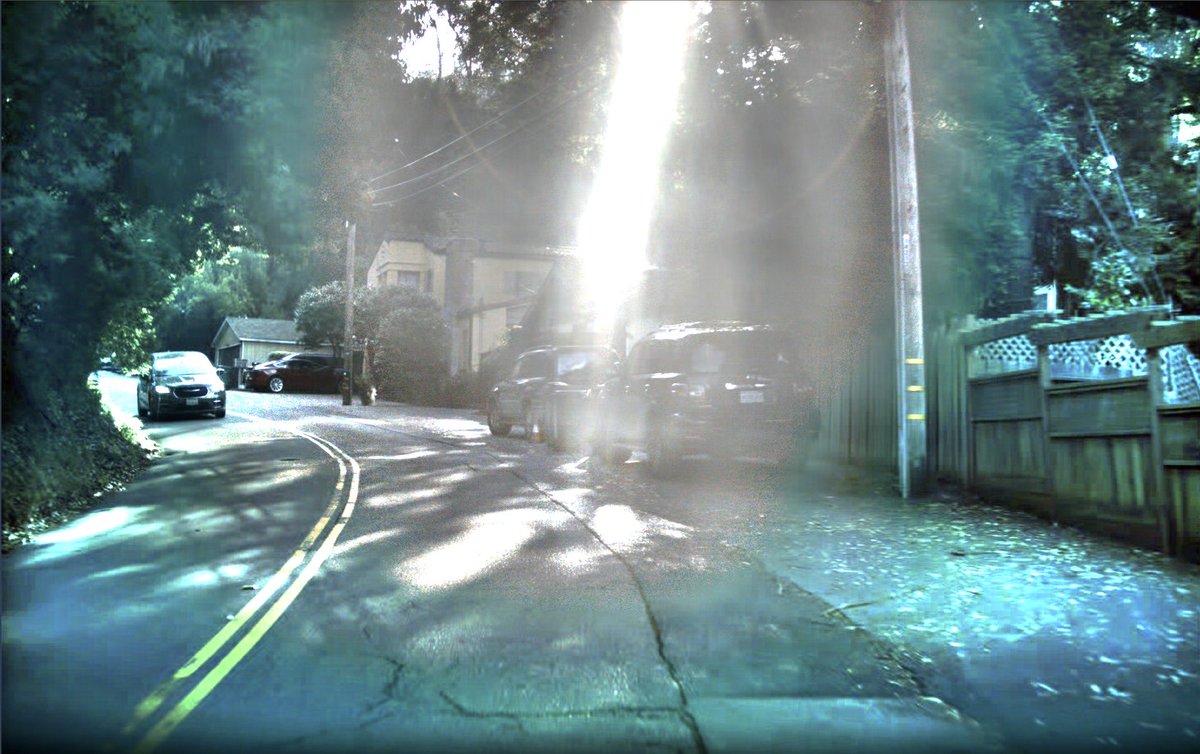
The human-perceived RGB is image 1 and the Tesla AI photon count reconstruction is image 2.
This is why Tesla FSD can see so well at night or through extreme glare.