Our #ECCV2026 work is out!🚀
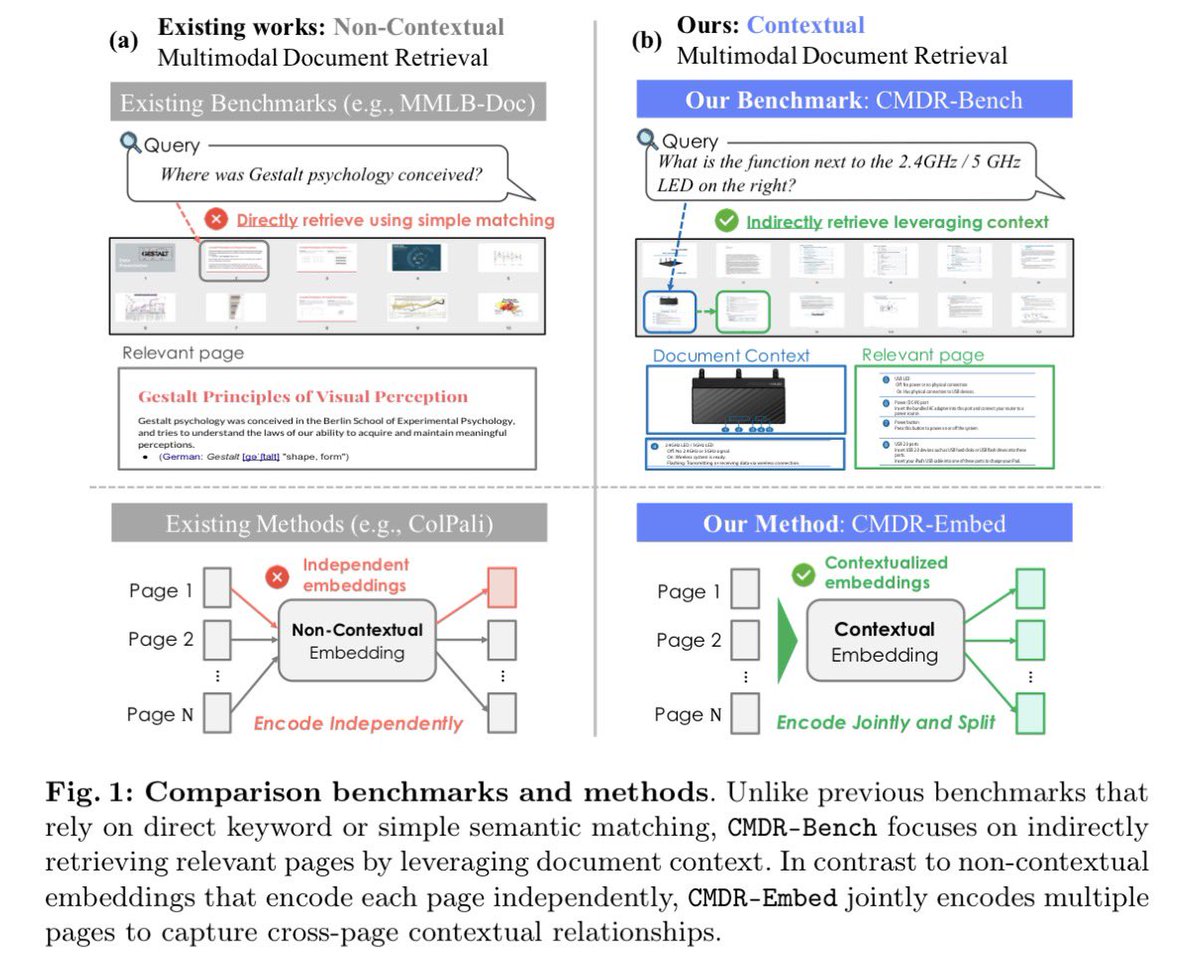
Can retrievers understand document-level context across multiple pages?
💡Our answer is CMDR: a new benchmark (CMDR-Bench) and a context-aware multi-page embedding model (CMDR-Embed) that substantially improves retrieval.
📄 https://t.co/83dQSGQeym
Our #ECCV2026 work is out!🚀
Can retrievers understand document-level context across multiple pages?
💡Our answer is CMDR: a new benchmark (CMDR-Bench) and a context-aware multi-page embedding model (CMDR-Embed) that substantially improves retrieval.
📄 https://t.co/83dQSGQeym
Our #ECCV2026 work is out!🚀
Can retrievers understand document-level context across multiple pages?
💡Our answer is CMDR: a new benchmark (CMDR-Bench) and a context-aware multi-page embedding model (CMDR-Embed) that substantially improves retrieval.
📄 https://t.co/83dQSGQeym
CMDR: Contextual Multimodal Document Retrieval
@rtanaka_lab et al. introduce a benchmark for retrieving pages from long documents via cross-page context, plus an embedding model that beats non-contextual retrievers.
📝 https://t.co/54LhbXEWzq
👨🏽💻 https://t.co/g2MRGoTsrr
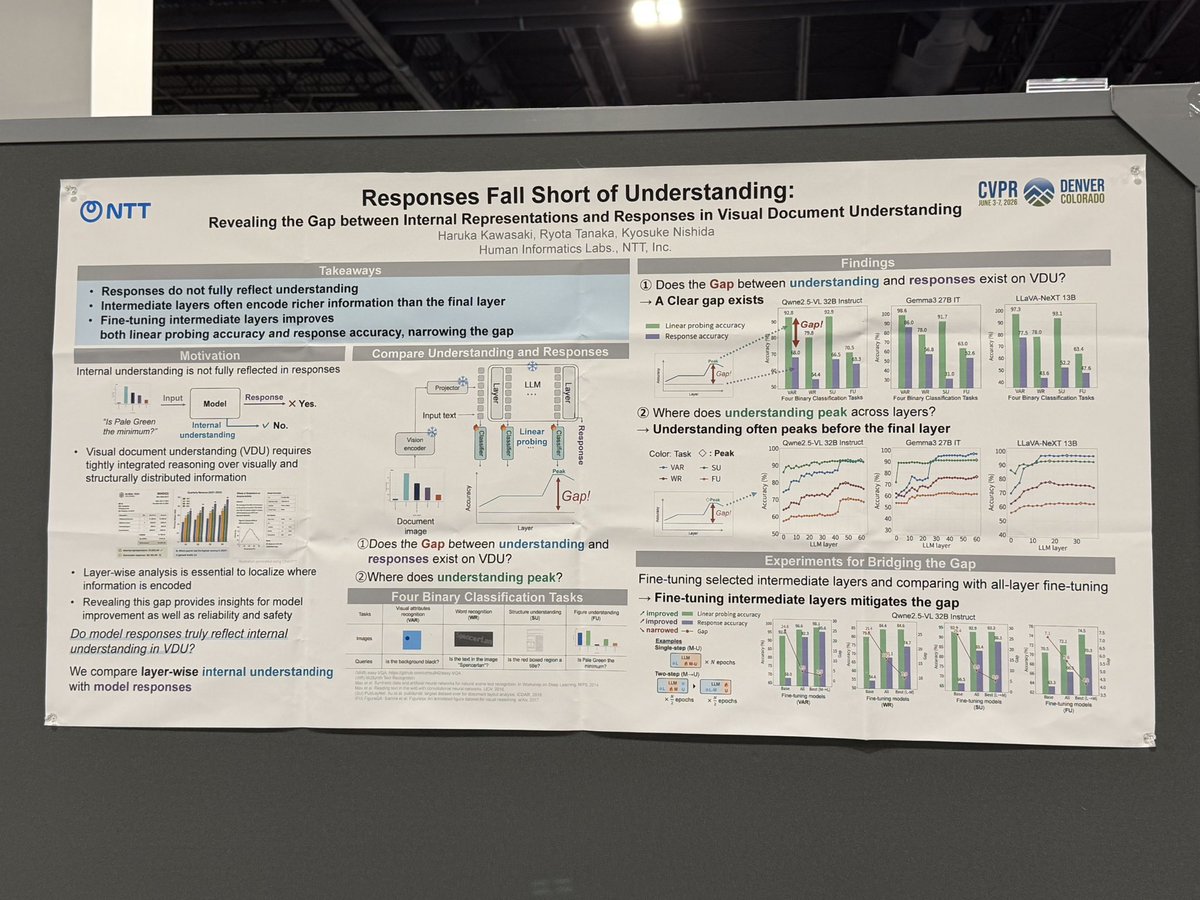
Just gave an oral presentation at #CVPR2026 MULA workshop by @k_haruka_r !
We found interesting behaviors in visual document understanding models!
✅ A gap between internal representations and responses exists
✅ Task Information is encoded more linearly in intermediate layers
🚀 New paper on arXiv!
https://t.co/wGSHaQ1kve
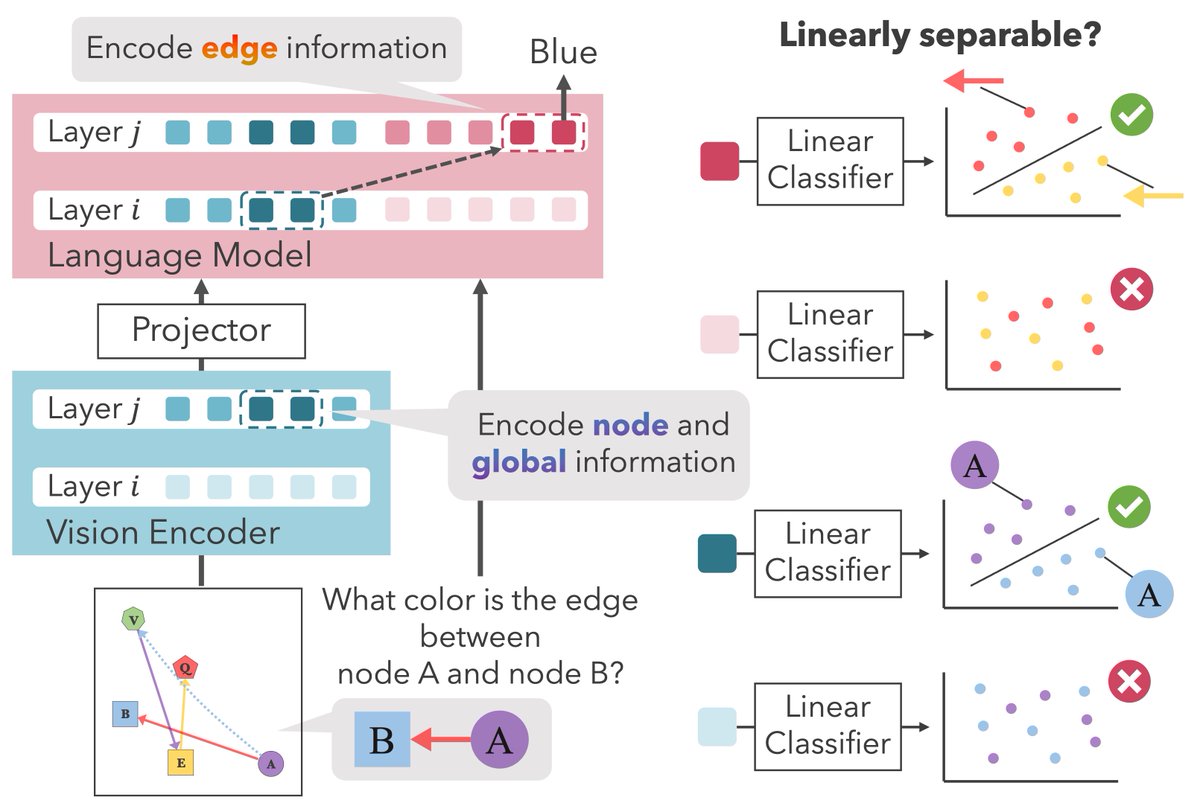
🤔 How do LVLMs internally form representations of nodes and edges?
💡 Node representations form early, whereas edge representations form late.
Feedback is welcome! 1/N
📜Lossless Vocabulary Reduction for LLMs🤖
In this paper, we established a theoretical framework that can flexibly shrink the vocabulary of a given LLM to an arbitrary sub-vocabulary, efficiently in inference-time.
🔗https://t.co/bhrgGTppls
See the video for a quick overview👇