WSTS: 2026 semiconductor market forecast +90% to US$1.51 trillion
MONSTER upward revision from $975 billion for 2026.
Memory alone expected +250% to over $800 billion this year.
Americas +112%
Asia Pacific +87%
Europe +58%
2027 seen +27% to $1.91 trillion
Higher device costs due to limited memory supply, cloud bills, and capex could dent consumer demand and corporate profits—turning an AI bottleneck into a broader macroeconomic headache…
https://t.co/tdHoKrRFLC
Marvell today introduced Teralynx T100, the industry’s first 102.4 Tbps switch silicon purpose-built for the AI era.
Unlike legacy switching platforms designed for traditional enterprise and cloud data centers, the Teralynx T100 was architected from the ground up for AI—enabling the industry’s lowest power consumption and lowest latency at this bandwidth tier to address critical bottlenecks in today’s large AI clusters. The T100 will start sampling to customers beginning this quarter.
Learn more: https://t.co/Y7rVW5V2BU
$NVDA CEO:
Tokens are now in extraordinary demand.
And because tokens are now profitable units of revenues... The AI companies want to build a lot more tokens, generate a lot more tokens, build more AI factories, which is the reason why compute demand has skyrocketed
AI PCs: A Privacy Win?
Nvidia’s Jensen Huang is pushing AI PCs with on-device chips like RTX Spark, letting AI agents run tasks locally instead of in the cloud.
Your data — emails, photos, documents — stays on your device. Less uploading, fewer leaks, better privacy?
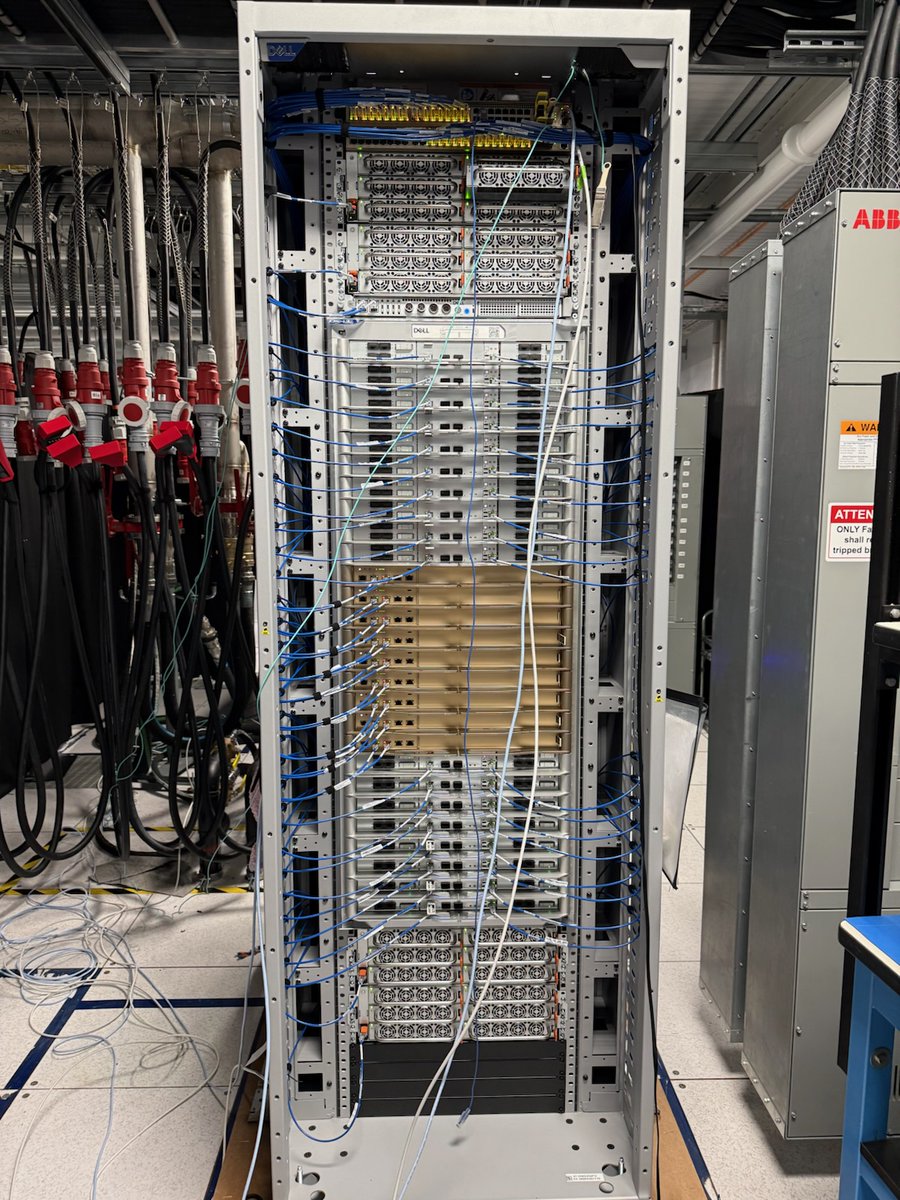
The world’s first @nvidia Vera Rubin NVL72 server rack is here.
We’re thrilled to deliver the first working, liquid-cooled @Dell PowerEdge XE9812 for @CoreWeave.
Built for the next era of AI infrastructure. 🚀🤝
Space is hard, as the latest Blue Origin mishap reminds us. Looking at the comparison below, it is obvious why SpaceX is lightyears ahead and commanding a massive valuation despite challenging financials. 🚀
SpaceX’s $SPCX 3 Pillars: With a potential $1.75T–$2T valuation ahead of IPO, which pillar is really justifying that price?
1. Connectivity (Starlink): Satellite internet bringing in ~$11.4B (61% of revenue). This is the profitable engine with strong growth and solid margins.
2. Space (Launches & Contracts): Rocket launches, NASA, and government work (~$4.1B). Reliable but slower growing and more R&D-heavy.
3. AI (xAI integration): Newer bet on compute, models, and infrastructure (~$3.2B revenue) — but burning cash fast on massive data centers and training.
Financial snapshot (2025): $18.7B revenue (+33% YoY), but $4.9B net loss due to heavy Starship + AI investments.
Growth mode is expensive — but the bet is clearly on the future.
Design Linked Incentive (DLI) scheme is showing good results.
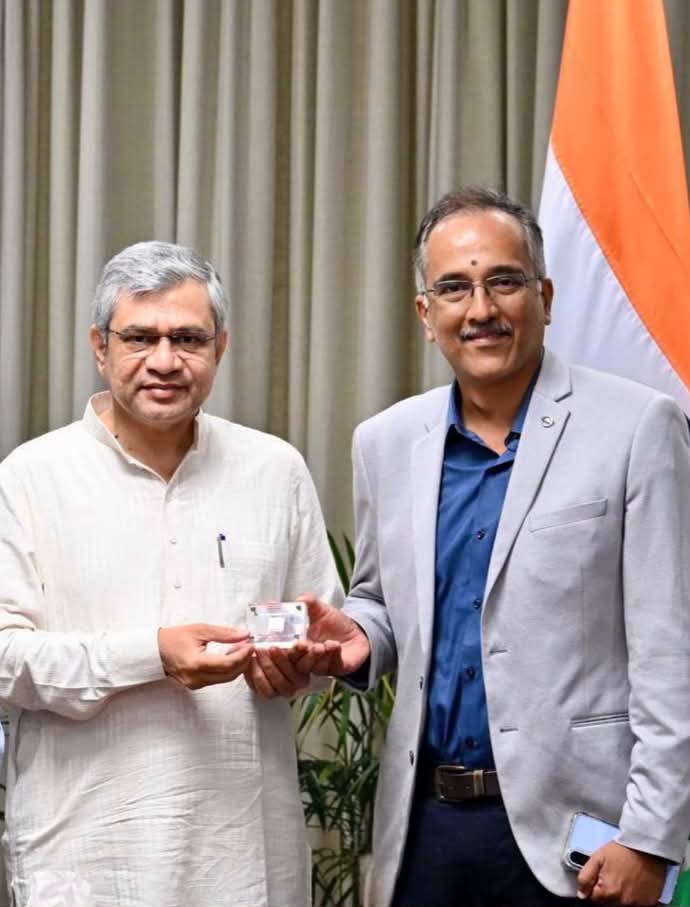
@netrasemi has designed India’s first Edge AI System-on-Chip (SoC) ‘NETRA A2000’, at advanced 12 nm node.
At commercial scale this will power smart vision devices for surveillance, automotive, robotics, drones, etc.
Looks like ByteDance wants to lessen dependence on Nvidia and traditional CPU vendors amid high demand, shortages, and geopolitics. The Qualcomm partnership accelerates one part (ASICs) while they invest in homegrown CPUs …..
Exclusive: Chinese technology giant ByteDance is developing its own central processing units to support its growing AI infrastructure needs, as surging chip prices and prolonged supply shortages constrain its expansion plans. Read more - https://t.co/yGgTBQO7ym
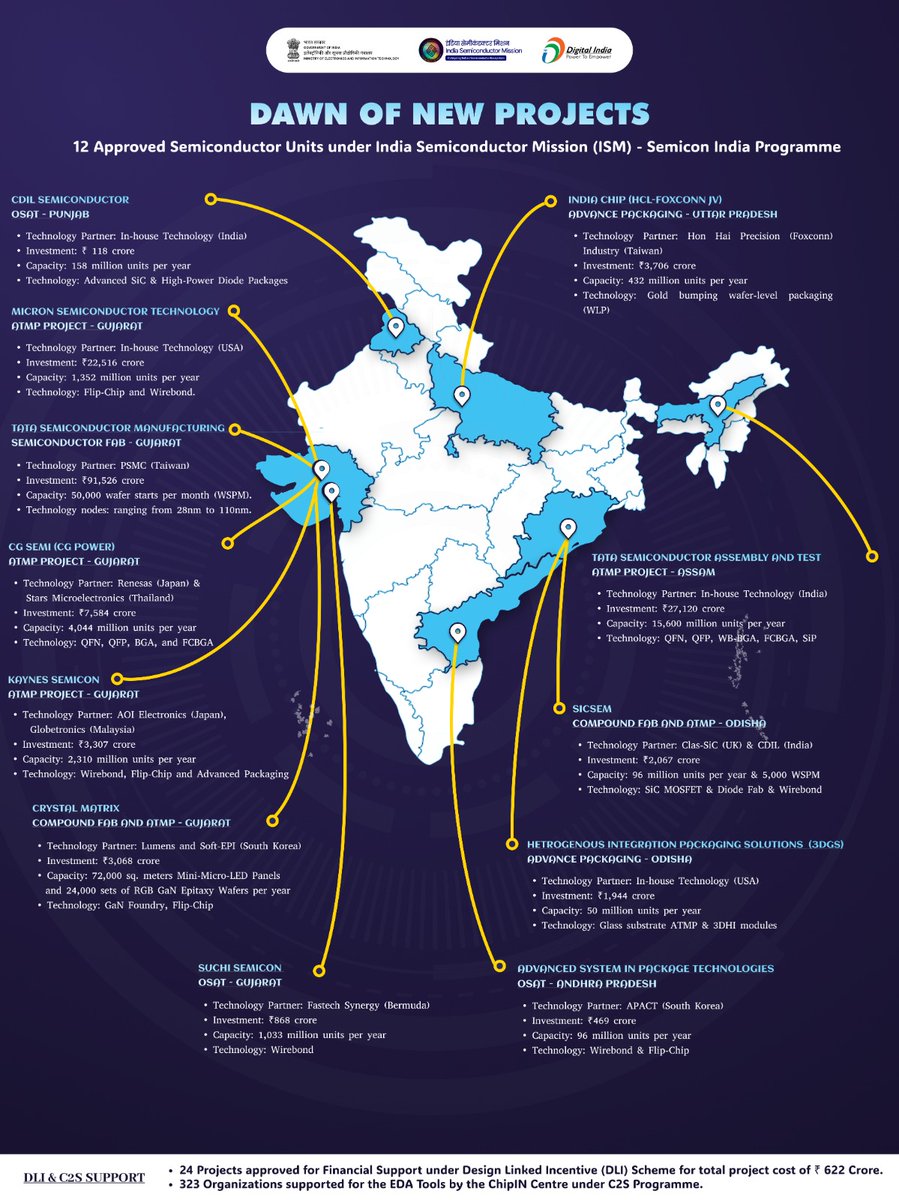
Good snapshot !
I believe these fabs and OSATs will fill quickly with both domestic and external demand, as other fabs and OSATs focus on advanced nodes and packaging.
India’s semiconductor ambition is turning to reality.
Within a span of few years ISM has catalysed semiconductor ecosystem growth, with 12 approved projects & ₹1.65 lakh cr outlay, under implementation across 6 states.Out of these, 2 projects have commenced commercial production