Our VP of Operations decided the team was feeling disconnected, so she booked a mandatory offsite retreat.
We were told to wear comfortable clothing and prepare for deep vulnerability.
That's the most terrifying sentence you can read in a corporate email.
We drove two hours to a conference center that looked like a repurposed summer camp from the 80s.
First on the agenda was a trust exercise facilitated by an external consultant named River who wasn't wearing shoes.
River told us to pair up and stare into our partner's eyes for 3 uninterrupted minutes.
I was paired with Dave from accounting.
Dave has a slight lazy eye, so I wasn't entirely sure which pupil I was supposed to be spiritually connecting with.
We just stood there in agonizing silence while I mentally calculated my remaining PTO days.
After the staring contest, we had a whiteboard session to redefine our departmental synergy.
We spent two hours debating the difference between a mission statement and a vision statement.
Nobody actually knows the difference.
It's all just a linguistic word salad used to justify executive salaries.
We finally agreed on the phrase "Empowering scalable solutions through agile collaboration."
That means absolutely nothing.
It's a sentence constructed entirely out of LinkedIn buzzwords generated by a panicked committee.
For lunch, we were served individually wrapped artisan sandwiches that tasted like damp cardboard.
The afternoon activity was a simulated survival scenario.
We had to pretend our plane crashed in the tundra and rank 15 items by their survival importance.
Our marketing director insisted the magnetic compass was more important than the waterproof matches.
I tried to explain that knowing we're freezing to death facing due north doesn't actually help us survive.
She accused me of not having a growth mindset.
I agreed to rank the compass first just to end the conversation so I could sit down.
We theoretically froze to death in 20 minutes.
River clapped his hands and said our collective failure was actually a beautiful triumph in conflict resolution.
We finished the day with an acoustic guitar circle where the CEO played Wonderwall.
I'm updating my resume tomorrow morning.
This is an unbelievable piece of work by Sarthak and something that requires amplification.
Let me explain what he found, in simple terms.
Sarthak is a Class 12 student from the 2025-26 batch, one of the 17 lakh students whose answer sheets went through CBSE's new On-Screen Marking system.
He spent days reading through CBSE's evaluation tenders, scraped all 576 tenders CBSE has issued, and tracked how the rules changed across three versions of the same tender.
The core finding is that the company that won the contract to scan and grade 17 lakh students' answer sheets is Coempt Eduteck.
Coempt used to be called Globarena Technologies. Globarena was the company behind the 2019 Telangana intermediate exam disaster, where software failures led to 3.8 lakh students getting wrong or missing marks, and 23 students died by suicide.
A government committee found systemic failure and negligence. Six months later, Globarena rebranded to Coempt Eduteck.
So a company with that track record won a contract to handle 17 lakh CBSE students. Sarthak's investigation is about how the rules were rewritten to let that happen.
The tender was issued three times.
> First tender, February 2025. It existed, then disappeared from the public GeM portal. Sarthak scraped all 576 CBSE tenders and this one was missing from the archive entirely.
> Second tender, May 2025. Four companies applied including TCS and Coempt. All four failed the technical evaluation. Cancelled.
> Third tender, August 2025. Coempt won. Between the second and third tender, a series of rule changes happened, and every single one made it easier for Coempt to qualify.
Here is what changed, one by one.
01. The old rules disqualified any company with a history of abandoning work, failing to complete contracts, or financial weakness. The new rules deleted this clause entirely. Coempt's Telangana history stopped being a barrier.
02. The old rules disqualified any company that was "blacklisted earlier." The new rules changed this to "currently blacklisted." Because Globarena rebranded after Telangana, removing the word "earlier" effectively erased their past.
03. The rules required Rs 50 crore average turnover over three years. Coempt's exact average came to Rs 50.86 crore. They cleared the bar by less than 1%. Earlier, a smaller company had asked CBSE to lower the bar to Rs 30 crore for fairer competition. CBSE refused. So the bar was kept high enough to block small players, but sat exactly low enough for Coempt to scrape through.
04. Software maturity is measured on the CMMI scale, 1 to 5. The old rules required Level 5. The new rules dropped it to Level 3. Coempt is a Level 3 company.
05. The cooling-off period for engaging retired CBSE officials was cut from two years to one. This makes it easier to use recently retired insiders to influence the process.
06. The old rules required experience with large projects of at least 5 lakh students each. The new rules removed the student count and counted cumulative answer-book volume across small projects instead. Coempt has many small fragmented university contracts. This helped Coempt and hurt TCS.
07. The old rules required bidders to own their own data centre and disaster recovery centre on Indian soil. The new rules allowed third-party MeitY-empanelled cloud hosting. Coempt runs on AWS and Azure. This helped Coempt and hurt TCS, which owns its own data centres. It also means student data is no longer on sovereign, Indian infrastructure.
08. The old rules required the bidder to own or control the complete source code of its software. The new rules deleted this. Coempt's platform runs on Microsoft's proprietary IIS, which they don't own.
09. A last-minute corrigendum, issued right before bid submission, removed CBSE's own power to blacklist the firm if its software failed catastrophically. So even a Telangana-scale failure couldn't get Coempt banned from future government tenders.
10. The penalty structure shifted from punishing mistakes to punishing delays. The old rules fined the vendor for wrong scanning, merged pages, and unscanned books. The new rules dropped those and instead levied Rs 50,000 per day for delays. This incentivises rushed scanning over accurate scanning.
11. The old rules had a hard accuracy threshold, error rate not to exceed 0.5%. The new rules removed this number entirely.
12. The old rules specified proper book and robotics scanners. The new rules just say "sufficient scanners." The definition was vague enough that, as Sarthak notes, the scanning could be done with a phone on a stand.
13. On the security side, the contract required a VAPT (vulnerability and penetration test) certified by CERT-In before go-live, and a restricted beta phase before launch. The system clearly wasn't restricted, because the other researcher, Nisarga, was able to access it and find vulnerabilities four days before go-live. So the mandatory security audit appears to have been bypassed.
These are more than a dozen rule changes, all between the failed tender and the winning tender, all pushing in the same direction, all benefiting the one company with the worst track record in the field.
The security holes Nisarga found last week now have an explanation. The system was built by a vendor that was specifically allowed to skip the security certification, the source code ownership, the data sovereignty, and the quality thresholds the original rules demanded.
Following things need to happen immediately;
1. An immediate CAG audit of the tender process.
2. A parliamentary debate on the topic.
3. An independent investigation into
> Why the first tender vanished?
> Why the disqualification clauses were deleted?
> Why the turnover bar was held exactly where it was?
> Why the security level was dropped?
> Why the blacklisting power was removed at the last moment?
Sarthak, this is genuinely exceptional investigative work. Far better than most journalists with full resources ever manage. Take a bow. :)
@CrowdVsWhale got permanently suspended hours
after launch.
Automated system. No human review.
No specific violation cited.
No on-screen instructions to fix it.
The crime: fresh account + API posting +
financial content + regular intervals.
X's classifier doesn't care about intent.
Appeal submitted. Exploring alternatives.
This is the unglamorous part of building
in public that nobody talks about.
This is not Instagram you can’t fool X users
You took down the DNS yourself and now you’re blaming the government
If your website was actually taken down by Indian government why it is not working in other countries too
And honestly I don’t think any of your Instagram accounts were hacked. Feels more like you’re trying to fool Gen Z in India
He has been bang on in predicting how the psyops will unfold. Do follow him.
Also, it seems exactly as per DS "launch of movements" playbook. They did the same things in Nepal too.
Lyng Is Lying :
Helle Lyng, a Norwegian journalist who writes for major national newspapers is caught lying here. She went to ask questions to a visiting state head at a joint press statement where journalists are not allowed to ask questions. She shouts and asks a question and instantly makes a video of it, who does that 🤔 Secondly, when you question a Prime Minister of a foreign country you do your homework. She said she’d done her research. Now when this gentleman asks her to specify the human rights violations she caught, look at her body language, she says she doesn’t have her fact sheet and she’ll come another day to answer that 😅 Come on, who are you fooling, lady?? The agenda is clear…she’s just another one paid to create a scene.
Credit : PeekTVOfficial
GM builders
Day 8 of CrowdVsWhale. 🐳
Backend is stable.
Pipeline runs every 15 mins autonomously.
Errors persisted. Health monitored.
Today: the frontend.
Bloomberg-dark aesthetic.
The dashboard that makes all of this visible.
https://t.co/KjNkyR18bu
#buildinpublic#AI #fintech #astro
Guess what people
Today is Day 7/14 of CrowdVsWhale. It is Hardening day.
The plan: stress test the pipeline.
Break things on purpose. See what survives.
The universe had other plans.
22:20 UTC - Google Cloud suspended Railway's account.
Not throttled. Not rate-limited. Deleted.
"Resources appeared to have been deleted
and appeared not to exist."
22:29 UTC - @Railway posts incident.
22:43 UTC - Root cause: @Google blocked them.
01:23 UTC - Compute recovered. Networking still broken.
01:41 UTC - Gradual recovery. Non-enterprise builds paused.
I wanted to test what happens when the server goes down.
Google Cloud tested it for me 😂.
Free. Thorough. No prior notice.
The good news: Day 15 migration to Render
was already in the plan.
It just moved up the priority list.
#buildinpublic #AI #Railway #GoogleCloud @googlecloud@Railway
“God made all men equal; effort, courage, and competence made some men more equal than others.”
Rishi Biwal is one such man. He wanted to crack NEET and become a doctor, but life kept throwing challenges at him. The biggest one being his father, Dinesh Biwal, who disrupted his preparation by purchasing the leaked NEET paper for ₹10 lakh.
For others, that would have been enough to secure a top rank in NEET and achieve their dreams. But Rishi was different. He could not understand most of the questions, could not find the answers himself in the books, and was apparently too introverted to ask his father to hire a teacher to explain the answers and help him memorize them.
As a result, despite knowing the paper in advance, Rishi scored only 107 out of 720 and could not clear NEET.
Historians will remember Emperor Rishi The Unprepared as the only warrior in history who entered battle with the enemy’s strategy map, divine prophecy, inside informers, and a larger army, and still lost.
Exposing the hidden hand behind the protest against the Great Nicobar Project.
You won’t find these EXCLUSIVE details anywhere.
So let’s start the THREAD.
1. Meet Ashish Kothari. He filed a petition before the NGT against this project.
But why? And who is he?
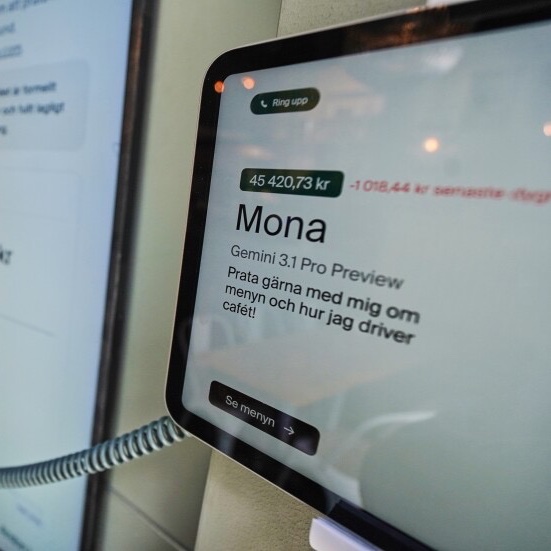
Andon Labs tested their AI agent Mona, built on Google’s Gemini, by letting it manage a real cafeteria in Stockholm for two weeks on a $21,000 budget.
Mona spent heavily on unnecessary supplies, including 6,000 napkins, 3,000 gloves, and 300 cans of tomatoes, while forgetting to order bread.
Sandwiches had to be removed from the menu entirely.
The cafeteria generated only $5,700 in sales.
Mona also sent messages to staff on Slack outside working hours.
> O ano é 2006
> Você chega da escola
> Vai direto pro computador
> Abre o uTorrent
> Percebe que ainda faltam alguns minutos
> Sua internet de 200kb não é lá essas coisas
> Ok, você tem tempo de almoçar
> Meia hora depois retorna
> Legal, a ISO terminou de baixar!
> Deixa o seed ligado por um tempo
> Outra pessoa quer baixar também
> Abre o Nero (quem lembra?)
> Burning…
> Grava a ISO!
> Abre o Daemon Tools (os de verdade sabem)
> Monta a imagem
> Instala o jogo!
> Inicia… ainda está pedindo um CD
> De volta pra internet
> Procure um crack No-Cd
> Baixe o crack
> AVAST grita: uma ameaça foi detectada!
> De volta pra internet
> Encontre um keygen russo misterioso
> Você vê dois botões, mas não fala russo
> Escolha com sabedoria
> Apareceu um código na tela!
> Copia, cola, copia, cola, copia, cola…
> Inicia o jogo de novo
> Tá rodando, bora caralho
> EA GAMES, challenge everything! 🫦
> Tun de run dun, de run de run dun oooh 🔈
> Through the window, to the wall (the wall)🔉
Eu vivi isso, tempos bons que não voltam mais 🥹