Manager: We use agile.
Me: Be honest
Manager: We implemented SCRUM for our tasks.
Me: I said 'honest'.
Manager: We cut Waterfall into sprints.
Me: Thank you
@Iyervval Yajurveda, section 61 says "kamahs karoti, nahaṃ"
eat meat... eat roti, not ham. Some charlatan brahmins changed its meaning to - "desire does everything, not me."
Our intern just asked me why we don't use Kubernetes.
I said because we don't need Kubernetes.
He said everyone uses Kubernetes.
I said everyone TALKS about using Kubernetes. Most companies are running Docker containers on three servers and calling it a day.
We have 40 employees. Our entire infrastructure runs on AWS with auto-scaling groups. It works fine.
Kubernetes is designed for companies running thousands of services across hundreds of servers. We have twelve services.
But he read that Kubernetes is "industry standard" so now he thinks we're behind.
This is what happens when people learn from tech Twitter instead of actual experience.
They think every company is Google-scale and needs Google-scale solutions.
We don't need Kubernetes. We need our MySQL database to stop running out of connections because someone wrote a query that doesn't close properly.
But that's not exciting. Nobody writes blog posts about "I fixed a connection leak."
They write about "How we migrated to Kubernetes and saved millions" even though the migration cost more than they saved.
I told the intern he should learn why tools exist before learning the tools themselves.
He looked disappointed. He wanted to put Kubernetes on his resume.
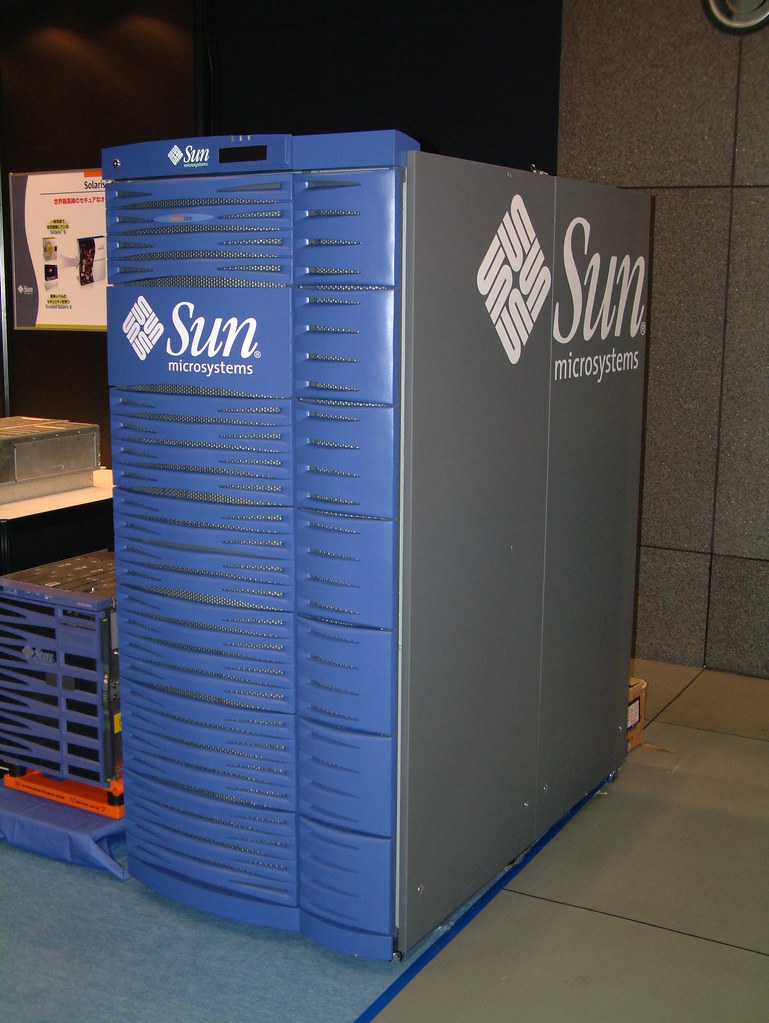
In 2004 the Sun Fire E25k was the apex predator of computing. This was the largest single-image Unix machine that money could buy ($2M fully loaded).
This bad boy had:
• 36 UltraSPARC IV processors (72 cores)
• 576 GB RAM
• 18 fully hot swappable CPU/memory boards
• gigabit ethernet and fibre channel HBAs
• Redundant power supplies, cooling zones, draw 15kW of power
I deployed software to these things. Uptime was measured in years. This was THE ONE.
Man I miss Sun.
Vector databases explained for people who just want to understand.
You have 10,000 product descriptions. User searches for "comfortable outdoor furniture."
Traditional database:
- Searches for exact word matches
- Finds products containing "comfortable" OR "outdoor" OR "furniture"
- Misses "cozy patio seating" even though it's the same thing
- Keyword matching is stupid
Vector database approach:
- Convert search into numbers representing meaning: [0.2, 0.8, 0.1, 0.9, ...]
- Convert every product description to similar numbers
- Find products with similar number patterns
- Returns "cozy patio seating" because the numbers are close
- Meaning matching is smart
How it works:
Step 1: Turn text into vectors (arrays of numbers)
- "comfortable chair" becomes [0.2, 0.7, 0.1, 0.4, ...]
- "cozy seat" becomes [0.3, 0.8, 0.2, 0.5, ...]
- Similar meanings = similar numbers
- Uses AI models like OpenAI embeddings
Step 2: Store vectors efficiently
- Traditional database: Stores text
- Vector database: Stores arrays of numbers per item
- Indexes them for fast similarity search
- Optimized for "find similar" not "find exact"
Step 3: Search by similarity
- User query: "outdoor furniture"
- Convert to vector: [0.3, 0.6, 0.2, 0.8, ...]
- Find closest vectors using math (cosine similarity)
- Returns items ranked by similarity score
Use cases:
- Product search that understands intent
- Documentation search that finds relevant answers
- Recommendation engines
- Chatbots that find similar questions
- Anomaly detection
Popular vector databases:
- Pinecone: Managed, easy, expensive
- Weaviate: Open source, feature-rich
- Milvus: Fast, scalable, complex
- pgvector: Postgres extension, simple
- Qdrant: Fast, Rust-based
Controversial take: You don't need a vector database for most projects. Start with Postgres + pgvector extension.
Vector databases are great for scale. For under 1 million vectors, your regular database with a vector extension works fine.
Coffee’s health impact depends on how you brew it.
Filtered coffee is linked to a lower cancer risk, while unfiltered methods—like French press or boiled coffee—let oily compounds called diterpenes sneak into your cup. These compounds, particularly cafestol and kahweol, can raise LDL cholesterol by 10–30 mg/dL in just a few weeks.
Long-term exposure to high levels of these diterpenes has been associated with a modest uptick in the risk for certain cancers, including pancreatic and respiratory tract cancers, as well as a higher risk of dementia (generally observed with very high levels of boiled coffee consumption in particular).
What’s going on here?
Diterpenes are fat-soluble, so they slip through metal filters or stay suspended in boiled brews. Filtered coffee contains undetectable levels of cholesterol-raising diterpenes. Polyphenols, on the other hand (like chlorogenic acids) are water-soluble antioxidants that pass through paper filters and deliver cellular benefits.
If you’re drinking multiple cups per day, consider switching to filtered coffee. It preserves the antioxidants while minimizing cholesterol-raising compounds.
This is comedy gold. 😭😂
Isn’t this the same woman who tweets, 'I'm proud to be a vegetarian. My plate is free from tears, cruelty, and guilt' every month?