Beleid in Nederland, de huurwet. Hebben allerlei mensen over nagedacht, adviezen gegeven, scenario’s geschetst. De negatieve effecten waren bekend. Wist iedereen. En toch deden we het. En nu nemen we geen verantwoordelijkheid. We moffelen het weg, en leren er nauwelijks van. Dat is horizontale politiek.
OpenAI is trying to own every app and platform and sell tokens, which means they want to kill every startup.
That’s their right, it’s a free market.
we need open source alternatives built in America that are committed to enabling startups with tokens — instead of selling them tokens and using the profits to replace them.
Hoe voer je een gesprek met andersdenkenden? Elly belt overal aan om de verbinding te zoeken: 'Het is luisteren en niet oordelen' https://t.co/0fuJLT4p8E
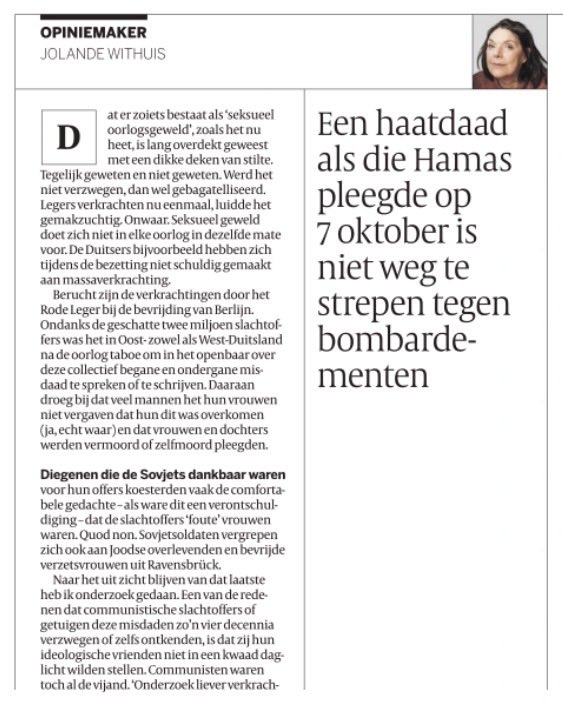
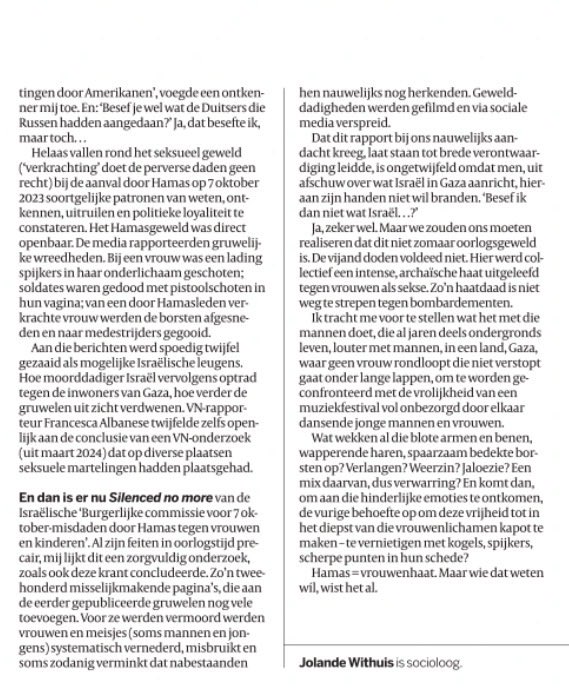
“We zouden ons moeten realiseren dat dit niet zomaar oorlogsgeweld is. De vijand doden voldeed niet. Hier werd collectief een intense, archaïsche haat uitgeleefd tegen vrouwen als sekse. (…) Hamas = vrouwenhaat. Maar wie dat weten wíl, wist het al.”
'Dus laat ik het hier alsnog zeggen. Zonder omhaal dit keer. De alarmbellen klinken al jaren, beleefd en met de rem erop, en er verandert niets. Zacht waarschuwen is een nette vorm van wegkijken geworden. Het is tijd om te benoemen wat er echt speelt, en wat we eraan gaan doen.
Dit is wat ik had moeten zeggen: acht jaar lang hebben we het tech-ecosysteem verwaarloosd, er is gebrek aan urgentie, en Amsterdam ontbeert visie en bestuurlijke kennis.'
https://t.co/waEjFBYlSB
Ik heb een paar weken geleden mijn Chinese rijbewijs gehaald, en het eerste wat ik ermee deed was niet zelf rijden.
Op uitnodiging van @XPENG_Global was ik in Guangzhou, in een auto die zichzelf door een Chinees kruispunt loodst waar de scootertjes om je heen schieten in aantallen die je in Nederland nooit ziet. En het gekke was: ik was niet bang.
Ik had een week eerder ook al kunnen oefenen, want ik zat voor Eva in een van de eerste supervised FSD Tesla's van Europa. En dit voelde niet heel veel anders. Diezelfde assertiviteit.
Het blijft iets bizars dat ze dit ding getraind hebben om te rijden in Guangzhou, en dat diezelfde AI straks gewoon over de A12 zou kunnen.
Na Tesla heeft ook XPENG een vergunningsaanvraag lopen bij de RDW, en het moet raar lopen willen de Chinezen na de Amerikanen niet de tweede zijn die zelfrijdende auto's in Europa aanbieden.
Mijn nerdhart gaat sneller kloppen van die Chinese smartphones op wielen, dat geef ik toe. Maar dit is uiteindelijk een verhaal over autonomie en Europese trots, en daar word ik eerlijk gezegd een beetje verdrietig van. Want wat zetten onze eigen autofabrikanten hier tegenover?
Het zijn de Amerikanen die als eerste met zelfrijdende auto's in Europa komen, en waarschijnlijk de Chinezen die volgend jaar volgen. Geen Europees merk.
Ik voel me vooral geconfronteerd met ons eigen gebrek, en ondertussen wijzen de Amerikanen en Chinezen ons de weg.
Grappig weetje trouwens: in China hebben de autofabrikanten samen een standaard afgesproken. Een turquoise lampje achterop betekent dat een auto zelfrijdend is, zodat mensen én andere zelfrijdende auto's elkaar herkennen.
Op de deurmat, een alarmbel: Techstad Amsterdam valt verder terug! Het is tijd om ons eerlijker uit te gaan spreken, zodat we weer kunnen bouwen met elkaar.
Vorige week kreeg ik bij het tech diner 'Tech voor Brede Welvaart' de microfoon, voor een zaal van tachtig mensen uit het ecosysteem. De vraag: wat hebben jullie besproken aan de tafel Tech voor brede Welvaart, en wat moeten we morgen doen?
Ik gaf een keurig antwoord. Te keurig. Ik somde de thema’s op, de coalities, de vervolgstappen. Allemaal waar. En toch was het niet het antwoord dat de zaal verdiende. Ik hield het netjes en operationeel. En dat is precies het probleem.
We waarschuwen al jaren, beleefd en met de rem erop. Zacht waarschuwen, de nette vorm van wegkijken.
Dus laat ik het nu wél hardop zeggen. Amsterdam staat op plek 7 in Europa, gezakt uit de top 3. En de pijnlijke waarheid: acht jaar lang hebben we het tech-ecosysteem verwaarloosd, er is gebrek aan urgentie, en Amsterdam ontbeert bestuurlijke visie en tech-kennis.
De afgelopen jaren werd tech de verdachte. Vijf ongemakkelijke waarheden zet ik op een rij in een nieuw artikel. Over zelf-felicitatie. Onze normatieve handrem. Over bestuurders die het moment nog niet begrijpen. En over de denkfout dat ambitie tegenover publieke waarden zou staan, terwijl ambitie er juist het fundament onder is.
Maar wees gerust, het is geen klaagzang. We hebben alles om weer te bouwen na jaren stilstand: de diagnose, het denkwerk, de coalities, en een tech corridor met Eindhoven (chapeau initiatiefnemers!) die samen ruim een kwart van het Nederlands BBP beslaat.
Blijft de vraag over, voor het nieuwe college en voor ons als burgers: Zetten we in op tech en AI met de aandacht, de urgentie en de bestuurskracht die het verdient, en durven we de keuzes te maken die daarbij horen? En wat is onze ambitie?
Alles staat klaar. Laten we ons durven uitspreken en weer aan de bak gaan.
Hoe? Dat lees je in het artikel: 'Wat ik had moeten zeggen', bij het tech diner kreeg ik de microfoon, en hield het te netjes. Dit is het eerlijke verhaal over een techstad die wegzakt, en hoe we ons kunnen herpakken.
Link hieronder
Amsterdam zou de tech-koploper van Europa moeten zijn, maar zakt steeds verder weg.
Terwijl Londen Revolut & Wise kweekt, Parijs Mistral AI laat knallen en zelfs Gent & Kopenhagen ons inhalen, blijven onze scale-ups steken.
We hebben Adyen, Booking en Mollie, maar waar zijn de nieuwe Nederlandse techreuzen?
We barsten van de start-ups, maar de Amsterdamse politiek kiest altijd voor regeldruk, woningnood en anti-groei-beleid in plaats van ruimte voor ambitie.
Tech = banen en banen = welvaart. Zonder dominante tech-hoofdstad te zijn verliezen we de concurrentieslag met de VS en Azië.
Tijd dat Den Haag en Amsterdam kiezen: minder verstikkende regels, écht kapitaal aantrekken, ambitie omarmen en talent cultiveren.
Anders worden we het leuke museum van Europa – charmant, maar totaal irrelevant.
https://t.co/gXDD61scnH
In @telegraaf schrijf ik vandaag waarom het juist slecht voor de democratie is om platformen als X te verlaten. Het resultaat is namelijk dat iedereen zich in zijn eigen ideologische informatiebubbels terugtrekt.
Lees het hele stuk hier👇 https://t.co/mUZmQ9d2b5
"You aren't getting it," a friend who lives in China told me after I said the new Ferrari is ugly.
"This is gonna sell well with China's new rich."
But why is a story of changing attitudes amongst car buyers, particularly in China.
In a world where everyone around you is driving a new electric car, which is true in many Chinese cities now, showing up with a loud gas car just doesn't fit in anymore.
Imagine you are a new rich factory owner in Shanghai.
Do you want to drive around in a loud Ferrari, like I dreamed about doing when I was a kid?
No.
Chinese culture is about fitting in, about caring what everyone else thinks.
Worse, in China they are going electric so fast that you can see the writing on the wall for gas. Soon gas stations will disappear altogether in major cities.
And cars that pollute and put fumes into the air are already being seen as artifacts of an age that needs to die quickly, particularly in cities with 40 million people.
Ferrari's sales are way down in China. New car brands there like @Xiaomi, @XPENG_Global, @NIOGlobal, @BYDCompany, and @HongqiGlobal are taking share with vehicles that have much more innovation than even this new Ferrari has.
What are my credentials to talk about Ferrari? Well, I've studied automotive innovation my whole life. Audi taught me to race. I had the first ride in the Fiat 500, the BMW i3, the Tesla Roadster, the first Mercedes AI car, and a few others. Have hung out with many billionaires who have Ferraris, went on a famous car rally with such last year to study buyers of super cars, and car collectors, among other things. And I did consumer research about attitudes toward new innovations, like autonomy, around the world.
But it goes deeper than just China, which buys more cars that USA and Europe combined.
Ferrari is run by people who love to drive and love to drive gas cars with loud, big, engines. In USA that makes sense. My friend Scott Jordan, who owns a clothing company in Sun Valley, Idaho, has one, and within a few minutes from his home he can be on some of the best driving roads in the world.
We argue about cars all the time, and he probably never will buy a Tesla. Loves the sound the Ferrari makes. And the design of the hand stitched leather dash. He hates this new Ferrari. Could never see himself in one.
But his counterpart in China? Will never get onto a pretty road. When I was last in Shanghai I drove for hours and never stopped seeing high rise buildings with stop and go traffic. Americans can't grok that.
They don't want a dirty, gas, car, that makes a lot of noise in China. All traditional luxury brands (another way for saying $500,000 or more for a car) are seeing sales declines for this reason.
They also get on race tracks far less frequently than we can here in America. Which is where you can really enjoy a Ferrari.
In fact, the luxury brands are more of a club than buying a car. I once hung out with the Bugatti owners from around the world (one of the benefits of living within walking distance of the Half Moon Bay Ritz Carlton). They told me that it is a club and that Bugatti flies their cars around the world for a variety of driving experiences. Makes sense, the last thing a billionaire wants to hear while on vacation is a pitch for a new startup, or someone begging for money (same thing, really). So they have a club experience that keeps them separated from those kinds.
The Chinese buyer cares more about innovation than those of us in USA do. You see this in their vehicles, which have big huge screens covering the dash, and seats that rub their backs, and even suspensions that "hop" over potholes, not to mention autonomy that drives them everywhere in stop and go traffic.
It's one reason why China's government has kept Tesla from really turning on its autonomy, which is slightly ahead of the Chinese brands. As a Tesla investor I am watching that closely.
Speaking of Tesla, its new Roadster that we should see "within months" according to @elonmusk and his main designer @woodhaus2, should capture the world's attention, and especially the new rich in China.
But will it be allowed into China in a world where USA doesn't allow Chinese cars to be imported here? The answer to that question is way above my pay grade.
But if it were, it'd be a massive competitor to this new Ferrari.
Why?
Well, Ferrari's innovation just isn't there for this new consumer. It doesn't self drive. Its screens are smaller than any of those new Chinese brands, many of which started out making smartphones and other consumer electronics.
And that leads to this design that is rightfully getting derided.
Ferrari doesn't like being pushed into this new world of electric, screens, and autonomy. If it could it'd go back to an all-analog car, which is what most of the buyers of Ferrari like, taking them back to their childhood.
I can just imagine what Jony Ive had to do to come up with even the design he was able to ship here.
Consumers used to like buttons. Old people, particularly billionaires, still do. Takes them back to familiarity and tactile senses. They still talk about how much they love the buttons and knobs in their old cars.
But the new Chinese consumers grew up with smartphones and iPads you can touch. Many of them carry around @Huawei triple fold phones, that, when unfolded look like an iPad. We don't have those in America yet and Apple is rumored to be bringing a single fold device to America later this year.
Such a consumer is more impressed by big screens and automation than loud engines and fast speeds.
But the new rich want to stand out. Often they are running factories or tech companies where most of the engineers have Teslas or one of the new Chinese brands. How do they stand out?
Roll up in one of these.
And now you understand why the design of this car is so ugly. Ferrari doesn't want its traditional consumer to buy it. And didn't want a mind-blowing aggressive design that would make its traditional customer pissed that it was "going electric."
It's all about trying to regain share in China.