David Friedberg reveals France's public spending is 57% of GDP: greater than that of communist countries
"This chart is a measure of public spending as a percent of GDP; Rand Group Research published it. And you can see the comparison of France's public spending as a percent of GDP, to the peak public spending as a percent of GDP of major communist nations, Soviet Union during, communist Romania, Venezuela under Chavez, and then communist China."
"It certainly been a socialist state, right? That's my point. I think this is such a precious lesson for the West to look at. We all think that there's some political problem with Macron or whoever it was."
"The more the government spends, the worse the conditions get for its people, not the opposite. And then the people riot and revolt and say that the government's not spending enough and the government needs to be doing more."
"Take a guess where the US is today. Federal government spending is $7.4 trillion, state and local government spending is $4.6 trillion. You add those two together, it's $12 trillion out of a $33 trillion GDP. US public spending is roughly 36% of GDP. France today is the same as the US, it's about 120% debt to GDP."
"France today is operating its national government spending deficit is 5.4% of GDP. The US is actually 6.2% of GDP. France is I think probably the first to go because they're only growing their economy at half a percent while the US is growing 2.3%."
"So we're still kind of hanging on because we have some degree of economic growth that's allowing us to kind of hold things together."
"But I would argue that we are facing the same sort of fiscal cliff that leads to this extraordinary social unrest as France, all the economic measures are aligned, we're at the same rate, we're at the same set of problems."
'Ik word er moedeloos van dat het gaat om 'Wij eisen de nacht op' en extra lampjes en camera's'
De vermoedelijke moordenaar van Hajar komt uit Somalië. Meer dan 50% van de moordenaars van vrouwen heeft een migratieachtergrond. Waar blijven maatregelen die de veiligheid van vrouwen echt vooropstellen? 'Vrouwen betalen telkens de prijs voor beleid dat tekortschiet,' vindt onze opiniemaker @lale_gul89 . #nieuwsvandedag
Dankzij AI moet het hele internet de komende tijd door een bijzonder zure appel heen. De afgelopen 48 uur waren vrees ik slechts een amuse. Het voordeel is dat AI soms al jaren openstaande gaten in veel gebruikte software ook loeisnel weet te dichten. Dat dan weer wel.
Eens, urgentie mbt rationeel en strategisch klimaatbeleid. Ik zou willen toevoegen dat wij via innovatie een strategische rol kunnen spelen in vermindering uitstoot en klimaat adaptie (o.a. Cradle, CuspAI, Ocean cleanup). Weer focus op exporteerbare oplossingen ipv reductie-mindset. Benodigd: bouwers attitude, toegang tot voldoende/betaalbare energie én rekenkracht (noodzakelijk in de intelligentie economie).
Tien jaar Parijsakkoord, tien jaar industriële productie voor de G20 landen + Nederland.
De grafiek laat zien wie bouwde en wie afbouwde.
Rood: landen die onder Parijs geen absolute reductieplicht hebben, of het akkoord hebben verlaten. Groen: landen met een volle reductieverplichting.
De top van de lijst: China +74% Turkije +48% India +42% Rusland ≈+30% Zuid-Korea +22%
De onderkant: Frankrijk -1% VK -2% Italië -2% Japan -8% Duitsland -12%
Nederland komt uit op +4%, onder het EU-gemiddelde van +7%.
China hoeft volgens zijn eigen doel pas "vóór 2030" een piek te bereiken en mag tot die tijd groeien. India stuurt op CO₂ per euro bbp, niet op absolute uitstoot, en wil pas in 2070 klimaatneutraal zijn. Turkije en Mexico vallen formeel onder ontwikkelingsland.
Ondertussen legt Europa zichzelf harde, juridisch afdwingbare doelen op, met ETS-prijzen, CBAM-bureaucratie en een energierekening waar geen Aziatische concurrent mee te maken heeft.
Duitsland sloot zijn kerncentrales, was noodgedwongen te stoppen met Russisch gas en betaalt nu de prijs.
De les is niet dat industrie onmogelijk is in Europa.
De les is dat betaalbare, betrouwbare energie het fundament is, en dat wij dat fundament zelf onder onze industrie vandaan hebben getrokken.
Een ton CO2 die niet meer in ons land wordt uitgestoten, maar wel in India, VS of China, is geen klimaatwinst. Het is banenverlies met een groen deugetiket.
Ik roep Nederlandse bestuurders rationeel en strategisch naar ons klimaatbeleid te kijken, want we gaan de bietenbrug op.
Bron: OECD (2015=100, versie okt. 2026), China: NBS.
There’s a world of difference between user-authorized agents (Muse, Instinct, Grokbot, etc.) and true unauthorized/rogue agents that could constitute cyberattacks.
Most of the activity described in the Axios story appears to be the former: customers sharing credentials with agents so they can take actions on their behalf. This may violate bank terms requiring humans to log in themselves, but these are in no way cyberattacks.
The direction banks should go is to support user-directed agents. For example, Amex is an authorized connection in Muse, making it easy for users to grant, limit, and revoke access.
Read-only permission levels are a sensible interim step. Several banks already support or are moving toward them. Full write access (with user credentials) is a different risk category and should be approached carefully.
Frightening the public by blurring the line between user-authorized agentic behavior and cyberattacks is irresponsible.
As I have predicted here several times this year, the legacy financial system is not prepared for attacks by AI agents. I didn’t expect it would start so soon already. This could get very ugly.
BREAKING NIUS: Für mich ist es einer der unglaublichste Auftritte von Bundeskanzler Friedrich Merz in dessen Amtszeit. Seit 17 Monaten erzählt Merz, er wolle Deutschland deregulieren, unnötige und schädliche Bürokratie beseitigen. Dann hat dieser Bundeskanzler die Möglichkeit, auf der Weltbühne, vor milliardenschweren Investoren dem Nvidia-Chef Jensen Huang eine Frage zu stellen. Und was fragt der Bundeskanzler? Er will wissen, wie man Künstliche Intelligenz am besten REGULIEREN kann. Als Huang antwortet, nunja, erstmal müsse die KI-Industrie in Deutschland aufblühen, bevor man sie regulieren könne, legt Merz nach. Er erklärt Huang, aus seiner Sicht sei entweder eine europäische oder gar eine globale Regulierung notwendig, um die "Schädlichkeit" von KI zu begrenzen.
Afgelopen zomer heb ik mijn baan opgezegd. De reden: ik maak mij intens veel zorgen over Nederland. We worden in rap tempo armer en afhankelijker. Tijd voor actie. Een draadje.
🇩🇪 Jensen Huang has some tough love for Germany: stop overthinking and get to work.
“Nothing pains me more, frankly, than to see one of the most technologically advanced countries to be left so far behind in technology.
And I think the reason for that is this: maybe it’s the European way to overthink everything.”
The Nvidia boss says Germany has no shortage of talent, it just needs to actually use it.
The country that built the car and the printing press now needs productivity advice from Silicon Valley. How times change.
Writer: Julie
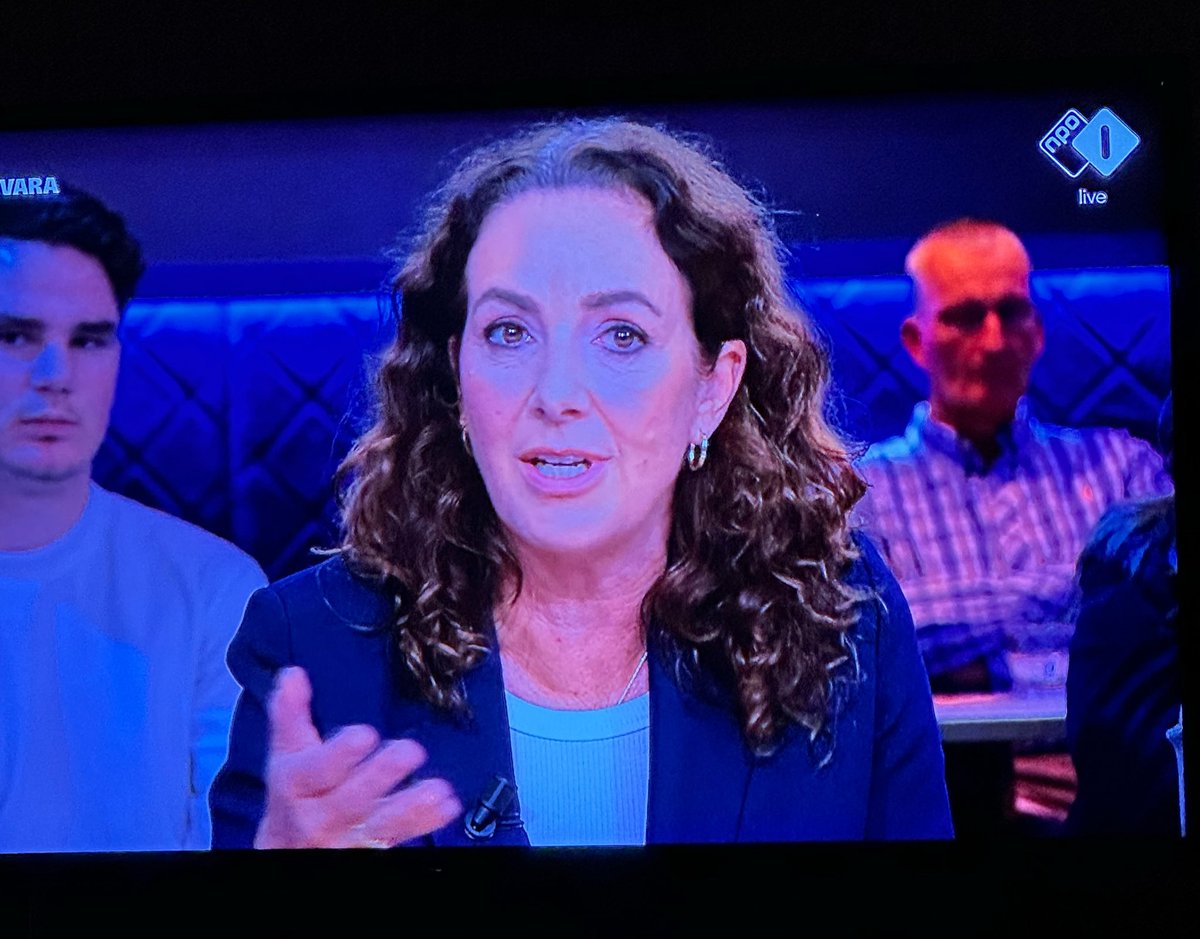
Bij @pauwendewit legt Halsema met veel woorden uit waarom ze op 7 oktober niet kon ingrijpen. Maar de wezenlijke vraag blijft onbeantwoord. Handel je als burgemeester uitsluitend naar de letter van de wet, of ook naar de geest ervan? En welke bestuurlijke ruimte benut je dan?
Ook Nederland zou het eenvoudig moeten maken om vermogen rechtstreeks over te dragen aan de volgende generatie.
Richt een speciaal daarvoor bestemde naamloze vennootschap (NV) op die als fonds fungeert.
Iedereen die vermogen rechtstreeks wil overdragen aan de volgende generatie, kan bezittingen, zoals geld, aandelen of vastgoed, inbrengen in dit fonds.
Nederlandse jongeren onder de 18 jaar krijgen aandelen in het fonds toegewezen. Volledig transparant is wat het fonds bezit, waar het vermogen vandaan komt en hoeveel het waard is.
Een van de grootste problemen met vermogensbelastingen is dat geld dat naar de overheid vloeit, mogelijk inefficiënt wordt besteed en ruimte creëert voor verdere schuldenopbouw.
Een rechtstreekse vermogensoverdracht tussen burgers is daarentegen een investering in een nieuwe generatie financieel zelfstandige volwassenen, die daardoor minder afhankelijk kunnen worden van de overheid.
Het is een initiatief dat voor veel vermogende Nederlanders aantrekkelijk zou kunnen zijn.
Via @DanielPriestley
⚡️Musk is attempting something far more consequential than a $10.7 billion giveaway.
He’s creating a generation of Americans with a direct financial interest in the success of one of the country’s most strategically important companies.
The genius of the structure is the distribution. One share per child creates millions of individual ownership relationships while leaving concentrated corporate control largely intact. A $146 gift has limited immediate economic significance. Its potential power comes from what happens afterward.
Every SpaceX milestone becomes personal. Every increase in valuation raises the value of an asset held by American families. And every political battle involving SpaceX now has the potential to become a debate over the financial interests of those families.
Musk is attempting to convert corporate success into a form of distributed political legitimacy.
But the mechanism goes deeper.
SpaceX already operates in sectors central to American strategic power: launch infrastructure, satellite communications, and defense. Its relationship with Washington will become increasingly consequential as space infrastructure expands.
By distributing ownership across American children, Musk would begin aligning three constituencies that historically had different interests: shareholders, the federal government, and ordinary households.
That alignment becomes especially powerful if SpaceX continues appreciating over decades. Children who receive their first share could eventually become adults whose earliest investment was tied to America’s space infrastructure.
Musk is trying to turn SpaceX from a company Americans depend on into a company Americans feel they own.
And the deeper consequence is the precedent.
Private control of critical national infrastructure becomes easier to defend when millions of citizens have been given a financial stake in its success.
If executed, this would be an unusually ambitious attempt to transform concentrated corporate wealth into mass ownership without surrendering the underlying concentration of power.
I’ve spent a few days thinking about the Tesla Roadster reveal and landed somewhere I haven’t seen much discussion. I’m neither a Tesla fanboy nor a Tesla hater. And I couldn’t care less whether what we saw technically qualifies as a flying car. Three takeaways: (1) The risk of that live demonstration going horribly wrong was real. Almost no CEO would willingly expose their company to that kind of public humiliation for a product with so little financial upside. Elon did. (2) That willingness to attempt the seemingly impossible is what makes Tesla special. It’s also arguably Elon’s greatest contribution to America. He’s helped bring back something we’ve lost. The American spirit of chasing big scary ideas that most people think are impossible. That mindset is spreading across a new generation of founders and its long term impact on America’s future could dwarf anything Tesla ever sells. I think this is deeply underappreciated. (3) Can we just acknowledge how insanely cool that moment was? We’ve reached a strange place culturally where even extraordinary feats of human ingenuity immediately become arguments about why they don’t count. Not everything needs to be a debate. Sometimes we should just be able to stand back together and marvel at what humans are capable of. I’ve been both bullish and critical of Tesla’s ambitions over the years. But watching Elon and his team push the boundaries of what’s possible reminds me why I’m glad we have him. Whether the Roadster ever makes Tesla a dollar or impacts $TSLA stock price is almost beside the point. We need more people willing to risk failure in pursuit of things the rest of us think are impossible. Because when they succeed we all win.
Watching the aftermath of yesterday’s chaos across France, and today’s renewed violence and my heart breaks for the thousands of shops and restaurants owners who lost everything. These are good, hard-working people. They’ve been completely abandoned by their own government.