-> faire son stage au sein de la branche tech d’une entreprise assez sympa
->tout le monde est soit ingénieur d’une top école, soit docteur
->Les gens font pipi à côté des chiottes
Tain
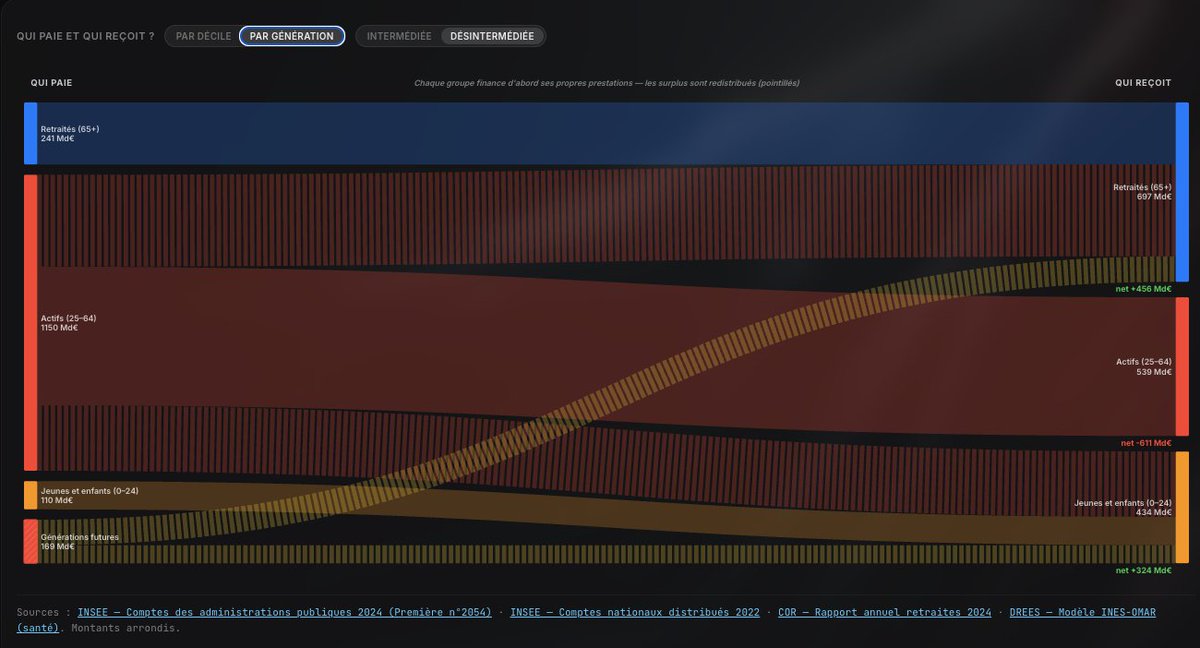
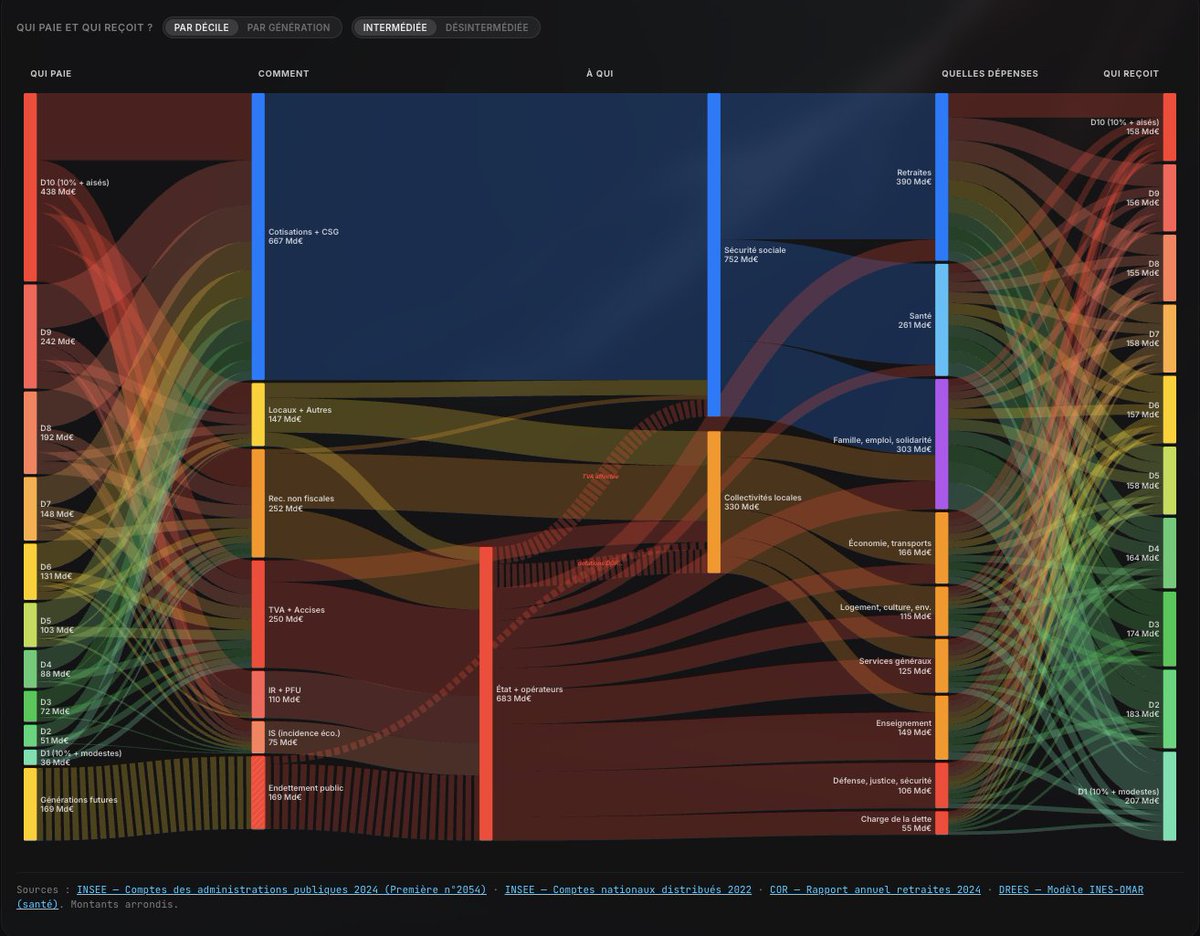
Je vous propose un graphique qui je crois n'avait encore jamais été fait : les flux monétaires complets Français => sphère publique => Français.
En effet, la sphère publique est une grande machine à redistribuer.
On prend aux Français de plein de manières différentes (TVA, IR, amendes, etc.), ça passe par des administrations diverses complexes et ça retombe dans le poche d'autres Français de façons diverses (transferts, services publiques, infrastructures, etc.)
Ce graph retrace les flux, et permet de voir les transferts par niveau de richesse et par génération.
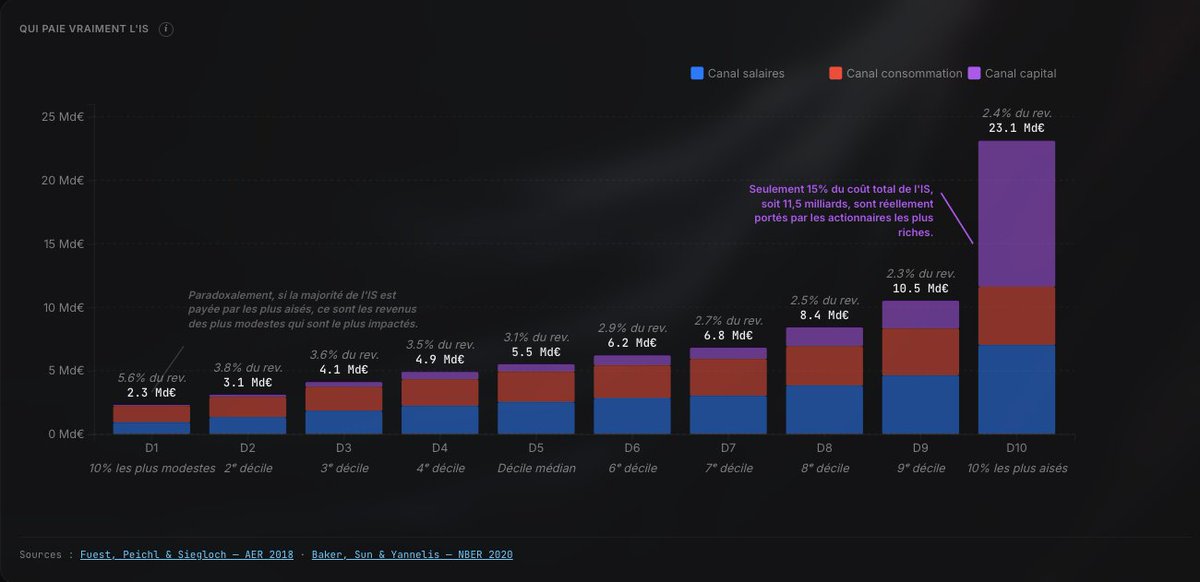
Cela m'a forcé à faire des trucs rigolos, comme décomposer qui paye vraiment l'impôt sur les sociétés.
J'arrive à la conclusion que seulement 15% de l'IS est payé par les plus riches des actionnaires, et qu'en proportion de leurs revenus, les plus pauvres payent plus pour l'IS. Pourquoi ? Parce qu'une partie du coût de l'IS est portée sur des salaires plus faibles et des prix à la consommation plus élevés.
Ce n'est forcément pas parfait, et je prends tous vos commentaires et corrections. Je pense néanmoins que les ordres de grandeur sont corrects.
Vous trouverez les versions détaillées et interactives ici : https://t.co/3aDDi42BjO
(Par ailleurs j'ai ajouté partout sur le site les sources et les formules)
>be me, move to Paris
>romanticize it hard: wine, walks, writing in cafés, reinvention
>reality: 17m² apartment with a shower in the kitchen and a toilet in the stairwell
>landlord says it’s “charming”
>neighbors slam doors like it’s a competitive sport
>go outside and every street is beautiful, every bureaucracy is hell
>spend two hours at the préfecture just to be told I filled out the wrong form
in the wrong arrondissement twice
>meet a girl who works in fashion PR
lives in a 6th floor walk-up, earns €1,400/month, still wears Celine
no one knows how
>everyone smokes but judges you for putting milk in coffee
>try to make friends but everyone’s booked two weeks out and replies to texts like it’s a negotiation
>Americans here pretend they’re not American and speak English with a weird international-school cadence
>guy from Chicago corrects my French, says “we” when talking about strikes
somehow more Parisian than the Parisians
>dating feels like a part-time job
>everyone’s emotionally unavailable but wants long dinners and eye contact
>girl tells me she’s “anti-capitalist”
>splits rent with her dad, only wears vintage Margiela
>I nod like this makes sense
>weekends are for brocantes, wine by the canal, complaining about Macron
>still get goosebumps walking home at night
>still can’t believe I live here
>tfw Paris is crumbling, indifferent, wildly expensive
>tfw I might never leave
>and that’s the most Parisian thing about me now
>c’est_la_vie.jpg
@guil_lambert If liquidators could only liquidate the amount that brings positions back to a sufficiently healthy state (e.g. 1.05 health factor), it would force liquidations to share the available liquidity (up to the price impact that yields bad debt)...
> went on @CoWSwap
> input ENS subdomain as recipient
> do not see the subdomain being parsed as address zero
> see the swap redirected to my address instead of address zero 🥵🥵🥵
Thank you for having covered this edge case (pls democratize resolving ENS subdomains)
@bios_hazard@tom_doerr Far form being as powerful as Nextcloud and its plugins (apps). But certainly looks nicer out-of-the-box
Minimalist but enough for a self-hosted Drive (and no more)
This is an unfair analysis Omer, I know you have a competing product to shill, but this post is engagement bait for the uninformed
What we saw is that a series of trades on the deUSD/USD Curve liquidity pool, representing ~50% of daily trading volume, temporarily pushed the price of deUSD above $1
Given Chainlink feeds for deUSD report the market-wide volume weighted average price (VWAP), the feed’s pricing reflected these trades
The feed was clearly marked as a High Risk Market to reflect the underlying market risk that make the market price of low liquidity/volume assets subject to greater uncertainty or volatility
And as such, protocols need to take precaution when building markets involving such assets
“Chainlink just proved oracles are one of the weakest links in DeFi” is an insane take given Chainlink’s operational track record of not only securing tens of billions in DeFi for hundreds of protocols, but enabling the creation of the DeFi sector as we know it today
🟠 BTCFi lending & borrowing are now live on @okutrade
Powered by 🦋 @MorphoLabs. Curated by 🥩 @SteakhouseFi
Welcome to BTC-native lending -- Corn-style🌽📈
( Details👇 )