Spent the afternoon driving @Publix to Publix clearing each location out of their buy one get one specials on dog food. I was able to fill an entire SUV packed full of dog food for the dogs in Escambia County, FL that are in need of dog food.
I also picked up some cat food.
I like to think of myself as an expert in dog food, so I was happy to deliver over 200 bags of dog food to the shelter today which will be given to People in need after the hurricane this week who need pet food.
There’s still so many people without power and internet and a lot of destruction.
Publix has a great buy one get one free deal on some dog food right now so I was able to get so much more dog food than I originally thought I’d get!
I plan on going back when they restock as well.
If you can do the same, please send dog food and cat food to the following address:
Escambia County Animal Shelter
200 W Fairfield Drive
Pensacola, Florida 32501
This is what grief looks like when you carve it in marble.
William Wetmore Story made it after his wife Emelyn died in 1895, after 50 years together.
“It represents what I feel” he said.
He died later same year, at 78.
Both of them are buried together, right here, under this monument in Rome's Non-Catholic Cemetery.
I can't even imagine how he must have felt carving this.
Three years ago today, Hamas terrorists tortured, mutilated, and murdered 1,200 innocent civilians in Israel.
Among those slain were men, women, and children — including dozens of Americans.
We will never forget this act of barbarism against an ally and recommit ourselves to the defense of civilization.
I am a Jew from Ireland.
To see the national football team behave so disgracefully in tonight’s match against Israel, saddens me.
Disrespecting the Israeli anthem. Refusing to even shake hands with the Israeli players.
Ireland has become a shadow of its former self.
The Netherlands has become the first country in the world to successfully eliminate stray dogs, ensuring that every dog has a home.
This remarkable achievement stems from a combination of strict animal welfare laws, large-scale spaying and neutering programs, and a strong culture of responsible pet ownership. The Dutch government has long supported widespread sterilization initiatives and enforces tough penalties for animal abuse and abandonment.
While an estimated 200 million stray dogs exist worldwide, the Netherlands stands out as a global leader. In Dutch cities, it is common to see dogs riding in bicycle baskets, relaxing under café tables, and even joining their owners on public transport, a reflection of how deeply integrated pets are into everyday life.
The country now serves as an inspiring model for animal welfare, demonstrating how coordinated policy, cultural awareness, and compassion can effectively solve a challenge that continues to affect many other nations.
🔁No Applications For Gwynfor. Please Keep Sharing🔁
🐴Meet Gwynfor, a handsome Dartmoor yearling who is expected to mature at around 12.2hh🐴
🐎Gwynfor came into our care via a local stray holding facility
🐎With a little detective work, we were able to trace his breeder & learnt that he had previously been sold through the sales. Beyond this, we know very little about what this young pony has experienced before finding his way to us
🐎Understandably, Gwynfor can be nervous & unsure but he has shown us that underneath those nerves is a kind, sweet-natured youngster
🐎He is ready to find someone who can give him the consistency & guidance he needs
🏥Gwynfor is up to date with parasite treatment, farrier & dental care
🏡He needs a patient & experienced home that understands young ponies, can continue his handling, education & confidence building at his own pace
🏡With the right investment of time & training, we feel Gwynfor has the potential to become a ridden pony in the future. For now, though, his priority is simply growing up, learning & enjoying being a youngster
🏡If you have the experience, facilities & time to help Gwynfor reach his potential, please complete the application form by following the link below👇
🔗
https://t.co/tVvZwQHriP
📝FYI: Applications are processed Monday to Thursday. Please be patient, our Rehoming Team will be in contact with you as soon as possible📝
🏡🏥All successful applications are subject to home & Vet checks🏥🏡
📍Our animals are based in #Pembrokeshire South West #Wales While we do rehome across the UK, please keep our location in mind because visits to the centre are essential. We will prioritise homes that are closer to the rescue
For full details on our adoption process please visit:
🔗
https://t.co/P5YZxvile6
Can't adopt right now? The best way to help an animal in need is to:
🔁SHARE THEIR POST so it reaches their forever home🔁
📝Engage with their post by leaving a comment or an emoji because this helps with the X algorithm📝
Thank you for considering adoption & for helping us find a truly special home for Gwynfor 💚🙏💚
#teamgreenacres #rescue #rehomehour #ponyhour
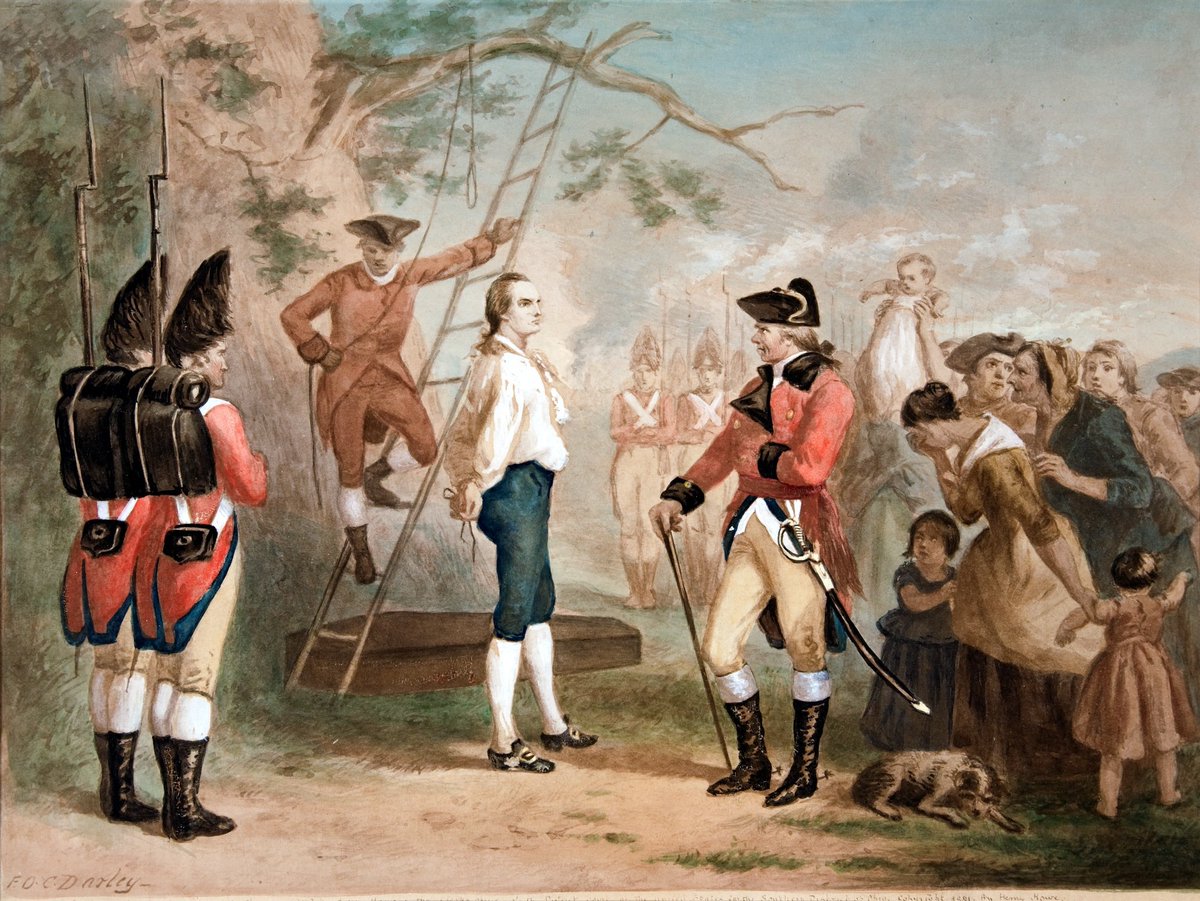
On this morning 250 years ago, the British hanged a 21-year-old American schoolteacher as a spy, and in trying to make him disappear quietly, they accidentally made him immortal. His name was Nathan Hale, and it is worth sitting with just the last few hours of his life.
He had been caught the night before, behind British lines on Long Island, carrying notes on enemy positions hidden in his shoes. There was no real trial. A man out of uniform with military intelligence on him was a spy by the rules of war, and the sentence for spying was death by hanging, no ceremony, no honor. General Howe ordered it done in the morning.
What we know of that morning comes mostly from the enemy, from British officers who were there, and it is the small human cruelties that stay with you. Hale asked for a clergyman to attend him in his final hours. The request was refused. He asked for a Bible. That too was denied. He was a devout young man about to die, and they would not give him even that comfort. A British officer named Montresor, watching, was troubled enough by the young man's composure to later make sure his story was told.
In his last moments Hale was allowed to write a couple of letters, one to his mother, one to a fellow officer. He wrote them, and then the British provost marshal, a notoriously brutal man named Cunningham, took those letters and destroyed them in front of him. The reason given was chilling in its pettiness: so that the rebels should not know they had a man in their ranks who could die with such firmness. They did not just want to kill him. They wanted to erase him.
Then they marched him to the gallows, and there, according to the accounts that survived, this young schoolteacher who had failed at the one dangerous mission he ever attempted, stood calmly and spoke about duty and country with a steadiness that unnerved the men sent to kill him. The famous words attributed to him, that he only regretted having but one life to lose for his country, may be polished or borrowed from a play he loved. But everyone who was there agreed on the essential truth beneath the wording: he met his death without flinching, and he made even his executioners remember him.
And that is the irony that redeems the whole sad morning. Cunningham burned the letters so no one would know how bravely Hale died. It did not work. The story got out anyway, carried by the very enemies who watched it, and a young man the British tried to erase became one of the most enduring symbols of the Revolution, honored two and a half centuries later, on this exact day, as the first American to die spying for his country. They denied him a Bible and a chaplain and burned his last words, and still they could not make him small.
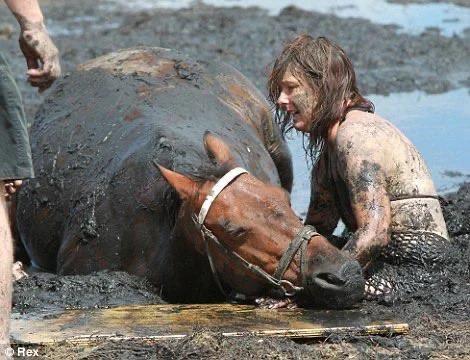
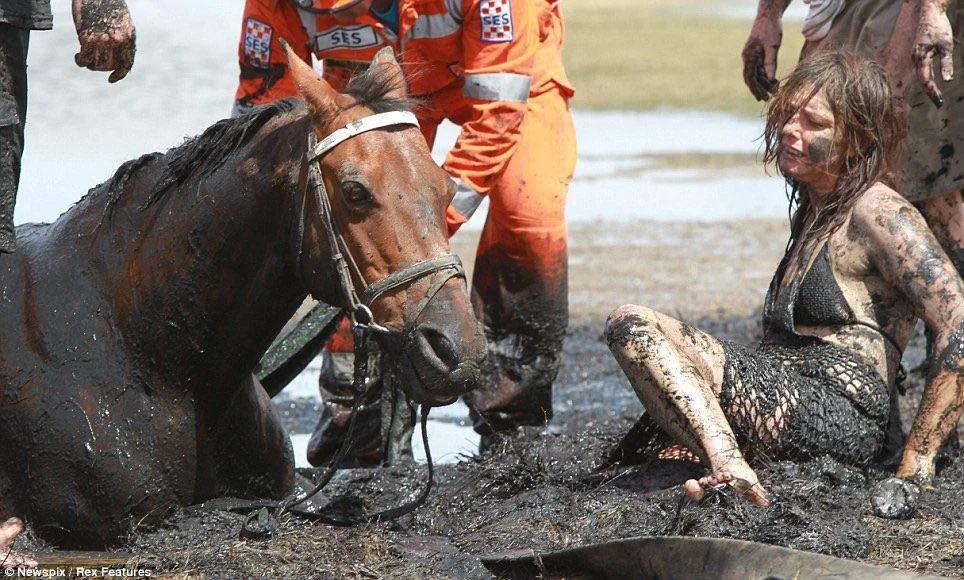
For 3 hours, Nicole Graham stayed waist-deep in sinking mud, holding her horse Astro's head above water to save him from drowning as the tide rushed in.
@openshutter21 We live right up the hill from Victoria Beach, where your photo was taken. The spot is truly as magical as your photo so beautifully reflected. Thank you for sharing.
Laguna Beach isn't the first place that comes to mind when you think of cattle like structures but here we are. I accidentally stumbled upon this location, which I enjoy more than finding a spot on maps then navigating there.
The airplane was a battlefield the first troops deployed with a drink cart boiling water and pure will of force against a enemy in combat with the united states.
Why cant these guys get the medal of honor.
They were militia that day, troops in my mind.
Shanksville, Pennsylvania was the first battlefield of the GWOT.
Im a vet by the way, I would love to see this.
Better than getting a medal people who write books get.
I hate that I have to do this, it’s my least favorite part about my life. I knew my life would get even more dangerous when I announced I am suing California and began accepting invitations to speak on college campuses this semester.
I need to raise money again for security. Doing the right thing and exposing evil now puts your life in danger in today’s society. For example, a UC Irvine “lecturer” (teacher) is insinuating it would be funny to assassinate me and leftist are threatening to kill me constantly.
I will not cower to the radicals or the far left who threaten and plot to kill and destroy our country, yet the $30k–$50k a month it costs me just to stay safe doing my job is unsustainable. I make enough for my needs and my employees, but this added expense produces no return and is unsustainable on my own.
If you can donate, please donate here: https://t.co/t17KpayiXW Donations are tax-deductible and go strictly toward security/operations, anything helps 🙏🏼 If you cannot donate no worries please like and share this so more may see it!
God bless,
Nick
🇺🇸🙏That sound is from the jumpers trapped above the 91st floor with nowhere to go.
Over 200 people jumped to escape 2,000° heat, smoke, and carnage.
The firefighters on the ground knew instantly what they were hearing.
Not debris. People. Hope, falling.
#NeverForget
Credit: One Day In America by @natgeo@TwinTowers_NYC
In the dead of night at Bergen-Belsen concentration camp, a garbage truck stopped behind a women’s barracks. Its cargo was not trash.
One by one, 54 children were dumped into the freezing mud before the truck drove away, leaving them crying in the darkness.
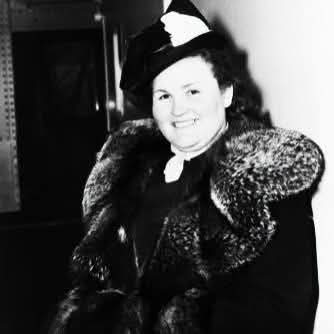
Inside the barracks, 26-year-old Luba Tryszynska heard the commotion through the thin walls. A former nurse from Kamenets-Litovsk, she had arrived at Bergen-Belsen only weeks earlier. When she stepped outside, she found terrified children between the ages of four and twelve.
Earlier that day, their mothers had been separated from them and transported to another camp near Hamburg. The children had been loaded onto a different vehicle, driven around for hours while officials decided their fate, and ultimately abandoned like unwanted cargo.
For Luba, the sight was unbearable.
Two years earlier, at Auschwitz, she had been forced to watch her own family disappear. During the selection process, an SS guard noticed her young son, Isaac. Knowing mothers with small children were often sent directly to the gas chambers, Luba’s mother-in-law pulled the boy from her arms in a desperate attempt to save her life.
Isaac, her husband Hersch, and her mother-in-law were all taken away. None returned.
Luba survived, but the loss haunted her every day. She often wondered why she had been spared when the people she loved most had not.
That night at Bergen-Belsen, standing before dozens of abandoned children, she finally found a purpose for her survival.
Without hesitation, she gathered the children and brought them inside. The other prisoners were terrified. Sheltering children could have resulted in severe punishment or death for everyone in the barracks.
Luba did it anyway.
She arranged bunks for them, tucked the youngest children into the safest corners, and reassured them with quiet words:
“You’re safe now. Stay quiet, and I’ll take care of you.”
Then she took an even greater risk.
Luba approached Fritz Klein, an SS doctor at the camp, and told him directly that she intended to keep the children hidden and under her care. Against all expectations, Klein agreed and allowed her to use a separate wooden hut.
Why he consented remains unclear.
With that small concession, Luba created something almost unimaginable inside one of the most horrific places on earth: a refuge for children.
Over the next four months, she and a handful of other women worked tirelessly to keep them alive. Hermina Krantz, a Slovak prisoner, helped clean and prepare whatever scraps of food could be found. Dr. Ada Bimko, another prisoner, cared for the sick and injured.
Luba became the heart of the operation.
Every day she searched for food, traded possessions, begged for supplies, and sometimes stole whatever was necessary to feed the children. Bread, water, bits of soup, and occasionally milk became precious treasures.
Remarkably, some German guards even began assisting her. They quietly provided firewood, extra bread, and on one occasion, an entire bucket of fresh milk.
As the months passed, more orphaned children arrived.
By April 1945, Luba was caring for 94 children, including an infant less than a year old.
Then, on April 15, British troops liberated Bergen-Belsen.
The soldiers entered a camp filled with death, disease, and starvation. Everywhere they looked were bodies and prisoners barely clinging to life.
But when they opened the door to Luba’s hut, they encountered something extraordinary.
Inside were dozens of children who had survived.
A British officer reportedly asked who was responsible for them.
Luba stepped forward and answered simply:
“I am.”
Thanks to her determination, nearly all of those children lived through the war.
After liberation, she personally helped return many of the children to their home countries. Some were escorted back to the Netherlands, while others were taken to safety in Sweden.
Eventually, Luba married fellow survivor Sol Frederick and settled in Washington, D.C., where she built a new life far from the horrors she had endured.
Yet the children never forgot her.
In 1995, fifty years after the war, many of those she had saved gathered in Amsterdam for a reunion. They arrived as adults—doctors, teachers, engineers, parents, and grandparents.
One after another, they embraced the woman who had protected them when no one else would.
The child Luba lost at Auschwitz could never be replaced. The pain of that loss stayed with her forever.
But through her courage, compassion, and refusal to look away, nearly one hundred other children were given the chance to grow up, build families, and live full lives.
Luba Tryszynska passed away in 2009 at the age of 91.
Her story remains one of the most powerful reminders that even in humanity’s darkest moments, a single act of love can become a lifeline for countless others.
Five elephants swept away by raging floods in Nepal were found alive after being carried downstream into India. The herd reached Girija Barrage in Uttar Pradesh’s Bahraich, where officials reduced the water flow, allowing all five elephants to climb out safely and make their way back to safety.