“save our children and we will save the West“
At ARC 2026, @Miss_Snuffy argued that the crisis facing the West is a crisis of moral formation, and that schools, families, and communities must once again take seriously the task of raising the next generation.
Mañana comenzará el Mundial, y muchos estarán atentos a los partidos. El fútbol nos recuerda algo que no debemos olvidar: la vida no es una carrera para lucirse en solitario, sino un camino que aprendemos a recorrer juntos. Quien no sabe pasar el balón, aunque tenga talento, todavía no ha entendido el juego. Y quien no sabe vivir con los demás y para los demás, todavía no ha entendido la vida. #ViajeApostólico
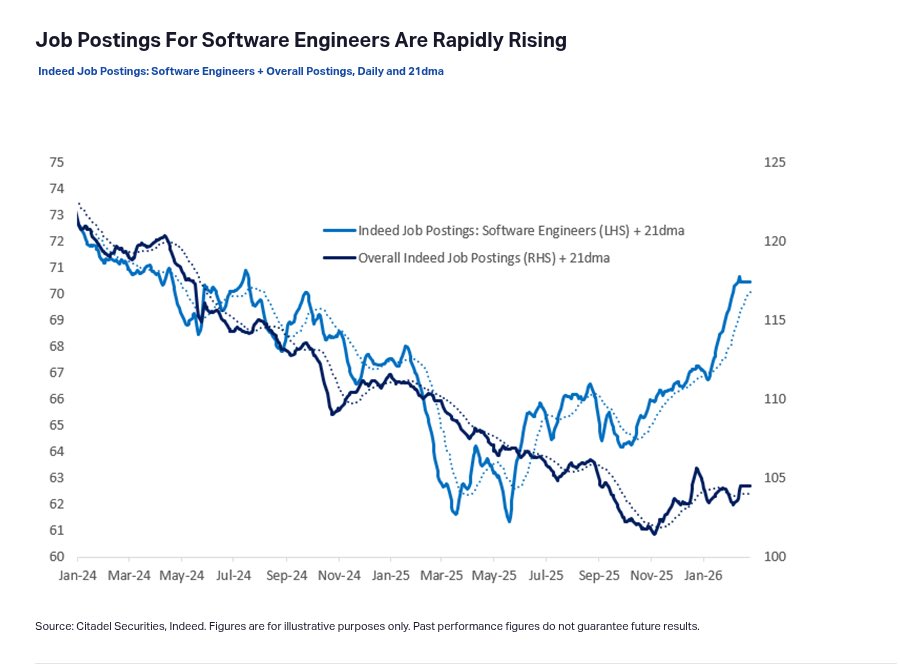
Q: How are job postings for software engineers rising rapidly despite AI agents automating coding?
A: Because there’s far more code to manage than ever before. We’re already seeing a 14x YoY increase in GitHub commits, and it’s accelerating.
AI has dramatically lowered the cost of writing code, so it’s now being used across far more businesses, applications, and use cases.
We’re at the beginning of a massive productivity boom driven by the proliferation of bespoke software throughout the entire economy.
Coding has been AI’s breakout use case this year. The fact that it’s increased demand for software engineers — rather than decreased it — should call into question the entire “AI will cause mass job loss” narrative.
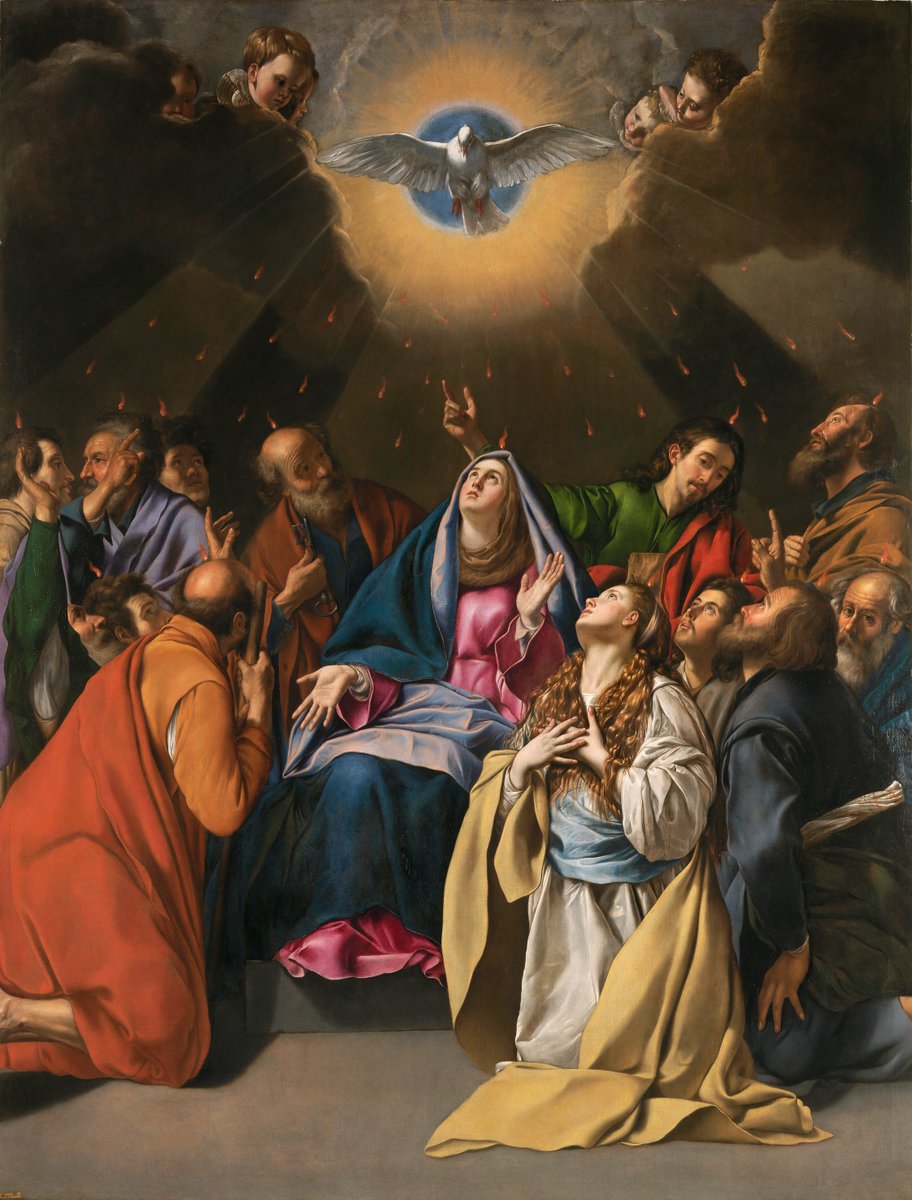
Today is Pentecost Sunday. The day the Holy Spirit descended upon the Apostles and the Church began to grow.
It begins with a sound like a mighty wind, and ends with the Apostles converting over 3000 people.
Here's what happened:
¡Señor, ayúdame a esparcir Tú fragancia! •*•*•*•*•*•*•❤️🔥❤️🔥
JESÚS, ABRÁZAME FUERTE
•••••••••••✨👑❤️🔥❤️🔥✝️✨•••••••••••
"Mi amado Jesús, hoy vengo ante ti sintiéndome pequeño/a y necesitado/a de tu ternura. El mundo a veces me sobrepasa, siento el peso de mis cruces y el cansancio de la vida. Te pido, con el corazón en la mano:
abrázame fuerte.
Necesito sentir tu abrazo que sana y calma.
Que tu amor me envuelva y me diga que todo estará bien. Que el dolor y el miedo desaparezcan en la seguridad de tus brazos,
Señor.
Permíteme reposar mi cabeza en tu hombro, el mismo que cargó la cruz por mí. Que tu corazón humano y divino lata junto al mio, infundiéndome tu fuerza, tu paz y tu capacidad de amar incondicionalmente.
Jesús, no me dejes caer. Sosténme, abrazame y llena mi vacio. Gracias por ser mi padre, mi guía y mi refugio eterno. Confio en que, en tu abrazo, siempre estaré seguro/a.
✨✝️Que así sea🙏🙏
#JesusAbrigameConTuAmor
#SeñorSostenMiAlma
@theisaacmed I was born in California but moved to Mexico when I was three. Moved back to the US at 10 and moved to Brazil at 32. Been here for three years and can tell you everywhere has its upsides and downsides.
I love it here in Brazil.
"If I told you there was one free thing you could do every Sunday that would make your kids happier, healthier, smarter, and closer to you, you'd think I was selling something."
Take your kids to church regularly. I don't care if you believe. The data is so lopsided that skipping it is the parenting equivalent of refusing vegetables because you don't like the taste.
Grades. Religious teens get As at almost twice the rate of nonreligious teens. In a class of 100, that's 24 A-students instead of 14. Church gives a kid the same academic boost as being born rich instead of poor.
College. Working-class religious kids earn bachelor's degrees at double the rate of their nonreligious peers. Middle-class kids do it at 1.5x the rate. For families without a trust fund, this is one of the most powerful forms of upward mobility social scientists have measured.
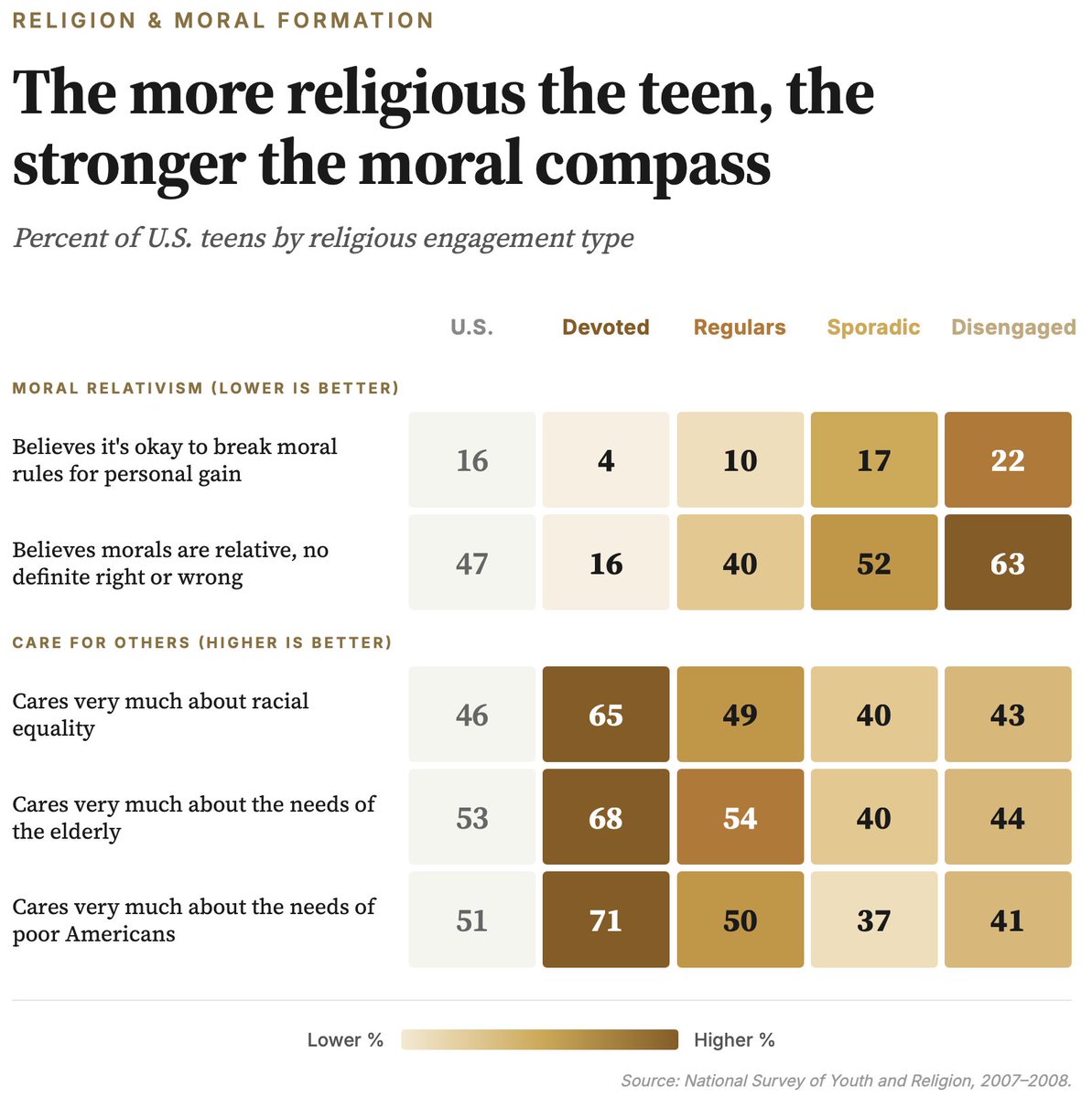
Character. Religious teens are far less likely to lie, cheat, or do things they hope their parents never find out about. They're more likely to care about racial equality, the elderly, and the poor. They reject the idea that morality is whatever works for you in the moment. That kind of kid doesn't happen by accident. It's built.
Closeness. 60% of parents of religious teens say they feel "extremely close" to their kid, compared to 50% of nonreligious parents. The kids report the same thing back. They get along better with their parents, talk about hard stuff, and actually want to spend time with their family.
Despair. Religious teens are dramatically less likely to be depressed, anxious, lonely, or feel that life is meaningless. 90% of devoted religious teens never binge drink, compared to 41% of the disengaged. Economists named the modern epidemic "deaths of despair." Regular church attendance is one of the strongest known buffers against it. Parents are spending fortunes trying to solve teen mental health. The most evidence-backed intervention is free.
Purpose. Religious young adults report higher purpose, gratitude, life satisfaction, and resilience. These are the exact traits every parent says they want their kid to have.
Here's why it works. Affluent families already surround their kids with networks of stable, accomplished adults through neighborhoods, schools, and parents' colleagues. Working and middle-class families usually don't. A congregation is often the last institution in American life that puts your kid in weekly contact with dozens of stable, employed, sober adults who know their name. It used to be called "a village." Now it barely exists outside of churches.
"But I don't believe." Your kid doesn't need your theology. They need you to show up.
"But church is boring." So is sitting through a kindergarten music recital. Parenting is the deliberate choice to be bored on purpose for someone you love.
There's a church within 15 minutes of nearly every American home. You don't need money, connections, or credentials to walk in. Nothing else in this country will surround your kid with engaged adults, teach them moral seriousness, and give them a stable weekly rhythm at zero cost.
You already drive them to practices that produce far less. The free thing on Sunday produces more, on more dimensions, than almost anything else you do as a parent.
You don't have to believe anything. You just have to take them.