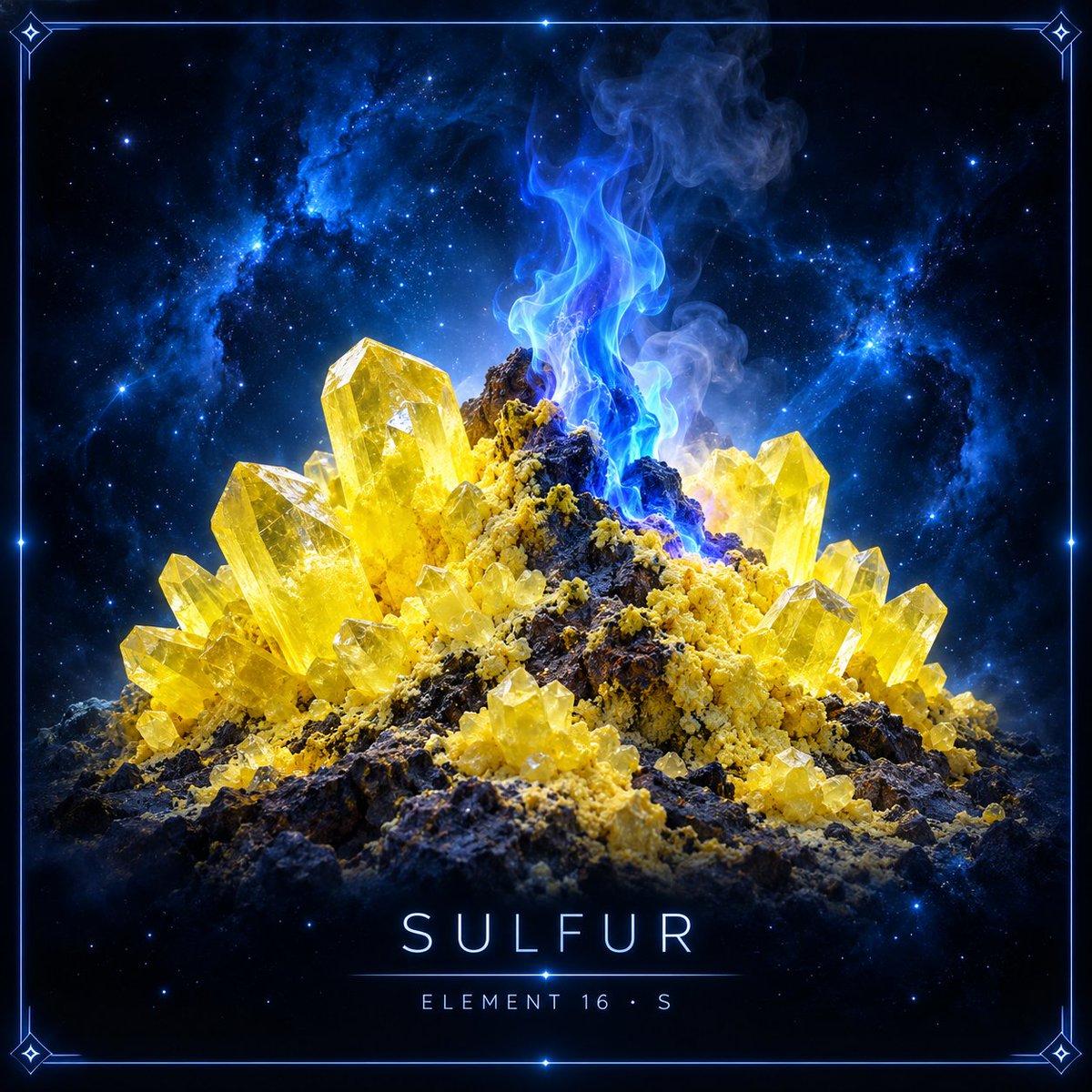
Element 16 of 118.
Sulfur. The "brimstone" of old stories, blamed for the smell of rotten eggs. Pure sulfur barely smells: that's hydrogen sulfide.
It burns blue: Indonesia's Ijen volcano glows with blue fire at night.
102 to go. ⚛️
#Nucleo#NFT#Enjin#PeriodicTable
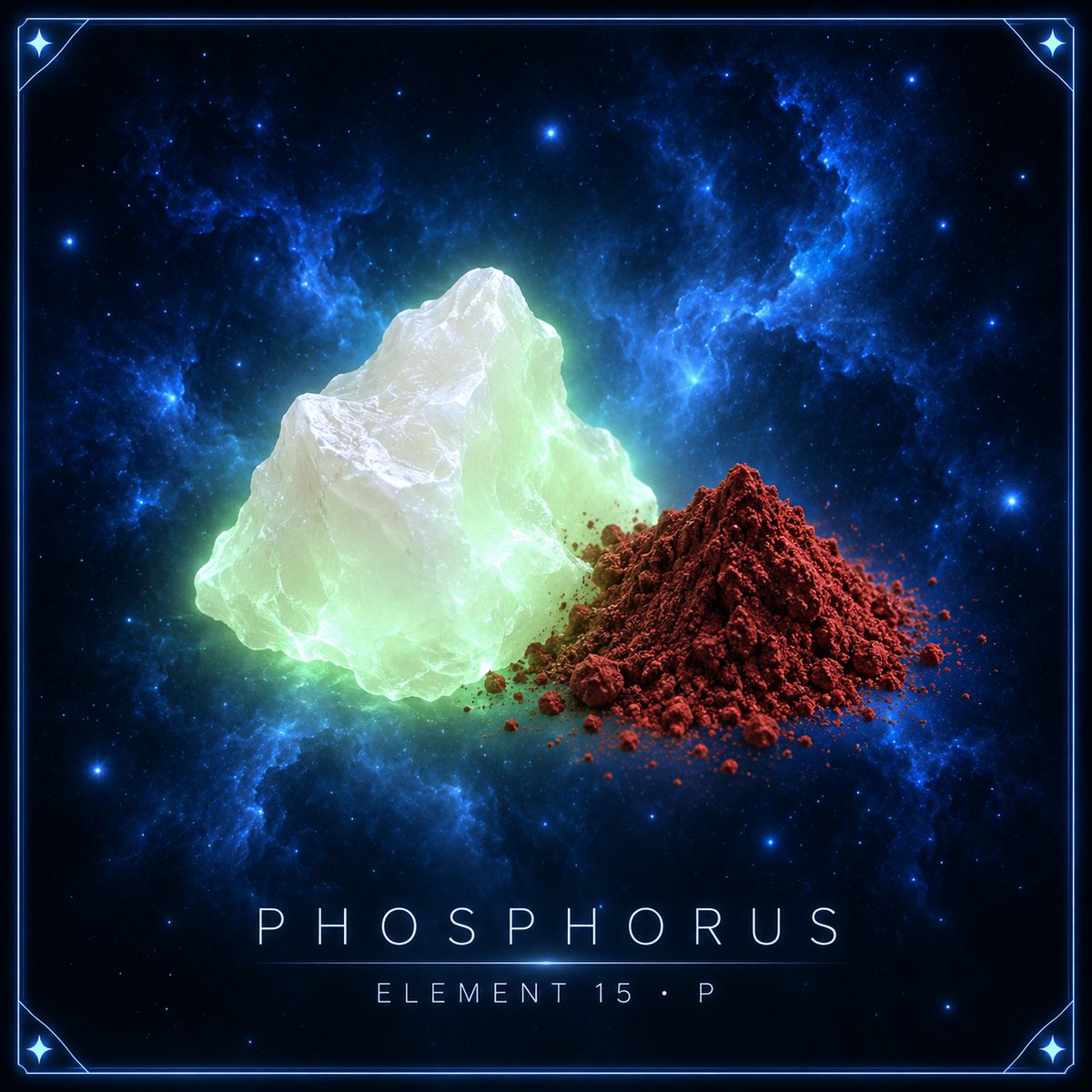
Element 15 of 118.
Phosphorus. In 1669 Hennig Brand boiled down buckets of urine looking for gold. He found a white substance that glowed in the dark.
Today it holds your DNA together.
Named "light-bearer" in Greek.
103 to go. ⚛️
#Nucleo#NFT#Enjin#PeriodicTable
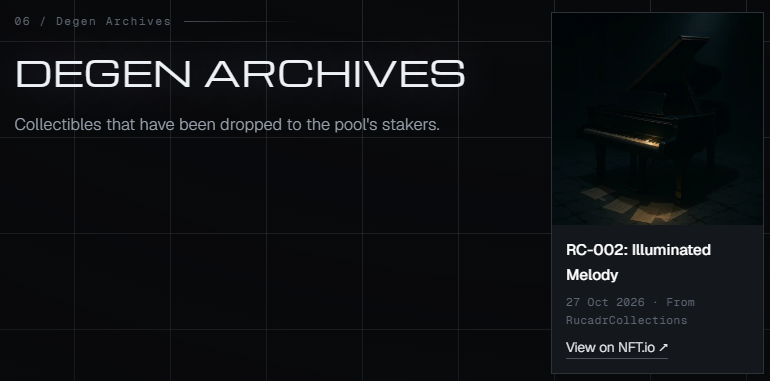
The Degen #2068 Archives.
Every collectible dropped to the pool's stakers, numbered and in one place. 4 so far, from 2 collections.
https://t.co/EznFMtLgKY
$ENJ #NFTs
Element 14 of 118.
Silicon. Beach sand is mostly silicon and oxygen. Grown into a pure crystal and sliced thin, it becomes the chips in every phone.
Only oxygen is more common in Earth's crust.
Named after flint (silex). Found in 1824.
104 to go. ⚛️
#Nucleo#NFT#Enjin #PeriodicTable
BeamBlitz Weekend is LIVE 🎃
Had a fun Halloween? Keep the treats coming: Eve the Enchantress has a new look ✨
Scan the Beam QR with the Enjin Wallet app or claim it here: https://t.co/0XgOEqqAPM
Same day next week fam!
ℹ️ https://t.co/Hylz3PQojo
#FreeNFT#BeamBlitz
Element 13 of 118.
Aluminum. Once worth more than gold: Napoleon III kept aluminum plates for his most honored guests.
Now it's the most common metal in Earth's crust, and it wraps leftovers.
Named after alum. Found in 1825.
105 to go. ⚛️
#Nucleo#NFT#Enjin#PeriodicTable
Element 12 of 118.
Magnesium. A ribbon of it burns with a white glare so bright early photographers used it as flash.
It's at the heart of chlorophyll: every green leaf runs on it.
Named for Magnesia, Greece. Found in 1808.
106 to go. ⚛️
#Nucleo#NFT#Enjin#PeriodicTable