Self-hosted CI runners become a side project: images, scaling, patching, cleanup.
What we're building instead: install a GitHub App, choose repositories, change runs-on. Each job gets a fresh microVM.
GitHub Actions, Linux x64, in development: https://t.co/1rUOhhwNdR
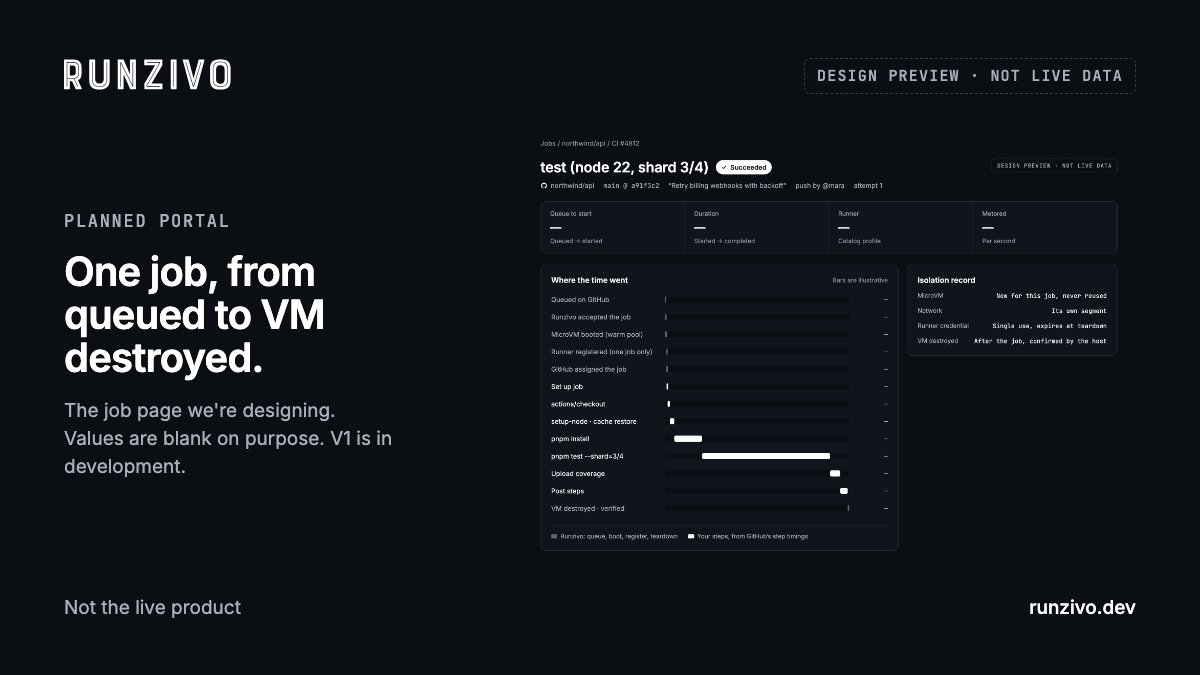
A design preview of the job page we're building for Runzivo: one job's timeline from queued to VM destroyed.
Not the live product. Values are blank on purpose. V1 is in development.
What would you want on this page that GitHub doesn't show you today?
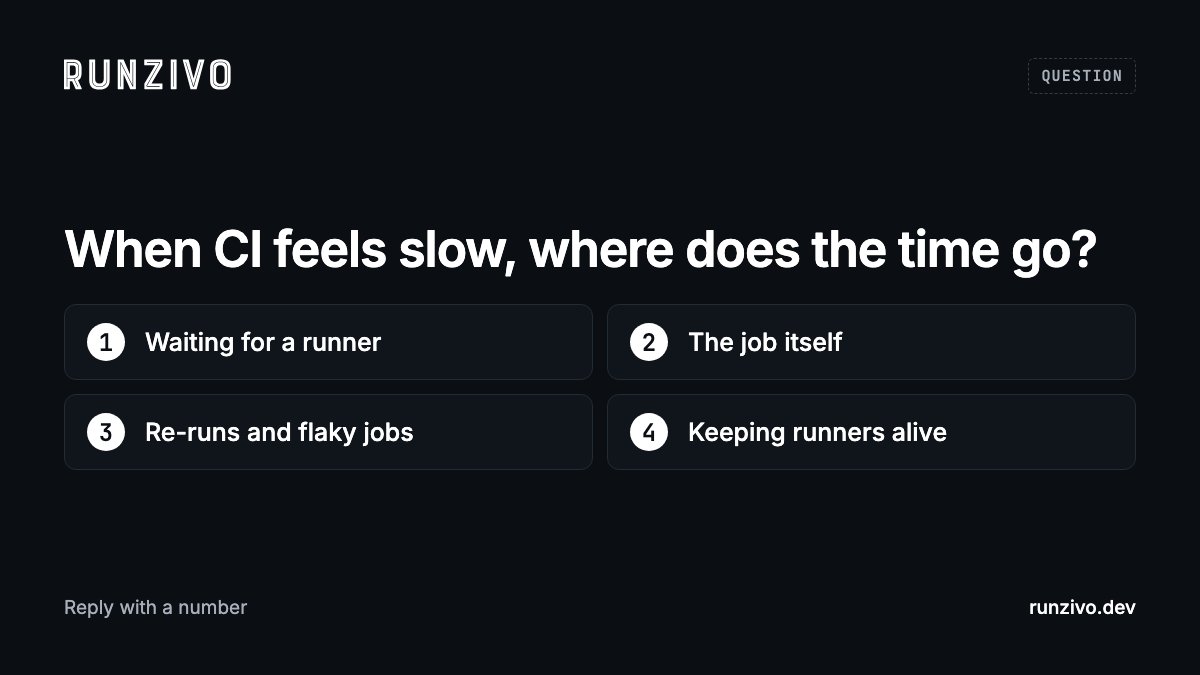
Teams on GitHub Actions: when CI feels slow, where does most of the time go?
1. Waiting for a runner
2. The job itself
3. Re-runs and flaky jobs
4. Keeping runners alive
Reply with a number. If you ran yesterday's check, share what you found.
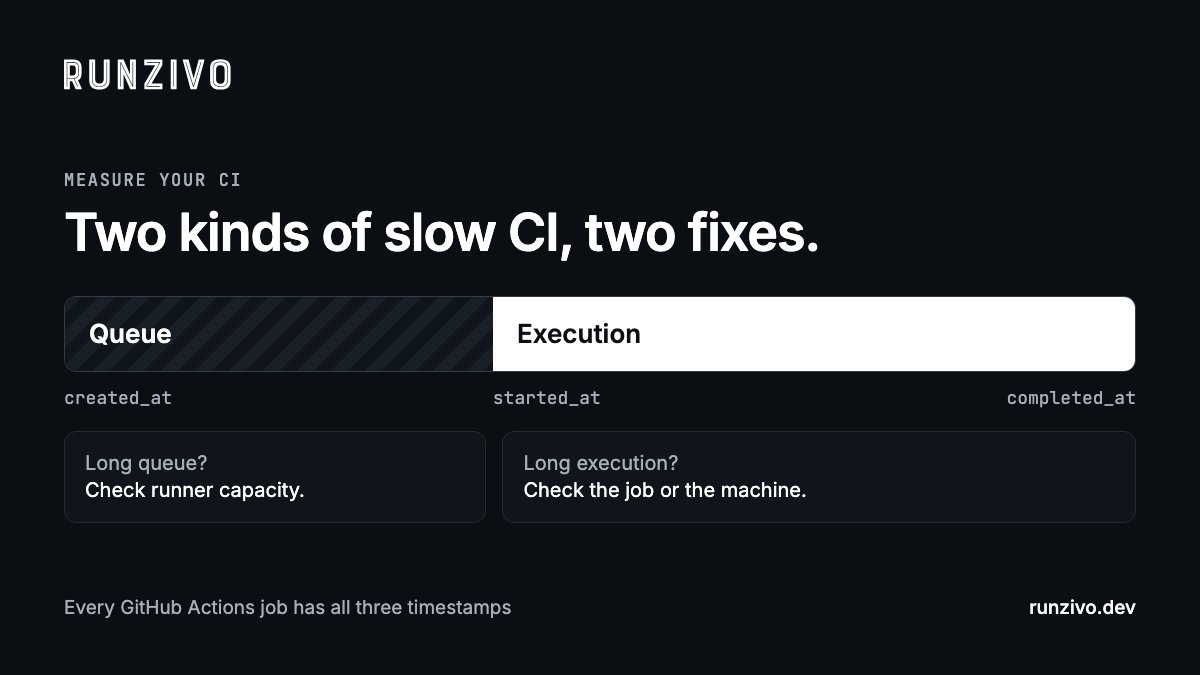
Two kinds of slow CI, two fixes.
Queue: started_at − created_at
Execution: completed_at − started_at
GitHub's API has both for every job:
gh api repos/OWNER/REPO/actions/runs/RUN_ID/jobs
Long queue? Check runner capacity.
Long execution? Check the job or the machine.
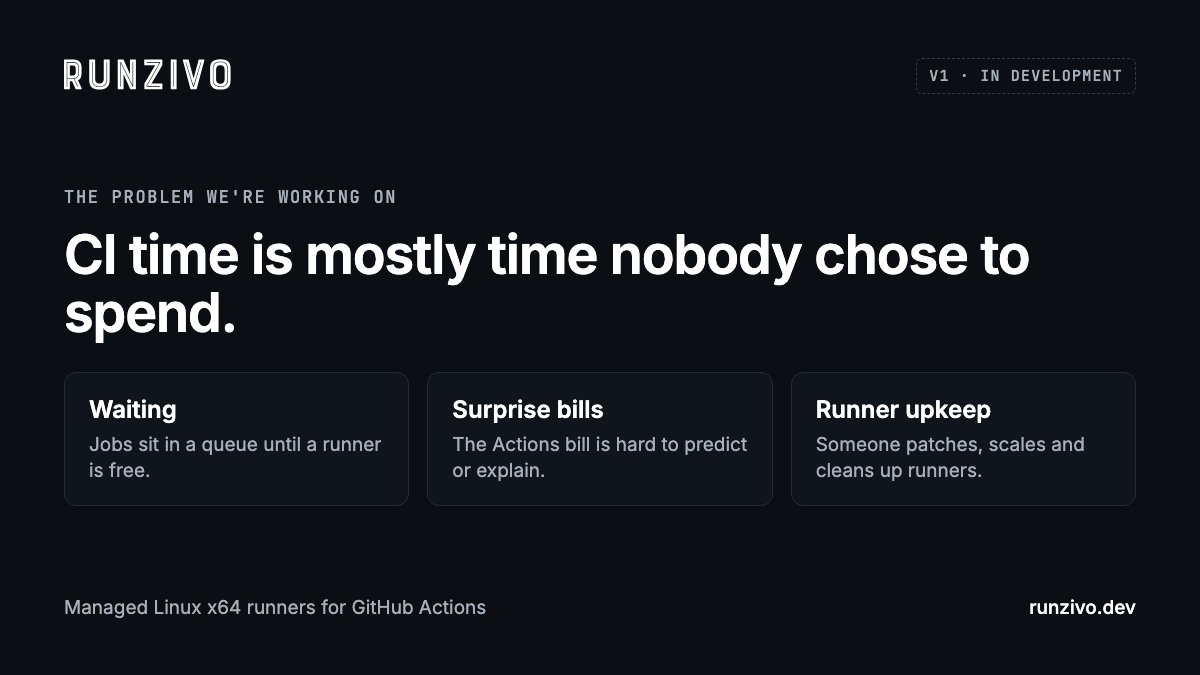
CI time is mostly time nobody chose to spend: jobs waiting for a runner, hard-to-predict bills, self-hosted runners someone has to patch.
We're building Runzivo to take that off your team, starting with Linux x64 runners for GitHub Actions.
More: https://t.co/1rUOhhwNdR