We've been asked countless times: when $PRIMT?
Today, just three things:
1️⃣ It's worth the wait
2️⃣ Every trade, every point from our early days is on record
3️⃣ We never forget anyone who walked with us
Points remember. Early believers remember more.
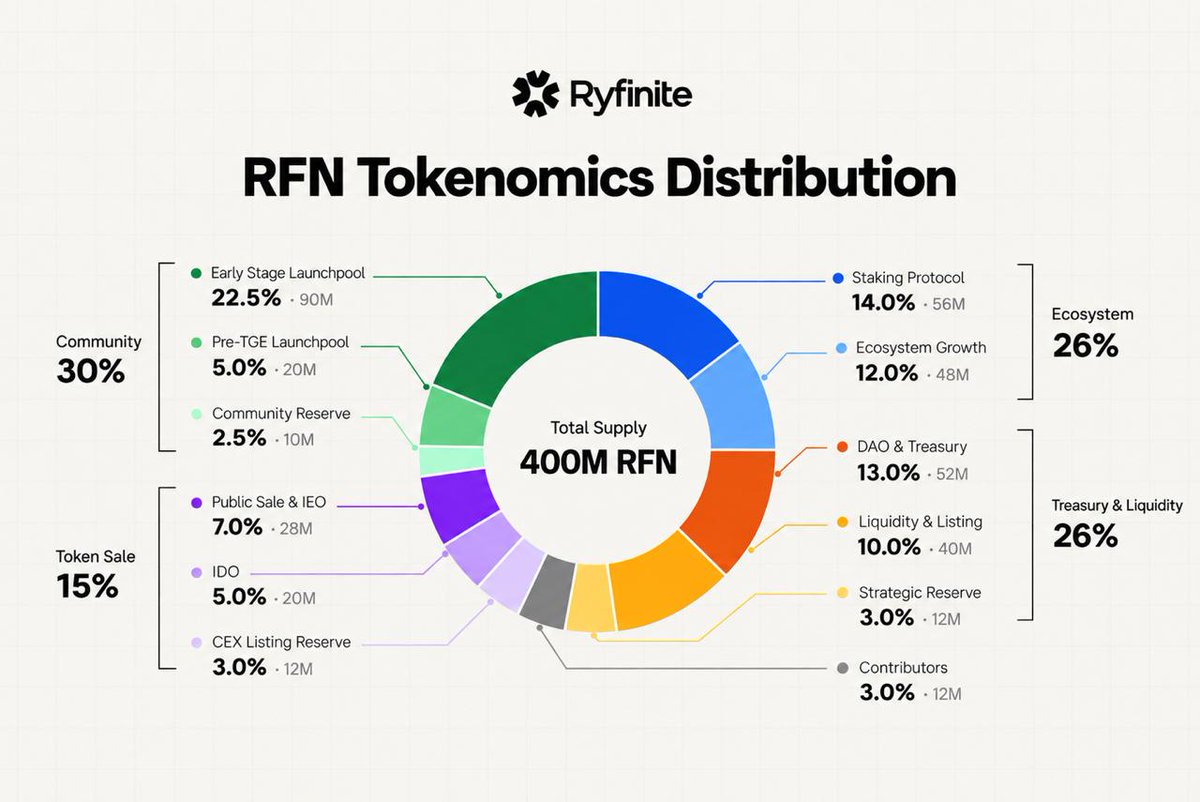
🫧 $RFN Tokenomics is here
A clear look at how RFN is structured and allocated across the Ryfinite ecosystem.
Built for long-term alignment, sustainable growth, and the Ryfinite ecosystem.
Check out the full breakdown in the graphic below 📊
More details about RFN tokenomics will be shared in the next stages.
Join Ryfinite → https://t.co/Cj3Rwd2clT
$3,000+ Worth of $YNX has already been distributed !🦉
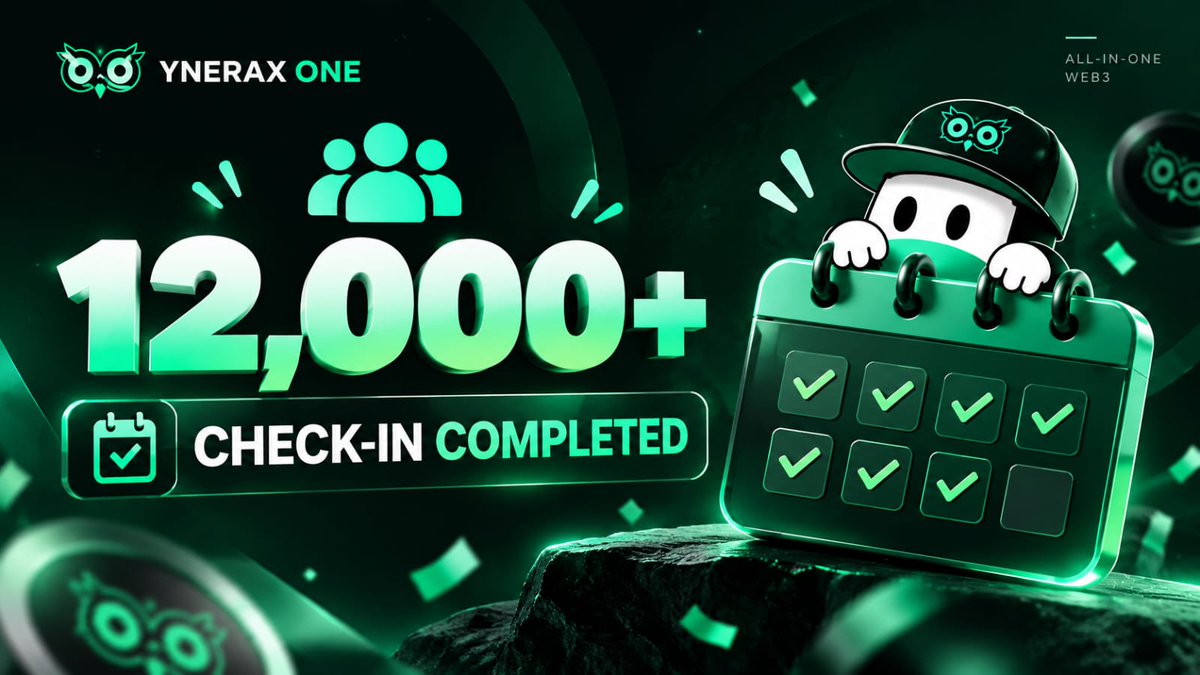
Users who complete the On-Chain Check-In will receive exclusive Red Packets to help cover their check-in fees⚡
Stay active, complete your check-in, and don’t miss the next $YNX drop. 👀
One week into 100 days of AI
Have a question? Simply #AskBinance 🙌
What to do:
1️⃣ Like + repost
2️⃣ Comment with your question + #AskBinance
3️⃣ Complete survey 👉 https://t.co/j0OBORH5J4
200USDC will be given to each user whose question has been chosen. Ends 4 Oct 23:59 UTC
On 1 October, the Ethereum Foundation blog introduced zkAPI, built by the Open Anonymity Project with the EF: a way to pay for a metered API, AI inference first, without the payment being tied to who you are.
You deposit credits into a vault contract on Ethereum once. After that, your device produces a zero-knowledge proof that says, in effect, "a funded note covers this spend and nobody has spent it before." The server checks it, issues a short-lived API key capped in dollars, and never learns which deposit paid.
The design choice worth noticing is where those proofs get checked.
Day to day, spending goes through the server, which verifies spend proofs off-chain. Getting money out is handled differently: "The vault contract verifies the same kind of proof at deposit, close, and escape, so your exit never depends on the server's honesty." A balance can be closed and withdrawn on-chain "even if every zkAPI server disappears."
So the operator is relied on for one thing and not the other. Everyday spending runs through the server. The step that returns your funds is checked by the contract itself.
Not every check in a system has to run on-chain. In this design, the one that guards the exit does.
https://t.co/KPblUUWPJi
#DeepSafe #Web3Security
12,000+ users have completed their On-Chain Check-In!
If you’ve referred users, make sure they complete the On-Chain Check-In to verify their participation. ⚠️ Fake referrals or duplicate accounts may lead to a ban.
Only genuine, verified users will be eligible for rewards. 🦉