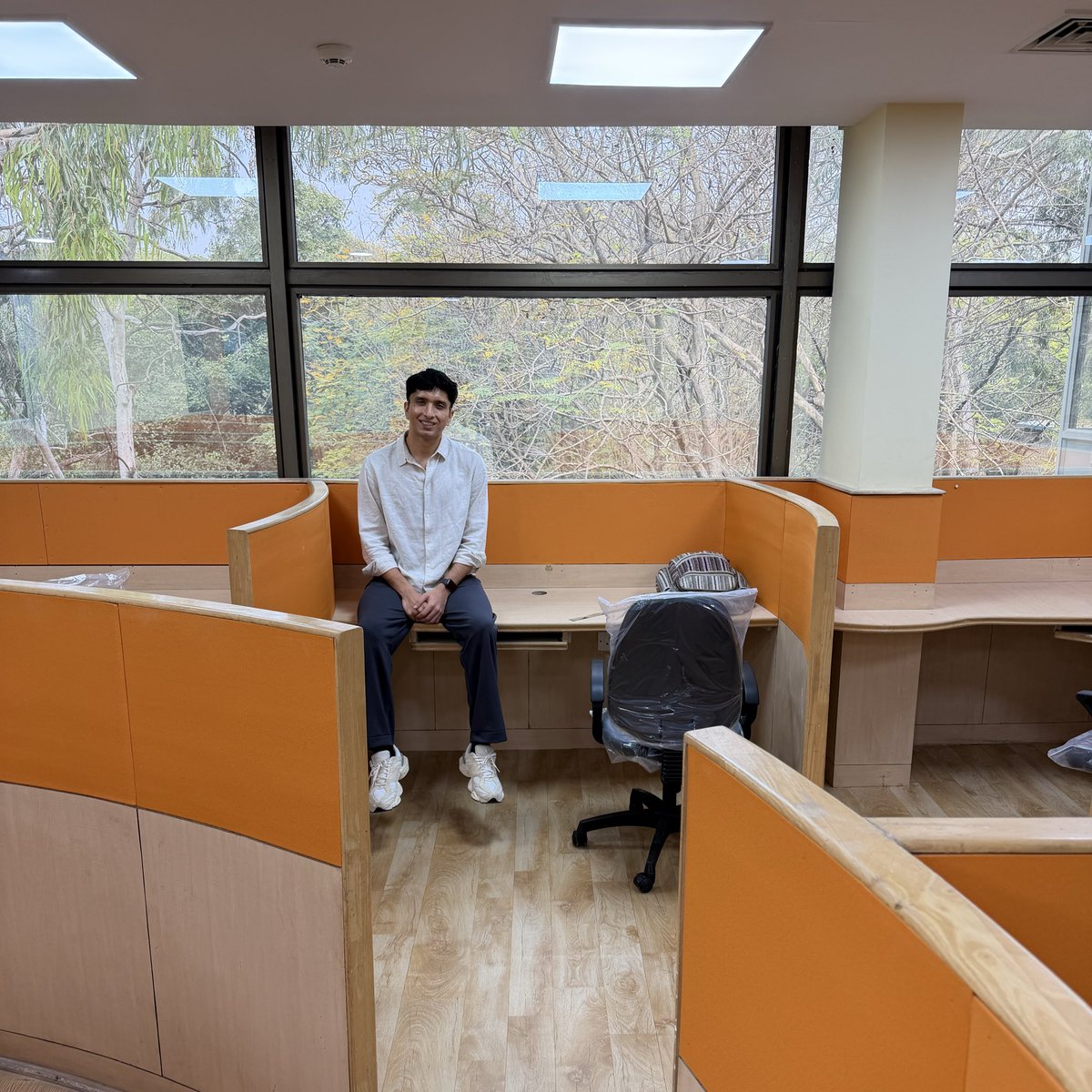
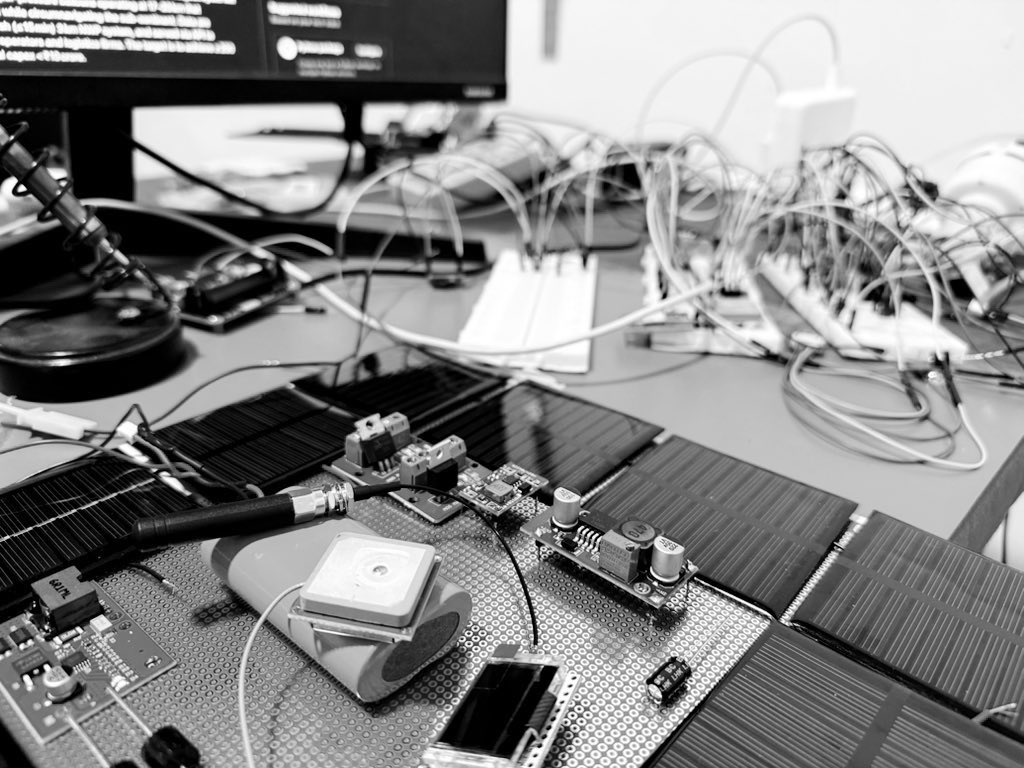
We've won the HDFC Parivartan grant today at IISc. This meaningfully accelerates our field trials and product iteration.
Huge thanks to @HDFCBankCSR for the generous backing and FSID IISc for being a rock!
Onwards.
@Nithin0dha Software will be a blip in history. We spent 25 years writing complex English instructions just to bridge a gap. Now that the abstraction layer is finally here, we can stop over-indexing on code and start solving hard hardware problems.
Tech seems to be getting effectively nationalized. Starting from around 2020, we've seen an increase in export controls on things like chips, critical minerals, restrictions on advanced manufacturing equipment and various other trade restrictions. Supply chains have become a security issue for countries.
We're no longer in a world where India can be okay with just exporting IT services. If we don't build domestic deep tech capabilities, we'll be locked out when it matters most. Self-sufficiency has become necessary insurance.
India's startup ecosystem has come a long way. We have genuine local talent that can build a lot of what we currently import. They just need the right support. The recent government push for deep tech is a step in the right direction.
The timing also matters. If AI can pretty much produce all of the software, asset-light models will get hit. The next decade belongs to atoms, not just bits. You're already seeing this with money flowing into data centers, defense systems, batteries, semiconductors, advanced manufacturing.
You can also see this in VC investment flows. In the last decade most of VC investments went into eCommerce, lending, and payments. Those segments have now matured and the easy opportunities are gone. For deep tech, it's still day one.
We have the talent but what we don't have is the ecosystem around them.
Comparisons with China are cliched, but they didn't become an industrial superpower by accident. There are lessons we can learn.
China's internal market is brutally competitive. Hundreds of startups compete in a given sector and this forces them to innovate and be efficient. Indian states used to do this for software parks. Why not for deep tech? Tamil Nadu, Gujarat, and Maharashtra are success stories but we need more states in the race.
Companies choose to manufacture in China because everything they need to manufacture is within a few miles. This industrial clustering creates genuine competitive advantages. You can create a design in the morning and have a prototype by evening. This density took decades to build, but we can do it if we invest with a long-term mindset.
China also built real bridges between universities and companies. In India most ideas die in the minds of students. Brilliant PhDs can't find the capital or institutional support to build a prototype, let alone turn them into businesses. We need government procurement guarantees. Patient capital that understands hardware burns cash for years before revenue. Pathways from idea to commercialization.
The government backing deep tech is a good move. But support can't just mean funding. We need R&D tax credits, subsidies, first-purchase guarantees, streamlined approvals and other incentives. All of this has to be sustained across decades, not election cycles.
Without domestic deep tech capability, we stay dependent on others for critical infrastructure. That dependence is vulnerability.
If we build the clusters, invest in education, fund the R&D, bridge academia to industry, and let states compete to create ecosystems, we get more than self-sufficiency. We become a deep tech exporter.
The bulk of our recent investments through @rainmatterin have been to support homegrown deep tech startups.
@thinkyballoon has been accepted into FSID at IISc Bangalore!
This grants us the seed funding, maker space, and the government procurement channels necessary to deploy our aerostat systems as force multipliers for air defense.
We’re building autonomous balloons that last many months and collect 1,000× more atmospheric data than traditional systems.
Here’s a clip from a recent launch where we tested the altitude-control system of our current prototype.
Reminiscing about the good ol’ days when solving concurrency bugs felt like the biggest dragons one had to slay!
(Can’t wait for the world to see itself get a nice step function update)
Thank you, @nvidia, for bringing us into the Inception program! A cloud-heavy business like ours could use all the firepower we can get, and having NVIDIA by our side is a big win!
Onward and upward!
"We're currently building very obedient students, not revolutionaries."
Interesting hot take on AI: Instead of a country of Einsteins sitting in a data center, current 'manifold-filling' approaches are churning out yes-men on servers.
Github Repo: https://t.co/CaQDqRnYAy
Built on top of trev3D/QuestDisplayAccessDemo + MLKit. If you’re working on MR object tracking, would love your thoughts!
Got curious last night about how our XR platform might totally shake up the furniture shopping experience—so obv couldn’t resist diving into a little fun late-night hackathon!
Achieved custom object detection locally inside the Meta Quest 3 headset!
We move closer to that "White Christmas" episode from Black Mirror everyday! (the one where Internet blocking gets extrapolated into real life)
Glamr 🤝🏻 Meta
Happy to be accepted into Meta’s Horizon Start program! This will help us effectively build and distribute our platform by tapping into the brains of Meta engineers and talented VR builders.
@MetaHorizonDevs
Hacked a Mixed Reality experience that lets you try shoes virtually and learn lacing patterns.
Hand gestures to manipulate 3D models, place them on feet, save favorites.
Plus it guides you through different lacing styles in real-time.
XR hopefully at its most practical :)