This isn’t something that has come in to my doorstep two months ago. You don’t have to be a very Hard coder but understanding basic code is enough to create Magic 🪄 🧬 Generational shift is imminent!
Programmers will probably become obsolete in 4-6 years of time. “OpenAI can translate English into code with its new machine learning software Codex” https://t.co/cxSfTkr0kf
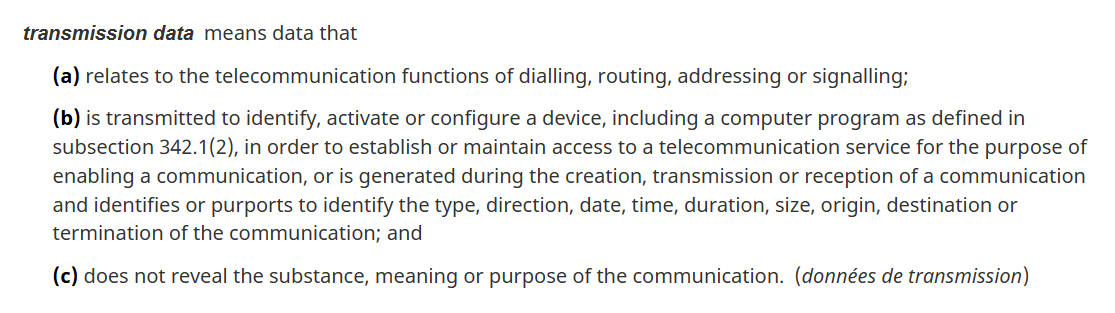
The term "metadata" appears only once in the 74-page Bill C-22. Without defining "metadata," the Bill grants government power to order companies to retain Canadians' metadata for up to six months. The Criminal Code defines "transmission data." It does not define the broader term "metadata." Undefined terms should not be the foundation of surveillance powers.
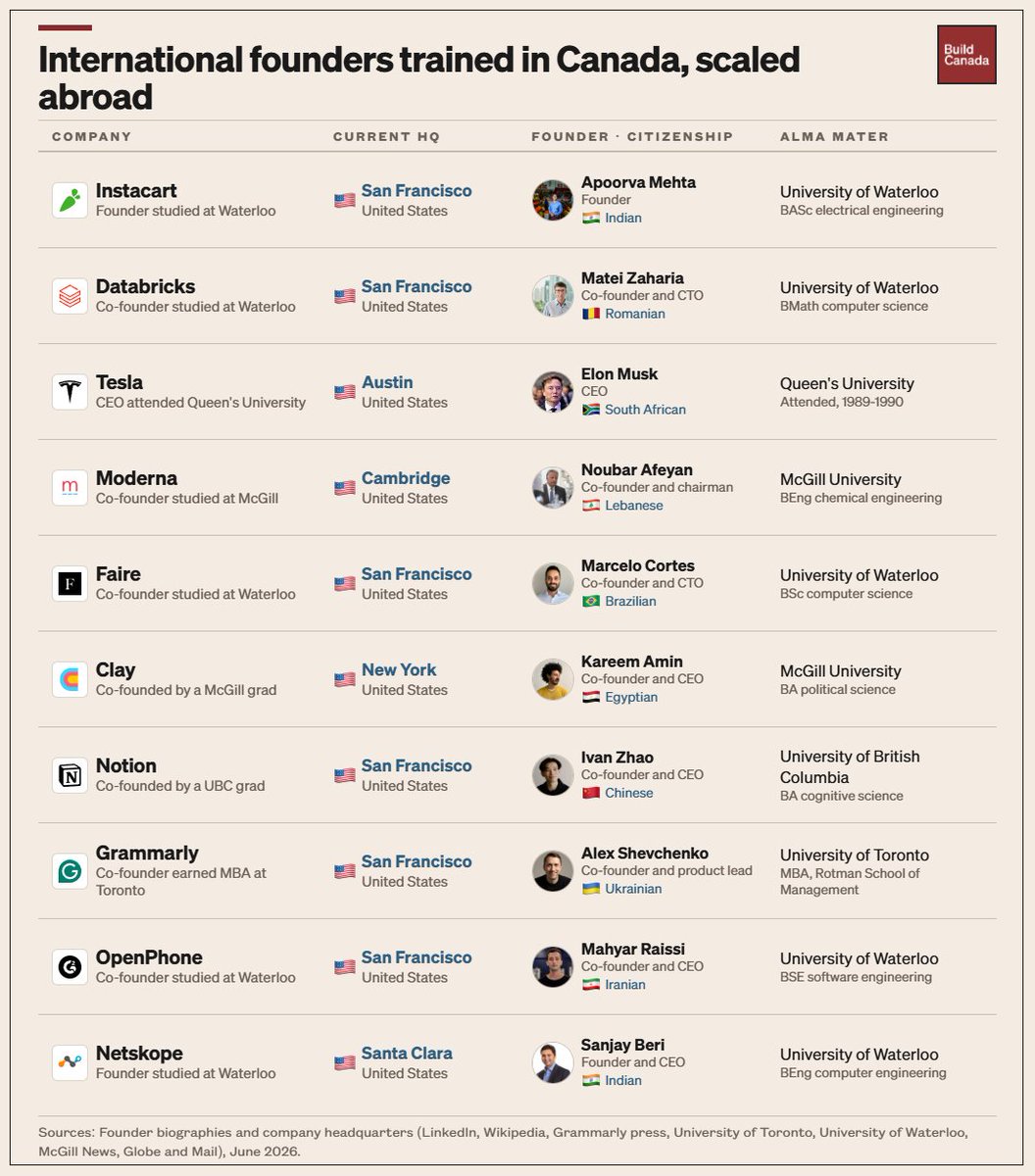
Canadians have built tech empires. But most didn't do it at home. ✈️
@Uber, @Cloudflare, @OpenAI, @AnthropicAI - all co-founded by 🇨🇦's who went on to build their businesses in the 🇺🇸.
Add on foreign nationals who attended Canadian universities, you get @Instacart, @Tesla, @moderna_tx, @NotionHQ. 🎓
Founders of all these companies slipped through our national grasp.
You've likely seen the headlines from bills C-34, C-36, and C-22 in the media.
Each may sound reasonable on their own: protect kids online, modernize privacy, help police catch criminals.
But buried within is an emerging Digital Regulatory Superpower unlike anything Canadians have ever seen.
These bills hand one unelected commission power over what Canadians can say, what stays private, and who the state can watch.
As of today, the Federal Government is rushing to enact massive Internet Surveillance Reform into law without proper debate.
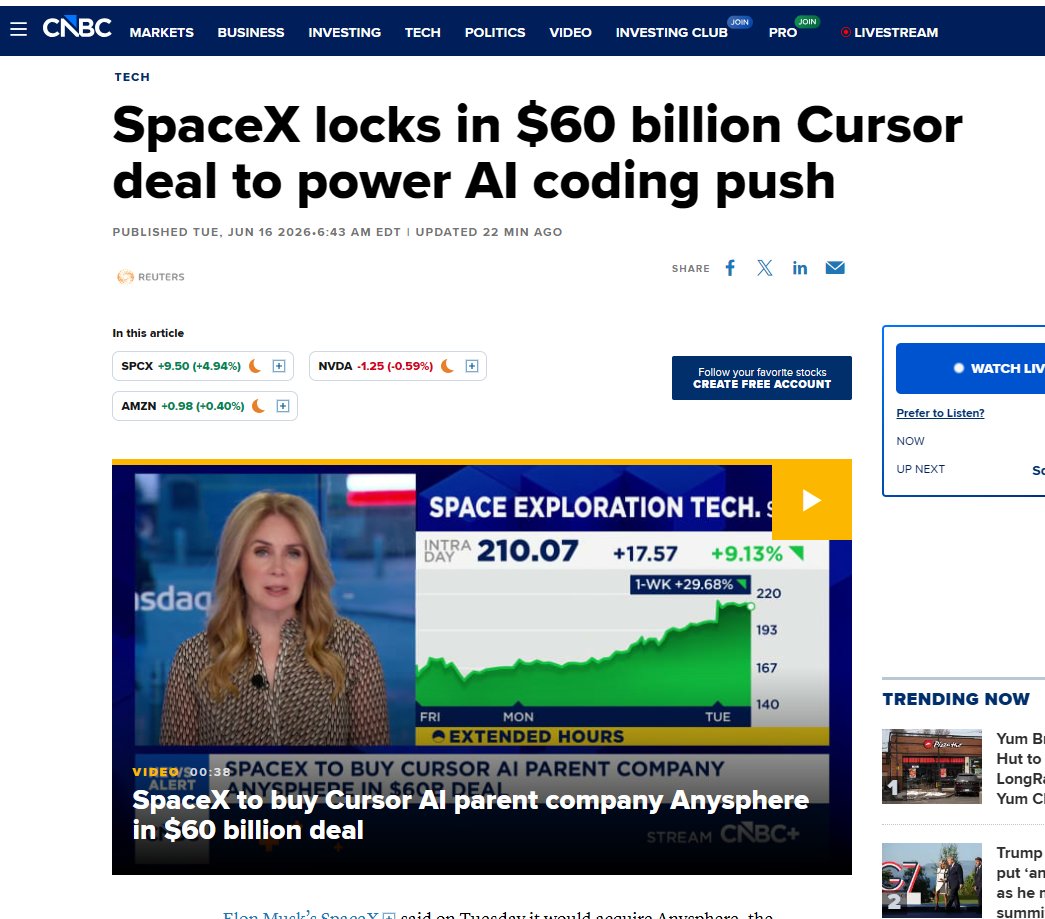
SpaceX just bought a $60 billion company without spending a dollar.
The deal for Cursor, the AI coding tool, is all stock. No cash. SpaceX prints new shares, hands them over, done.
Now connect it to what happened last week.
SpaceX went public by floating just 4% of itself. 556 million shares against 13 billion. The tiniest free float a mega-cap has ever listed with. Index funds were forced to buy it. Retail piled in. Tiny supply, enormous demand, and the stock rocketed past $200.
Here's the part that should make you sit up.
The price SpaceX pays for Cursor is set by its own share price in the seven days before closing. The higher the stock, the fewer shares it has to print to cover $60 billion.
So the engineered scarcity that pumped the stock now makes the acquisition cheaper. The squeeze pays for the shopping spree.
A company losing $4 billion a quarter is now buying AI startups with paper it manufactured out of a 4% float.
This isn't aerospace. It isn't even AI.
It's the finest financial engineering of the century, and it's only getting started.
What a brilliant $60B exit for Cursor to SpaceX today!
$4B in run rate growing 7x YoY.
The 4 25yo MIT founders will make ~$2.7B in a span 4yrs and first 50 hires ~$20-500M each.
A testament to why you should actually join early stage startups and of huge outcomes building apps on top of AI models.
The OTPP turned a $300M bet on the $SPCX IPO into ~$16B CAD – roughly $33.5K per each of it's 346K teachers.
Thousands more Canadians are along for the ride through their RRSPs, TFSAs, & retail investment.
Like Elon or not, a rising tide lifts all boats. Canadian boats too. 🇨🇦
Introducing Claude Fable 5: a Mythos-class model that we’ve made safe for general use.
Its capabilities exceed those of any model we’ve ever made generally available.
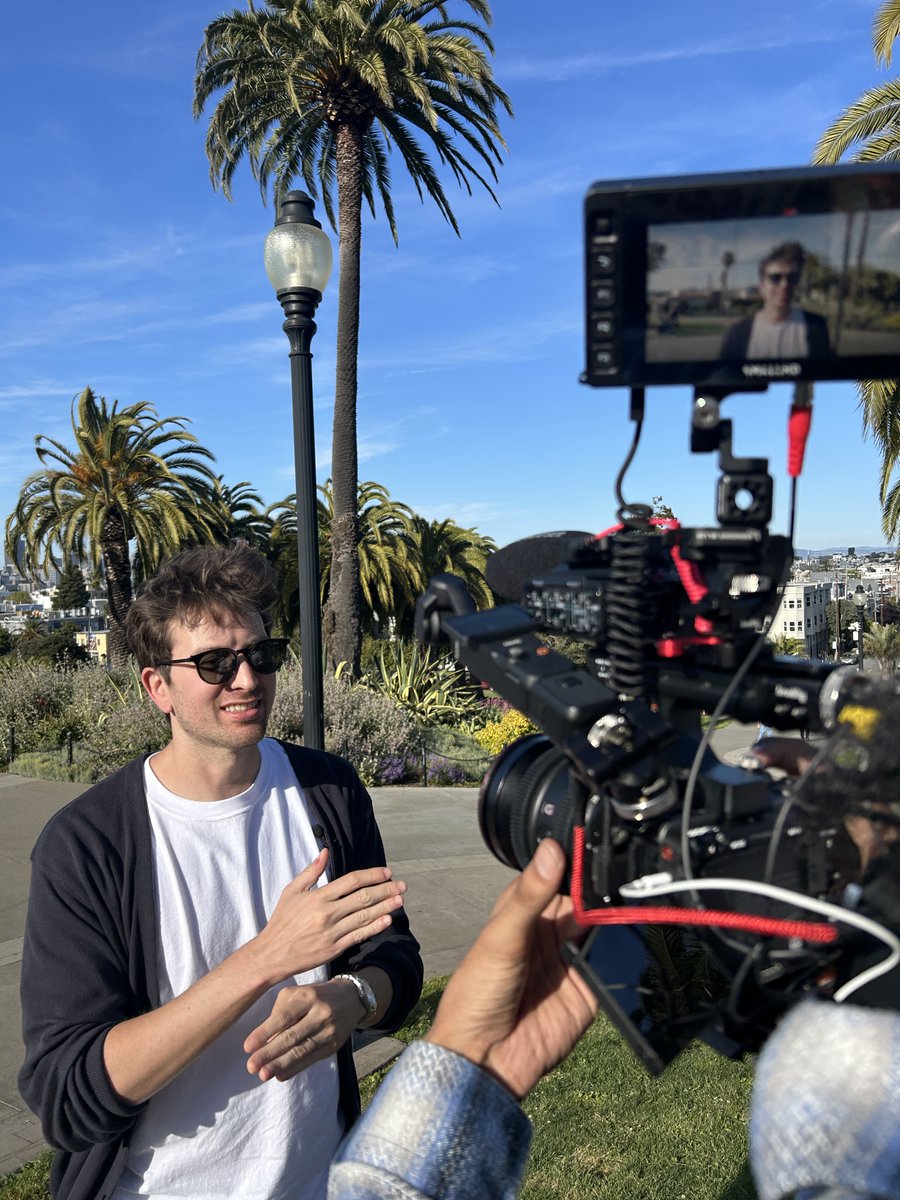
I just got back from SF and I FEEL INSPIRED.
I spent 5 days with frontier AI model teams, AI startup founders, and 3 billionaires.
My takeaways:
1. I had lunch with 3 billionaires. All of them are buying SaaS companies and rebuilding them agent-first. They were deeply inspired by Bending Spoons and Ryan Cohen's eBay deal. Buy the company, cut the headcount, rebuild the tech, add agents, add features, make more valuable experience, raise prices.
2. The frontier model companies are hungry for usage data from the field. They can see API calls and token counts. They can't see the actual workflows. If you're deep in a niche using these models in ways the model companies haven't seen, that understanding is incredibly valuable. Usage intelligence is the new alpha.
3. Consumer AI is massively underbuilt. Every billboard in SF is either B2B inference infrastructure or vertical agent companies. The entire city is optimized for enterprise. Meanwhile you have companies like Cal AI doing $50M ARR in 18 months as a consumer app. I met with a cool few teams doing consumer AI (@paulscherer / @ekuyda)
4. MCP came up in literally every conversation. The companies exposing their product as MCP endpoints are getting pulled into deals they never pitched for. The ones that aren't are becoming invisible to agents. This is the new SEO. If agents can't find you, you don't exist. Building products for agents is the new zeitgeist in general.
5. Not uncommon for hot seed rounds to be $25-50 million valuations. I saw a Series A at $450 million
6. If I had a dollar every time someone mentioned "forward-deployed engineer" this trip I could have funded a seed round. It's the hottest role in SF right now. The person who sits between the agent and the customer, making sure everything actually works.
7. The mood around open source shifted. A year ago it felt like open source was chasing the frontier models. Now founders are telling me Gemma and DeepSeek are good enough for 80% of what they need at a fraction of the cost. The "which model do you use" conversation is being replaced by "which model for which task." Model loyalty kinda feels dead.
8. Voice agents came up more than I expected. Multiple founders told me voice is the interface for the next billion users. The billion people who will never type a prompt will absolutely talk to one.
9. The Obsidian community in SF is weirdly intense. Multiple founders showed me their vaults unprompted. Like showing someone your home gym. It's a flex now. The quality of your knowledge base (second brain?) is becoming a status symbol among builders.
10. Maybe it was just the people I met but the age of the founders is shifting. I met more founders over 40 this trip than any trip before and more founders under age 21 than ever before. Founders getting older and younger at the same time.
11. I spoke to a lot of fast-growing startups, VCs and frontier models who are hiring content creators right now.
12. The restaurant scene in SF is actually better than it's been in years. Founders are going out more. Alcohol is out, not surprisingly.
13. SF doesn't feel like the only place anymore. We all have access to the same frontier models. We all read the same X feed. A founder in NYC or Lagos is calling the same APIs as a founder in SoMa. So in the past it felt like SF was always lightyears ahead, doesn't feel that way anymore. It's okay not to live in SF and have BIG DREAMS.
14. The coworking spaces in SF are half empty but the coffee shops are packed. People want to be around people. I had a few startup ideas here....
15. Walking around the Mission I noticed something: the street-level businesses, the taquerias, the barbershops, the laundromats, none of them use any AI at all.
16. I heard the phrase "agent debt" for the first time. Like technical debt but for agents. When you hack together an agent workflow fast and never clean it up, the system prompts conflict, the memory gets polluted, the tools overlap. 6 months later the agent is doing weird things and nobody knows why lol.
17. Met a few people who carry two phones now. One for personal. One that's basically an agent terminal running Telegram or iMessage connections to their agent fleet.
It's always amazing to get that dose of inspiration in SF. I FEEL INSPIRED.
But I'm so happy to be back home, locked in and building.
We're 12-18 months into a shift that will take 15 years to play out. The urgency in every conversation was real.
What an incredible time to be building.
making it easier to access and use AI tools will help Canadians learn and compete
some great ideas here for:
1. a personal tax deduction of up to $3,000 per year for qualifying AI subscriptions, learning tools, and productivity services
2. a 400% deduction for Canadian businesses on AI expenditures up to $500,000 annually and a 200% deduction for larger corporations on AI expenditures up to $5 million annually
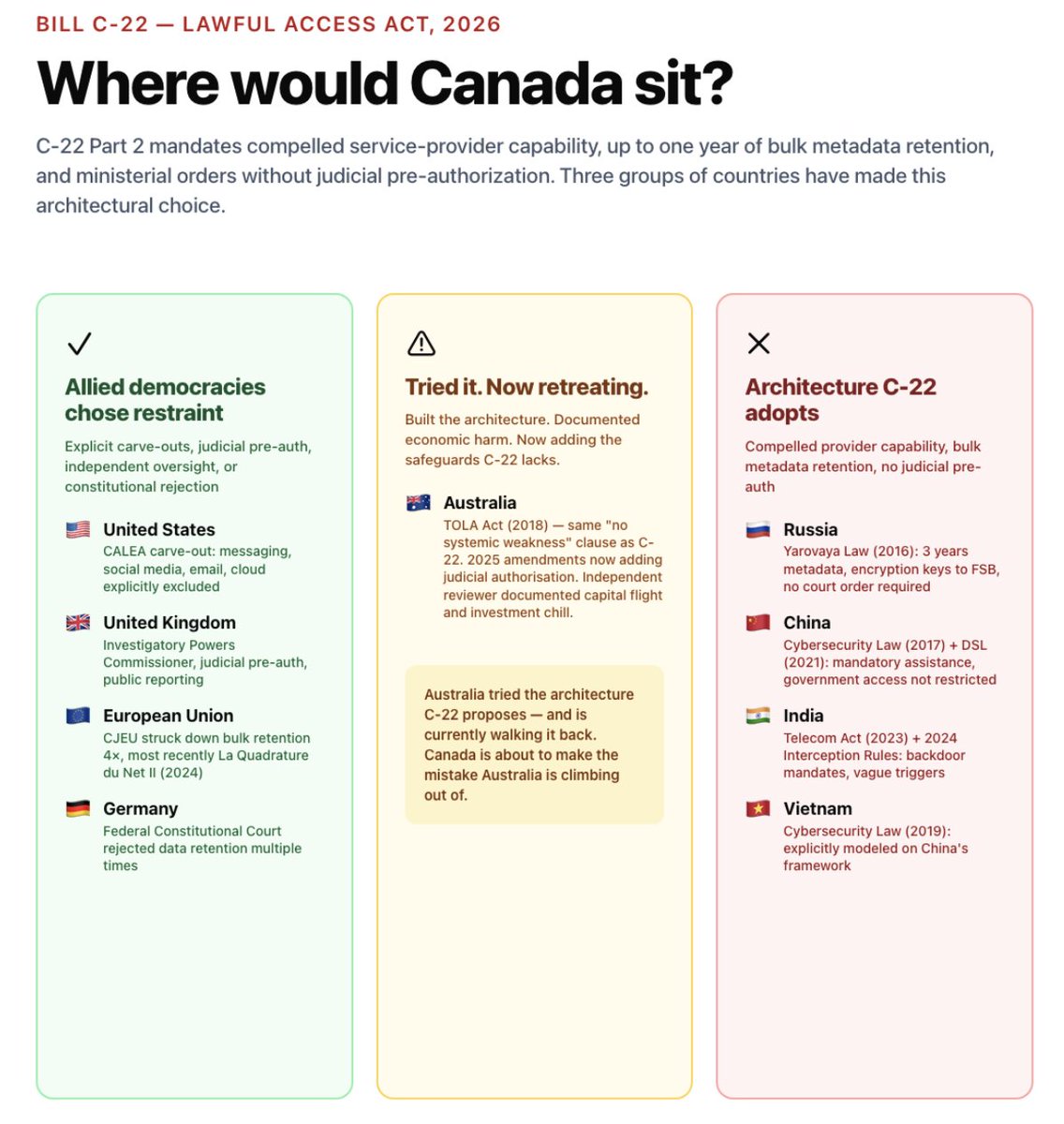
C-22's architecture is most similar to laws in place in China, Russia, India and Vietnam.
Among allied democracies, the closest analog is Australia's TOLA Act (2018), which Australia is now amending due to the economic harm it caused.