Four traits that help you grow and compound over decades
- you love learning
- you are relentlessly curious
- you have a deep obsession with your craft
- you find joy in sharing what you have learnt
Satya Nadella just introduced a concept that's going to change how every company thinks about AI. He's calling it "token capital." And once you understand it, you can't unsee it.
His idea: every company now needs two types of capital.
Human capital : the knowledge, judgment, and pattern recognition of your people.
Token capital : the AI capability your company builds and owns.
Human capital doesn't become less valuable as AI grows. It becomes more valuable. Without human direction, AI just runs in circles.
The real opportunity isn't picking the best model. It's building a learning loop where your people and your AI compound together. That loop becomes your real IP.
But here's the warning nobody expected from a CEO pushing AI harder than anyone.
He compared what's happening now to globalization. GDP looked fine on the surface but entire economies were hollowed out by outsourcing.
He's saying don't let that happen with AI where a few models capture all the value while industries get their knowledge commoditized underneath them.
His line: "You can offload a task. You can offload a job. But you can never offload your learning."
The companies that build the learning loop early will have an advantage that's nearly impossible to replicate. Regardless of which model is on
Something strange is happening in tech.
CTOs of billion dollar companies are quitting to take IC roles at Anthropic.
Workday CTO -> MTS (Mar 2026)
You[.]com CTO -> MTS (Mar 2026)
Instagram CTO -> MTS (Jan 2026)
Box CTO -> MTS (Dec 2025)
Super[.]com CTO -> MTS (July 2025)
Adept AI CTO -> MTS (Jan 2025)
The mission is that real.
The Claude Code hackathon is back for Opus 4.7.
Join builders from around the world for a week with the Claude Code team in the room, with a prize pool of $100K in API credits.
Apply by Sunday: https://t.co/5MCkMtP5ti
If you’re in your first 0–5 years of work, upward management is one of the underrated skill you should learn.... not politics... not buttering up your boss.
It’s learning to manage the relationship so your growth is not left to luck.
The best software engineers I know all have this in common:
• Start coding with big dreams at 21.
• Get rejected by companies at 22.
• Take the job they could get at 23.
• Spend 2 years fixing bugs and writing CRUD APIs.
• Feel behind when others post big salaries online.
• Try to switch at 26.
• Fail interviews at 27.
• Realize tutorials were not enough.
• Finally learn CS fundamentals, system design, databases, networking, and how real systems break.
• Start building better at 29.
• Become dangerous at 31.
And change their family’s future by 35.
With their sharpest years still ahead.
Software engineering is not a sprint.
It is a long game of skill, patience, and staying in the fight.
Keep going.
GitHub stores millions of repositories the same way they exist on our local machine - literally as git repositories. Nothing very special.
Instead of one copy, GitHub stores at least three copies of every single repository to make sure the code is never lost. This replication system is called Spokes at GitHub.
When we push code, the write is not accepted unless a strict majority of replicas - at least 2 out of 3 - can successfully apply the change and produce the same result.
Interestingly, the system watches real application traffic to detect failures. If three requests in a row fail to one of the servers for a repository, that server is marked offline, and traffic is routed to other replicas within seconds. No heartbeats needed - just monitoring the real user operations.
Each replica lives in a different rack. When an entire rack goes down, repositories remain available because the other copies live elsewhere. And when repairs are needed after a server failure, the whole cluster helps out - the bigger the cluster, the faster it recovers.
Spokes refuses write operations that it cannot commit to at least two places. This ensures that when your push succeeds, your code is already safe.
This is also why GitHub rejects pushes during partial outages. Reads might still work, but writes fail because the system refuses to risk losing data.
This is pretty much how GitHub stores repositories and, more importantly, prefers a simple design with consistency over durability and availability.
Hope you also found it interesting.
Bangalore has so much to offer.
Yet I see so many people not really leveraging what this city gives you. The people, the connections, the meetups, and the ease of finding your kind of community.
From tech to hobbies.
From beginner-friendly communities to serious ones.
From sports and dance to biking, running, and everything in between.
Bangalore is not just a place to hustle.
It is a place to live the life you once wanted but were scared to start.
Leverage the city, not just for work, but to actually enjoy life.
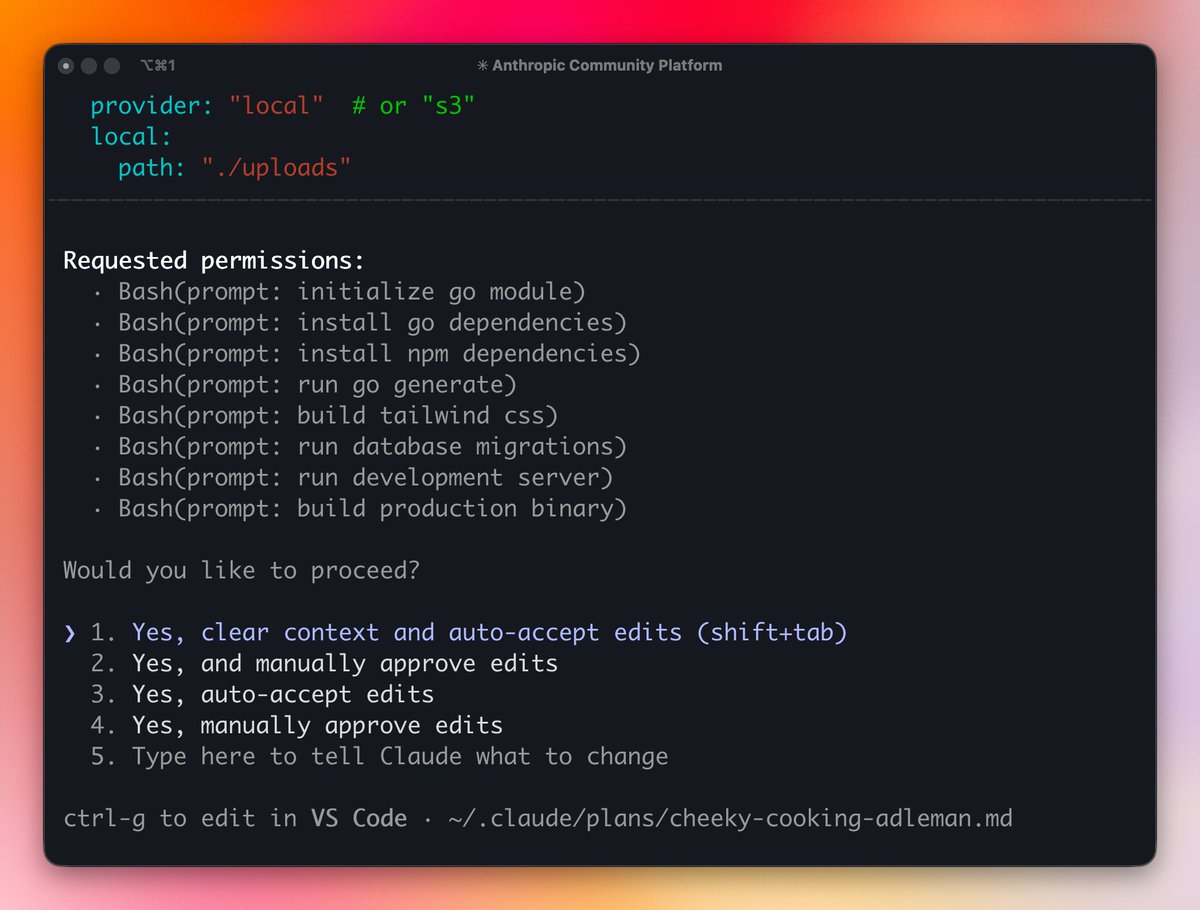
Claude Code's plan mode now auto-clears context when you accept a plan.
Why it matters: By the time you finish planning, your context window is stuffed with old file explorations, a ton of back-and forth, and potentially irrelevant data.
Your plan file IS the context.
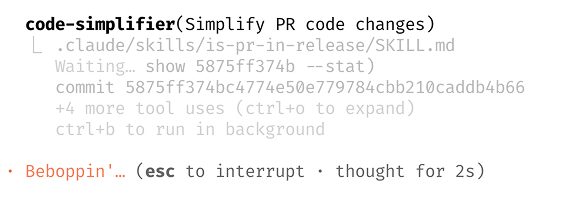
We just open sourced the code-simplifier agent we use on the Claude Code team.
Try it: claude plugin install code-simplifier
Or from within a session:
/plugin marketplace update claude-plugins-official
/plugin install code-simplifier
Ask Claude to use the code simplifier agent at the end of a long coding session, or to clean up complex PRs. Let us know what you think!
Ek hi to kaam tha college ke paas ki foundation subject pdha do, vo b na ho rha inse.
Networking, OS ye to krwa dete, baaki to chalo students b expect nhi krte ab.
Tum bs NOC dene me nkhre kro n attendance ka jaap kro. Na fest krwane ka fund dete, upr se attendance me relaxation b nhi dete.
Ab koi mere paas koi benefit of doubt nhi bacha inke liye.
When I started working in corporate,
I felt like a fraud.
Every day.
I would sit in meetings and think,
“Why am I even here?”
“Everyone knows more than me.”
“What if they find out I’m not that good?”
There was so much to learn.
So many tools.
So many smart people.
And the more I learnt,
the more I realised how little I knew.
It felt like a black hole.
No end.
No clarity.
Only self-doubt.
I used to go back home feeling heavy.
Questioning myself.
Overthinking everything.
I thought I was behind.
I thought I wasn’t made for this.
I thought maybe I got lucky.
What I didn’t know back then was this:
Almost everyone feels this way.
Especially the ones who actually care.
Imposter syndrome doesn’t mean you’re bad.
It means you’re growing.
With time, I understood one thing.
You don’t escape that feeling in one day.
You outgrow it slowly.
By showing up every day.
By learning even when it feels overwhelming.
By accepting that it’s okay to not know everything.
Today, when I look back,
that phase changed me.
It made me humble.
It made me curious.
It made me consistent.
If you’re feeling lost right now,
if you feel like everyone is ahead of you,
if you feel stuck in that black hole…
Trust me, you’re not alone.
And you’re not failing.
You’re just in the middle of your growth.
Save this post.
Read it again when self-doubt hits.
You’ll be fine.
Just don’t stop giving your best at every moment.
Cheers,
Akshay Saini
#YouArePowerfulThanYouThink
𝗜 𝗱𝗼𝗻'𝘁 𝘄𝗿𝗶𝘁𝗲 𝗰𝗼𝗱𝗲 𝗮𝘁 𝗚𝗼𝗼𝗴𝗹𝗲 𝗮𝗻𝘆𝗺𝗼𝗿𝗲. 𝗜 𝗿𝗲𝘃𝗶𝗲𝘄 𝗶𝘁.
𝙄𝙛 𝙄 𝙡𝙤𝙤𝙠 𝙖𝙩 𝙢𝙮 𝙙𝙖𝙞𝙡𝙮 𝙘𝙤𝙢𝙢𝙞𝙩𝙨, 70-80% 𝙤𝙛 𝙩𝙝𝙚 𝙘𝙤𝙙𝙚 𝙞𝙨 𝙣𝙤𝙬 𝙬𝙧𝙞𝙩𝙩𝙚𝙣 𝙗𝙮 𝘼𝙄.
My role has fundamentally shifted.
• I don't type syntax; I prompt logic.
• I don't hunt for bugs; I review AI's suggestions.
• I don't read legacy code; I ask AI to explain it.
A lot of engineers feel guilty about this. They feel like they are "cheating."
They aren't. They are evolving.
𝗜 𝗼𝗻𝗰𝗲 𝗮𝘀𝗸𝗲𝗱 𝗮 𝘀𝗲𝗻𝗶𝗼𝗿 𝗹𝗲𝗮𝗱𝗲𝗿 𝘁𝗵𝗲 𝗾𝘂𝗲𝘀𝘁𝗶𝗼𝗻 𝗲𝘃𝗲𝗿𝘆𝗼𝗻𝗲 𝗶𝘀 𝗮𝗳𝗿𝗮𝗶𝗱 𝗼𝗳: "𝗪𝗶𝗹𝗹 𝗔𝗜 𝗿𝗲𝗽𝗹𝗮𝗰𝗲 𝘂𝘀?" 𝗛𝗶𝘀 𝗮𝗻𝘀𝘄𝗲𝗿 𝘀𝘁𝘂𝗰𝗸 𝘄𝗶𝘁𝗵 𝗺𝗲:
"𝘈𝘐 𝘪𝘴 𝘢 𝘮𝘶𝘭𝘵𝘪𝘱𝘭𝘪𝘦𝘳, 𝘯𝘰𝘵 𝘢 𝘳𝘦𝘱𝘭𝘢𝘤𝘦𝘮𝘦𝘯𝘵. 𝘐𝘧 𝘺𝘰𝘶 𝘶𝘴𝘦𝘥 𝘵𝘰 𝘥𝘰 1𝘹 𝘸𝘰𝘳𝘬 𝘪𝘯 𝘢 𝘸𝘦𝘦𝘬, 𝘵𝘩𝘦 𝘦𝘹𝘱𝘦𝘤𝘵𝘢𝘵𝘪𝘰𝘯 𝘪𝘴 𝘯𝘰𝘸 4𝘹 𝘸𝘰𝘳𝘬 𝘪𝘯 𝘵𝘩𝘦 𝘴𝘢𝘮𝘦 𝘸𝘦𝘦𝘬. 𝘕𝘰 𝘤𝘰𝘮𝘱𝘢𝘯𝘺 𝘸𝘢𝘯𝘵𝘴 𝘵𝘰 𝘮𝘰𝘷𝘦 𝘣𝘢𝘤𝘬𝘸𝘢𝘳𝘥."
The bar for "productivity" has moved.
If you refuse to use AI because you are a "purist," you aren't noble. You are just slow.
𝗔𝗜 𝘄𝗶𝗹𝗹 𝗻𝗼𝘁 𝗿𝗲𝗽𝗹𝗮𝗰𝗲 𝘆𝗼𝘂. 𝗕𝘂𝘁 𝗮𝗻 𝗲𝗻𝗴𝗶𝗻𝗲𝗲𝗿 𝗱𝗼𝗶𝗻𝗴 4𝘅 𝘁𝗵𝗲 𝘄𝗼𝗿𝗸 𝘂𝘀𝗶𝗻𝗴 𝗔𝗜... 𝗱𝗲𝗳𝗶𝗻𝗶𝘁𝗲𝗹𝘆 𝘄𝗶𝗹𝗹.
> Docker is Go
> Kubernetes is Go
> Prometheus is Go
> Grafana is Go
> Terraform is Go
> Vault is Go
> Helm is Go
> CockroachDB core is Go
> InfluxDB is Go
> ArgoCD is Go
> gRPC is Go
> Containerd is Go
> Cloudflare edge systems are Go
> Google SRE tooling is Go
> Uber infrastructure is Go
> Dropbox backend is Go
> Twitch backend is Go
> PayPal core services are Go
> Shopify backend is Go
> DigitalOcean control plane is Go
> CNCF ecosystem is Go
> Modern cloud infrastructure runs on Go
> Go isn’t flashy but it’s what runs the internet now.
- Still not convinced to learn Golang ?