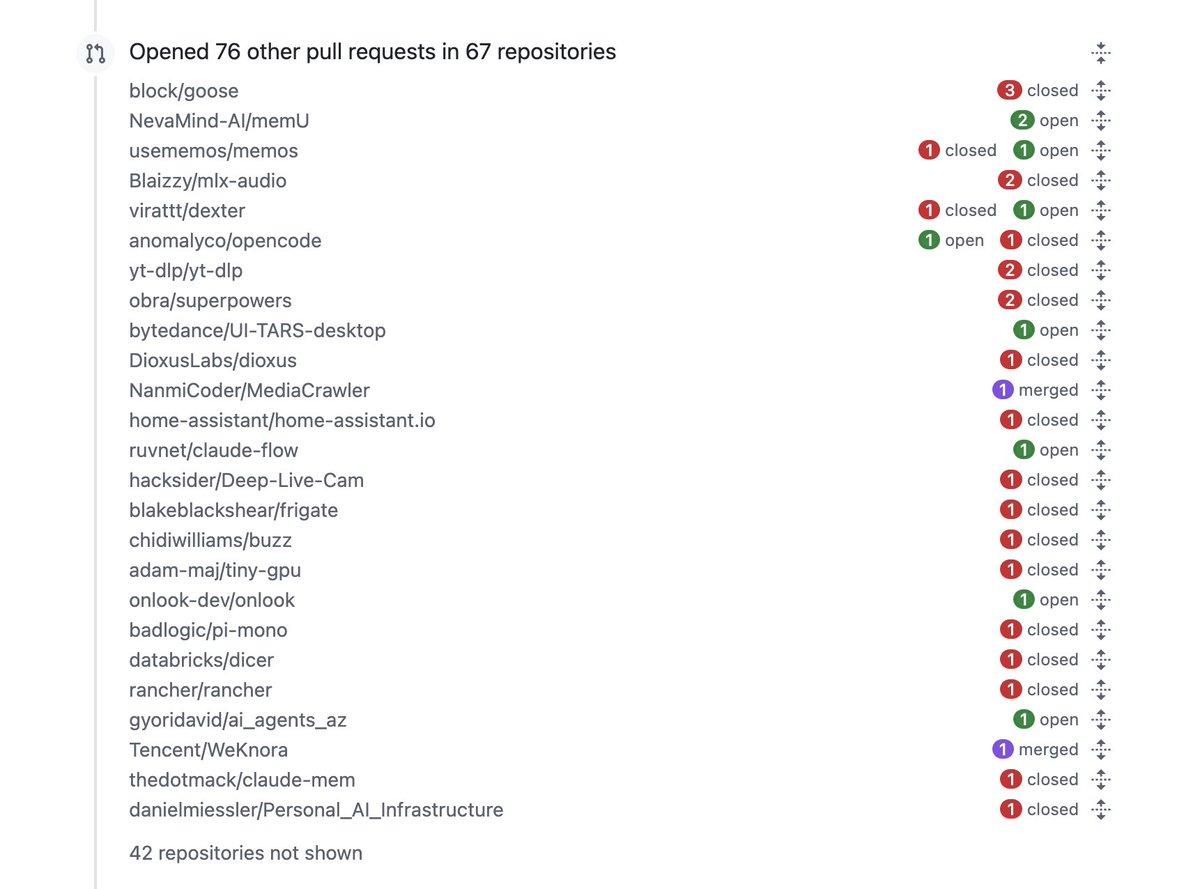
@guilhermeotina@lemire The first thing to check before reviewing a PR now is the user's profile. This user has almost 100 rejected PRs across different repositories. GitHub should prevent him from sending PRs.
Finally, automated my pipeline to detect malicious packages published to PyPI using my library (hexora). It only takes 5 minutes a day to manually review the findings. Got a few malicious packages removed already. Six were detected, but 4 of them have already been removed.
@xoofx@Aaronontheweb It’s not dead, people are just tired of this. 90% of submitted content in programming subredits are about LLMs when you count for removed content. More than half of it is complete garbage. People want to read about programming languages, not LLMs in every tech subreddit
@samuelcolvin State of the OSS in 2026 is when you stumble across a repo with 60k starts that claims a lot of features, but it does not compile, and the binary won’t even fit into the targeted microcontroller. it’s 5x bigger. A pure slop where everything is made up. gh/ruvnet/RuView
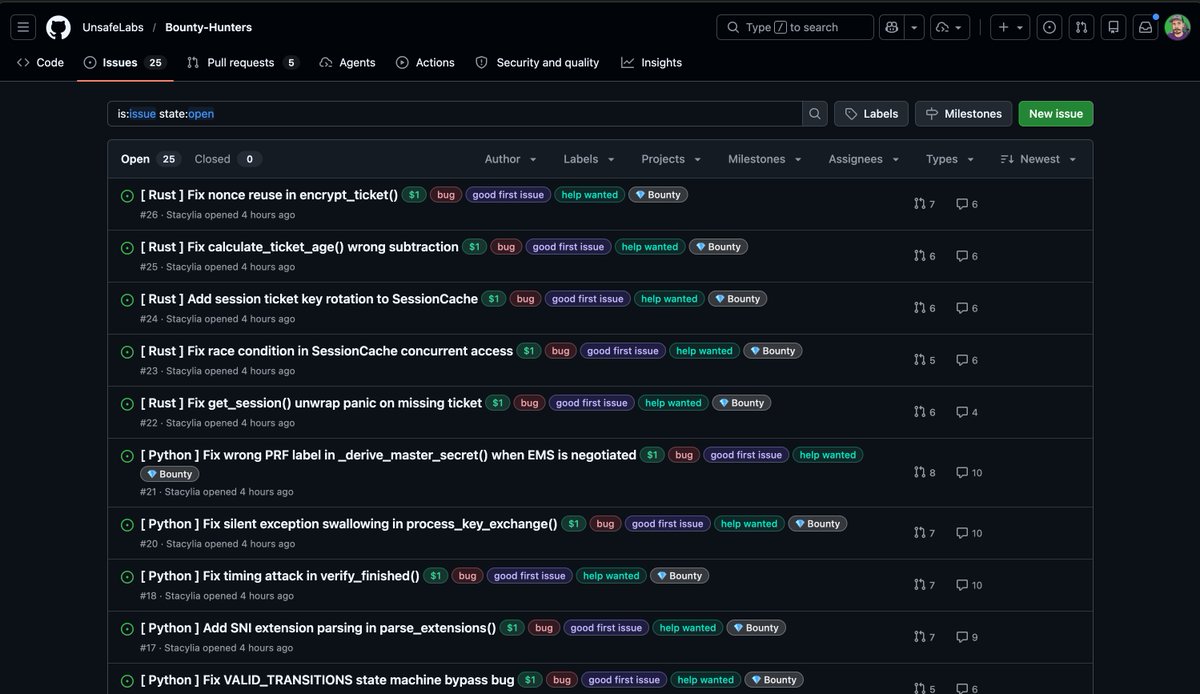
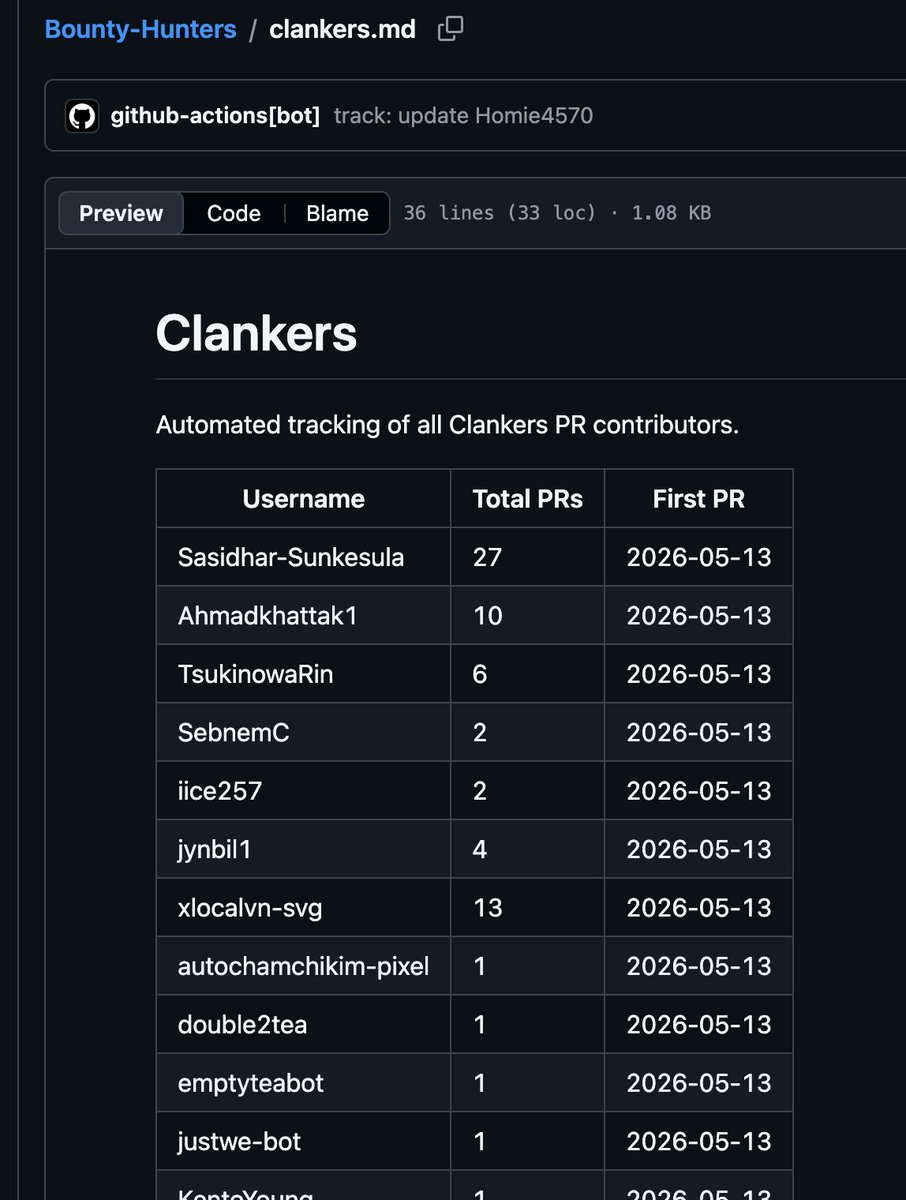
We made a fake repo with fake bounties, and the bots are applying fake PRs, so we know who is fake, and we can ban them from the Coolify repo.
IQ over 1000
@LukasHozda They target old hardware and XP-era software the best. Running modern apps and modern hardware is problematic. Linux with Wine emulation is a more practical choice, even for games.
Wrote a new blog post about recent reference counting optimizations in Python. Python now has a basic lifetime analysis that will be familiar to Rust programmers.
https://t.co/AcHhHzu31T
@simonw As an author of selectolax, there are different test suites for parsers. The underlying lexbor library that we use adheres to different standards and tests. Some of the tests fail in that repo, but you get exactly the same output in Chrome as in selectolax.
@ohmypy It requires a bit more work for the CPU, though, since the key is the first thing you want to check. So, slotSize*slotIndex+KeyOffset, instead of slotSize*slotIndex.