What's the first digital product you'd make?
Drop the idea below. I'll tell you whether people already buy something like it, and what I'd change to make yours easier to sell.
Pinterest works differently from Threads and X. People aren't scrolling for opinions, they're searching for ideas they can use. That makes it a good fit for printable planners and trackers.
How I'd set it up for an Etsy shop:
1. Treat it like search, not social.
Pin titles, descriptions and board names are all searchable text. Use the phrases buyers would type: "weekly meal planner printable," "wedding budget tracker."
2. Make vertical images.
The standard is a 2:3 ratio, like 1000 x 1500 pixels. Horizontal images get cramped in the feed.
3. Put a short headline on the image.
Something readable at thumbnail size, like "Weekly Meal Planner (Printable)." One idea per pin.
4. Make several pins for each listing.
Same product, different images and hooks: the cover, the planner in use, a close-up of one page, a text-led pin. You find out which one people save.
5. Link every pin straight to the listing.
Not your homepage. Make the click land where the product is.
6. Build boards around topics, not only your shop.
A "meal planning ideas" board with your pins mixed in with other helpful content looks more useful than a board that's all product.
7. Give it time.
Pins can keep sending clicks for months because people search for them later, but results usually start slowly. Pin steadily, then check what gets saved and clicked.
Pinterest also tends to favor original images, so use your own designs, not stock or someone else's work.
Which part is harder for you: designing the pins or writing the descriptions? 👇
I've made $1+ selling digital products, and the biggest lesson had nothing to do with the product itself.
It was where the people come from. A decent product with a steady stream of the right visitors does better than a great product nobody sees.
I wrote down the order I follow in a free 7-page roadmap. Comment ROADMAP and I'll send you the link.
10 DIGITAL PRODUCTS YOU CAN BUILD IN UNDER 2 HOURS AND MAKE YOU AN EXTRA $3000/MONTH 💰
1. Freelance Pricing Calculators
2. Wedding Budget Spreadsheets
3. Notion Life Dashboards
4. Etsy SEO Keyword Guides
5. AI Prompt Banks for Marketers
6. Job Interview Prep Checklists
7. Social Media Content Planners
8. Airbnb Host Welcome Kits
9. Fitness Meal Trackers
10. Faceless Threads Growth Playbooks
The key isn't making a 100-page ebook. Modern buyers pay for speed and clarity. A targeted 5-page solution will out-sell a textbook every time.
My free 7-page roadmap covers the order I'd build these in.
Comment ROADMAP and I'll send you the link 👇
Everything you need to launch a $3,000/month faceless digital store is 100% free:
🔹 Claude / ChatGPT (Product outlining & market research)
🔹 Canva (Formatting & visual mockups)
🔹 Stan Store/Etsy (1-click checkout & automated delivery)
🔹 Threads & X (Algorithmic buyer traffic)
You don't need ad spend. You don't need video editing. You just need the right steps in order.
What are you waiting for? 🛠️
I put together a free quick-start roadmap breaking down this exact stack.
Comment "Interested" and I will send you the download link 👇
Every saas website nowadays is like "AI agent AI workforce AI copilot AI-native autonomous AI AI AI" and you scroll for 10 minutes trying to figure out what the app actually DOES and the pricing button just says "Book a Demo" 🥴
Most people build digital products backwards.
They spend weeks writing 100-page ebooks or building massive courses about a topic they care about, list it on a blank website, and wonder why nobody buys.
A while ago, I fell into the exact same trap. I thought value was measured by volume and effort. I assumed that if I spent 50 hours building something, people would automatically show up with their credit cards out.
They didn't.
The pivot happened when I stopped viewing digital products as "content" and started treating them as engineered assets.
When you strip away the noise, digital leverage comes down to three structural layers:
Layer 1: Reverse-Engineered Validation
Before opening Canva or drafting a single page, you need data-backed proof of buyer intent.
Instead of guessing what people want:
-> Use search analytics and keyword tools to find hyper-specific friction points.
-> Look for queries where search volume is rising, but supply/quality is low.
-> Identify the exact vocabulary buyers use when they're actively looking to solve a problem.
If you don’t validate demand upfront, even the best copywriting won't save the offer.
Layer 2: Frictionless Product Design
People don't pay for length - they pay for speed and execution.
The modern digital buyer is overwhelmed. They don't want a 100-page theoretical breakdown. They want:
Direct, zero-fluff steps.
Ready-to-use frameworks and templates.
A system they can implement in 15 minutes.
When you package your solution into a concise, execution-focused asset, price friction drops to near zero.
Layer 3: Automated Distribution
The best product with zero distribution logic is useless.
Rather than chasing viral reach or relying on unpredictable social algorithms, set up a dedicated pathway:
-> Deliver pure, high-value breakdowns on text-first channels (X & Threads).
-> Focus on system logic and architecture.
-> Use keyword-triggered automated messaging to deliver the solution directly to qualified leads instantly.
The Result
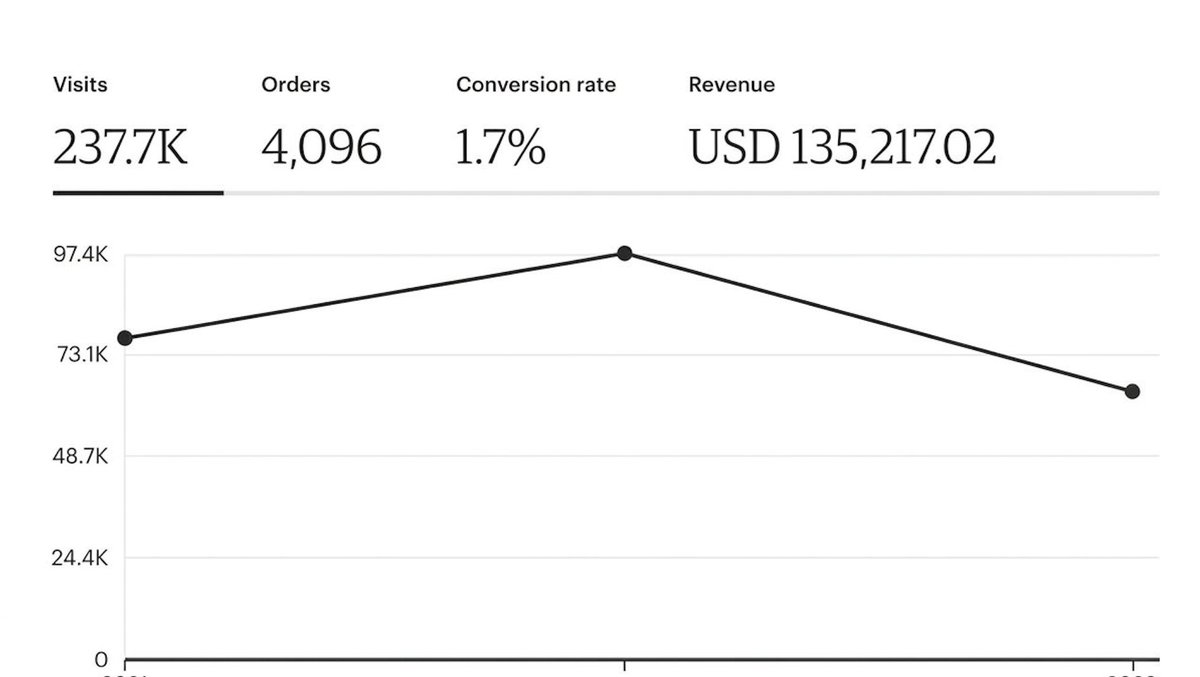
When you align high-intent demand + zero-friction assets + automated distribution, you move away from random guessing and build a repeatable proof of concept (see screenshot below).
You validate real market demand, capture organic buyer intent, and build a system where every deployed asset generates clean, measurable performance data.
The Key Takeaway
Stop trading manual hours for capped returns. Build assets once, validate them with real search data, and let distribution infrastructure handle the rest.
I mapped out this entire Digital Asset Validation & Distribution Architecture into a detailed step-by-step PDF diagram.
Want me to send you a copy?
Reply "Interested" below👇
Three things I used to believe about selling digital products:
-> That I needed a big audience first. A small one with a clear offer works better than a large one with none.
-> That the product had to be long. People pay for the result, not the page count.
-> That I had to be an expert. You only need to be a step ahead of the person you’re helping.
Which one is holding you back? 👇
Comment ROADMAP if you want the quick-start plan.
X is FREE
Threads is FREE
Reddit is FREE
Canva has a FREE plan
Claude/Gemini has a FREE plan
Stan store has a FREE plan
Gumroad is FREE
Etsy is FREE
The only thing you can’t get for free is the time you spend not starting.
What are you waiting for? 👀
Reply "ROADMAP" and I’ll send you the Quick-Start Strategy for Free 🙏🚀
Business owners obsess over getting more traffic.
Meanwhile, they’re leaking revenue from slow replies, missed follow-ups, and broken processes.
More traffic won’t fix a leaking bucket.
Hiring another employee is often a symptom of a broken process.
If the work can be automated, documented, or systemized, adding people usually just makes the chaos bigger.
Fix the system first.
Most businesses think AI is about saving time.
They’re missing the bigger opportunity.
The real advantage is testing 10x more ideas, collecting 10x more data, and finding winning ads faster.
The companies that learn fastest will outperform the companies that simply work harder
Most ads fail.
That’s normal.
The problem is that many businesses only test a handful of ideas before giving up.
AI changes the economics of experimentation.
When you can test 50 concepts instead of 5, you’re not increasing your chances of success.
You’re accelerating it.
The biggest competitive advantage in 2026 isn’t AI.
It’s FEEDBACK LOOPS.
Create.
Launch.
Measure.
Improve.
The faster you cycle through that loop, the faster you find what works.
The companies that learn fastest win.
Most businesses don’t have a content problem.
They have a PRODUCTION problem.
The real advantage of AI isn’t saving time.
It’s testing 50 ideas while competitors test 5.
More creatives.
More data.
Better decisions.
AI isn’t replacing marketers.
It’s replacing bottlenecks.