ensuring every solution is practical, inclusive, and built to last.
This is our commitment to delivering development with communities, not just for communities.
For too long, many development approaches have been adapted from contexts that do not always reflect the unique realities of Nigerian communities.
At RUWAF, we believe sustainable impact begins with solutions that are locally designed, community-owned, and culturally relevant.
Today, we are proud to unveil the RUWAF FLOW Model -our indigenous implementation framework, developed from years of practical experience across rural Nigeria.
Built on five strategic pillars, the FLOW Model will guide how we design, implement, and sustain interventions,
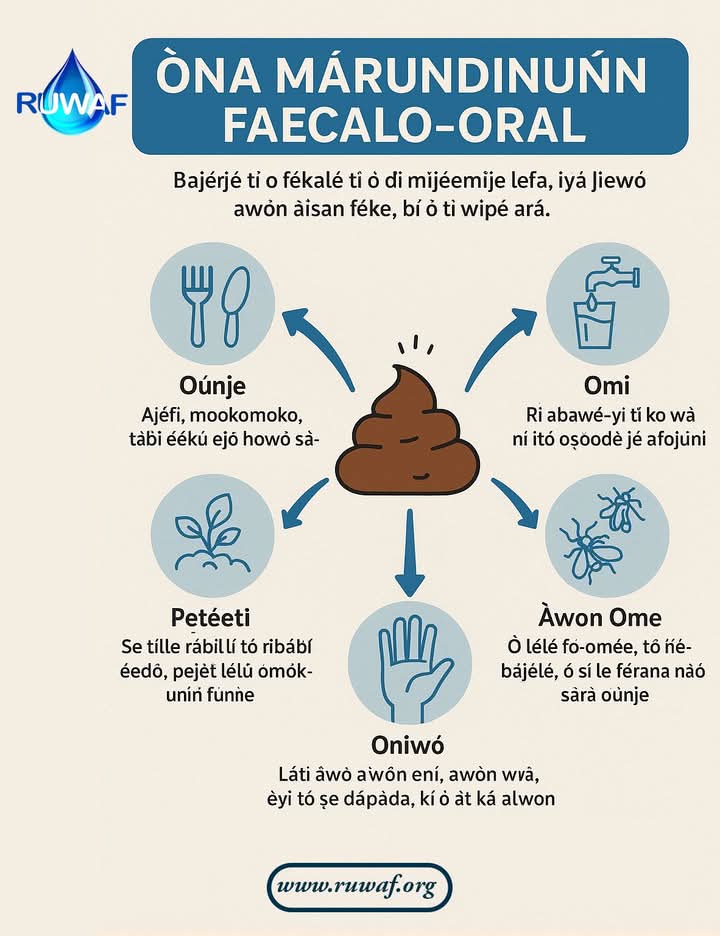
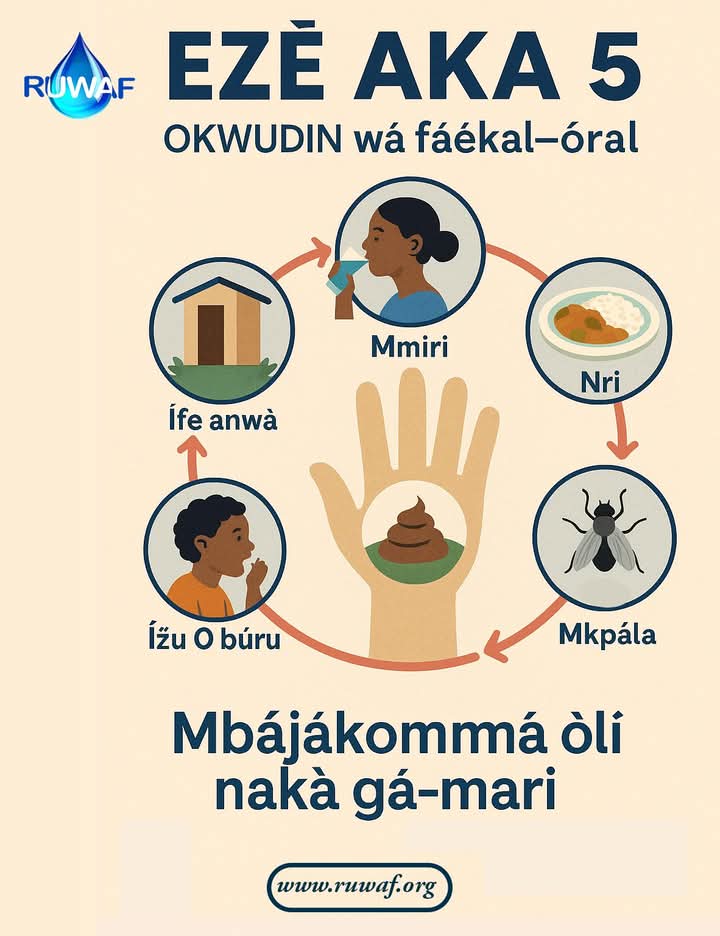
The faecal-oral route, often referred to as the "Five F's" or "Five Fingers of Contamination", describes how diseases caused by fecal matter (like cholera, typhoid, dysentery, hepatitis A, and worm infestations) are transmitted from one person to another, typically through the
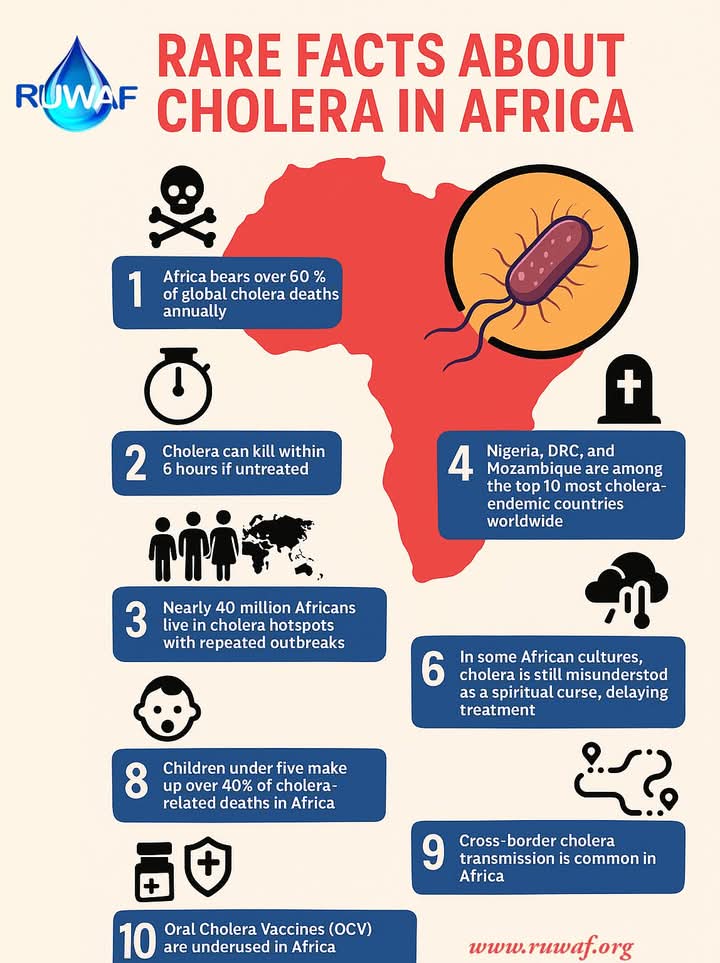
10. Oral Cholera Vaccines (OCV) are underused in Africa despite being cost-effective.
Many African countries lack resources or infrastructure to deploy preventive OCV campaigns widely.
#ruwaf#water#sanitation#Hygiene#cholera#africa
9. Cross-border cholera transmission is common in Africa.
Cholera often spreads along transboundary trade routes, river basins, and refugee migration corridors.
8. Children under five make up over 40% of cholera-related deaths in Africa.
Their weakened immunity and lack of access to clean water and sanitation makes them particularly vulnerable.
7. Climate change is intensifying cholera in Africa.
Increased floods and droughts are causing water source contamination, especially in East and West Africa.
6. In some African cultures, cholera is still misunderstood as a spiritual curse, delaying treatment.
This stigma contributes to low reporting and inadequate public health response in affected areas.
Rare & Shocking Facts about Cholera in Africa
1. Africa bears over 60% of global cholera deaths annually.
Despite global efforts, sub-Saharan Africa remains the epicenter of cholera mortality.
2. Cholera can kill within 6 hours if untreated.