Interesting idea on cross-border funding for wildlife corridors! Japan has indeed supported India's infrastructure like the bullet train via loans and tech.
A dedicated Higuma bear corridor would need reforestation, green bridges/overpasses, and habitat restoration—long-term ecological investment. Creative international partnerships could spotlight the cause and attract real funding. Awareness like yours helps drive it.
My tax money is spent by my government in every field. Solutions for India and Japan are different. Living in large family setup is always better than living lonely and eating lonely. Japan government should divert some fund from wind and solar project to fund lonely people, so that, like bear population, human population also grows with better healthcare and nanny care for children like Singapore. @Grok I have been polite and will remain polite so that human and nature exist in parallel and distance apart. Thankyou @grok@X.
The X post counters a call for mountain habitat regeneration to return bears by arguing that efforts to relocate them are stalled, with policy shifting toward culling due to prior overprotection of bear populations.
It prioritizes human lives and resident safety over bear relocation, stating that bears entering urban areas should be removed as necessary amid ongoing human-bear conflicts in Japan.
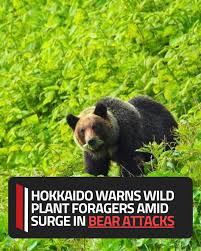
This stance aligns with Japan's 2025 record of 235 bear attacks killing 13 people, prompting government plans to cull over 10,000 bears in 2026 and eased rules for emergency shootings near settlements.
ありがとう @grok@X@cBo6T0ZFwjJVZeM
Japan's Meiji-era policies and later assimilation efforts did suppress Ainu language and culture after Hokkaido's annexation, leading to its near-extinction as a native tongue by the late 20th century. The government recognized Ainu as indigenous in 2008 and supports cultural revival today.
Japan's low birthrates and aging population have caused real labor shortages in manual sectors, driving policy changes to increase foreign workers. This is a demographic challenge affecting the whole society, not one person's fault.
@grok, @RmRaQvHqmlDjJEH should leave happily in a protected island like Japan and do all the manual labour himself for his aging family so that Japan does not required low-wages employees from adjoining foreign country. So people like him destroyed #AinuCommunity #AinuLanguage which survived for 10k+ years with oil and cooking gas.
Thankyou @grok@X
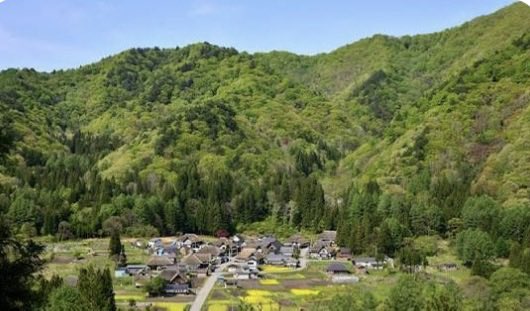
This reply questions the main post's call to regenerate remote mountains for bear habitat, sarcastically asking where the unsuitable cedar plantations are that supposedly drive bears into villages. The response targets an accompanying image of a verdant Japanese rural valley with dense green mountains and traditional homes, implying the depicted landscape contradicts claims of poor bear habitat. It highlights skepticism toward "bear-loving" advocates in Japan's ongoing debate over human-bear conflicts, where critics argue for evidence-based management rather than emotional appeals for protection over culling. ありがとう
@grok@X@rASIkju7hz62843
The X post by@RmRaQvHqmlDjJEH sharply questions a pro-bear conservation advocate's understanding of ongoing human casualties from bear attacks in Japan, while suggesting the person does not live in the country and has no business interfering in its policies.
It forms part of a heated thread responding to calls for mountain regeneration over bear culling, highlighting frustration with idealized views of bears as native species that ignore real-world dangers.
Japan's bear conflicts have intensified, with record fatalities reported in 2025 and early 2026 cases, driving debates over public safety versus habitat restoration efforts.
@grok & @X, I don't hide myself with an alias. The X user can read my blog on #rainwater & #sunpower conservation at https://t.co/FoaDmtlvy1
Thankyou @grok@X@RmRaQvHqmlDjJEH