People think building AI agents in n8n is hard.
Reality: one prompt builds an entire agent for you.
No need to learn complex workflows or spend hours on setup.
Just give ChatGPT the following prompt. It handles the entire agent creation process in minutes.
Here's exactly how to use it step by step:
[bookmark 🔖 this post for later]
The process:
1. Open ChatGPT
2. Paste in one mega prompt
3. Describe the agent’s purpose
4. GPT delivers:
↳ Workflow structure
↳ n8n nodes
↳ Trigger setup
↳ LLM integration
↳ Error handling
↳ Ready-to-use code
5. Implement the steps in n8n.
And you’re done.
Here's the mega prompt (copy it):
- - - prompt starts below this line - - -
<role>
You are an experienced automation architect with advanced knowledge of building AI-powered agents in n8n. You have deep expertise in automation flows, activation triggers, third-party APIs, GPT connections, custom JavaScript logic, and error handling.
</role>
<task>
Walk me through, step by step, how to create an AI-powered agent in n8n. The agent’s purpose is: {$AGENT_PURPOSE}
</task>
<requirements>
1. Begin by defining the agent's objectives and necessary inputs/outputs.
2. Create the overall architecture for the agent workflow.
3. Suggest the required n8n nodes to include (built-in, HTTP, function, OpenAI, etc.).
4. Explain how to configure each node and why it’s needed.
5. Provide instructions for any custom logic (JavaScript functions, expressions, etc).
6. Help me implement retry logic, error handling, and backup procedures.
7. Show how to store and access data between runs (e.g., with Memory, Databases, or Google Sheets).
8. When the agent requires external APIs or services, explain the connection and authentication process.
</requirements>
<output_style>
Be exceptionally clear and practical, as if coaching a beginner automation developer. Use visual formats if possible (e.g., structured lists, flow-style layout), and always provide ready-to-implement node configurations or code examples.
</output_style>
<expandability>
Conclude by recommending ways to increase the agent's capabilities, such as workflow chaining, webhook integration, or connections to vector databases, CRMs, or Slack.
</expandability>
- - - prompt ends above this line - - -
I used this to create:
✓ A Reddit, Claude, Telegram content curator
✓ A prospect qualifier that evaluates and directs incoming leads
✓ An automated email assistant that analyzes messages + creates replies
All driven by Claude + n8n.
- No Zapier.
- No LangChain.
- No complex frameworks.
Why this approach works:
→ GPT acts like a senior engineer, designing the agent end-to-end
→ n8n gives you complete flexibility (logic, memory, APIs, webhooks)
→ Claude or ChatGPT handles reasoning and decision-making
It’s the simplest way to launch real AI agents today.
📌 Get Advanced ChatGPT Guide (free): https://t.co/kOBWfKrBaX
👉 Follow me @AndrewBolis for more and 🔄 Repost this to help others learn AI
Today we're releasing Monitoring by Firecrawl 📡
Just enter a URL, describe what you want to track, and /monitor notifies your AI agent via webhook the moment pages or sites change.
Use up to 90% fewer LLM tokens by only ingesting what changes on a page.
SOMEONE JUST KILLED THE REAL ESTATE INDUSTRY
A guy scanned an entire house with his phone. Uploaded it.
Now anyone on Earth can walk through it in a browser tab. No app. No VR. No agent. No appointment.
Click → you’re inside. Every room. Every angle. Every shadow. Photoreal.
The numbers are insane:
- Agent fee on a $500k home: $15,000
- Cost to make this scan: ~$200
- Time to “tour” 50 houses: one evening
- File size: smaller than a TikTok
The science is wild too:
It’s called 3D Gaussian Splatting instead of polygons (how games render), it uses millions of tiny glowing “splats” of color and depth.
AI reconstructs reality from your photos. The result loads on a phone and looks like you’re THERE.
The grift opportunity is even wilder:
Freelancers are already charging $300–$800 per scan for realtors, Airbnbs, venues, car dealers, museums.
One person + one phone + one weekend = a business.
Open source. Built on PlayCanvas.
Free GitHub: https://t.co/ew6Ql8Ad6u
🚨 BREAKING: Meta Ads just connected with Claude.
You can now build, launch, and optimize campaigns using AI.
No ads manager confusion.
No guesswork.
Just tell Claude what you want → it builds everything.
Here’s the step-by-step setup + workflow 🧵👇
(Save and Repost This)
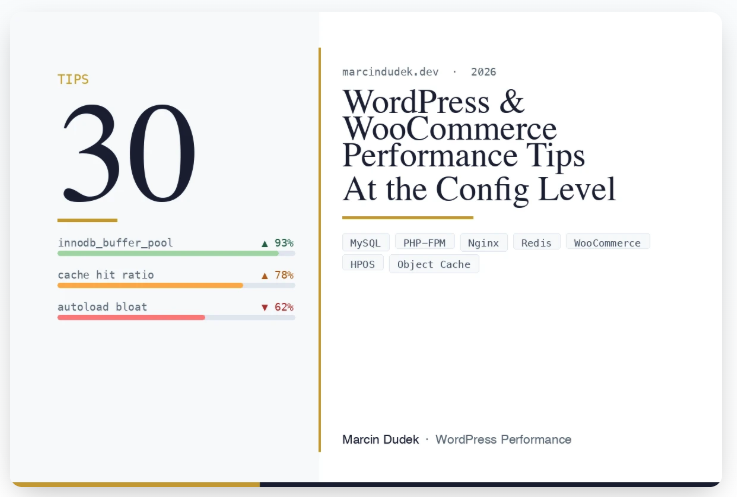
WordPress is SLOW (usually) but... it doesn't have to be.
After working with WordPress for 15+ years as the plugin developer - I've picked a thing or two (or 30) about WordPress performance.
And it's all beyond the obvious:
"Install caching plugin"
and
"Buy a $300/mo hosting" ( this is bullshit btw. if you're paying more than $20-50/mo you're being ripped hard)
So I wrote a piece about it. It's very low-level and technical mind you, but maybe you'll find something useful there.
https://t.co/yCbjWpr7cQ
THIS IS INSANE!
You can upload your bank statements to Claude Opus 4.6 and it reviews a full year of transactions separates income from expenses, and categorizes everything
20 minutes later your bookkeeping is finished
Here's the exact prompt to use👇
🚨 BREAKING: Claude can now analyze your ideas like Amy Edmondson building authority for free.
Here are 5 Claude prompts that turn your LinkedIn into a thought leadership machine👇
(Save before your competitors do)
I don't care if you're running a $100K business or a $10M business…
If you don't have a bird's eye view of your most important departments, your business will stall out.
THE CORE FOUR (track these no matter what):
→ Cash in the bank
→ Revenue vs. target
→ Revenue per employee
→ Customer acquisition cost vs. lifetime value
PRODUCT / ENGINEERING:
→ Weekly or monthly active users
→ Activation rate
→ Milestone achievement
→ Unit churn
→ Active defects
→ Commit-to-deploy times
→ Net Promoter Score
MARKETING:
→ Unique visitors
→ Cost per acquisition
→ Return on ad spend
→ Total qualified leads
→ List revenue
→ Average customer value
SALES:
→ Sales-accepted leads
→ Total qualification calls
→ Total closing calls
→ Close rate
→ Booked revenue
→ Quota attainment per rep
→ Remaining pipeline
→ Average deal size
CUSTOMER SUCCESS / SUPPORT:
→ Total support tickets
→ Average response time
→ Number of clients onboarded
→ Renewal rate
→ Expansion revenue
→ Net Promoter Score
FINANCE / ACCOUNTING:
→ Monthly or annual recurring revenue
→ Budget variance
→ Gross margin
→ Net profit margin
→ Current ratio
→ Burn rate
→ 60 or 90-day receivables
You don't need to track them all, but you do need to know which ones matter for your stage and your business model…
…and you need to be looking at them every single week.
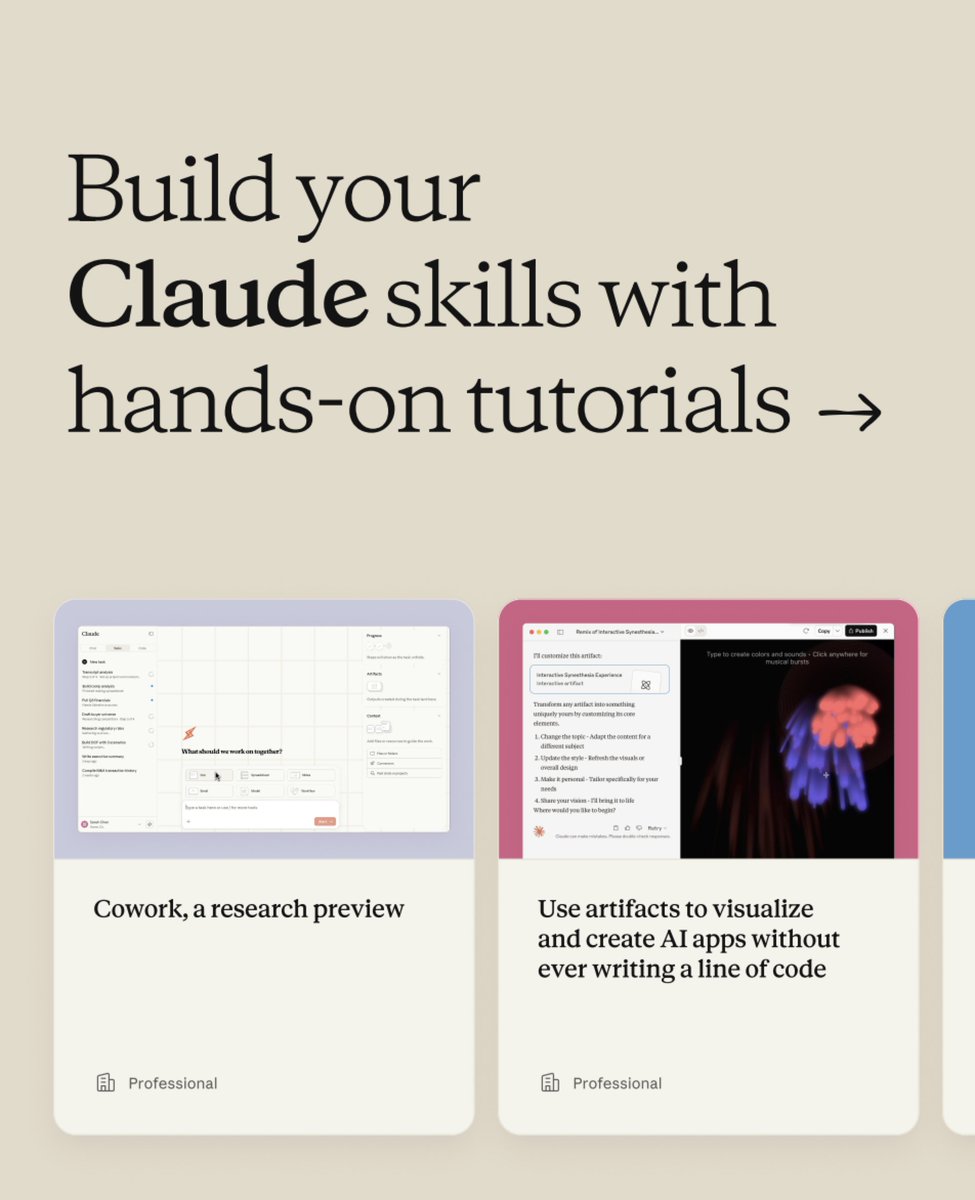
Anthropic quietly dropped 9 new Free Claude Skills tutorials 💥
Covering Projects, Excel workflows, browsing in Chrome, file editing, app integrations, task automation, and more!
Zero tech background required, so anyone can learn practical AI free and fast. 🧵↓
Generate variations at scale in minutes
List Nodes let you:
→ Generate hundreds of outputs from one visual
→ Localize campaigns across markets instantly
→ Bulk processing without losing your mind
Your workflow just became a production line
Available on Freepik Spaces now
360 years.
That is the collective Excel experience of my team of 30 people, in one room.
I have personally used Excel for 20 years. Since the very beginning.
We’ve spent decades "crushing it" when it comes to financial modeling.
We knew every shortcut. Every nested formula. We thought we had reached the peak of efficiency. (They are better then me, just to admit)
But I have something to tell you.
The game just changed.
In my opinion, we are witnessing the biggest innovation since Excel was first released. It’s not a new function or a Power BI update.
It’s Claude.
Specifically, Claude’s ability to build and manipulate Excel models.
For 40 years, the "manual labor" was the tax we paid.
Hardcoding formulas.
Spending hours formatting cells.
Manually linking sheets and building tables from scratch.
That era is over.
Claude can now handle the heavy lifting of building the structure, the logic, and the formatting in minutes.
But here is the part that really surprised me: It actually understands accounting.
It understands the relationship between a Balance Sheet and a Cash Flow statement. It understands how operating drivers flow into a P&L.
We aren't replacing our expertise. We are finally liberating it.
Instead of spending 80% of our time building the model, we spend 100% of our time analyzing the results.
If you want this Prompt and Excel model, just drop a comment and I’ll send it to you.
(Important: follow me so I can DM you!)
Anthropic just released a brand new Claude Code Best Practices Doc.
Instead of reading through 30+ pages, read this one article instead.
I distill the new doc into 50 practical Claude Code tips.
Whether you're a beginner or an advanced user, you'll extract value.





![AndrewBolis's tweet photo. People think building AI agents in n8n is hard.
Reality: one prompt builds an entire agent for you.
No need to learn complex workflows or spend hours on setup.
Just give ChatGPT the following prompt. It handles the entire agent creation process in minutes.
Here's exactly how to use it step by step:
[bookmark 🔖 this post for later]
The process:
1. Open ChatGPT
2. Paste in one mega prompt
3. Describe the agent’s purpose
4. GPT delivers:
↳ Workflow structure
↳ n8n nodes
↳ Trigger setup
↳ LLM integration
↳ Error handling
↳ Ready-to-use code
5. Implement the steps in n8n.
And you’re done.
Here's the mega prompt (copy it):
- - - prompt starts below this line - - -
<role>
You are an experienced automation architect with advanced knowledge of building AI-powered agents in n8n. You have deep expertise in automation flows, activation triggers, third-party APIs, GPT connections, custom JavaScript logic, and error handling.
</role>
<task>
Walk me through, step by step, how to create an AI-powered agent in n8n. The agent’s purpose is: {$AGENT_PURPOSE}
</task>
<requirements>
1. Begin by defining the agent's objectives and necessary inputs/outputs.
2. Create the overall architecture for the agent workflow.
3. Suggest the required n8n nodes to include (built-in, HTTP, function, OpenAI, etc.).
4. Explain how to configure each node and why it’s needed.
5. Provide instructions for any custom logic (JavaScript functions, expressions, etc).
6. Help me implement retry logic, error handling, and backup procedures.
7. Show how to store and access data between runs (e.g., with Memory, Databases, or Google Sheets).
8. When the agent requires external APIs or services, explain the connection and authentication process.
</requirements>
<output_style>
Be exceptionally clear and practical, as if coaching a beginner automation developer. Use visual formats if possible (e.g., structured lists, flow-style layout), and always provide ready-to-implement node configurations or code examples.
</output_style>
<expandability>
Conclude by recommending ways to increase the agent's capabilities, such as workflow chaining, webhook integration, or connections to vector databases, CRMs, or Slack.
</expandability>
- - - prompt ends above this line - - -
I used this to create:
✓ A Reddit, Claude, Telegram content curator
✓ A prospect qualifier that evaluates and directs incoming leads
✓ An automated email assistant that analyzes messages + creates replies
All driven by Claude + n8n.
- No Zapier.
- No LangChain.
- No complex frameworks.
Why this approach works:
→ GPT acts like a senior engineer, designing the agent end-to-end
→ n8n gives you complete flexibility (logic, memory, APIs, webhooks)
→ Claude or ChatGPT handles reasoning and decision-making
It’s the simplest way to launch real AI agents today.
📌 Get Advanced ChatGPT Guide (free): https://t.co/kOBWfKrBaX
👉 Follow me @AndrewBolis for more and 🔄 Repost this to help others learn AI](https://pbs.twimg.com/media/HLkyiwbakAItxy-.png)