"Decentralized" is doing a lot of heavy lifting in crypto right now.
How decentralized is decentralized enough?
DeFi platforms are facing pressure to add identity-attestation, which raises the obvious problem: if a protocol can verify identity, how decentralized is it really?
The answer isn't more centralization or less. It's identity that can be proven cryptographically without a central party holding the records.
Verification and decentralization aren't opposites. The infrastructure just hasn't caught up to that yet.
After the year's biggest hacks, the stolen funds followed the same path.
Cross-chain liquidity protocols with no KYC.
Privacy tools to obscure wallet links.
Conversion to Bitcoin through intermediaries.
The exploit gets the headlines. The laundering infrastructure is what makes it worth doing.
As long as anonymous rails exist for moving stolen funds, the incentive to steal them never goes away.
The privacy model crypto actually needs:
Anonymous to third parties. Transparent between the two people transacting.
Right now you get one or the other. Full transparency exposes everything to everyone.
Privacy pools hide everything from everyone, including the recipient who needs to know who paid them.
The answer is an identity layer that sits between those extremes.
Outsiders see nothing. The two parties see each other.
Private where it should be. Verifiable where it matter
The hardest part of crypto security infrastructure isn't building it.
It's getting it adopted.
A privacy and identity layer that requires developers to rebuild their entire wallet will never reach scale.
The version that wins is a drop-in SDK, integrate it on any chain, in any wallet, in days.
Zero cost to adopt.
Adoption friction kills more good infrastructure than bad technology ever does.
When we started building AmericanFortress, we believed crypto deserved something better than complicated addresses, public wallets, and constant security risks.
Today, more than 100,000 people are following that vision.
Over the past few weeks we've:
• Grown to 100K+ followers on X
• Added 3,000+ new Discord members
• Launched community activations with hundreds of wallet-connected participants in the first 24 hours
This milestone belongs to our community.
To everyone who has shared our content, tested our products, joined our Discord, given feedback, challenged our ideas, and helped spread the word, thank you.
We're just getting started.
To celebrate, we're launching a special 100K giveaway for the community.
👇 Drop your username below for a chance to win AF merch.
We'll select winners next week.
Next stop: 250K.
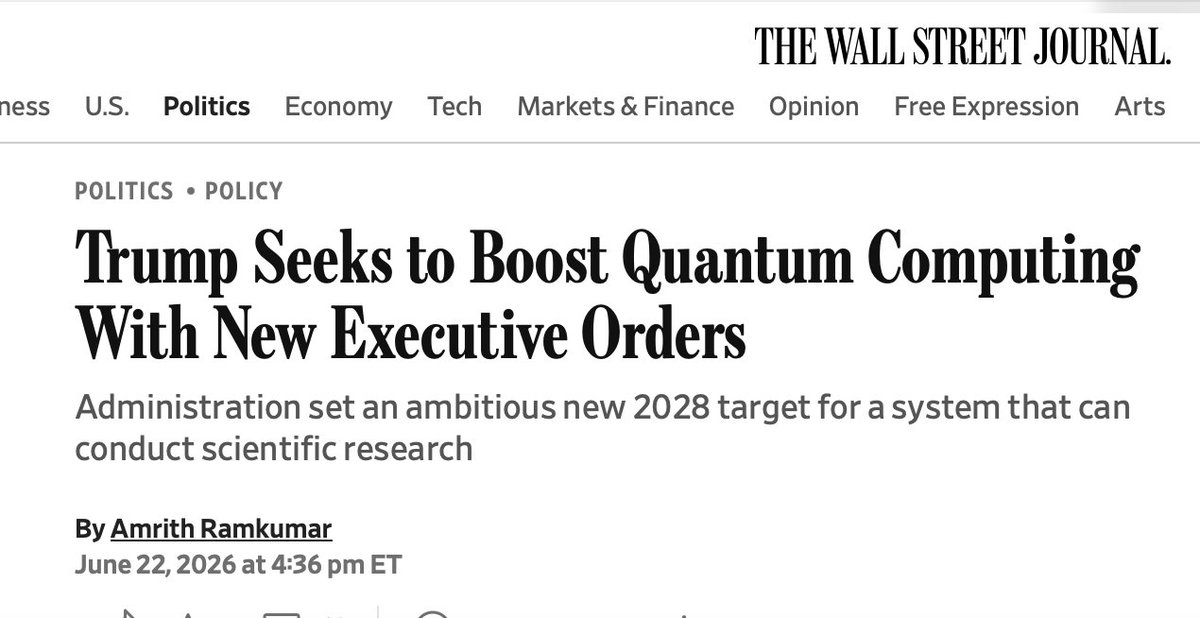
The quantum race just became a national priority.
President @realDonaldTrump 's new Executive Orders accelerating quantum computing development and preparing federal agencies for a post-encryption world are a reminder that quantum risk is no longer theoretical.
The conversation has shifted from if quantum computers will challenge today's security infrastructure to how soon organizations need to be ready.
For crypto, this is especially important.
Blockchains secure trillions of dollars in value using cryptographic systems that were never designed for a quantum future. The migration to quantum-resistant infrastructure will likely become one of the largest security upgrades in digital asset history.
We've believed from day one that quantum readiness is a necessity.
As governments, enterprises, and financial institutions begin preparing for the next era of computing, the need for quantum-resistant wallets, identity systems, and digital asset infrastructure will only grow.
Most compliant privacy systems have a backdoor.
They call it a "viewing key" - a master key that lets a third party see into your transactions. For compliance, supposedly.
But a viewing key is God mode. Someone, somewhere, can decide to look at your activity without your consent.
The better answer: no viewing key at all. The recipient can reveal their funds to whoever they choose, but no third party can decide for them.
Compliance without a backdoor. Disclosure without God mode.
First Class Metals has executed a binding agreement with nGRND in relation to its Kerrs Gold project.
FCM retains ownership of Kerrs, while nGRND creates a new funding stream by acquiring and keeping their gold while in-ground, creating Preserved Gold - value without extraction.
This is what innovation in a 5,000-year-old industry looks like.