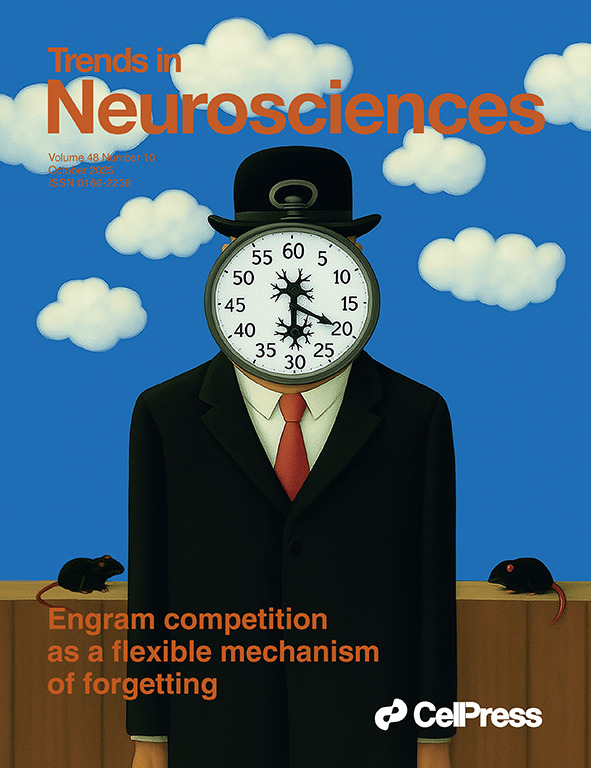
Check out the October 2025 issue of Trends in Neurosciences:
https://t.co/luVS5Ibg7s
Cover article: ‘The cost of remembering: engram competition as a flexible mechanism of forgetting’ by Livia Autore, Michael Drew & Tomás Ryan @TJRyan_77
https://t.co/XsF9dCsoKs
New paper with Dan Burnston at @Tulane.
Part of a special issue on "Representation in the Neurosciences and AI" in Philosophy & the Mind Sciences
An alternative to encoding for thinking about neural representation. https://t.co/Q2BRO8G79g
Rescuing specific memories by rejuvenating engram cells.
Commentary by @LouisaZielke at @tcddublin on a recent important paper from Johannes Gräff & team at @EPFL in @NeuroCellPress
https://t.co/h3S1RT25TI
Do you work or study in the fields of psychology, neuroscience, computer science, artificial intelligence, or philosophy?
What does 'representation' mean to you?
We invite you to participate in a brief survey on conceptual questions across fields.
https://t.co/nK7oq7F917
Infantile #amnesia limits our recall of early-life memories, but what is its cellular basis?
@erikasstewart from @RyanLabTCD & @tcddublin reveals that #microglia regulate infant memory retrieval in mice during postnatal development.
@plosbiology.org 🧪 https://t.co/cXft9C3241
Microglia Activity in the Brain Drives Infantile Amnesia in Young Mice
According to the data, when microglia activity in the brain was suppressed, baby mice were better able to recall fearful experiences
@TJRyan_77@tcddublin#microglia#brain#amnesia
https://t.co/WGLdUSqU8B
#ListerFellow@TJRyan_77 on his fascinating research into memory engrams and the importance of forgetting 👇
🧠Recommended easy listening for a long, winter walk (but hurry before that snow hits ❄️⛄️)
Youtube: https://t.co/OCIKFXblAR
Spotify: https://t.co/rpexTkYfxJ
Recent discussion on Brain Ponderings with the singular Mark Mattson.
We discussed current ideas on engrams, and the adaptive functions of forgetting.
https://t.co/twWE7H0aq3
Concluding 2025 with a thread on one of our most recent manuscripts at @RyanLabTCD
"Extinction and subsequent updating of innate fear responses to a visual looming stimulus rely on hippocampus-dependent mechanisms"
https://t.co/eEaTni0NDk
#engram#instinct@PLOSBiology
Happy Holidays from everyone at @RyanLabTCD. Thanks to all of our alumni, collaborators, colleagues, and funders for helping us to continue to deliver science in turbulent times.
Looking forward to a busy 2026
🧠🧬🔬🌐☘��
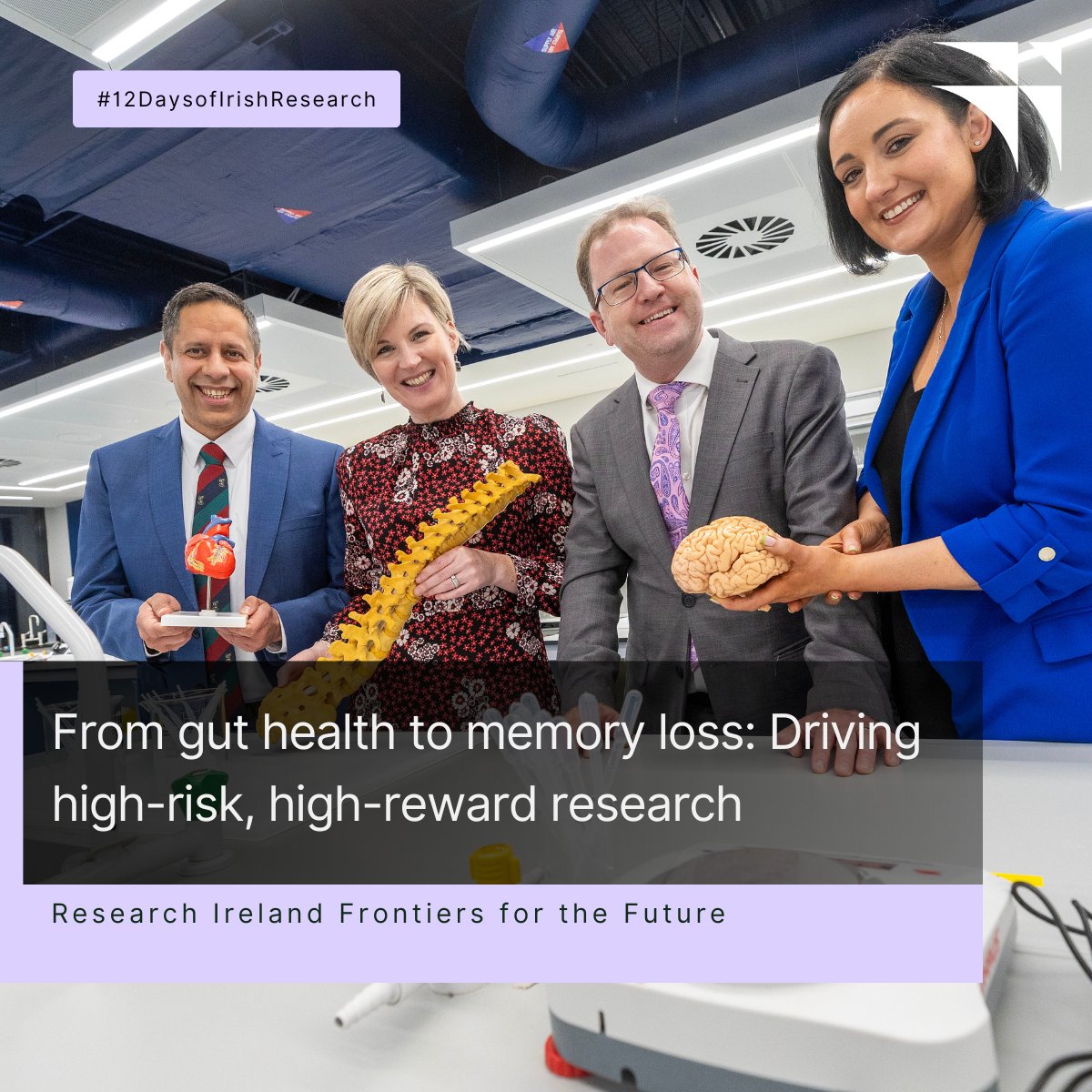
#12DaysofIrishResearch: Prof Tomás Ryan (@tcddublin) is exploring how early-life memories are lost - and differ in autism and between sexes - aiming to reverse memory loss. Funded by Research Ireland’s Frontiers for the Future Programme. Learn more: https://t.co/xTen6xMPHq
Happy Holidays from everyone at @RyanLabTCD. Thanks to all of our alumni, collaborators, colleagues, and funders for helping us to continue to deliver science in turbulent times.
Looking forward to a busy 2026
🧠🧬🔬🌐☘️
Junior or mid-career group leaders working in neuroscience, apply by 30 Jan to join the FENS-Kavli Network! We are looking for excellent and engaged future scholars, committed to exchanging scientific ideas & contributing to improve Neuroscience in Europe. https://t.co/vxsFdPIkfB
📣 #MCCS25 starts TOMORROW! Check out our poster session tomorrow & our symposium on Friday to hear from the best and brightest in molecular and cellular cognition.
More information here: https://t.co/MG06VRier2