@saradietschy almost always. it's not necessarily a struggle to create something in and of itself, but extracting what is in your head and getting it accurately out into the world is messy, painful and frustrating.
@grayzoneintel I’ve started videoing people like your great aunt with the hope of keeping those stories alive and adding context to the pictures left behind. Recently filmed my great uncle who told me all kinds of stories about my grandfather in WWII, how he was at Guadalcanal and Leyte Gulf.
After years of defiant atheism, Paul Kingsnorth went searching for “a truth I would surrender to.”
The once proud nonbeliever tells The Free Press how he found Buddhism, witchcraft, and—eventually, much to his surprise—settled on Orthodox Christianity. https://t.co/u0JNxvuyJi
@timeforjeffrey@Nick_Herrera34 Same for me. Doc said I could get an MRI if I wanted, but it would be a waste of time because it’s torn. I never got the MRI, just went to surgery. He was right.
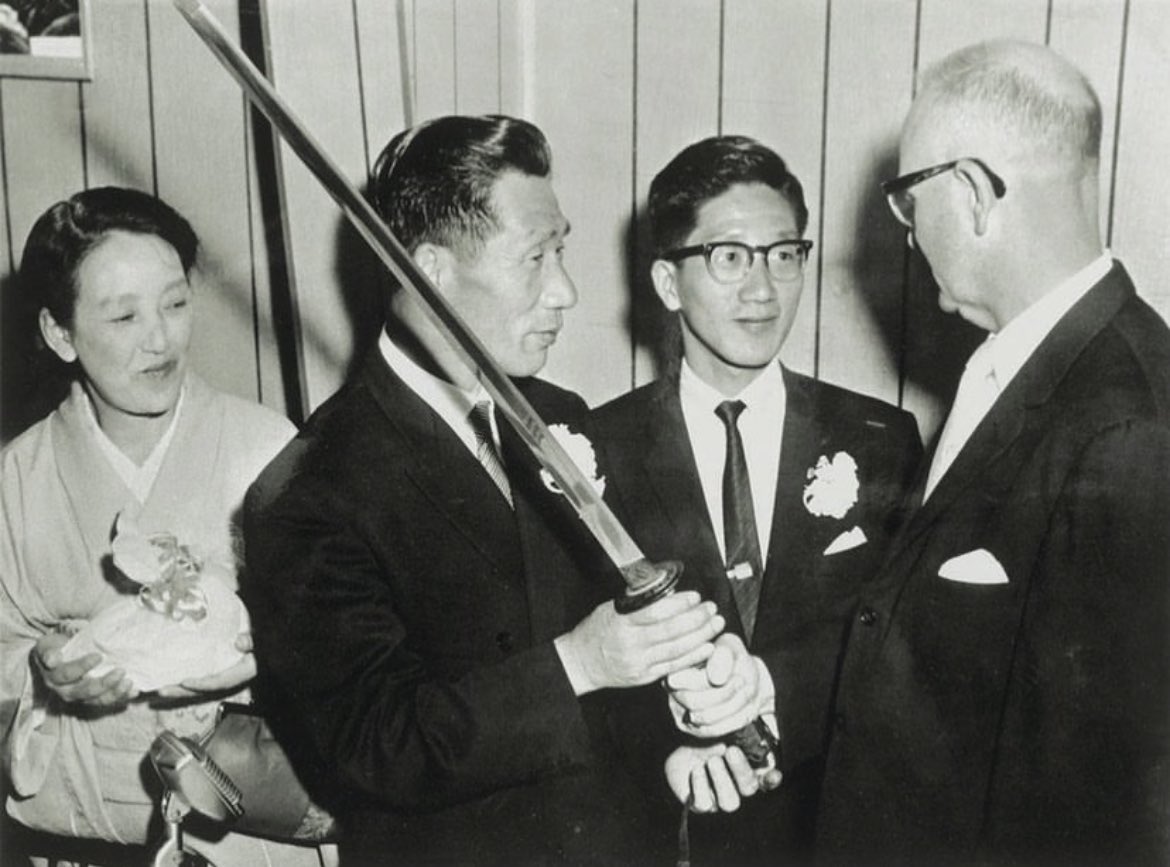
Nobuo Fujita, a Japanese pilot, holds the unique distinction of being the only foreign individual to have bombed the contiguous US. Following the war's conclusion, he was extended an unexpected invitation to revisit the very town he had bombed, Brookings, Oregon. Upon his return, Fujita humbly offered the mayor his family's cherished katana as a symbol of remorse.
In September 1942, under the cover of darkness off the Oregon coast, a Japanese submarine witnessed activity as a team of sailors hastily assembled a seaplane on deck. This mission sought retaliation for the 'Doolittle raids,' an earlier attack on Tokyo. While Fujita, a 30-year-old fighter pilot, had initially desired to bomb larger cities like LA or San Francisco, he was ordered by his superiors to target Brookings, Oregon.
Fujita's mission aimed to ignite a forest fire, disrupting the region's resources and spreading fear along the West Coast. However, the wet conditions of Oregon's woods caused the bombs to fizzle, thwarting their destructive plan. The disappointed crew had to abandon the mission and return West.
Two decades later, a group of Brookings businessmen surprisingly extended an invitation to Fujita for the town's Memorial Day celebrations. During his visit, he made a heartfelt gesture by presenting his family's cherished 400-year-old samurai sword as a gift to the town.
This remarkable event sparked an enduring bond between Brookings and Fujita that would last for the next three decades. In 1997, the town honored him with honorary citizenship. Tragically, just days after this heartfelt tribute, Fujita passed away at the age of 85. To commemorate his fateful actions, a tree was planted at the site where he had dropped the bombs, and his daughter scattered his ashes there, believing his soul would forever soar over the forest.