New paper out in Criminology w/ Rob Stewart, @Veronica_L_H , & @chrisuggen
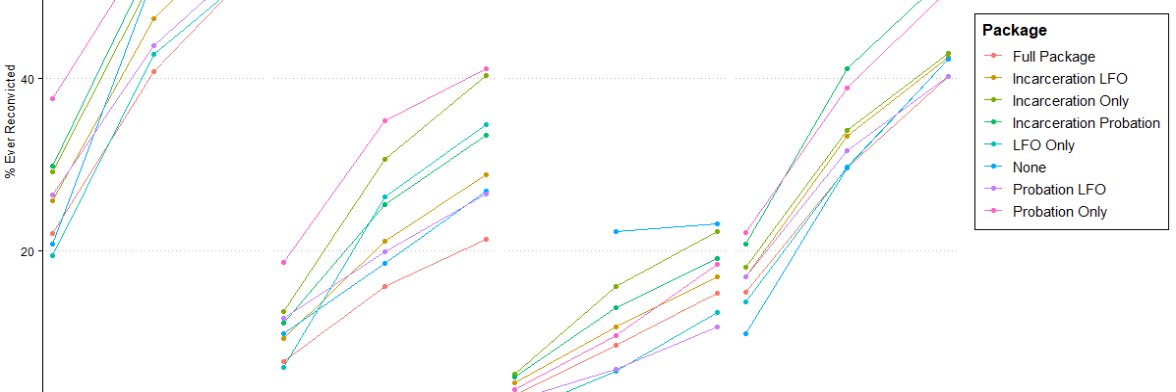
We model punishment more closely as it is experienced by defendants - a constitutive package of incarceration, probation, and monetary sanctions.
https://t.co/vTTAXESrfl
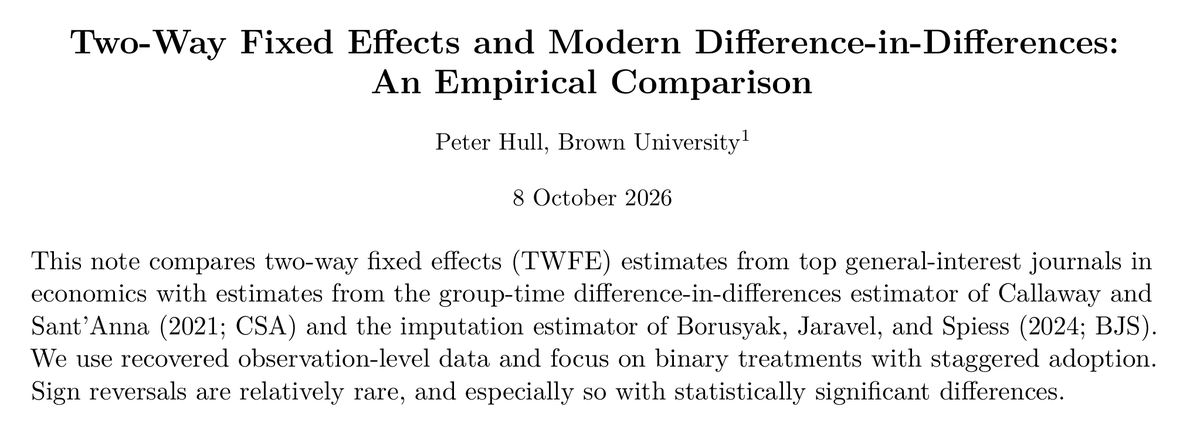
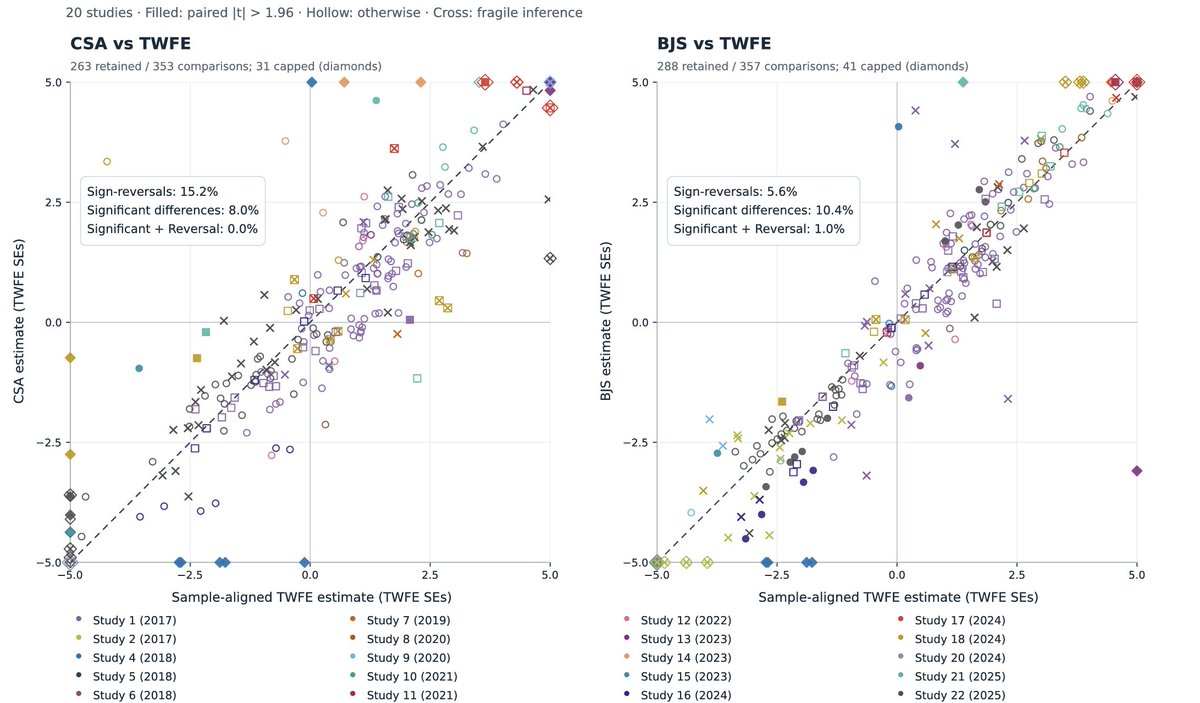
People dunking on this saying that TWFE is just fine are omitting an important detail that these are from “top 5” -- papers that have been vetted for identification, passed several robustness checks, gone through several rounds of reviews, and then gone through.
This paper extends difference-in-differences methods to settings with non-binary treatments and #heterogeneous effects. The #framework allows researchers to estimate #dose-response relationships when treatment intensity varies over time and across units. https://t.co/GhIwOj3u2B
He fit the same statistical models with three different software and got much different estimates. It’s another dimension of the multiverse.
https://t.co/sP9MyvytYm
New in Criminology! Punishment as a racialized package of confinement, cash, and surveillance. By @ryanplarson, Rob Stewart, @Veronica_L_H, and some old guy. This detailed thread by Ryan show ‘n tells the story.
Overall, we hope our study illustrates the benefits of modeling punishment more closely as it is experienced: as a constitutive package of different forms and intensities of punishment.
non-paywall link here: https://t.co/NffrwzgoS5
New paper out in Criminology w/ Rob Stewart, @Veronica_L_H , & @chrisuggen
We model punishment more closely as it is experienced by defendants - a constitutive package of incarceration, probation, and monetary sanctions.
https://t.co/vTTAXESrfl
These results highlight how punishment is racialized in complex ways depending upon the axis and context. Accounting for this mix is important for the estimation of racial disparities in sentencing - with both prob/LFOs racialized punitive terrains above and beyond incarceration.
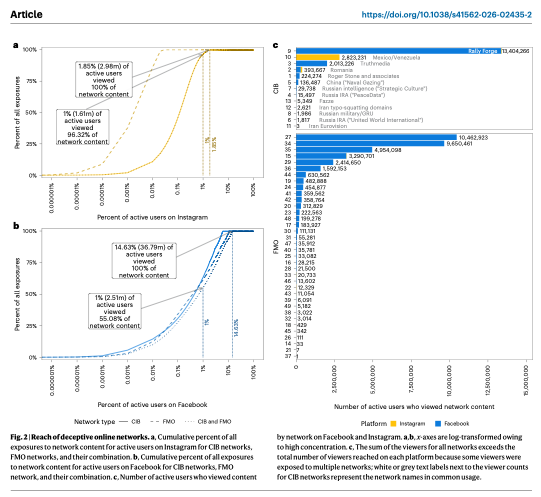
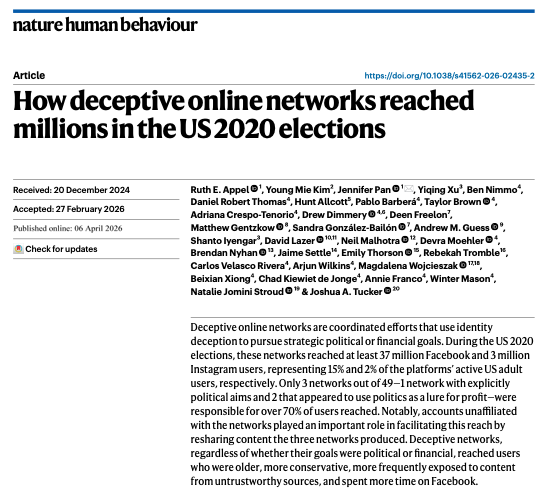
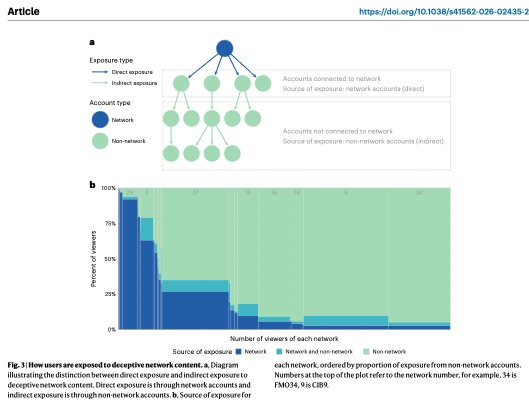
New in Nature Human Behaviour: How Deceptive Online Networks Reached Millions in the US 2020 Elections
-Reached at least 37M Facebook and 3M Instagram users
-3 networks out of 49 responsible for >70% of users reached
-Exposed users older, more conservative
@Nature has published three groundbreaking papers on reproducibility, analytical robustness, and replicability across the social sciences. Sincere thanks are due to the many folks who contributed to these projects. It’s painstaking work, and a great service to social science.
New Acemoglu et al. paper: AI may boost short-term decision quality but can erode the learning incentives that sustain collective knowledge in society, creating a risk of long-run knowledge decline or collapse.