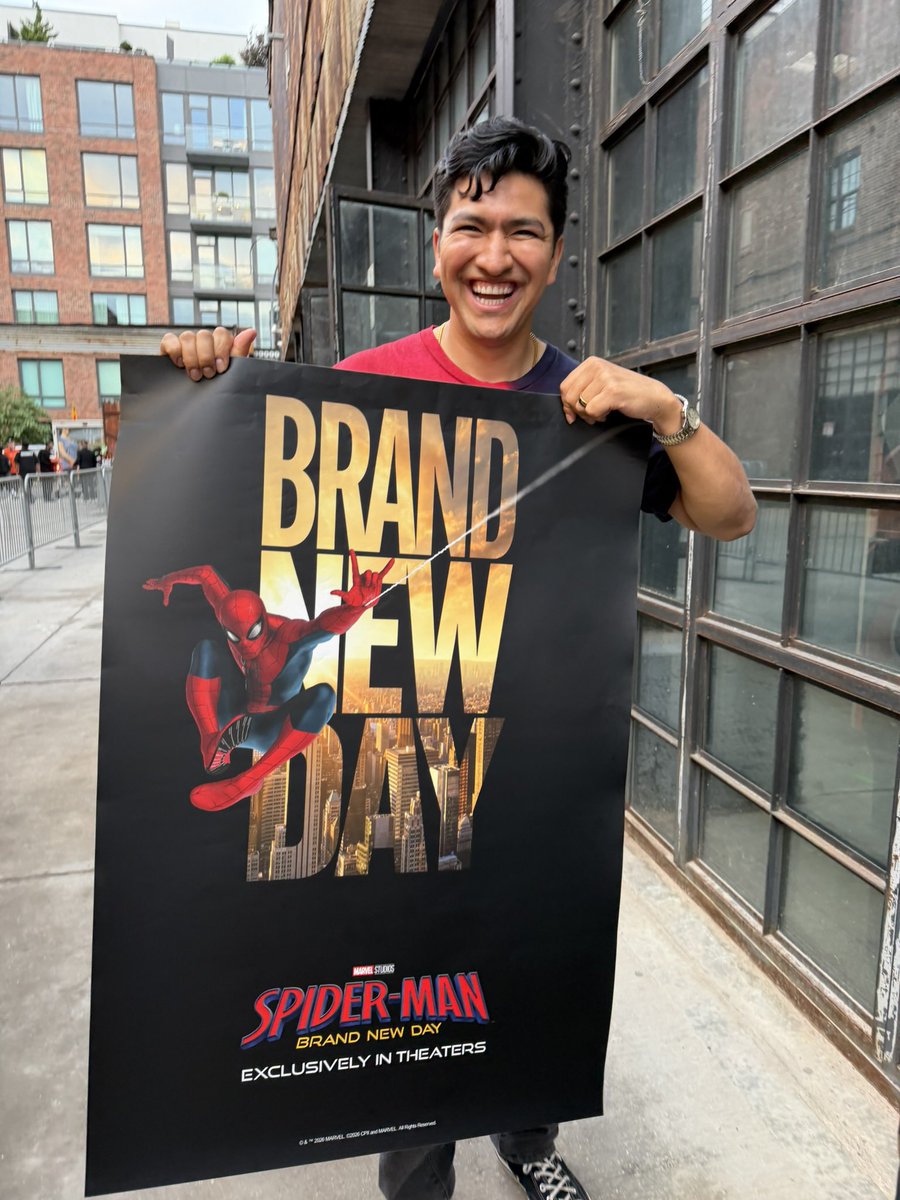
Long Island NY I like Martial Arts Im a Adult Brown Belt and I collect Comics,play Video games and I watch movies .My favorite Superhero is Spider-Man 🕷
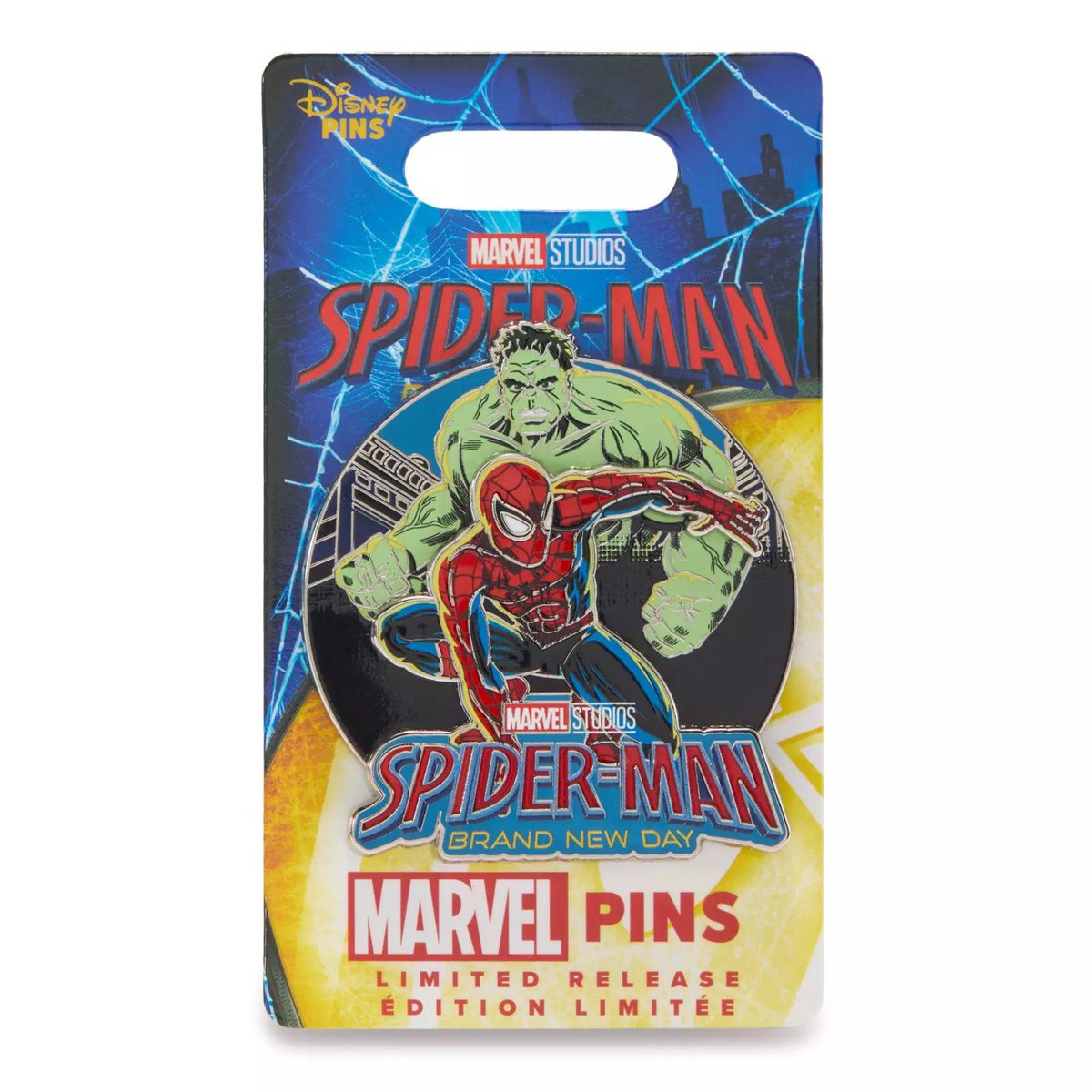
Here’s a look at some Spider-Man Brand New Day pins
First one is a San Diego Comic con exclusive
Second one sold here
(https://t.co/5vfH8Kg1VI)
The other 2 are cinema exclusives
No, non siamo nel multiverso. E no, non è nemmeno AI. È semplicemente un Brand New Day. La mia intervista completa a Zendaya e Tom Holland è sul canale YouTube di Sony Pictures Italia.
Rest in peace to the original voice of Max Goof 🕊️
Many Disney fans grew up hearing Dana Hill long before they knew her name. As the original voice of Max Goof in Goof Troop, she gave Goofy’s son a sharp, raspy, funny, and genuinely kid-like personality, the awkwardness, attitude, heart, and humor that made Max feel like more than just “Goofy’s kid.”
Hill’s voice had a rare quality: youthful, rough-edged, emotional, and completely believable. For many fans, her Max was the version that introduced the character before A Goofy Movie turned him into a teen icon.
Dana Hill passed away 30 years ago this month, on July 15, 1996, at just 32 years old. Her time was far too short, but her work still lives on every time fans return to Spoonerville and hear Max trying to find his place alongside his dad.
Rest in peace, Dana Hill 🙏
Mates, we're 2 days away! Who's ready for battle? 🏴☠️
Read our new Combat Deep Dive article to learn about the overhauled combat system, discover its new features, and sharpen your skills with tips & tricks: https://t.co/v8D962YXSc
#AssassinsCreed
A snippet from the Spider-Man Brand New Day soundtrack called “Suite new day” has been released
Currently unknown if this was released early by accident or not
The Historic Discovery of Kepler-22b: Our First True Sun-Like Star “Earth 2.0” CandidateIn 2011, NASA’s Kepler Space Telescope made history by announcing Kepler-22b — the very first confirmed exoplanet orbiting squarely inside the habitable zone of a star remarkably similar to our own Sun. Located about 600 light-years away in the constellation Cygnus, this world instantly became a superstar in the search for potentially life-friendly planets.
Unlike most early habitable-zone finds that huddled around small, cool red dwarf stars (which can bathe their planets in fierce flares and tidal locking), Kepler-22b orbits a genuine Sun twin — similar in size, temperature, and brightness. That made its discovery a game-changer: it proved that Earth-like orbital real estate isn’t limited to dwarf stars. Comfortable, stable “Goldilocks” zones truly exist around stars just like ours. A Planet of Mystery and PromiseKepler-22b is roughly 2.4 times the diameter of Earth — big enough to be called a super-Earth, yet possibly a mini-Neptune. This size puts it in a frustrating gray zone. It could be a rocky world with mountains, oceans, and a solid surface… or a thick-atmosphere gas planet with no solid ground at all. Even today, we still don’t know for sure what kind of world lies beneath its clouds.What we do know is exciting: it completes one orbit every 290 days, receiving roughly the same amount of stellar energy as Earth does from the Sun. If it has a suitable atmosphere and magnetic field, liquid water could exist on its surface — the essential ingredient for life as we know it.Why Kepler-22b Still MattersThis planet wasn’t just another data point. Its discovery shattered doubts and set a new standard. It showed that the conditions that allowed life to flourish in our Solar System aren’t rare cosmic flukes — they can happen around Sun-like stars across the galaxy.Kepler-22b opened the floodgates. Since then, thousands more exoplanets have been found, but this trailblazer remains iconic: the first solid proof that somewhere out there, orbiting a star much like our own, a potentially habitable world was waiting to be discovered.Even after more than a decade, Kepler-22b continues to spark imagination. Is it a rocky paradise, an ocean-covered super-Earth, or a hazy mini-Neptune? Future telescopes may finally reveal its secrets — but for now, it stands as a beacon of possibility in our ongoing quest to find Earth’s cosmic cousins.




![JonFunkos's tweet photo. Spider-Man: Brand New Day [Wave 2] concepts by @fun_kollect (IG)!
#Funko #Marvel https://t.co/YFweMqZzI4](https://pbs.twimg.com/media/HMgk-sYXoAAetPa.jpg)