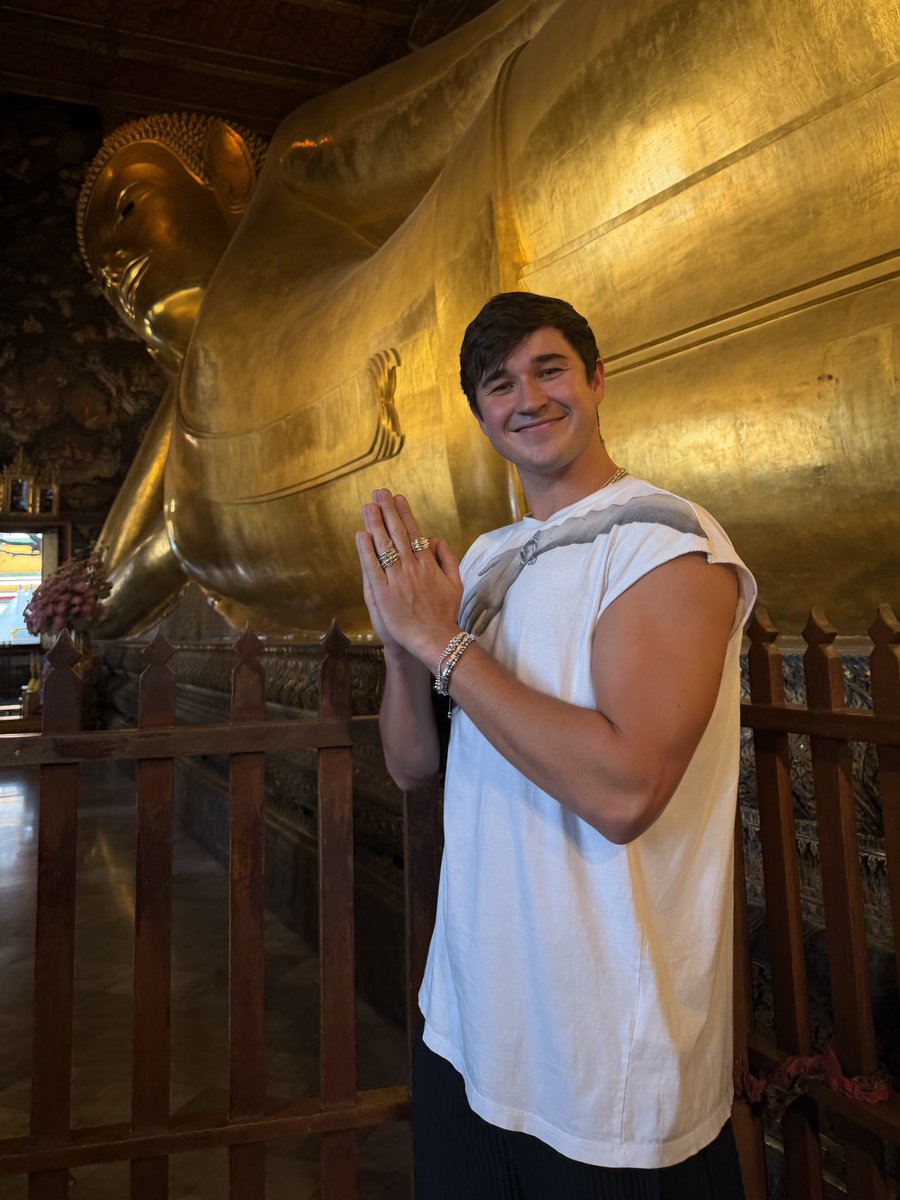
this asia tour has been insane.. bangkok, bali & singapore blew me away.. china up next, i really gotta spend more time out here and less in america i think
Project Hail Mary is a fun, solid 3 star movie. But it feels like a 5 star because our standards for gathering at the cinema have lowered since the pandemic began.
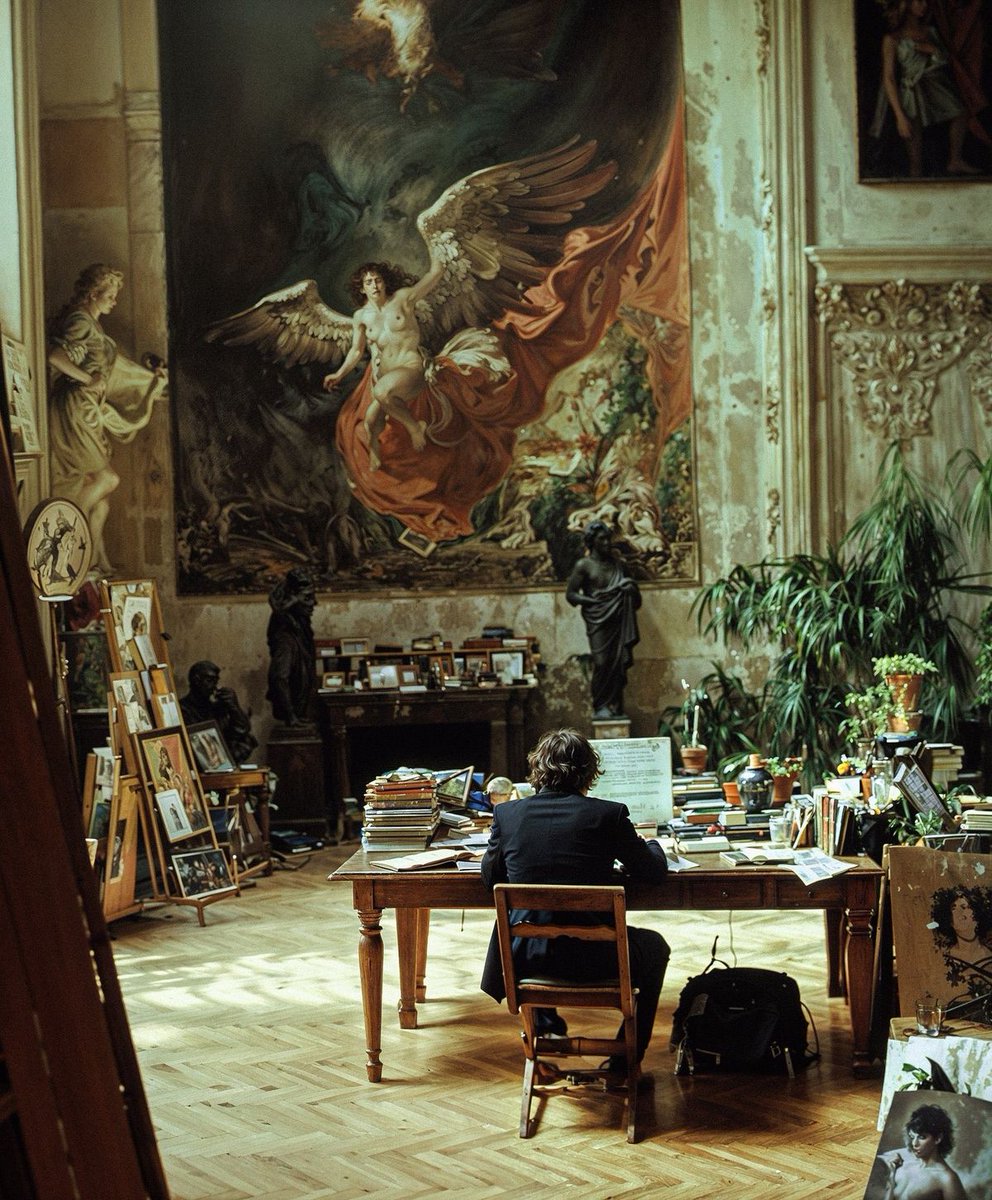
“What is necessary, after all, is only this: solitude, vast inner solitude. To walk inside oneself and meet no one for hours—that is what one must be able to attain.”
— Rainer Maria Rilke
When does a person's life change?
Socrates: When he knows that he does not know
Senka: When he knows the limits of his ability
Dostoevsky: When he suffers alone
Nietzsche: When he transcends himself
Sartre: When he believes in his freedom
Frankl Victor: When he finds meaning in his life
Schopenhauer: When he exceeds his will
Cioran: When he dies
Spinoza: We change according to the requirements of necessity and not in response to our freedom
Milan Kundera: We change when we realize that this world is beyond repair
Simon de Beauvoir: When a person vomits his heart
Carl Jung: When we understand ourselves and see the dark side of it and the seeds of evil.
Filmmaker David Lynch's Diagram for Transcendental Consciousness is one of the greatest, easiest to understand explanations for how our reality is made of MIND first, MATTER second.
I promise this is genuinely worth your time.
It's fantastic.
“I have read many books but forgot most of them. What remains is a kind of mood, a vague memory of the feeling rather than the facts.”
George Orwell
#quote
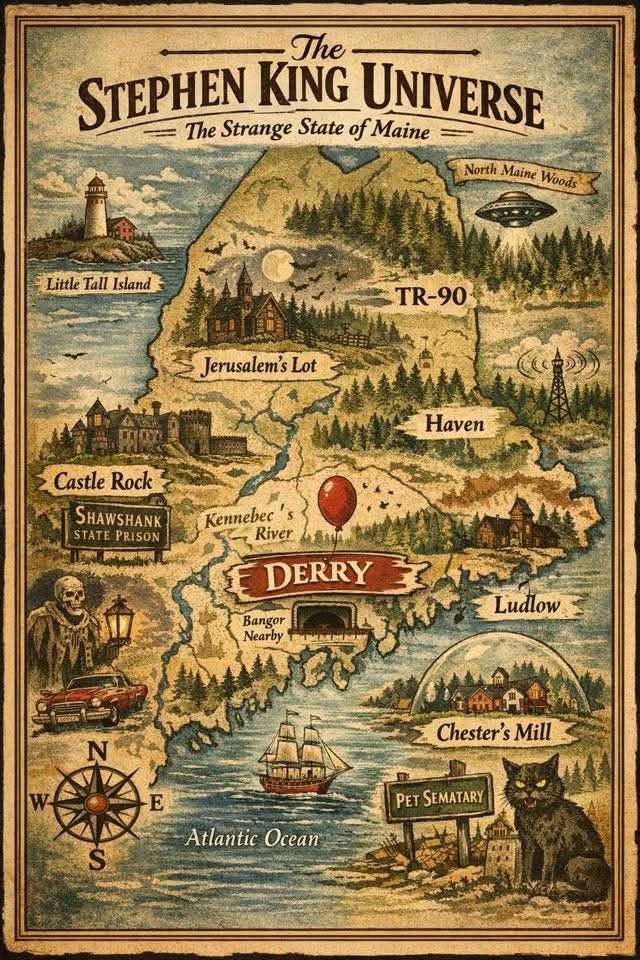
The Stephen King Universe
Often called the Kingverse or Macroverse, it is a vast literary and cinematic multiverse where nearly all of his stories are loosely or directly interconnected. Rather than following a strict chronological timeline, it is structured like a web with a single central point: The Dark Tower.
The Core Concepts
The Dark Tower: This structure is the linchpin of all existence, standing at the center of infinite parallel worlds. If the Tower falls, all realities are destroyed.
Gan: The benevolent creator-god of the multiverse who manifested as the Dark Tower.
The Crimson King: The primary antagonist of the multiverse whose goal is to topple the Tower and rule over the resulting chaos.
Ka: A concept similar to fate or destiny that moves characters toward their purposes.
The Prim: The chaotic darkness that existed before the universe was created.
Significant Intersections
Many of King's most famous works contain "Easter egg" references or major character crossovers:
Randall Flagg: A recurring villain who appears under many names (such as the Man in Black or Walter o'Dim) in The Stand, The Eyes of the Dragon, and The Dark Tower series.
Father Callahan: The priest from 'Salem's Lot becomes a core member of the "ka-tet" (group bound by fate) in the later Dark Tower books.
Maturin the Turtle: A cosmic guardian of one of the "Beams" holding up the Tower; he is the entity that created the universe in It.
Derry & Castle Rock: Fictional Maine towns that serve as the setting for numerous books like It, Insomnia, The Dead Zone, and Cujo, often referencing events from each other.
Multiverse Structure
King’s world consists of various types of "Earths" and dimensions:
Keystone Earth: Our real world, where Stephen King himself exists as a character who is "channeling" the stories of Roland Deschain.
All-World: The primary setting of The Dark Tower, a "post-apocalyptic" world that has "moved on."
The Territories: A parallel realm introduced in The Talisman where people have "twinners" (parallel versions of themselves).
Cinematic Universe
While the books have always been connected, recent screen adaptations like Castle Rock and IT: Welcome to Derry are more explicitly building a shared cinematic universe similar to the MCU (Marvel Cinematic Universe).