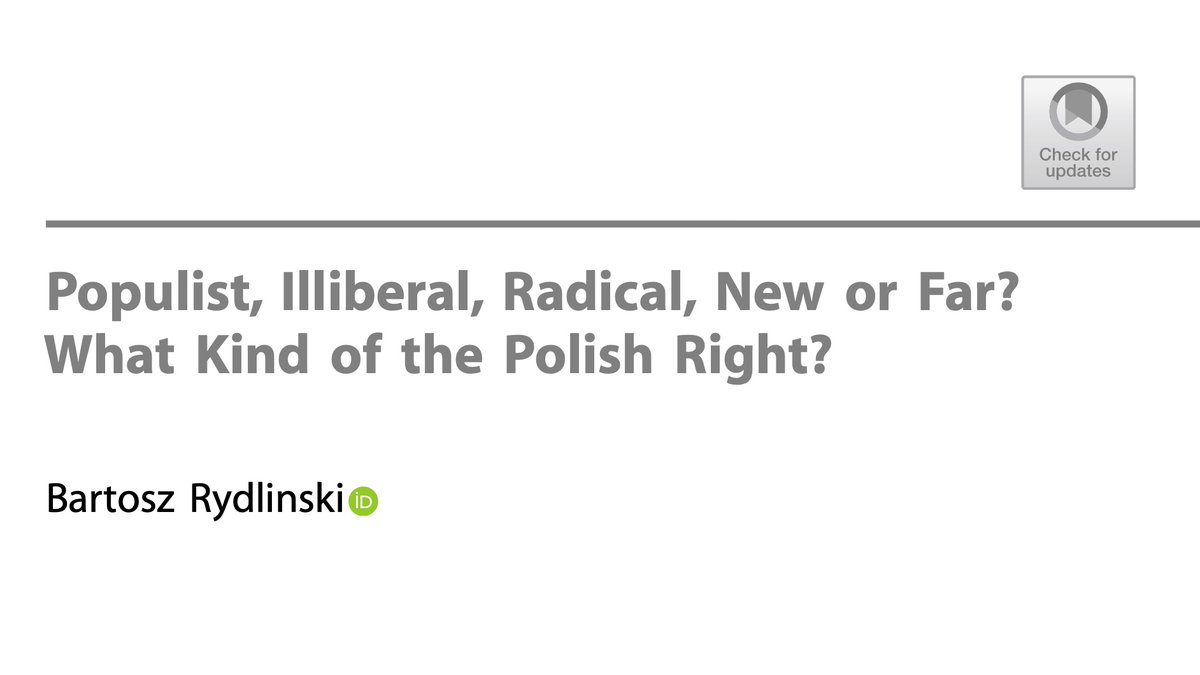
This chapter examines the ideological, political, and symbolic characteristics of Poland’s two main right-wing populist parties: Law and Justice (PiS, Prawo i Sprawiedliwość) and Confederation (Konfederacja).
https://t.co/BiBrOOuiTQ
Sztuczna inteligencja przypisała jej słowa, których nigdy nie wypowiedziała. Joanna Dunikowska-Paź opisuje, jak model Grok wywołał lawinę nienawiści o milionowych zasięgach i co to oznaczało dla niej i jej rodziny. Sąd umorzył postępowanie. To powinno niepokoić każdego z nas.
Cała rozmowa w audycji Kamila Wróblewskiego "Zagubiona Autostrada". Słuchaj na https://t.co/mw7NryhY63 oraz w aplikacji TOK FM👉 https://t.co/uHGBmC8R7X
#dezinformacja #sztucznaInteligencja #deepfake #wolnośćsłowa #bezpieczeństwowsieci
‼️Dziennikarz FA uniewinniony‼️
Sąd I instancji w całości oddalił zarzuty o braku autoryzacji wypowiedzi oraz zniesławienia prof. Krystiana Marszałka!
Poszło o artykuł Mariusza Karwowskiego „Paper mills: członek Rady NCN pod lupą Komisji ds. etycznych”
https://t.co/KtfIYIAo5c
Michał Bilewicz mnie zablokował na X-ie
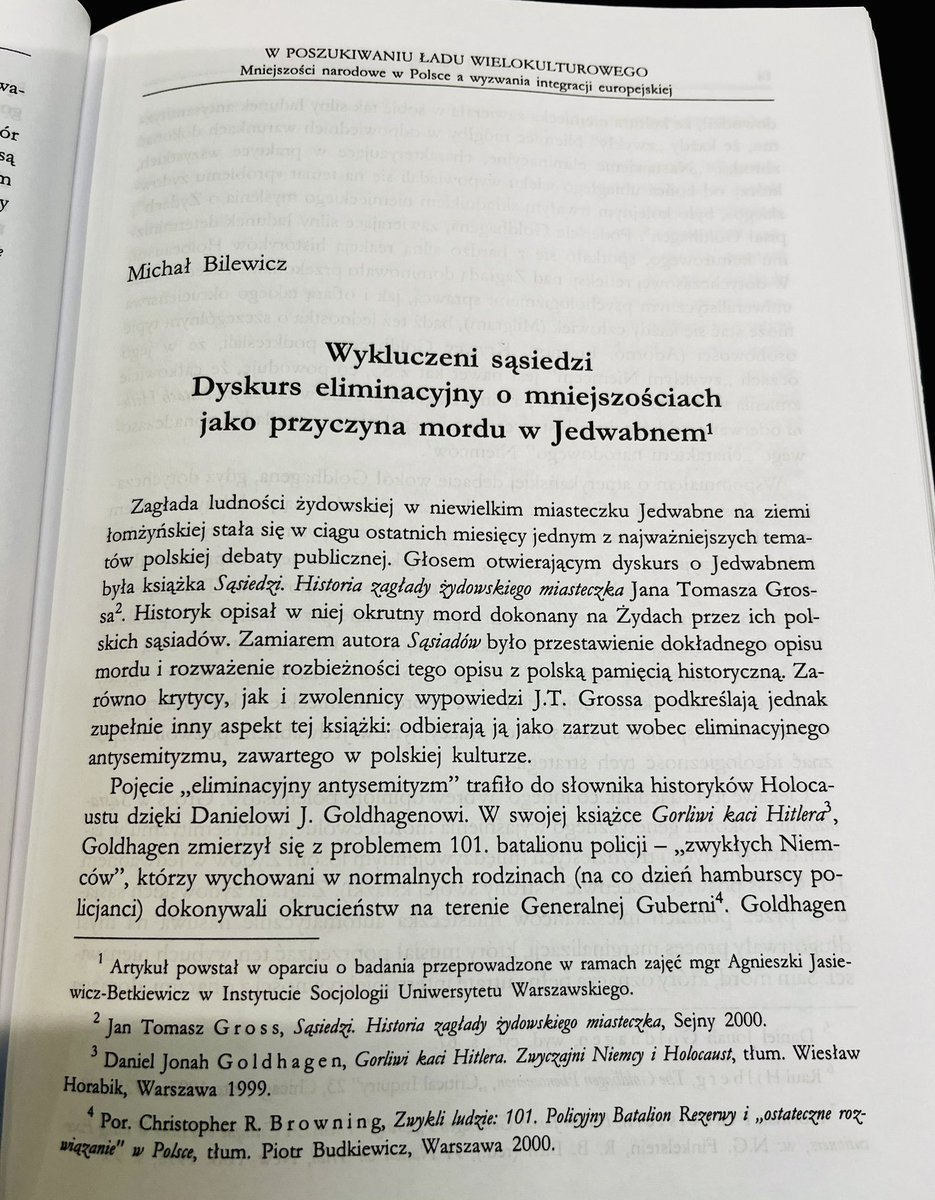
Czy ktoś może poinformować Pana Profesora, że dotarłem do jego artykułu gdzie ponoć znajdują się odnośniki do konkretnych numerów czasopism z Niepokalanowa?
Proszę szczególnie @DrAGrabowski oraz @Kloc_K
Cóż, z tego co wiem nikt Żerki nie złapał na fałszywych przypisach, a Bilewicza tak. Stąd z punktu widzenia "nauki" to Żerko będzie jej częścią, a Bilewicz jeśli już, to tylko warunkowo.
30 maja odeszła nagle Kasia - prof. Katarzyna Kołodziejczyk, dziekan @WNPiSM . Objęła stanowisko niecały rok temu, w trudnym dla Wydziału czasie. Ujmowała wszystkim kompetencją i dobrocią. Poznaliśmy się ponad ćwierć wieku temu, gdy ja broniłem pracę magisterską, a Kasia była kierownikiem studiów. Ostatni raz widzieliśmy się na uroczystości nadania doktoratu h.c. prof. Adamowi Rotfeldowi.
Będzie nam jest bardzo brakowało.
Pożegnamy Kasię w czwartek 11 czerwca na starym cmentarzu na Służewie.
Lubię opowiadać o Daszyńskim
📸 zdjęcia z konferencji „Visual Political Propaganda: Sources, Incarnations, Future” na @UniWarszawski, podczas której wygłosiłem referat
„Prime Minister Ignacy #Daszyński – Between Modern Visual Codes and Pop Culture Industries”
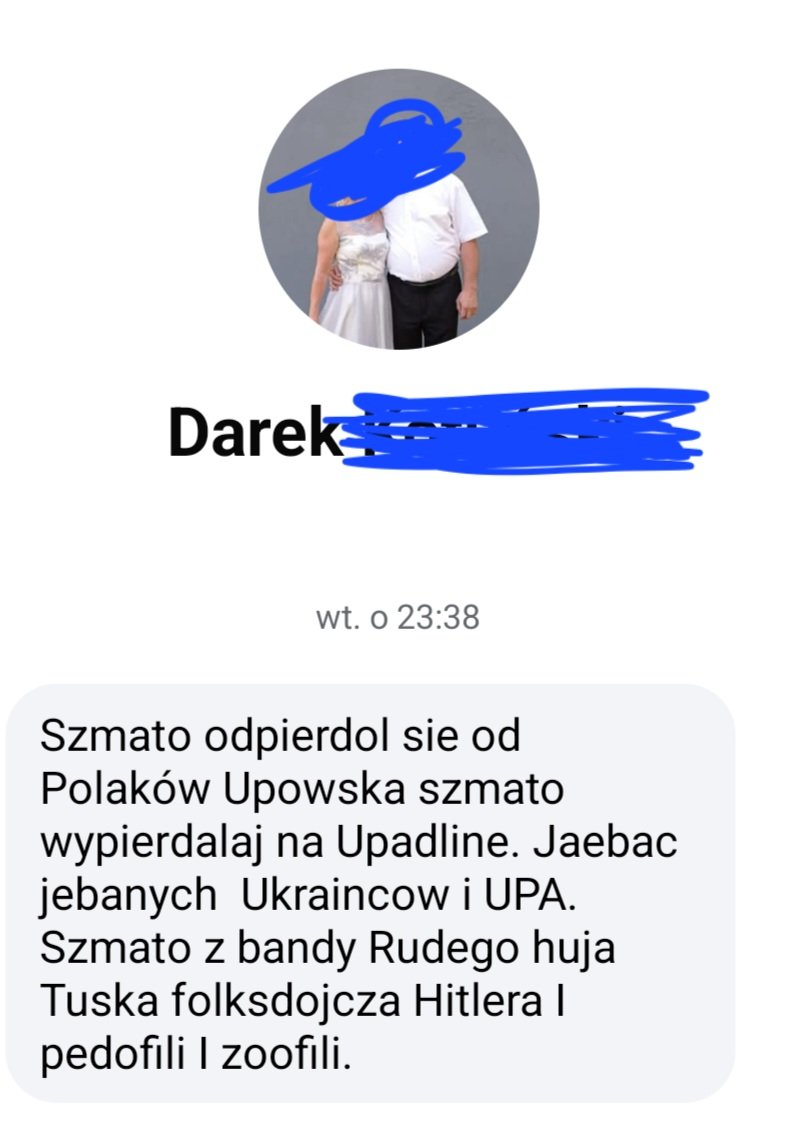
Serdeczne wiadomości od prawdziwych mężczyzn i przykładnych Polaków. Pod nazwiskiem, że ślubną fotografią, z żoną u boku i flagą oczywiście. Taki mamy klimat.
A to tylko malutkie przykłady.
🔜 za tydzień w środę 10 czerwca na Uniwersytecie Ekonomicznym w Krakowie razem z prof. dr hab. Anną Pacześniak oraz dr hab. Łukaszem Danelem, prof. UEK będziemy dyskutować o książce Evy Illouz
„Emocjonalne życie populizmu.”
Więcej info: https://t.co/KHNXsAFPBn
🔜 Zapraszamy do udziału w dyskusji wokół książki „Emocjonalne życie populizmu. Jak strach, odraza, resentyment i miłość osłabiają demokrację” (Eva Illouz).
🗓️ środa, 10 czerwca
🕠 13:15–14:45
📍 Sala G11, Uniwersytet Ekonomiczny w Krakowie (Rakowicka 27)
"Eskalacja napięć między Ukrainą a Polską nie przynosi korzyści ani Ukraińcom, ani Polakom" - pisze Andrij Sybiha, komentując aferę dot. nadania imienia "Bohaterów UPA.
Hmm, a z czego wynika ta eskalacja?
Walka o godne upamiętnienie polskich ofiar zamordowanych przez ukraińskich faszystów z OUN-UPA stanowi konsensus wszyskich sił politycznych w Polsce. Kiedy Ukraińcy to zrozumieją?
Considering my partial Polish roots, I’ve spent a long time thinking about what to write regarding the Ukrainian-Polish scandal, and the crisis in our relations as a whole. But I doubt I could ever say it better than Oleksandr Zinchenko. We have a lot of work ahead of us, and much can be said about the solutions, but we must remember the core truth - without Poland, Ukraine will be weaker, and without Ukraine, so will Poland. 👇
Why is the Polish right-wing turning hostile? Historian Oleksandr Zinchenko argues that it’s not about past UPA history - it’s about fear of Ukraine’s rising geopolitical power. The Polish right realizes that Russia is losing, and they are terrified of Ukraine’s growing agency. Poland is currently acting as a "Traumaland" - making past fears and historical scars the cornerstone of its national identity instead of processing them.
To overcome this crisis and stop mutual re-traumatization, Zinchenko proposes a comprehensive 7-step roadmap for reconciliation:
1. A Liturgy of Mutual Forgiveness - Ukraine should invite the next President of Poland to Kyiv for a joint prayer service at the historic St. Sophia Cathedral. The cornerstone of this spiritual reconciliation must be the powerful formula: "We forgive and ask for forgiveness."
2. Acknowledging Geopolitical Errors - The Polish leadership needs to declare that opposing Ukrainian independence in 1918-1921 was the single greatest mistake in our shared history. That division cost Ukraine millions of lives under Soviet rule, cost Poland hundreds of thousands, and directly led to Poland losing its own statehood in 1939. When we stand apart, we both fall.
3.Humanizing All Victims - We must stop dividing historical pain. A joint declaration should state: "All victims of our tragic past are neither strictly Polish nor Ukrainian - they are ours, they are human." Every act of ethnic cleansing committed in the 20th century by either side must be unconditionally condemned. The tragic deaths of children in Sahryn are no different from those in Wola Ostrowiecka.
4. Breaking the 80-Year Memorial Taboo - Both Presidents must jointly lay flowers at the historical conflict sites - specifically in Sahryn (Poland) and Ostrówki / Wola Ostrowiecka (Ukraine). Despite decades of Ukrainian urgings, no Polish president in over 80 years has taken this step. This historical omission must be corrected.
5. De-anonymizing the Tragedy - We need to move from abstract numbers to human faces. Ukraine and Poland should cooperate to research and publish a complete, nominal list of every single victim of the bilateral conflict, printed in both languages. Every individual must be remembered by name.
6. Agreeing to Disagree on National Pantheons - We must accept that our national heroes will never be the same. Poland must recognize that Ukrainian heroes are not Polish, and Ukraine must recognize that Polish heroes are not Ukrainian. Ukraine will not challenge the legacy of Piłsudski or Dmowski (who allied with Bolsheviks against Ukrainian statehood), and Poland must stop targeting those who fought for Ukraine's independence. We both fought for our freedom. We both won it. Period.
7. Ironclad Mutual Security Guarantees - A new strategic paradigm: Ukraine, possessing the most battle-hardened and powerful military on the European continent, will legally guarantee and actively defend Poland’s sovereignty. In return, Poland, as a major European power, will unconditionally support Ukraine’s integration and its diplomatic efforts for a just, lasting peace.
Ukraine has conquered its own existential fears on the battlefield. Now, we are strong enough to help Poland overcome its historical anxieties. By executing this roadmap, both nations can finally shed the baggage of the 20th century and build an unbreakable, equal alliance for the future.
🇺🇦🤝🇵🇱
Dear Mykhailo, and Colleagues,
In June 2015, during a meeting of the leadership of the Polish and Ukrainian Ministries of Foreign Affairs, the Polish side (at that time, still the Civic Platform-PSL government, and therefore *not* a right-wing administration) pointed to a lack of goodwill on the part of Ukraine in resolving bilateral issues.
What was Ukraine's growing geopolitical status 11 years ago, just after the second Minsk Agreement?
Partnerships are not about loving one another unconditionally and patting each other on the back - they are also about resolving existing problems, not sweeping them under the carpet, and coming up with justifications after the fact.
The concept of 'we agree to disagree' by no means does imply that the partners must stay silent and cannot express their disagreements. It means tolerating, but not *accepting*, the opposing positions.
There is a fundamental contradiction between a sovereign policy of remembrance and the necessity of uniting against Russia. Either Ukraine pursues a policy of remembrance without regard for its neighbours' sensitivities, in which case there is no basis for invoking a common threat, because Ukraine itself prioritises secondary matters over strategic ones.
Or, Ukraine is guided by the logic of the absolute necessity of victory in the war, in which case it needs allies to achieve this, meaning that political decisions should be made with a view to whether they increase the likelihood of assistance from partners or discourage them from providing such assistance.
The choice lies with Ukraine, as a sovereign state, and a sovereign state bears the consequences of its decisions, for every decision has its price.
NEW in @FortuneMagazine: Working-class people are deeply disillusioned.
Our polling finds they’ve had to make major sacrifices—skipping bills, buying groceries on credit, or taking on gig work—while believing politicians only serve billionaires, corporations, and themselves.