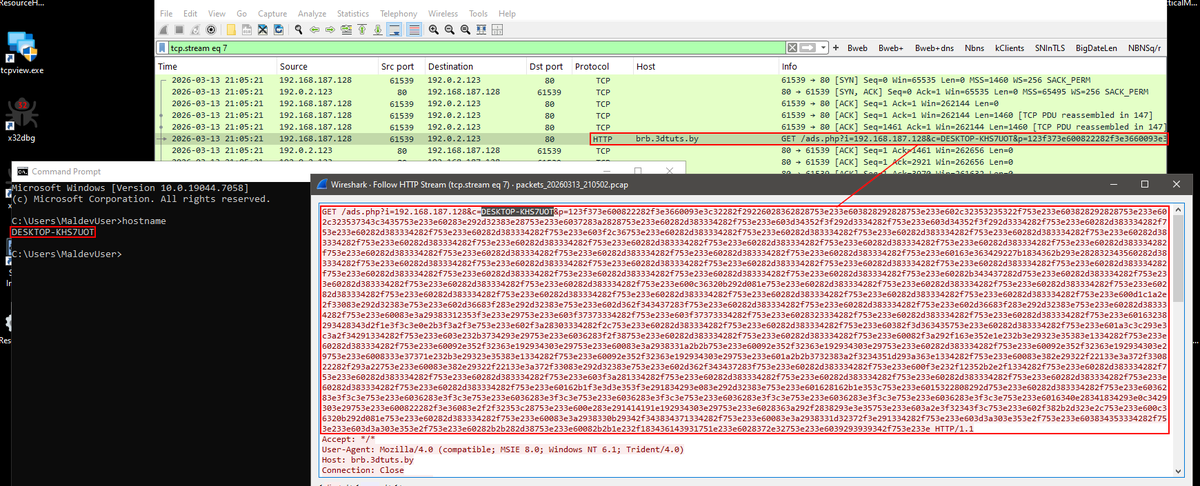
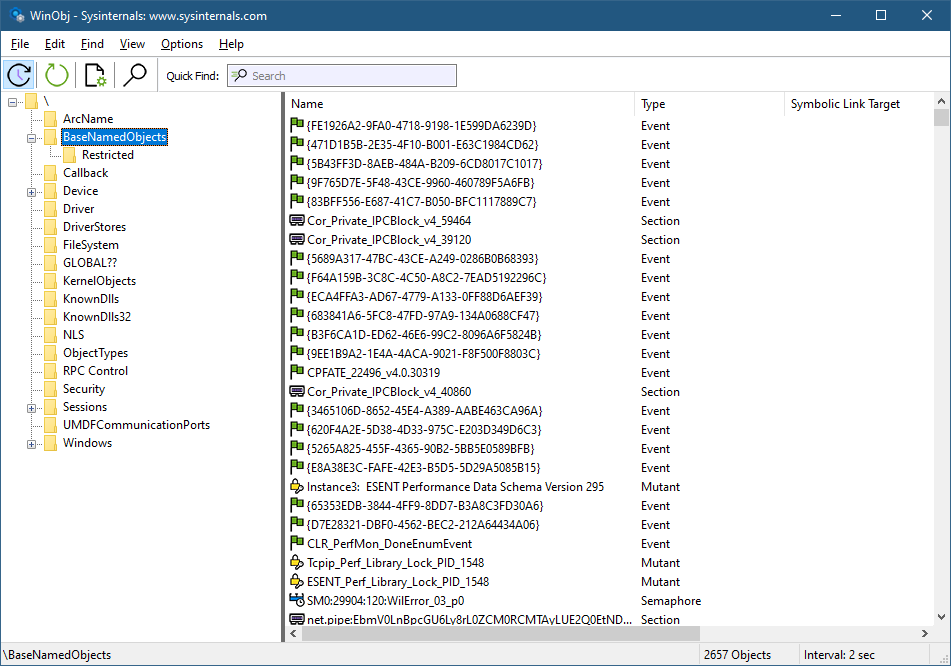
Another zero day exploit released by some nerd (can't remember name right now) because they're annoyed with Microsoft. It's been confirmed by other nerds. It is yet another legit zero day. Whew.
https://t.co/Zllhns1ztn
John the Ripper is the most universal password cracker on the planet, and every hacker needs to learn it!
This article covers installation, wordlist attacks, rules, and Linux shadow file cracking from the ground up.
https://t.co/hJ4bHDJpS3
@three_cube@DI0256@co11ateral
You don't learn reverse engineering by reading about it. You learn by doing it.
That's why I built https://t.co/BabZ0NwSJp, a free platform with hands-on RE challenges using real malware:
Whether you're starting out or sharpening your skills, this is how you level up.
A little-known feature in modern Windows is the ability to expose hierarchical data using the file system. This is called Windows Projected File System (ProjFS). Sharing some of the resource in it both (offensive & Defensive)
* https://t.co/Lc9zK6vuUN
* https://t.co/1XktzVBCzH
Offensive Security notes 🔥📢
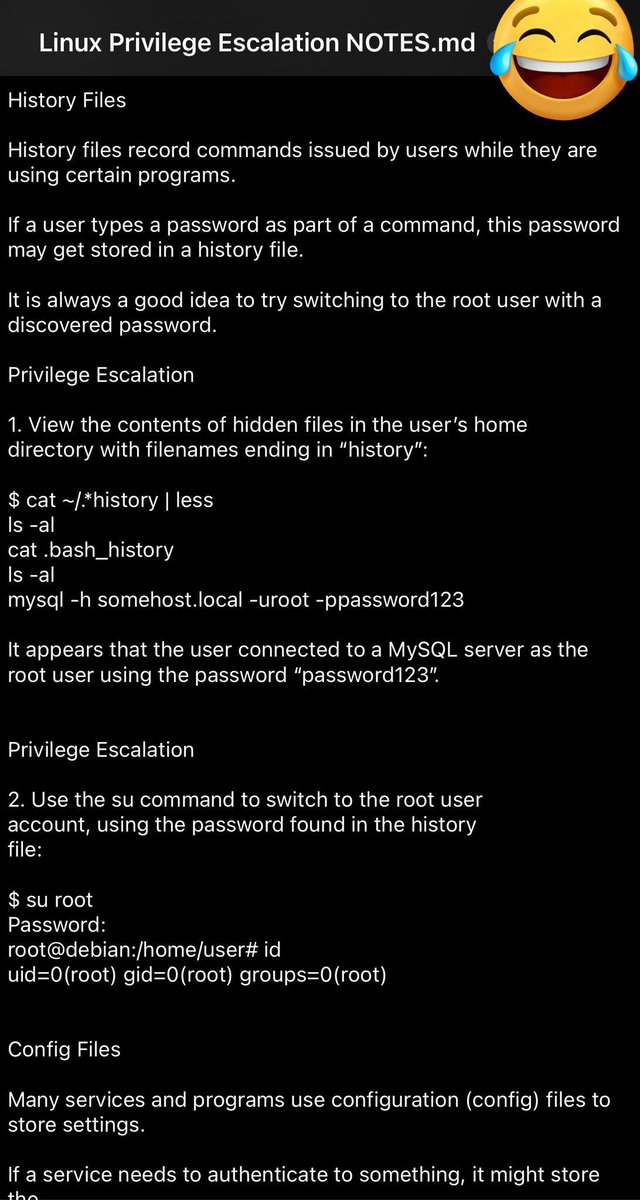
Welcome to the Linux Privilege Escalation Guide within my OSCP (Offensive Security Certified Professional) notes. 🚀🚀🚀
"Access to my OSCP Linux Privilege Escalation notes is limited to a select group.
First 10,000 people are eligible to receive access to OSCP Notes
If you'd like to receive these notes, please
👉follow me , 👉repost and drop 👉‘Yes’ and send me a private direct message.
This offer is exclusively for verified users, not new accounts."
In this comprehensive resource, we will explore the intricacies of escalating privileges on Linux systems, providing you with the knowledge and techniques necessary to navigate the challenging world of ethical hacking and penetration testing. From basic concepts to advanced strategies, this guide aims to equip you with the skills needed to elevate your privileges on Linux platforms, an essential skill for any cybersecurity professional.
📣 To my wonderful fans, your support means the world to me. Your unwavering encouragement keeps me going every day, and I'm truly grateful for each one of you.
😎😎😎😎😎😎😎😎😎😎😎😎😎😎
#Cybersecurity #Linux #PrivilegeEscalation #OSCP #EthicalHacking #InfoSec #PenetrationTesting #Security
#ITSecurity #Hacker #OnlinePrivacy
#DigitalSecurity #CyberAware #DataProtection #NetworkSecurity
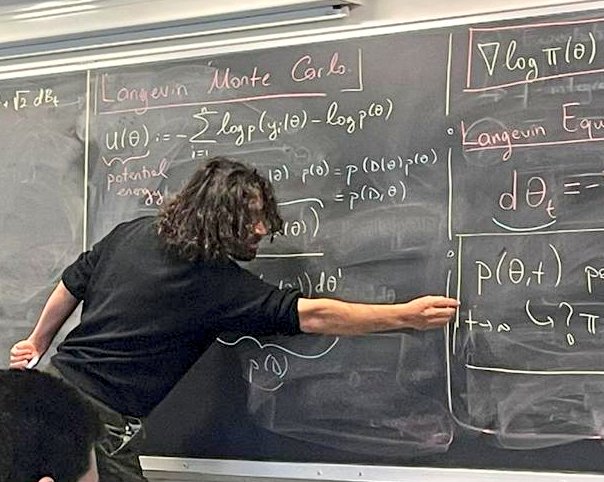
Umut Şimşekli is a prominent researcher at the intersection of probability theory, statistics, and modern machine learning, best known for revealing the role of heavy-tailed phenomena in learning algorithms. His work showed that the noise in stochastic gradient descent (SGD) is often not Gaussian, as traditionally assumed, but heavy-tailed and better modeled by Lévy processes. This insight fundamentally changed how researchers understand optimization, generalization, and robustness in deep learning. By connecting SGD to stochastic differential equations driven by stable laws, Şimşekli provided a probabilistic explanation for why deep networks can escape sharp minima and generalize well. He has also contributed to Bayesian nonparametrics, PAC-Bayesian theory, and information-theoretic learning principles. These ideas now influence optimization design, uncertainty quantification, and robustness analysis in deep learning. His work bridges classical probability with practical AI, showing how subtle statistical properties of noise shape the success of modern learning systems.
Red teaming basics: Cobalt Strike-CDN/Reverse Proxy Setup
https://t.co/Rw1p3QeI0E
TLDR; This blog post explain the usage of Content Delivery Networks can be used in conjunction with a C2-domain and Nginx as a reverse proxy in the context of Cobalt Strike for C2 communications.