bug bounty is 95% reading javascript for 6 hours and 5% finding a reflected xss in a logout endpoint that pays $50. and no, ai didn't change this. it just reads the javascript with you now.
Bug Bounty Tip #10
When you discover a new API endpoint, don't just test the request you found.
Replay it with:
Another user's ID
Another HTTP method (GET → POST → PUT → PATCH → DELETE)
Different Content-Type values
Missing parameters
Extra JSON fields
Many authorization bugs only appear after changing the request shape.
#BugBounty #AppSec
SSRF tip:
Do not stop at http://127.0.0.1.
Test parser gaps:
- http://127.1
- http://[::1]
- http://0.0.0.0
- decimal/hex IPs
- trusted.com@internal
- redirect to metadata
Best bugs live where validator and fetcher disagree.
#BugBounty#AppSec#Pentesting#WebSecurity #CyberSecurity
"My Complete Bug Bounty Hunting Workflow Every Command I Use" by Hacker MD 🤯🔥
👨💻 Hacker MD (BotGJ16)
🔗 https://t.co/5NTwPUrbR1
🔗 Join team 👉https://t.co/FeMz53HSN0
Burp Suite Professional costs 475 dollars a year per seat.
A senior software engineer in Amsterdam built the open source replacement as a side project. He put it on GitHub for free. It has 10,569 stars.
His name is David Stotijn. The software is Hetty.
Here is what Hetty is.
An HTTP toolkit for security research. A machine-in-the-middle proxy that sits between your browser and the target. Every request and every response flows through Hetty. You can read them, search them, intercept them, edit them, replay them, and send them again.
This is the core loop of every web application security test ever performed. Burp Suite charges 475 dollars a year for it. Hetty does the same job for zero.
Here is the feature set.
A machine-in-the-middle HTTP proxy with full logs and advanced search. An HTTP client for manually creating and editing requests, and replaying any request you already proxied. Request and response interception for manual review, with full edit, send, receive, and cancel control. Scope support to keep your work organized to a single target. A web-based admin interface that runs in your browser. Project-based database storage so multiple engagements stay separate. A GraphQL service for programmatic access.
The installer is a single Go binary. Works on macOS, Linux, and Windows. No Java runtime, no enterprise license server, no machine fingerprinting, no telemetry.
Here is the price ladder.
Burp Suite Professional: 475 dollars a year per seat.
Burp Suite Enterprise: thousands per year, contact sales for a quote.
Burp Suite Community Edition: free, but throttled, no scanner, no project save, no intruder rate.
OWASP ZAP: free and open source, now owned by Checkmarx after a 2024 acquisition.
Hetty: zero. Forever. One binary. No account.
A pentester working full time pays Burp 475 dollars a year. A team of 10 pentesters pays 4,750 dollars a year. A bug bounty hunter who finds one vulnerability has already paid for Burp twice over.
Or they download a 30 MB Go binary written by a freelancer in Amsterdam and keep every dollar they earn.
David has not pushed a new commit in 16 months. The last commit was January 13, 2025. That is normal for a tool that is feature-complete. HTTP has not changed. The proxy still proxies. The intercept still intercepts. MIT licensed code does not expire when the maintainer takes a break.
Buy a domain. Find a bug. Cash a bounty.
PortSwigger took a free industry tool and put it behind a 475 dollar paywall. A freelancer in Amsterdam gave it back. On every platform. For zero dollars.
Your proxy. Your binary. Your bounties.
(Link in the comments)
Not that important, people only talk about their small achievements all the time for the recognition. The best platform i get knowledge from was X, Medium, Github and Hacking platforms
This permission model of “ask the human before running commands” worries me, we can’t assume the next generation of developers who will be using AI from day 1 can even read or understand what these commands even mean and what the risk is of running them
Most people don’t realize how little real competition there is in bug hunting.
A huge part of the younger generation is focused on gaming, while others spend most of their time scrolling Instagram, TikTok and similar platforms. Even within tech, a lot of people are tied up in web development, chasing projects, clients or frontend trends.
And now with AI in the picture, many beginners get discouraged before they even start, thinking everything is already saturated or automated.
But the reality is very different. The field is still wide open.
If you stay consistent, actually learn the fundamentals and put in real effort, you’re already ahead of most people. The barrier to entry is much lower than it looks, and very few people are willing to go deep enough to stand out. That’s where the opportunity is.
Take advantage of it. Build your skills. Stay focused. This space can genuinely change your life if you take it seriously.
Backups Are Often the Weakest Door (Pentest+)
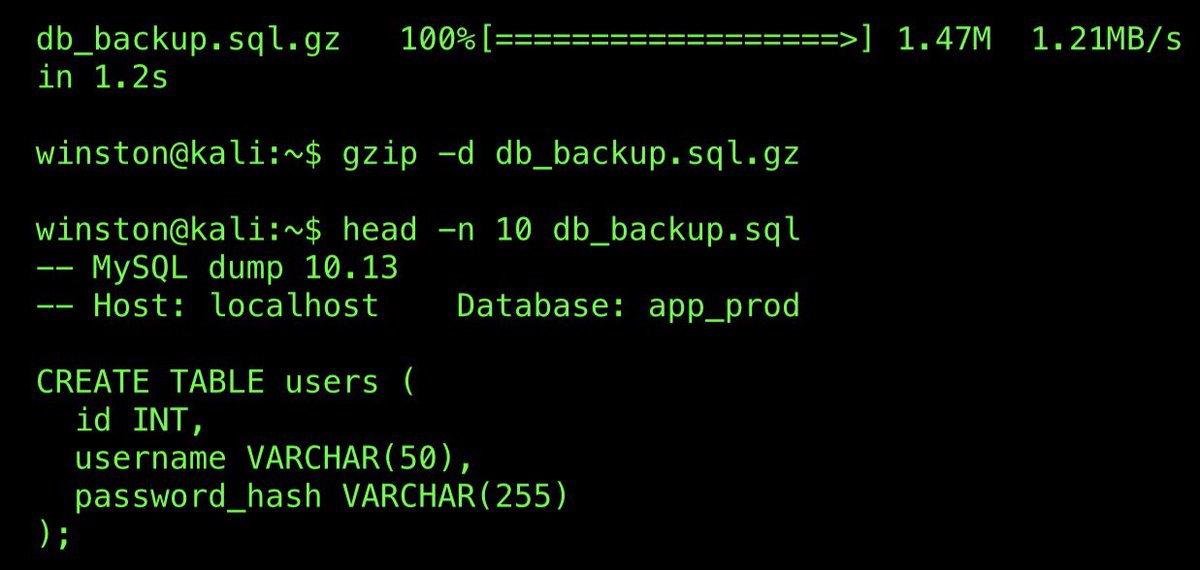
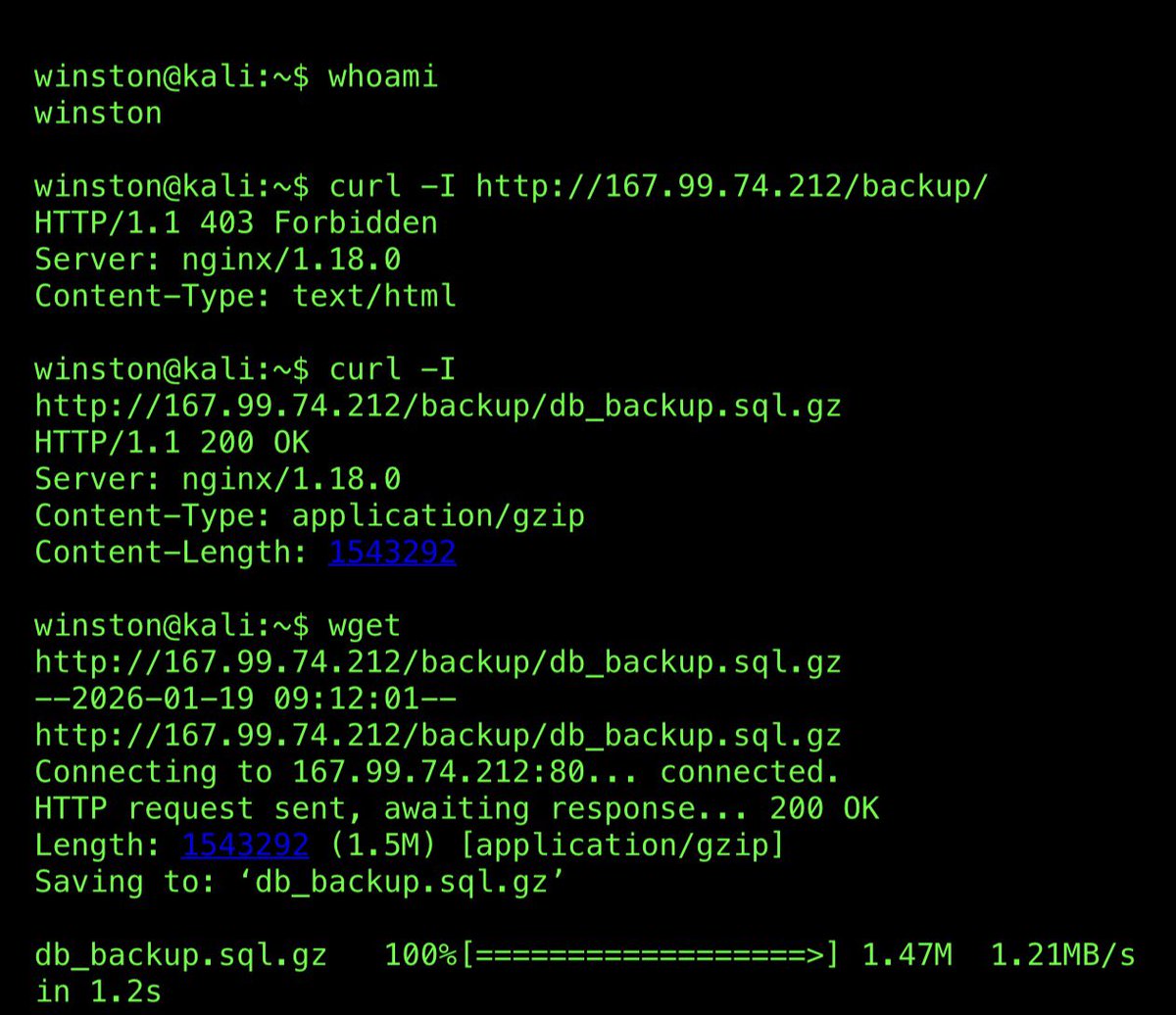
Backups are created to protect organizations from disasters, but they frequently introduce new exposure points. Backup directories, database dumps, and archived configurations are often stored on web servers or internal storage without the same access controls as the primary systems. Pentest+ highlights this risk because attackers frequently discover sensitive data not through exploitation but through poorly secured backup artifacts.
In the terminal below, I am checking a web server for backup files that were never meant to be publicly accessible. Directory enumeration previously revealed a restricted backup folder, but direct requests show that archive files are still retrievable. These backups often contain database exports, configuration files, and credentials that provide deeper access to the environment.
The danger of backup exposure is simple: the organization believes the data is protected because the production system is hardened. The backup quietly bypasses all of those defenses.
Phishing attacks start with a simple believable message.
This tool has multiple templates and has the ability to bypass spam folder.
Do you want this tool?