Just a humble attempt to sketch a temple complex borne out of my own imagination consisting of temple shrines incorporating various regional architectural styles.😊 I’ve allowed my creative juices to flow freely by indulging in a few artistic liberties. 1/n
Dear All,
I am happy to share that an article about my recent discovery regarding the death date of Hoysala King Vishnuvardhana has been published in today’s Prajavani newspaper.
I am grateful for this recognition and happy to share this important historical finding.
This is where Pune is headed.
Where do you go if you want to spend a day outdoors with your family or friends? Where do children play gully cricket and dubba eyespice these days? Where can non affluent youngsters train for army or police entrance? All the 'open plot' reservations have long been converted to real estate
#VetalTekdi is one such space where people of every age and socioeconomic class can come for physical exercise or mental relaxation, and even here they want to build roads. Must every bit of urban green space be 'developed' and monetised?
Kemar Roach was born stubborn.
At 5'8" he should have been a batter or maybe a spinner. In Caribbean, fast bowlers are supposed to look like they fell out of a coconut tree & kept growing. Roach just ran in faster than physics suggested he should.
In 2009, when senior players went on strike. West Indies had to pick a 2nd string side against Bangladesh with 9 debutants. Roach took 13 wickets in 2 matches. When big names came back, he was the only one they kept.
Then came WACA, December 2009. He hit Ricky Ponting in ribs,then elbow. almost 150 kmph. Ponting's forearm went into spasm. He could not hold the bat. He walked off the field, embarrassed, for first time in a long career. Roach dismissed him in 2nd innings immediately. He got Ponting out 5 times in 6 Tests.
But speed kills the bowler too. By 2013 his shoulder was gone. Surgery in Jamaica.then car crash. Rain on a Bridgetown road & his BMW flipped multiple times. He walked away with a cut on his head. his shoulder though never came back the same. In Australia 2015 he took no wickets in 3 Tests. Dropped & forgktten. His pace had dropped from 88 miles per hour to 80. At that speed, at that height, you are supposed to disappear.
Instead he rebuilt everything. His action, angle, his mind. He became a seam surgeon. Round the wicket to left handers. A front leg brace. Late swing. Since 2018 he has taken 153 wickets at 24.34 average & 48.9 strike rate. Only Bumrah, Cummins & Rabada have taken more wickets than him with better average & strike rate. Mind You, Roach turned 30 years in 2018 itself.
In 2021 Surrey signed him. He took 97 wickets for them. Surrey won 3 consecutive County Championships.
West Indies dropped him again in 2025. Director of cricket wanted youth. Then injury crisis in New Zealand & they called him back. He batted for 233 balls for 58* in almost 5 hours to save a Test.
Then yesterday at Antigua, he bowled Asitha Fernando & became first West Indian to 300 Test wickets since Curtly Ambrose in 1997. 29 years between them. His teammates mobbed him. A shirt with 300 on the back.
West Indies cricket is supposed to be about pairs & quartets. Walsh-Ambrose & Marshall-Holding. Roach did it alone. 161 Test innings & 2590 overs without anyone truly sharing the load. And still he got there.
ಗುಜರಾತನ “ರಾಣಿ ಕೀ ವಾವ್” ಎಂಬ ಹೆಸರಿನ ಬಾವಿಯ (step well) ಬಗ್ಗೆ ಎಲ್ಲರೂ ಕೇಳೆ ಇರ್ತೀವಿ, ಆದರೆ ನಮ್ಮ ಕರ್ನಾಟಕದಲ್ಲಿ ಅಂಥದೇ ಒಂದು ವಿಶಿಷ್ಟ ಮೆಟ್ಟಿಲು ಬಾವಿ ಇದೆ ಎಂದು ಎಷ್ಟು ಜನರಿಗೆ ತಿಳಿದಿದೆ?
ಗದಗ ಜಿಲ್ಲೆಯಲ್ಲಿ ಪುರಾತನ ‘ನಾಗ ಕುಂಡ’ ಎಂಬ ಹೆಸರಿನಲ್ಲಿ ಒಂದು ಮೆಟ್ಟಿಲು ಬಾವಿ (stepwell) ಇದೆ. 11 ನೇ ಶತಮಾನದಲ್ಲಿ ಕಲ್ಯಾಣದ ಚಾಲುಕ್ಯರ ರಾಜಧಾನಿಯಾಗಿದ್ದ “ಸೂಡಿ” ಇಂದು ಒಂದು ಪುಟ್ಟ ಹಳ್ಳಿ. ಈ ಹಳ್ಳಿಯಲ್ಲಿ ಇತರಹದ ಇನ್ನೆಷ್ಟೋ ಅವಶೇಷಗಳು ನಾಶವಾಗಿವೆ ಗೊತ್ತಿಲ್ಲ. ಆದರೆ, ಈ ಬಾವಿ, ಬೃಹತ್ ಗಣೇಶನ ಮೂರ್ತಿ, ಅಚಲೇಶ್ವರ ದೇವಸ್ಥಾನ ಹಾಗೂ ಜೋಡು ಕಳಸ ದೇವಸ್ಥಾನಗಳು ಮಾತ್ರ ಉಳಿದಿವೆ.
‘ಅಕ್ಕದೇವಿ’ ಎಂಬ ಹೆಸರಿನ ಚಾಲುಕ್ಯ ರಾಜಮನೆತನದ ಆಡಳಿತದ ಸಮಯದಲ್ಲಿ ಈ ನಾಗ ಕುಂಡ ಕಟ್ಟಿರಬಹುದು ಎನ್ನಲಾಗಿದೆ.
ಒಟ್ಟಿನ್ನಲ್ಲಿ ಇವತ್ತಿನ ಒಂದು ಅವಿಸ್ಮರಿಣೀಯ ದಿನ ನನಗೆ. ಈ ಅದ್ಭುತ ವಾಸ್ತುಶಿಲ್ಪವನ್ನು ನೋಡಲು ಈ ವಿಡಿಯೋ ನ ಪೂರ್ತಿ ನೋಡಿ.
📍Sudi village (near Badami), Gadag district, #Karnataka
@GemsOfINDOLOGY@GadagInsights@GadagHeritage
A fragmentary stone slab inscription from Gurgi, Rewa. Belongs to circa 10th century based on the characters, Kalachuri dynasty. Seems to record the construction of a Shiva temple. Here is the transcript:
१. र
२. नूर मि
३. गी र थी ते
४. वा श्म नां स
५. ते ना ख ण्डि त
६. स ता म ह व्र
७. र त्य नः कृत वृ ष
८. न स शि ष्या या सौ नि ज्ञ
९. द ते न्द णो यो गी न्द्रः
१०. त म् । तु कू सु प
११. दे वा ना म धि कः प्र च्च
१२. म ह सा न्नि धिः
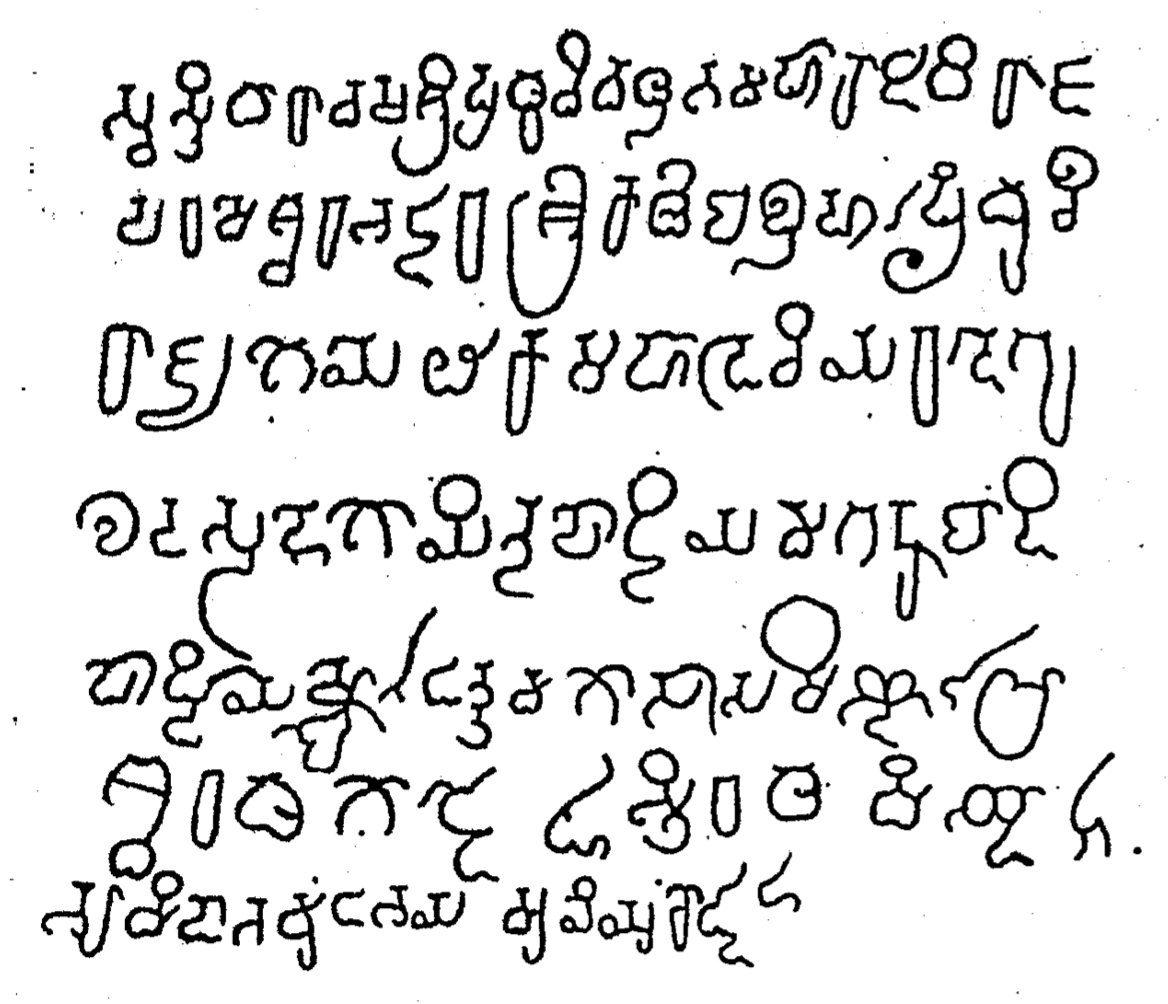
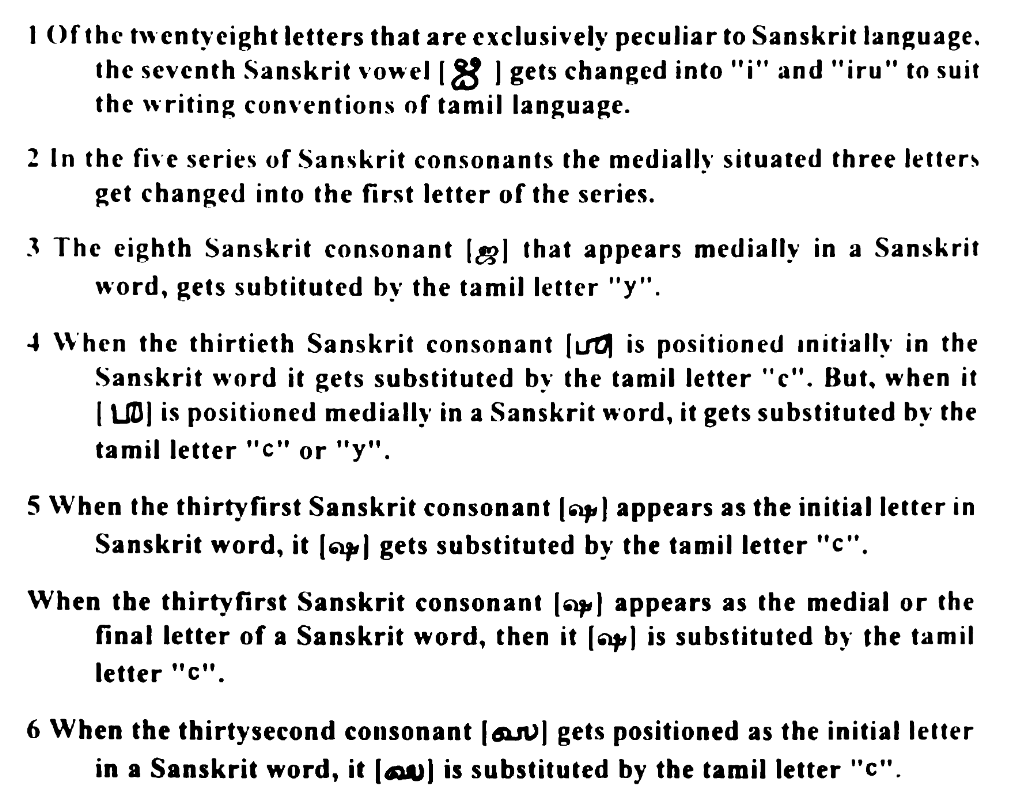
ಸಂಸ್ಕೃತ ��ದಗಳನ್ನು ತಮಿಳಿನಲ್ಲಿ ಹೇಗೆ ಬರೆಯುವುದು. ನನ್ನೂಲ್ ಎಂಬ ವ್ಯಾಕರಣದಲ್ಲಿ ೧೪೬-೧೫೦ ಸೂತ್ರಗಳು ನಮಗೆ ಸಹಾಯ ಮಾಡುತ್ತವೆ.
संस्कृत शब्दों को तमिल में कैसे लिखें। ऩन्नूल नाम की व्याकरण के 146 से 150 तक के सूत्र हमें बताते हैं।
https://t.co/r5BPWKi0hu
बोलचाल की तमिल और पुस्तकों में लिखी जाने वाली तमिल को एक साथ सिखाती पुस्तक: Tamil: An Auto-Instructional Course.
Textbook: https://t.co/DlZ4FfJ99o
Handbook: https://t.co/SjgwpnWxkB
Workbook (Spoken): https://t.co/YusVTBi8ok
Workbook (Written): https://t.co/kwnBzbQ4mM
It is incredibly frustrating to watch celebrity chefs & pop-history influencers look directly into a camera & confidently state, "Did you know our favorite South Indian staple, the Idli, actually came from Indonesia?" This entire narrative is a colossal house of cards. It is a classic case of academic confirmation bias that transformed into viral disinformation.
When an entire nation is taught to believe that they could not even figure out how to steam w/o foreign intervention, we have to look at the raw data to puncture the bubble.
Almost every single article/tweet/celebrity chef video claiming that the idli is Indonesian can be traced back to exactly 1 source: a single speculative paragraph written by the late food historian K.T. Achaya in his 1994 book, Indian Food: A Historical Companion. Achaya theorized that between 800-1200 CE, Indonesian kings traveling to India brought royal chefs who introduced a fermented, steamed dish called "Kedli."
Yrs after this book was published, investigative food journalists (such as Janaki Lenin) & linguistic researchers actually went to Indonesia to look for this legendary precursor. The word "Kedli" does not exist in any Indonesian language/dialect/historical dictionary. There is no historical record/recipe/anthropological trace of an ancient Indonesian dish called "Kedli." Achaya completely misread/manufactured the term based on a loose phonetic guess, yet it became an accepted "fact" because no 1 bothered to check the data.
The claim that India did not have idlis until the 12th century is thoroughly obliterated by our own ancient libraries. The evolution of the idli is meticulously recorded in indigenous Indian encyclopedias & literature centuries before Achaya’s timeline:
- 920 CE (Vaddaradhane): A classical Kannada text by the Jain monk Shivakotiacharya explicitly details a dish called Iddalige. It was a staple food item offered to Jain ascetics. - 1025 CE (Lokopakara): The earliest available Kannada encyclopedia, written by Chavundaraya II, gives a literal recipe for it: soaking split black gram (Urad Dal) in buttermilk, grinding it into a fine paste, mixing it with spices & the clear water of curd.
- 1130 CE (Manasollasa): The Western Chalukya King Someshvara III wrote a monumental Sanskrit encyclopedia detailing royal cuisine. He explicitly gives the recipe for Iddarikā describing how the urad dal cakes are prepared & cooked.
When skeptics are confronted with these ancient texts, they quickly shift the goalposts. They argue: Okay, fine, India had Iddalige, but it was just made of Urad Dal. It did not use rice/long fermentation/steaming... those techniques came from Indonesia! This is textually & technologically false.
Critics often cite the 7th-century Chinese traveler Xuanzang, who claimed India did not use steaming vessels. But we do not need a specialized metallic Chinese steam-cooker to steam food. For millennia, Indians practiced Kopotapaka & basket-steaming, tying a thin muslin cloth over a standard clay pot (Kunda) filled with boiling water, placing the batter on top & covering it with a lid. In fact, the Kanchipuram Idli is still steamed in traditional bamboo baskets lined with Mandhara leaves.
To say India did not understand fermentation until the 12th century is a historical joke. India is the cradle of complex biomaterial fermentation. The Rigveda & Ayurvedic Samhitas from 1000s of yrs ago are packed with advanced formulas for fermenting grains, herbs & dairy to create Asavas, Arishtas, Kanji & Dahi (Curd). The natural wild bacteria (Leuconostoc mesenteroides) required to leaven idli batter live natively on the husks of black gram found right here in the subcontinent.
Why do celebrity chefs keep repeating this lie? Because of a deeply ingrained post-colonial inferiority complex that dominates modern food media. There is a structural bias that assumes any advanced, scientific culinary technique, like molecular leavening/pasteurization/specialized steaming must have been imported to India from somewhere else. It sounds edgy, counter-intuitive & intellectual for a chef to tell an Indian audience that their national breakfast is not actually theirs.
The idli is a native, organic, ground-up evolutionary masterpiece of South Indian kitchen science. It evolved naturally from the lentil-based Iddalige of the 9th century into the perfectly balanced rice & lentil fluffy wonder we eat today. The next time a chef tries to tell you the idli is from Indonesia, ask them to show you the recipe for "Kedli." Watch how fast they fold.
#TIL that the original Kannada name for the Krishna river was ಪೆರ್ದೊಱೆ (perdoṟe), literally 'the big river'. The Krishna has the has the largest river basin in #Karnataka, draining ~60% of the state. The Tungabhadra was called ಕಿಱುದೊಱೆ (kiṟudoṟe), literally 'the small river'.
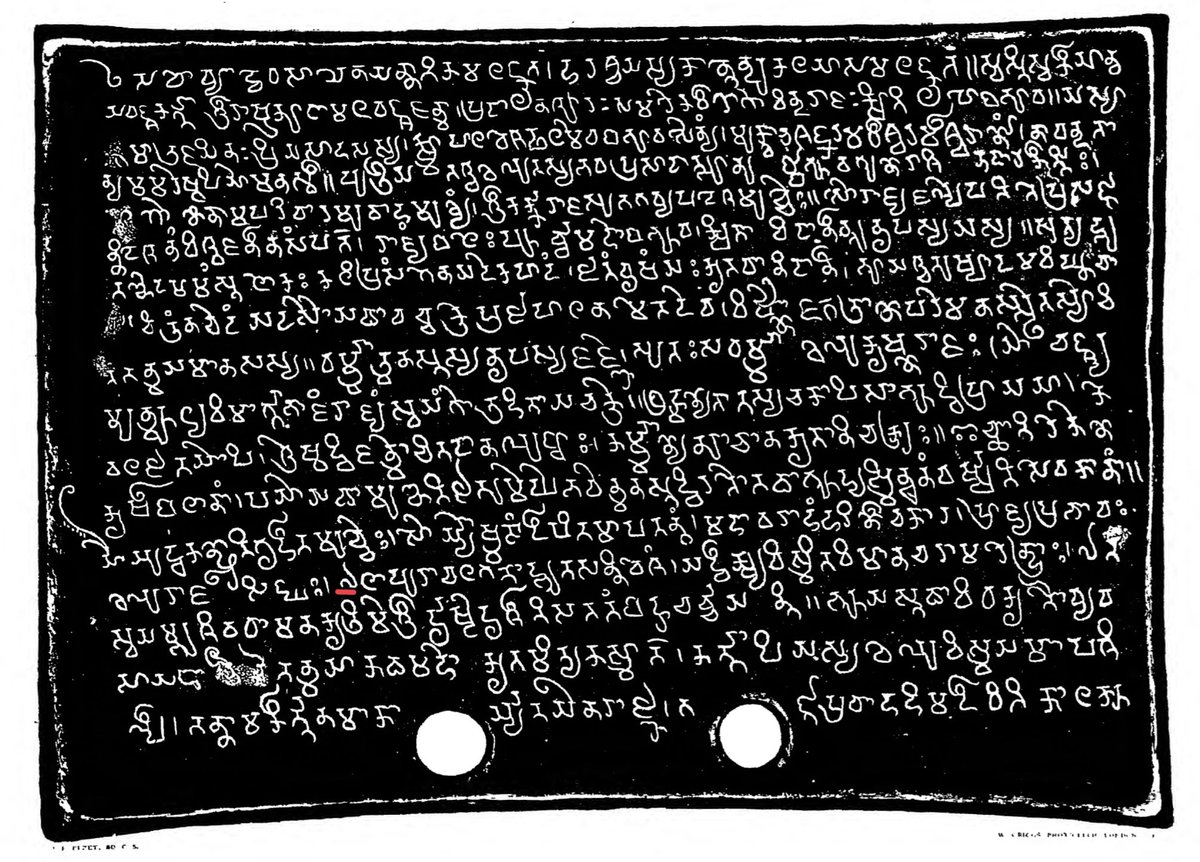
As beautiful as this structure itself, are the copper plates from 812 CE that name its builder as Kr̥ṣṇa I of the Rāṣṭrakūṭa dynasty. These plates are in Sanskrit in Old Kannaḍa script, and were dug up in the 1800s during the building of a house in Vaḍōdarā, Gujarāt.
Adding to an old thread on Kannada historically being a common language further North than today. See the distribution of village names ending in 'v(a)li' (← Old Kannada paḷḷi) in Mahārāṣṭra, they're dominant in the Kōṅkaṇ (i.e. coast) and Dēś (i.e. South MH) districts.
An example of the wealth (some) ಸೂಳೆ sūḷe-s possessed is seen in a Rāṣṭrakūṭa era inscription (probably the oldest attesting the word) of 771CE at the Lōkēśvara temple, Paṭṭadakal. It records temple grants by the sūḷe Bādipoḍḍi, daughter of another sūḷe Gōyindapoḍḍi.
A set of terms of common origin characterising the Deccan plateau:
- Kannada kaḍe, Telugu kaḍa 'place, direction, side'
- Marathi kaḍē 'towards', kaḍ 'border, edge, side'
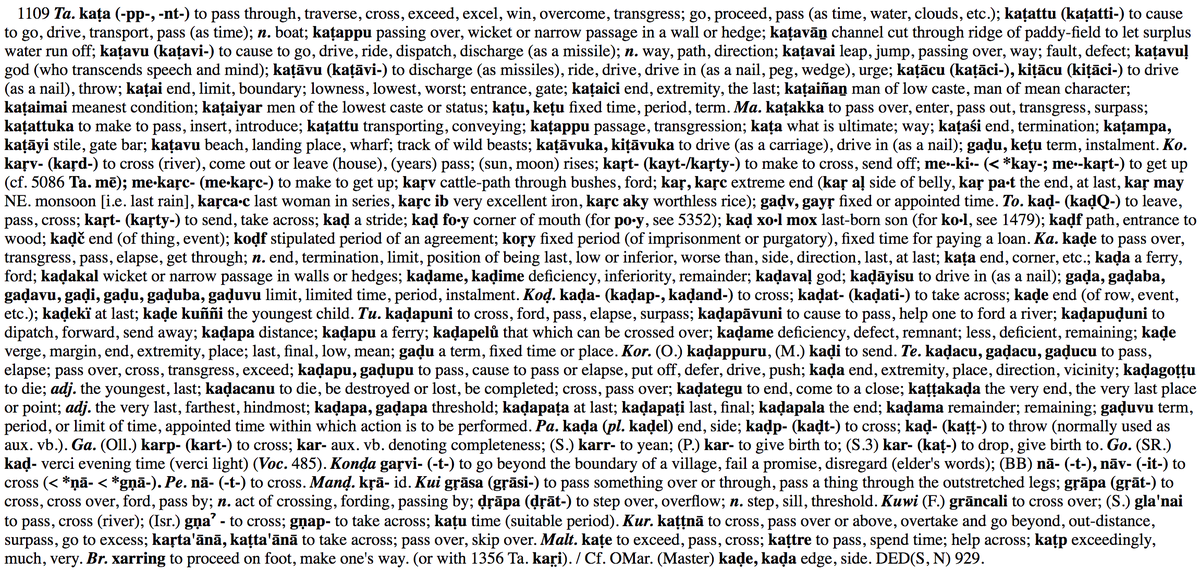
In Marathi's case they're borrowed from Kannada, these terms have widespread cognates in Dravidian.
ಹಳಗನ್ನಡದಲ್ಲಿ ನಾನು ಎನ್ನಲು ��ರಡು ಪದಗಳಿದ್ದುವು -
- ಆನ್ (ಎನ್ನನ್, ಎನಗೆ, ಎನ್ನ ಮುಂತಾದವು ಇದರ ರೂಪಗಳು)
- ನಾನ್ (ನನ್ನನ್, ನನಗೆ, ನನ್ನ ಮುಂ.)
ನಾವು ಎನ್ನಲು ಕೂಡ ಎರಡು -
- ಆಮ್ (ಮುಂದೆ ನಿಂತಿರುವವರನ್ನು ಹೊರತುಪಡಿಸಿ ನಾವು; ಎಮ್ಮನ್, ಎಮಗೆ, ಎಮ್ಮ ಮುಂ.)
- ನಾಮ್ (ಮುಂ. ನಿಂ. ಒಳಗೊಂಡು ನಾವು; ನಮ್ಮನ್, ನಮಗೆ, ನಮ್ಮ ಮುಂ.)
A set of copper plates from 940 CE, originally discovered in a well in Deoli, Wardha district, Maharashtra, naming an individual called Raṭṭa as the ancestor of the Rāṣṭrakūṭa dynasty.