Most traders focus on the breakout.
I focus on what happens after the breakout.
The first pause.
The first pullback.
The first low-risk entry.
That's where some of the best risk-to-reward opportunities are created.
Remember:
The money is not made by finding more stocks.
The money is made by entering at the right stage of the trend.
Save this note.
Study it this weekend.
Your future trades may thank you.
Follow @ChartMantra_
🔄 Repost if you found it valuable.
A Trading Plan: Do You Have One?
Successful traders have a plan to win. By carefully putting the odds in their favor for the long term, successful traders will overtake gamblers who rely on random trades and a prayer.
If you want to win in any area of life, you must be disciplined, study, and do the hard work. There are no short cuts, and especially not in trading. You need to enter the markets prepared and with a detailed plan to enable success. Here are the components of a trading plan:
The Components of a trading plan:
1. Entering a trade: You must know clearly at what price you plan to enter your trade. Will it be a break through resistance, a bounce off support, or a specific price, or based on indicators? You need to be specific.
2. Exiting a trade: At what level will you know you are wrong? Loss of support, a price level, a trailing stop, or a stop loss? Know where you are getting out before you get in.
3. Stop placement: You must either have a mental stop, a stop loss entered, a time stop alone, or a time stop with an indicator.
4. Position sizing: You determine how much you are willing to risk on any one trade before you decide how many shares to trade. How much you can risk will determine how much you can buy, based on the equities price and volatility.
5. Money management parameters: Never risk more than 1% of your total capital on any one trade. (2% maximum for aggressive traders who can handle bigger drawdowns.)
6. What to trade: Trade things you are comfortable with. Swing trading range bound stocks, trend trading growth stocks, or trend following commodities or currencies. Trade what you know.
7. Trading time frames: Are you a day trader, position trader, swing trader, or long term trend follower? If you are a long term trend follower, don’t get shaken out of a position in the first day by taking profits or getting scared. Know your holding period and adjust your plan accordingly.
8. Backtesting: Do not trade any method until you reviewed charts over a few years to see how you would have done. Alternatively, utilize backtesting software to analyze historical data for your system. There are also precooked systems like CAN SLIM, The Turtles Trading System, and many Trend Following Systems. You need to begin trading knowing you have an edge.
9. Performance review: Keep a detailed record of your wins and losses. You need to be sure that your method is working in real trading. Review this after every 20 trades. Also, if you had any issues with discipline, then make notes, learn from your mistakes, and the make necessary adjustments.
10. Risk vs. Reward: Enter high probability trades where you are risking $1 to make $3, or trade a system that wins big in the long term through trend following.
Regardless of how you trade, every trader must have a trading plan. Period.
Most traders look for the perfect stock.
I look for the perfect zone.
After studying hundreds of market leaders, I found one thing common among almost all big winners:
✅ Monthly RSI Above 60
✅ Weekly RSI Above 60
✅ Price Above Key Moving Averages
✅ Daily RSI Pullback Near 40 or 60
✅ Bullish Price Action Confirmation
This is what I call the:
⭐ ⭐ ⭐ ⭐ ⭐5 STAR ZONE
The goal is not to buy after a stock has already doubled.
The goal is to identify institutional strength before the next expansion begins.
Most traders focus on the breakout.
I focus on what happens after the breakout.
When higher timeframes show strength and the daily chart offers a low-risk entry, the odds shift dramatically in your favor.
That's where some of the biggest winners are born.
I've summarized my complete 5 Star Zone framework.
Save it.
Study it.
Build a watchlist around it.
One great setup can outperform months of random trading.
❤️ Like if you found value
🔄 Repost to help fellow traders
💬 Have you ever checked Monthly + Weekly RSI before entering a trade?
Follow @ChartMantra_ for momentum investing, stage analysis and high-probability trading setups.
🚨PRICE ACTION BLUEPRINT
✔ ORDER BLOCK – Key zone where institutions place large orders, often marking reversal points.
✔ SWEEP.
Liquidity grab above previous highs/lows before real move begins.
✔ MSS.
Market structure shift confirms change in direction.
✔ IDM.
Internal move showing imbalance and momentum.
✔ BOS – Break of structure validates trend continuation.
✔ ACCUMULATION.
Smart money builds positions before major drop or rally.
✔ TARGET.
Final destination where liquidity is taken and move completes.
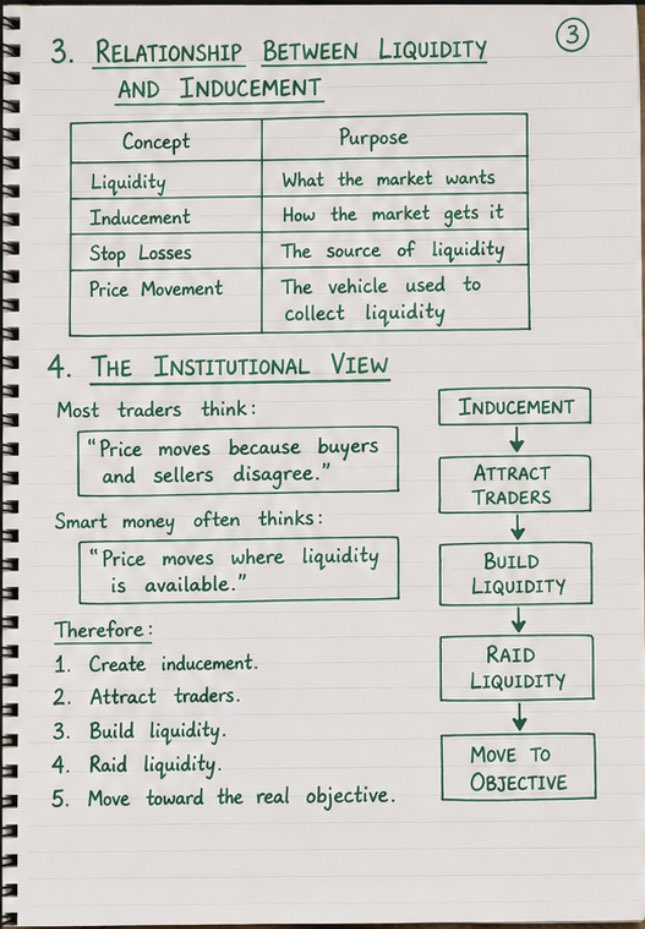
MARKET LIQUIDITY EXPLAINED IN SECONDS
✅ Liquidity shows how easily price can move without big slippage
✅ Buy stops sit above highs where short traders get taken out
✅ Sell stops sit below lows
where long traders get liquidated
✅ Resting liquidity = orders waiting on the book to be filled
✅ External liquidity forms above old highs & below old lows
✅ Internal liquidity forms between major pivots — great for quick spikes
Most traders draw trendlines.
Very few know how to trade the breakout.
The secret isn't the line.
The secret is what happens when the line breaks.
A valid Trendline Breakout tells you one thing:
📌 Supply and demand have shifted.
📌 Momentum is changing.
📌 A new trend may be starting.
My simple framework:
✅ Identify the trend
✅ Draw a valid trendline
✅ Wait for a decisive breakout
✅ Look for volume confirmation
✅ Manage risk ruthlessly
Remember:
The market doesn't pay you for predicting.
It pays you for reacting.
The biggest mistake traders make?
❌ Entering before the breakout
Professionals wait for confirmation.
Patience turns average setups into high-probability trades.
I've summarized my complete Trendline Breakout Strategy in this handwritten note.
Save it.
Study it.
Master it.
One clean breakout can outperform 10 random trades.
❤️ Like if you found value
🔄 Repost to help fellow traders
💬 Comment What's your biggest challenge while trading breakouts?
Follow @ChartMantra_ for practical trading education, breakout setups and market structure insights.
Here’s the consolidated list of scanners I’ve shared over the last few weeks.
📌 Bookmark this post for future reference:
1. Bullish Momentum Stocks
https://t.co/HUdzBJWa5K
2. Bearish Momentum Stocks
https://t.co/i8qUebj6KC
3. Volume Burst Scanner
https://t.co/BOjLSAjNnp
4. IPO Performance (Last 6 Months)
https://t.co/0OYpST7TQ4
Trade smarter, not harder.
🔄 Retweet if you find it useful.
#tradingstrategy #Investing #StockMarket #RSIEdge
Most traders focus on the stock.
Professionals focus on the STAGE.
Because every stock follows a cycle:
📌 Stage 1 → Accumulation
📌 Stage 2 → Markup
📌 Stage 3 → Distribution
📌 Stage 4 → Markdown
The biggest money is made when you identify the stage before the crowd.
❌ Buying in Stage 3
❌ Holding in Stage 4
is where most retail traders lose money.
The real edge?
✅ Buy when institutions accumulate
✅ Add on high-volume breakouts
✅ Ride Stage 2 trends
✅ Protect profits when distribution begins
Remember:
Price is the result.
Volume tells the story.
The trend is just the outcome of smart money positioning.
I've summarized my complete Stage Analysis framework in this handwritten note.
Save it.
Study it.
Master it.
One chart can change your portfolio.
One stage can change your returns.
❤️ Like if you found value
🔄 Repost to help other traders
💬 Which stage do you think the market is in right now?
Follow @ChartMantra_ for high-probability setups, stage analysis, market structure and breakout strategies.
Most traders know Support & Resistance.
Very few understand how it actually works.
Here are 7 truths about Support & Resistance that completely changed the way I trade:
• More tests often weaken a level
• Support & Resistance are zones, not lines
• Multi-year highs attract everyone
• Location matters more than prediction
• Resistance can become support
• Stop hunts are real
• Risk management beats accuracy
This is the kind of stuff nobody teaches beginners.
I've summarized everything in one handwritten note.
Save it now.
A few months from today, you'll thank yourself.
❤️ Like if you learned something
🔄 Repost so other traders can learn
💬 Which point surprised you the most?
Follow @ChartMantra_ for high-probability trading setups, market structure and price action education.
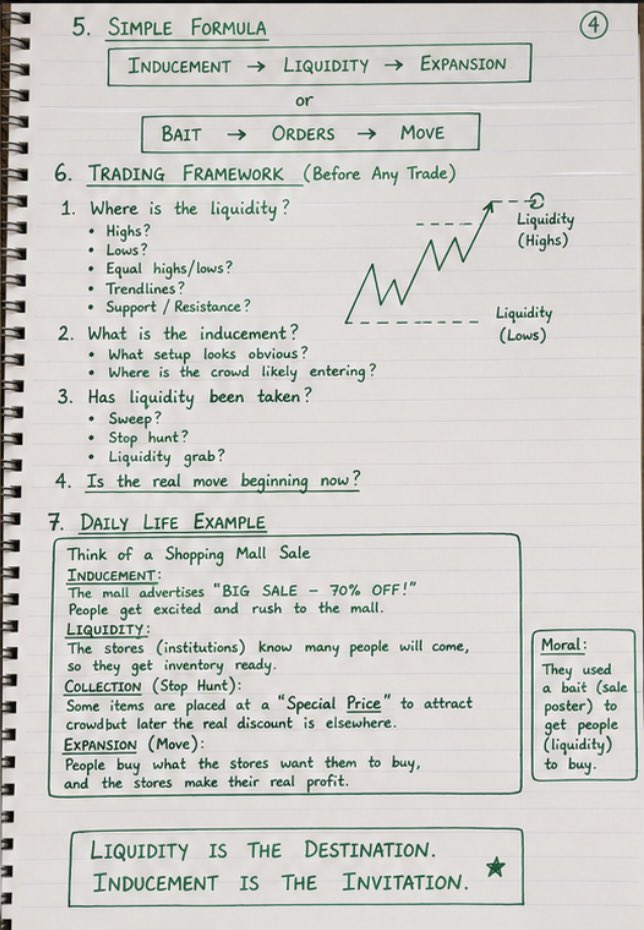
HOW TO FIND LIQUIDITY
Liquidity is where buy and sell orders are concentrated, making it a key target for price movement. Common liquidity zones include Previous Day High/Low, Previous Week High/Low, Swing Highs and Lows, Equal Highs and Lows, 4H Candle Highs and Lows, Previous Month High/Low, and Previous Session High/Low. Price often seeks these levels, sweeps liquidity, and then reveals its true direction. By combining liquidity with market structure, FVGs, and Order Blocks, traders can improve timing and identify high-probability setups.
#Liquidity #ICT #SMC #PriceAction #LiquiditySweep #MarketStructure #EqualHighs #EqualLows #SwingHigh #SwingLow #PreviousDayHigh #PreviousDayLow #ForexTrading #SmartMoneyConcepts #OrderBlock #FVG #TradingEducation #DayTrading #RiskManagement
MASTER THOSE ENTRIES
Mastering FVG + Order Block + Fibonacci gives traders a powerful framework for identifying high-probability setups. First, wait for a liquidity sweep and a clear break of structure. Then look for a strong Order Block that creates a Fair Value Gap (FVG). Finally, use the Fibonacci 0.71 retracement level for precise entries. When all three align, you have an A+ setup with strong confluence and better risk-to-reward opportunities.
#ICT #SMC #FVG #OrderBlock #Fibonacci #LiquiditySweep #BreakOfStructure #MarketStructure #PriceAction #ForexTrading #TradingSetup #RiskManagement #SmartMoneyConcepts #DayTrading #TradingEducation
📌 The cleanest entries often come after the move everyone else missed. 📉
✔ Previous low retest
✔ Trendline confirmation
✔ Rejection candle
✔ Continuation
Trade structure, not emotions. 🎯
After Friday’s $SPY pullback, the VIX just reminded us it’s still breathing.
Here’s a clean cheat sheet + breakdown of what it really means for traders. Save this. 🧵
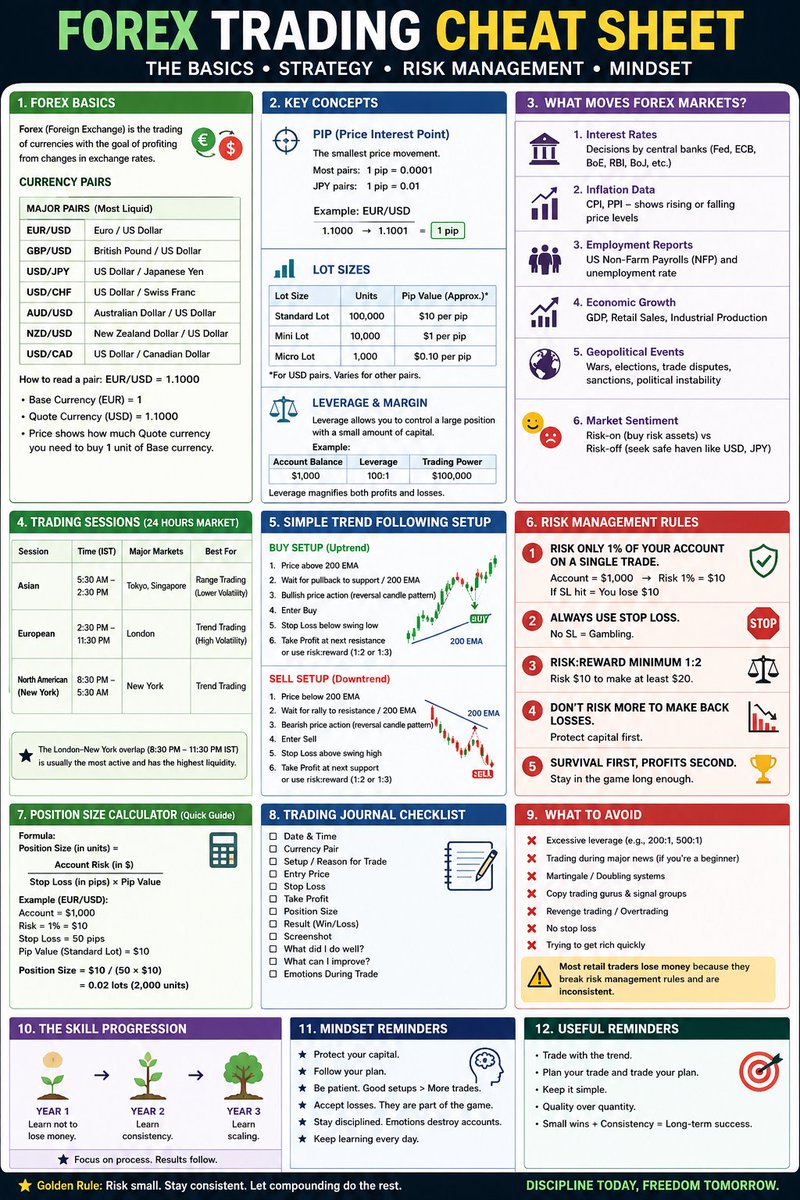
Learn Risk Management
This is where most traders fail.
My first rule:
Never risk more than 1% of your account on a single trade.
Example:
Account: $1,000
Maximum loss per trade:
1% = $10
If you lose:
10 trades in a row = 10%
You survive.
If you risk 10% per trade:
10 losses = account destroyed.
Professional traders think first about:
How much can I lose?
Beginners think:
How much can I make?
That mindset difference is everything.
📈 Trade with the trend. 🛡️ Protect your capital. 💰 Profits are a byproduct of discipline.
#Forex #Trading #RiskManagement #PriceAction #FinancialEducation #Investing #WealthBuilding #TraderMindset #MarketAnalysis #LearnToTrade