I'm intimidated by the fear of being average. Machine Learning , Cyber Security and Web Development, all excite me. Growth and change are the only constant.
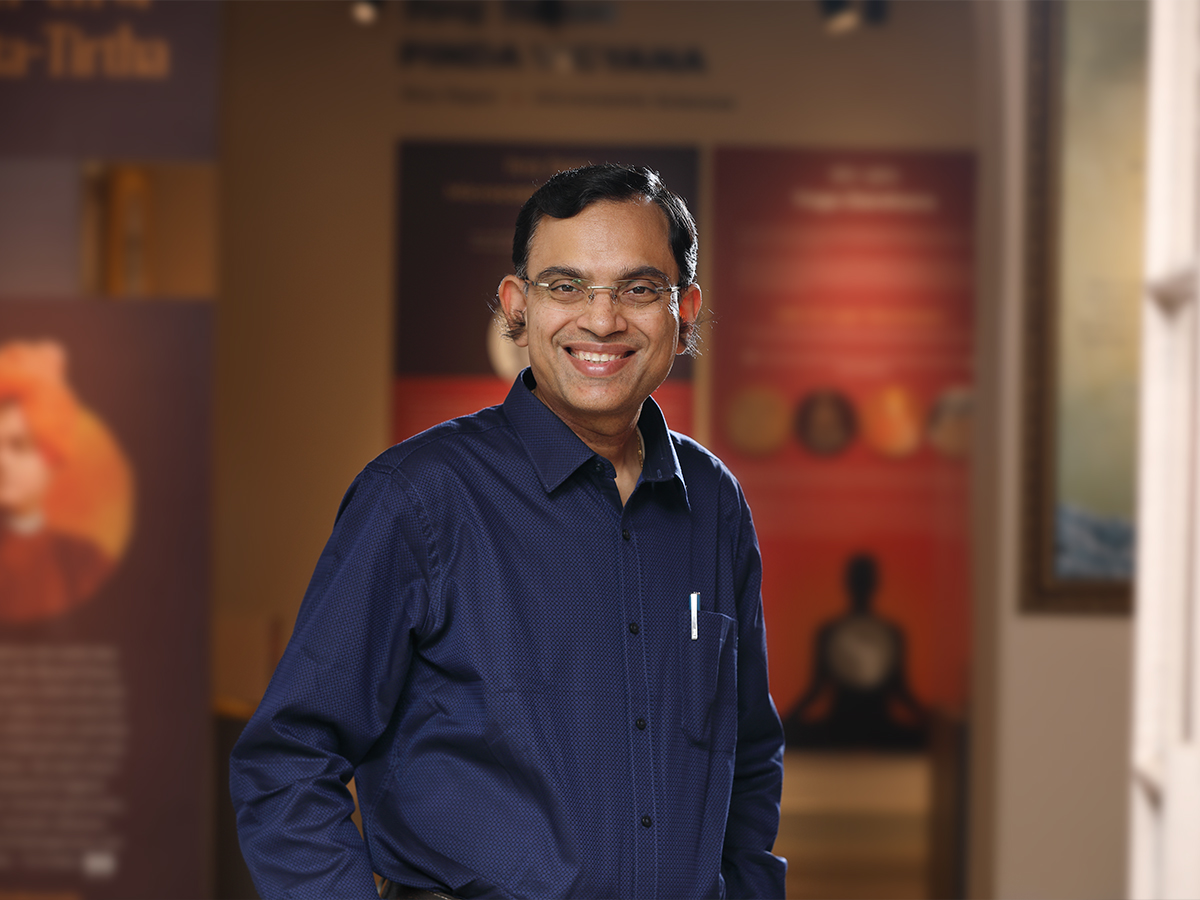
Meet Suman Chakraborty
(Every time a poor family gets a medical test for 2 rupees, he made that possible.)
> In 2025 he became Director of IIT Kharagpur, one of India's most prestigious institutions
> But this is not a story about that title
> This is a story about what he built before anyone was watching
> An Indian mechanical engineer born in West Bengal
> https://t.co/TMjo4uhO8z in Mechanical Engineering from Jadavpur University, 1996, secured 2nd rank
> Appeared for GATE 1997, secured All India Rank 1
> Joined IISc Bangalore for his M.E., emerged as faculty topper, won the Gold Medal and Senate Commendation
> Completed his PhD from IISc in 2002, won the Best Thesis Award Also won the Best International CFD Thesis Award in a worldwide competition
> The same year joined IIT Kharagpur as Assistant Professor
> Never left.
> Became full Professor by 2008.
> Built the first ever Microfluidics Lab in India of global standards
> Invented Paper and Pencil Microfluidics, a technology that runs medical diagnostic tests on simple paper strips
> No fancy lab. No expensive equipment. Just paper and physics.
> Developed COVIRAP, India's own rapid molecular diagnostic test for COVID-19
> Invented a hand held device that detects oral cancer on the spot
> Built a blood test kit that costs less than 2 rupees per test
> All built for the people who cannot afford hospitals
> Shanti Swarup Bhatnagar Prize in 2013, India's highest science award Infosys Prize in Engineering and Computer Science, 2022
> Over 525 published research papers. 25 patented technologies. 50 PhD students trained
A man who could have chased research glory chose to build 2 rupee tests for villages instead. He turned the most complex physics in the world into tools the poorest people on earth can use
"The purpose of science is not just to publish papers. It is to change lives."
He did not just say that. He proved it. One paper strip at a time.
@perplexity_ai I have received an email suspending my pro account stating thatI have violated the user terms and conditions. I strongly feel that this is an error. However when I reverted on email, I received an automated reply that the decision cannot be revoked. Request resolve
OpenAI just exited the video generation business entirely. App dead. API dead. No video inside ChatGPT. Disney’s $1 billion deal, signed four months ago, is dead.
Read that again. This isn’t a consolidation into the super app. Altman told staff Tuesday that OpenAI is winding down all products using video models. Disney’s own statement says they respect OpenAI’s decision to “exit the video generation business.” The Sora research team is being redirected to robotics.
The reason is sitting right there in the competitive data. Anthropic hit $19 billion in annualized revenue by early 2026 selling text and code. No video generation. No image generation. No consumer social app. No Disney deal. One product surface: chat, code, computer use, all in one place. OpenAI looked at where every dollar of market growth was coming from and saw the answer: coding and enterprise.
So now they’re copying the model. ChatGPT, Codex, and the browser merge into one app. Instant Checkout killed today too. Every consumer experiment is getting cut. What remains is the Anthropic playbook: one app, code and chat, enterprise and developer focus.
The Sora numbers explain the urgency. Total consumer revenue across iOS and Android since September: $1.4 million. Peak month was $540,000. Every video generation burned GPU compute that could have been running inference for ChatGPT or Codex instead. OpenAI’s own head of Sora announced generation limits because chips couldn’t keep up. At $14 billion in projected 2026 losses, every GPU matters.
Google just inherited the AI video market by default. Nano Banana already lives inside Gemini. No standalone app to manage, no separate brand to support. Among the majors, they’re the only ones left. Runway, Kling, Minimax, Luma, and the other independents are still shipping, but none of them have Google’s distribution.
Disney put $1 billion in stock warrants on a product that lasted six months. The deal was announced in December. Characters from Marvel, Pixar, and Star Wars were supposed to be generating fan videos on Sora by now. Instead, Disney is writing a polite press statement about “respecting OpenAI’s decision” while its legal team unwinds a deal that never produced a single licensed video.
Four months from billion-dollar partnership to obituary. That’s how fast the AI product landscape reprices when the unit economics don’t work.
@amankrai28 Good education is a blessing and a privilege. I firmly believe this. We should always feel grateful that we had access to it. Very rightly summed up
Why so many global CEOs are Indian is the wrong question. The real question is what kind of system produces them.
This isn’t about Indians being genetically smarter or IITs magically creating genius. It’s only about selection pressure. India is not a talent factory. India is a high-pressure talent filter.
Most Indians are born into middle class or lower middle class families. There is no safety net, no fallback plan, no cushion. From the day you’re born there is an unspoken contract. Do well or the whole family stays stuck.
Education isn’t optional. It’s survival, now add population. Five to ten lakh people fighting for a few thousand seats. Even after years of preparation, effort doesn’t guarantee success. You still have to win against insane odds.
What comes out of this system is not creativity. It’s endurance. People who can sit for long hours, delay gratification for a decade, operate under pressure without breaking, and don’t feel entitled to comfort.
That profile matters - Large global companies don’t reward raw brilliance at the top. They reward people who can survive complexity, politics, scale, and boredom for 20 to 30 years straight.
That’s why Indian origin leaders show up disproportionately in operator roles. CEOs, presidents, heads of massive systems, not founders.
They didn’t rise because they were the loudest or flashiest. They rose because they had already been trained by a brutal system that rewards consistency over brilliance.
Compare that to a child born in a developed country. There is pressure, yes. But there is also a safety net. More options. Less existential fear. That environment is great for creativity and risk taking. It produces founders and innovators.
India produces survivors who become operators. That’s the difference most people miss. And let’s be clear, this system is not something to romanticize.
For every one person who makes it, millions burn out. Talent gets wasted. Mental health gets crushed. The system is inefficient and cruel. But it does one thing extremely well. It filters for people who can endure.
That’s why Indians don’t dominate early stage innovation globally, but they dominate long-run leadership in established systems.
So no, Indians aren’t exceptional because of IQ. They’re exceptional because they were never allowed to be comfortable.
The uncomfortable question is not why this works. The real question is whether this is the only way we should be producing leaders. And whether the cost is worth it.