[ A LONG READ ]
Where do you actually want to live 🇮🇳 / 🇺🇸
This is a common topic of conversation with friends and family, and one of the most common questions people DM me.
After living in both countries, I have noticed smaller, intangible things that go beyond the obvious reasons. The US does have better infrastructure, more money, more freedom. India has family, community, food.
What I’m sharing here isn’t meant to convince anyone or land on a definitive answer. It’s a personal, debatable, and biased perspective. I stay in India today for these reasons, and I also know that for many people, these are the same reasons they choose not to.
So if you’ve ever gone back and forth on this yourself, or felt torn, this might resonate.
————
[1] It’s easier to feel grateful here.
If you’re reading this tweet, chances are you’re doing very well by Indian standards, probably in the top 1%. In India, you’re reminded of that almost immediately. The moment you step out of your house, you see people living with far less. Auto drivers waiting in the heat. Security guards standing all day. Sweepers who show up every morning. Street vendors who know what one slow day means financially.
Seeing this every day brings a deep sense of gratitude without effort. You notice how people make peace with their circumstances and still find ways to enjoy life. I’ve noticed myself complaining less over time because your definition of 'enough' changes. It does recalibrate what feels worth stressing over.
In the US, most people around you have their basics sorted. Life is pretty comfortable. And yet, there’s often a persistent sense of yearning for more. More comfort, more success, more meaning. Sometimes it feels like having ten times more still doesn’t translate to feeling settled.
In India, it’s very hard to forget how privileged you are. That awareness stays with you, and it naturally turns into a desire to give back.
————
[2] People show up without explanation.
India is a collective society in ways that are hard to articulate until you’ve experienced it. There’s an instinct to help that doesn’t come with too many questions.
You can knock on a neighbour’s door and be helped without needing to explain much. There have been moments when being alone at home felt unsafe, and I stayed over at a neighbouring family’s place without hesitation. When I mention this to friends living abroad, they can’t quite comprehend it. On the streets too, you see this play out often. People stop what they’re doing and step in, sometimes for something as simple as directions, without first deciding whether it’s their responsibility.
In the US, help is clearer and more structured. You know where to go, what to fill out, who to contact. The systems work and they’re reliable, but they also create distance. You’re encouraged to be independent, to manage things on your own, and for the most part, you do. That independence has its advantages, but it also means that when things feel heavy, you often carry them alone.
In India, you start feeling like you exist inside a web of people rather than moving alone from one system to another. There’s comfort in knowing that someone will show up.
————
[3] There’s too much to fix, and your contribution matters.
India has an overwhelming number of problems. Education gaps, access issues, infrastructure that barely holds, systems that are slow and imperfect. You see them around you all the time.
Because of that, effort feels visible too. Even small work feels like it lands somewhere. I was a part of a project to update parts of the curriculum for government schools. We were able to bring in Harvard professors for inputs, rethink the structure, and design it better. What still feels a little unreal is that it’s actually being used now. Knowing that something you worked on is shaping how hundreds of students learn makes the effort feel real.
You see this around you in other ways as well. People organising street cleanups, awareness drives, local initiatives that move things forward. If you’re someone who likes giving inputs, this matters.
That feeling is hard to replicate in places that are already built. There, contribution often feels like optimisation. Making something slightly better, slightly faster, slightly cleaner. Life is convenient and more comfortable, but there’s less room to intervene. Here, systems are still forming. If you want to get involved, there’s space for it, and you can usually see where your input goes.
————
[4] You get used to hard things.
Growing up in India, you learn early that effort is non-negotiable. Competition is everywhere, systems don’t always support you, and very few things are handed to you cleanly. You just learn that if you want something, you’ll probably have to work for it, and then work some more.
You also understand young that effort doesn’t guarantee outcomes. Sometimes things still don’t go your way even after you’ve done everything right. That teaches you to stop expecting fairness and start focusing on response. You grow a thicker skin. When something breaks, you look for another way.
As adults, this shows up in small, everyday moments. When something doesn’t work, you don’t freeze. I have seen how helpless people can feel in places where systems are meant to be perfect. A delayed train, a cancelled service, and suddenly no one knows what to do next. Growing up here, you’re used to gaps. You look for workarounds instead of waiting for things to fix themselves.
I hear this a lot from people living abroad too. That they want their kids to grow up here again. It's not easier, but learning how to deal with uncertainty, effort, and imperfect systems is something that’s very hard to recreate once life becomes too smooth.
————
I still want India to get better on so many fronts. There’s a lot that frustrates me here, and I don’t pretend otherwise. But right now, I’ve found comfort and joy in these positives.
If you’re grappling with a similar question, I hope you find the reasons that feel true to you. No place is perfect :)
tried @doji_com — gave it 6 selfies and got an AI version of myself
the app is about fashion, sure
but the real product is aspiration
this isn’t virtual try-on
it’s emotional prototyping
and it works too well!
Excited to see more upgrades :)
This is India:
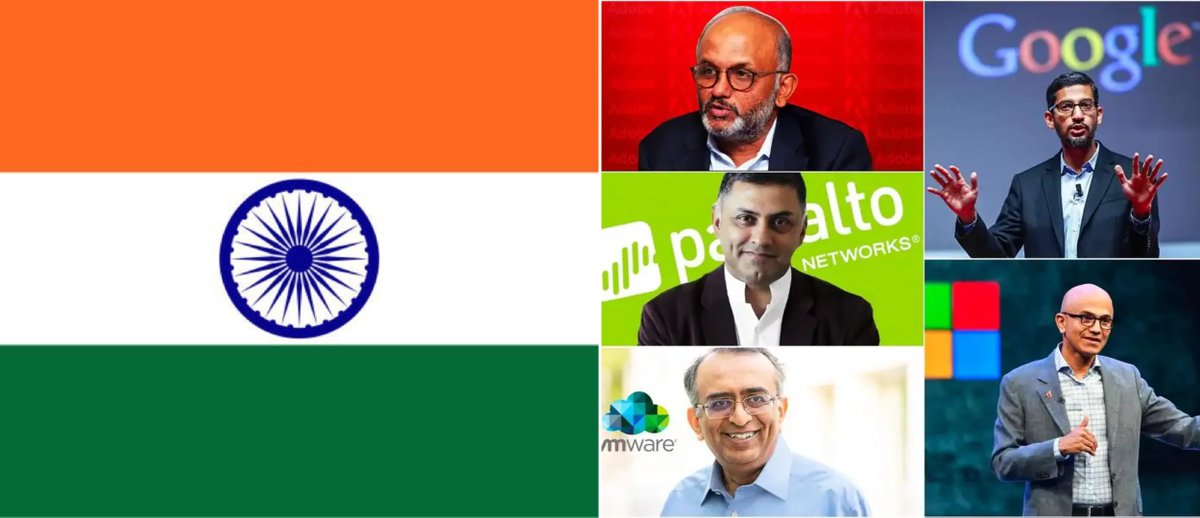
- 11% of Fortune 500 CEOs
- 90+ unicorn founders are Indian-born
- 1/3 of all engineers in Silicon Valley are from India
Why have they all left India to succeed?
Here's the hidden truth about the world's most controversial brain drain 🧵:
What’s Swish?
A 10-minute food delivery app. We take care of tech, food, and delivery so we can minimise the delivery time for you.
To start with, we are live in HSR. If you are someone who wants to get the convenience you deserve, do give it a try: https://t.co/pi8BMstdOZ
@darylginn FYI Reaching out on behalf of Opulix Digital where I work as a designer and we’re looking for some possible collaborations with https://t.co/ASKQopI7YI ✨