This dataset will be expanded further by @ASPI_org to cover more technologies, improve the data accuracy, and use new analysis to extract further insights. We hope that this dataset will be a useful tool for policy makers to better assess technology access vulnerabilities. 15/15
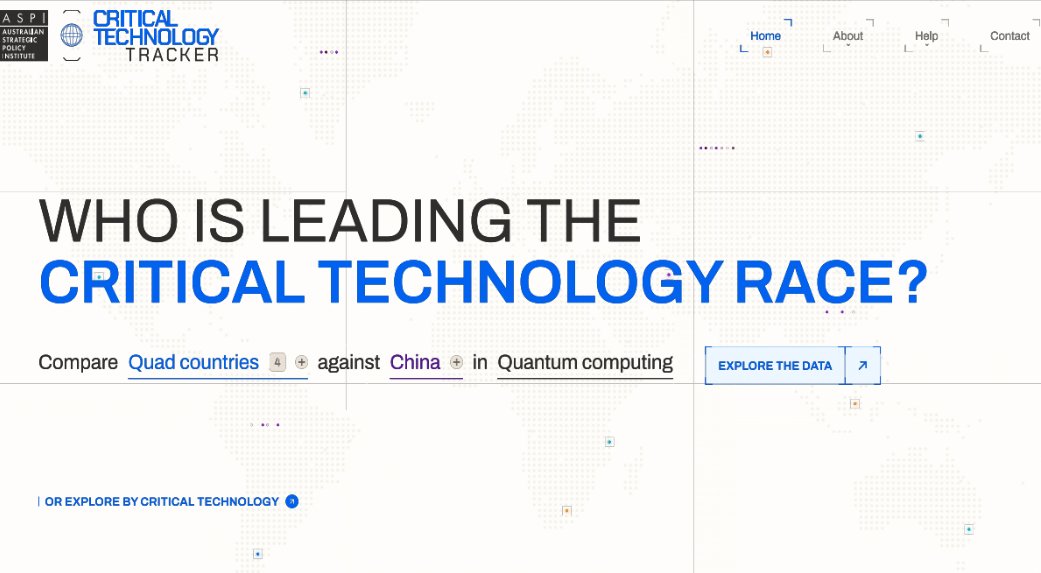
Last week @ASPI_org released the Critical Technology Tracker (https://t.co/4Kxr73qNWZ), analysing the global research landscape for 44 technologies key for future power. This analysis included a look at the global flow of research talent – here are some takeaways: 🧵1/15
🚨 NEW PROJECT 🚨
ASPI is excited to launch the Critical Technology Tracker, a world-first data study of high-impact published research & the movement of global talent. The project includes a report & interactive website which maps the flow of talent
🖥️: https://t.co/Dxq3wIfN14
Additionally, the talent flows represent a sample of total global talent. This was mainly due to limitations in the methodology that were necessary to allow for the analysis of over 2 million research papers. (see page 14 of our report https://t.co/wW9nYuSgHe). 14/15
Really pleased with the release of my first report with
@ASPI_org. Truly startling how severe the impacts of climate change will be in China in the coming decades, and how little work there is that tries to grapple with the scale of this change. Hopefully this changes soon.
🚨 NEW REPORT 🚨
'Climate change is 'a major blind spot' for scholars of China's political & foreign policy future', writes ASPI's @saarobin. 'We need research that captures how climate affects China's trade, tech, food & energy security.'
Read it now ➡️ https://t.co/HUYXMFzLuS