@the_good_matty@alz_zyd_ I mean, the hypothetical mba student is an obvious caricature, but I think that it's only ex-ante dumb because of theory, which is my point
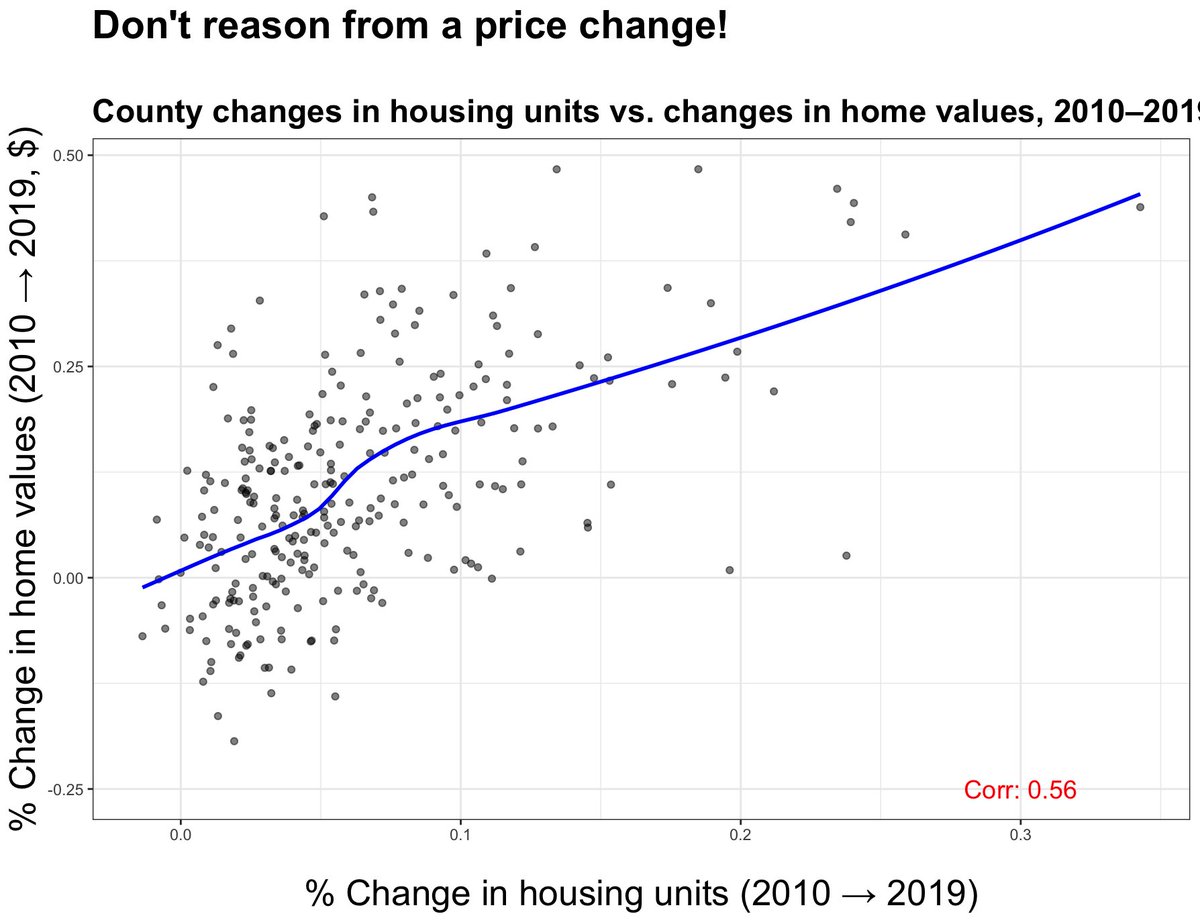
Given how easy it is to estimate upward sloping demand curves that fit the data really well, I'm kind of surprised at the "AI will / can solve causal inference" takes.
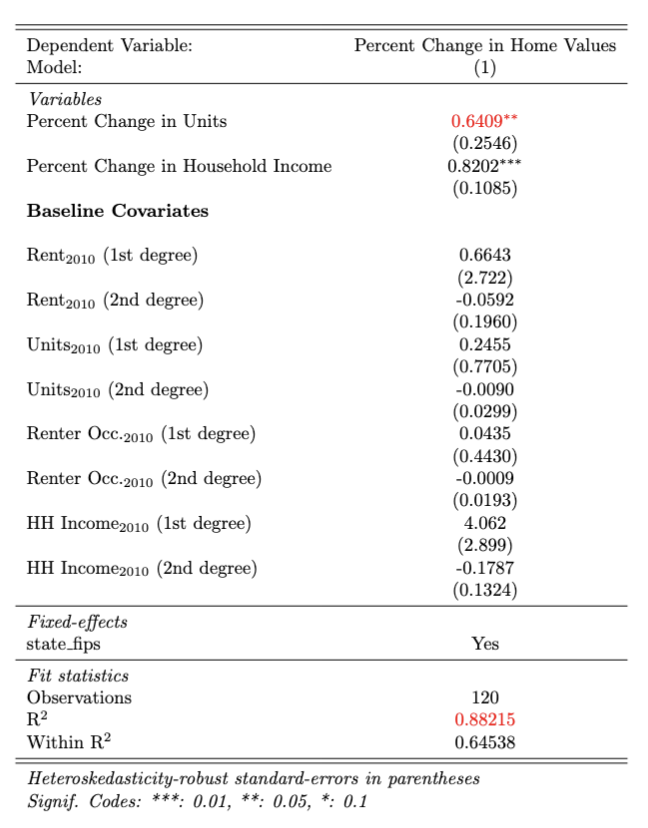
E.g., a regression of changes in home values on changes in supply gets an R2 of 0.88 and the wrong sign!
@zyudhishthu@_brianpotter@Austan_Goolsbee I think this is too pessimistic! even having Canada's construction growth would be what a 40% increase compared to what happened in the US?
if their productivity measure is something like homes built per worker, that would show up as a huge decline in breakeven rents
@alz_zyd_ at that point we can just centrally plan the economy! I think prediction == causal inference in the economy iff you've solved issues of private information, at which point RIP Hayek, I guess
@_vonarchimboldi@alz_zyd_ it's a literature, for sure, but afaict, nobody in economics really does it.
if I take the past ten issues of QJE and AER, how many papers would there be that do formal sensitivity analysis? ten? five? one? in contrast, it's way bigger in epidemiology
@arpitrage I think not quite getting to "solve prediction" is a dangerous place to be in!
A kitchen sink regression on changes in rent prices as a function of baseline demographics + changes in housing units gets you an R2 of 0.86 and an upward sloping demand curve!
@alz_zyd_ I found all the micro econ 101/201 stuff really, really helpful at explaining the world... after I had gone through a PhD IO course (basic-y insights like cournot can be Bertrand w/ capacity constraints).
not sure if this reflects good or bad on econ 201 though lol
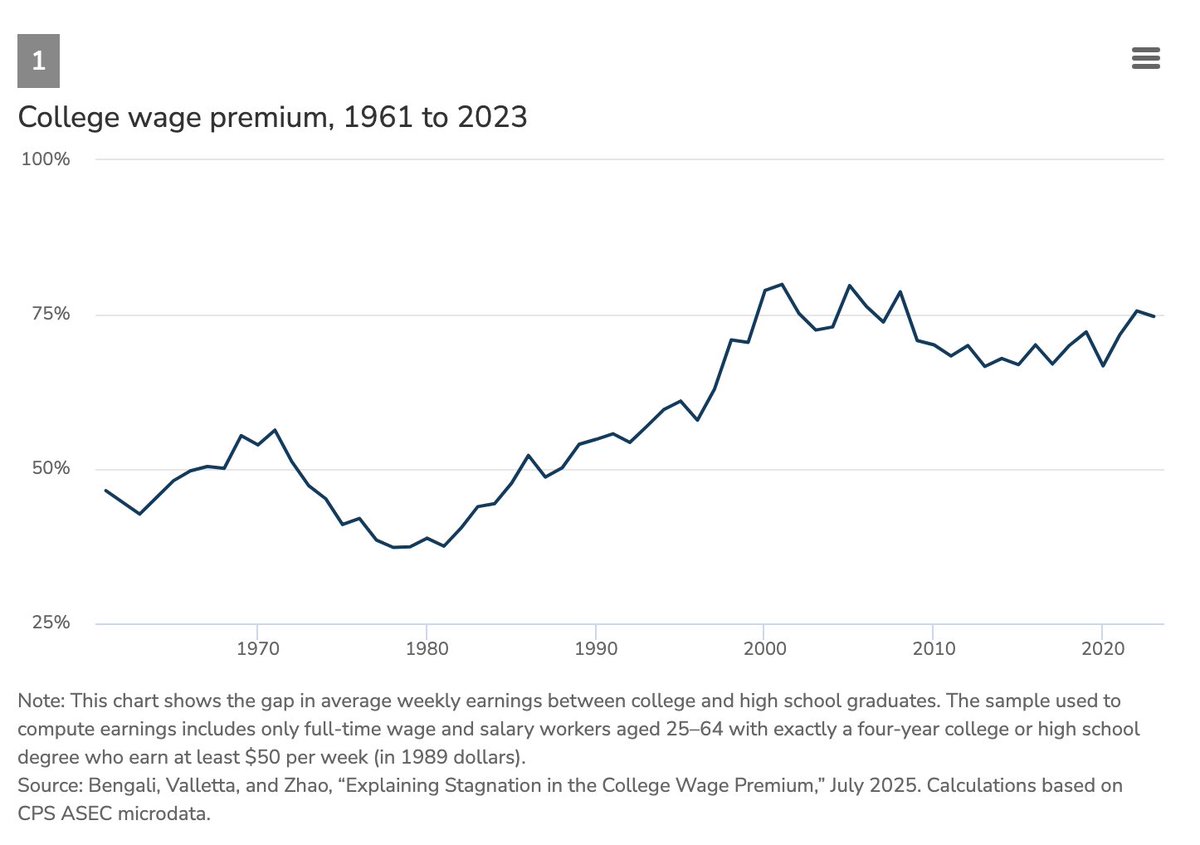
@Noahpinion and the college wage premium has been pretty flat, so, kind of paradoxically, now seems like a very good time to be going to college! (plus or minus your opinion on AI and the labor force)
https://t.co/scfugMZoyK
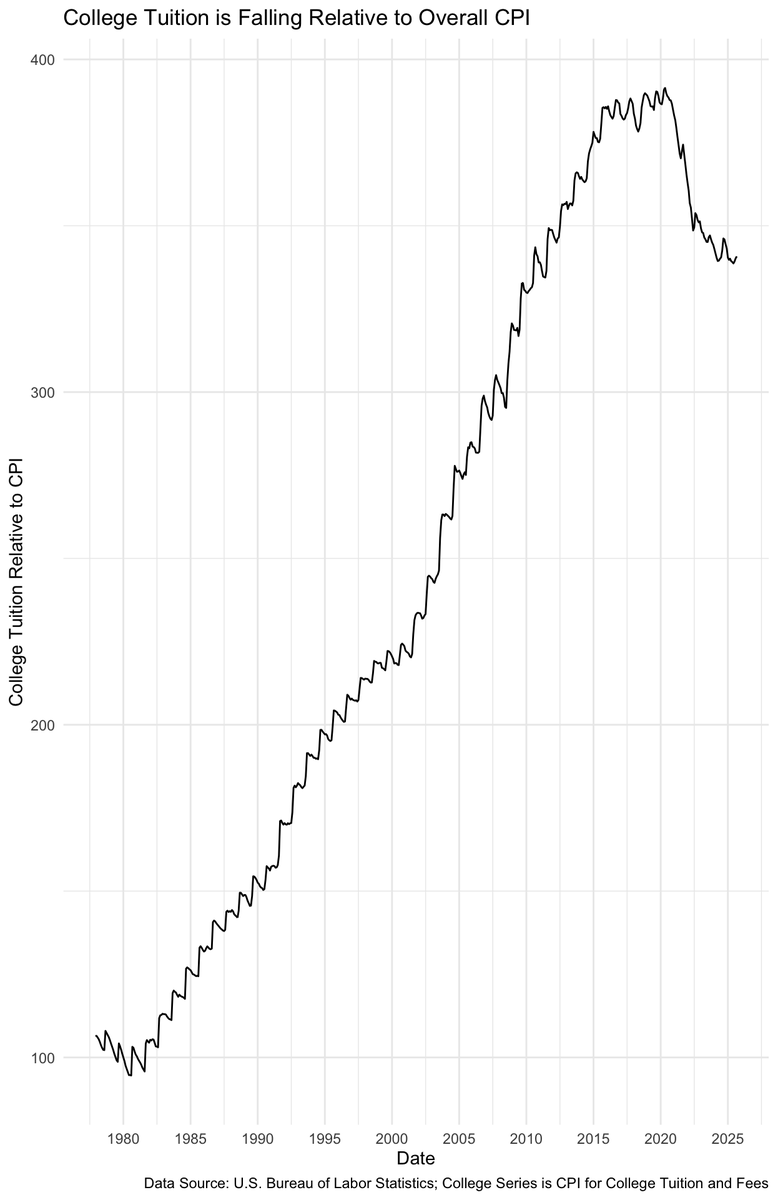
@Noahpinion beginning in 2020, college tuition started falling relative to CPI (after 40 years of outpacing it)
this is either because of weaker demand, or college is finally getting cheaper right as people are adjusting their expectations!
Unfortunately, faircloth isn't what's holding back public housing. Reality is that most PHAs are 1000s of units under their cap. Bigger problems are money, NIMBY regulations, and stuff like California's Article 34, which makes all low-income public housing subject to a vote.
@nominalthoughts like you'd have to believe China has lower extreme poverty than the following countries: Norway, Denmark, Sweden, Austria, the Netherlands, Finland, Italy, ...
@nominalthoughts china is reporting a 0% extreme poverty rate lol
but almost certainly what's happening is the world bank survey isn't capturing in-kind benefits in the US correctly.
https://t.co/b6bqaEtMVP
adding on to this, if you think supply is generally pretty inelastic, and yet it still increased by 73% (if anyone has a source plz lmk), it had to be that the demand shock was absolutely massive
not trying to dunk, but I think this is a thing people get tripped up on
unless you think making hotels got cheaper (seems unlikely, but I genuinely don't know), the new hotels are responding to a shift in the *demand* curve and so supply should correlate positively with/ prices
NYC’s hotel inventory increased 73% between 2007-2021. Demand is (presumably) inelastic.
A big reason we can’t have a real conversation about prices is that every major chain - Hilton, Marriott, Wyndham, Hyatt, Omni, Choice Hotels, etc - is using the same price-setting software.
even in a competitive market, if demand for NYC tourism went up a lot, supply would respond, but unless supply is perfectly elastic, prices should go up.
of course, algo pricing + collusion can happen on top of this, but supply increased so must be collusion isn't correct
@isaacinthesky with any of these though, I think the effects end up being pretty constrained by the fact that hotels and houses are already built
so the economic incentive to withhold supply isn't very strong. eg real page moves occupancy rates from ~97->~95% and increases prices by a couple %
@isaacinthesky it's a question of whether you think the software maximizes joint or individual profit.
if it's individual, there are incentives to undercut, if it's joint, the algo can facilitate collusion (one piece of evidence is real page banned users who rejected price suggestions)