🔥 100°F+ ENIGMA PARTY @OHBM2026, Bordeaux. 🔥What a night! Thanks to everyone* who joined us+1000000 thanks to Sophia Thomopoulos for organising 🔥
*Pictured, Row 1: PT, Katharina Wittfeld, Sven Cichon, Alexander Teumer, Thomas Müliesen; Clara Moreau, Johanna Bayer, Lune Bellec, Andrei Irimia, Ali Saffet Gönül; Row 2: Florian Kurth, Eileen Lüders, Christian Gaser, Yann Quidé, Philipp Sämann, Janna Marie Bas-Hoogendam; Émile d’Angremont; Clara Moreau, Anthony Juliano, Nadža Džinalija 3. Johanna Bayer, Jelle Veraart, Michelle Wang, Matthias Kirschner; Bramsh Chandio, Chris Ching, Melody Kang, Emma Corley, Mia Casburn; 4. Mia Casburn, Emma Corley; Pauline Favre, Charles Laidi, Noumane Bouaziz; 5. Jarek Harezlak, Eleftherios Garyfallidis, Bramsh Chandio, Fabrizio Pizzagalli, Marco Lorenzi, Boris Gutman, Emily Dennis; 6. Ruiyang Ge; Melody Kang, Boris Bernhardt; Chao-Gan Yan
@ClaraMoreau9@likeajumprope@enigmabrains@DrEmilyD@bas_janna@OHBM@OHBM_BrainArt@enigma_bipolar@ENIGMA_Diabetes@EnigmaIpv@EnigmaIndAging #OHBM #OHBM2026 @JarekHarezlak@BramshQ@garyfallidis@RuiyangGe@MMG_Kirschner@Emile_dA@eniluapervaf@saffetgonul@SocatLab@ENIGMA_ACRI #Bordeaux
Happening now in the Agora room @OHBM, Thomas Mühleisen is presenting the pilot ENIGMA #Gyrification Group project "Julich-Brain guided genetic mapping of cortical folding"
Largest dMRI network analysis in #bipolardisorder, relating symptom burden and polypharmacy to tractography-derived connectivity and graph-theoretical metrics, by @Leila_Nabulsi@enigma_bipolar. 🧠 https://t.co/8dsJiwJIDv
WONDERFUL TO MEET Prof Cagdas Eker @MCagdasEker (renowned psychiatrist + expert in bipolar disorder, from @SocatLab Ege University, Türkiye). Some take-aways from his brilliant lecture:
1️⃣ Unipolar and bipolar depression may look similar in some aspects, but the brain's reward circuits work differently in each disorder - In unipolar depression, the reward system is underactive: people expect less reward + experience less reward when it occurs (classic anhedonia). In bipolar depression, reward responses are more complex: some reward-related brain circuits remain active or even overactive, but responses can become blunted under uncertainty.
2️⃣ Anhedonia may not arise from the same brain mechanism in depression and bipolar, so careful clinical phenotyping is needed in imaging studies and treatment trials rather than assuming the same symptom has the same neural basis everywhere.
🔥The most pressing clinical goal is predicting which treatment will help each individual; each person has a unique mix of disturbances in the clinical domains of reward, mood, and drive.
🔥 Symptoms may even have a daily rhythm: many people with bipolar disorder start the day not wanting to get out of bed, deeply depressed but may improve later in the day + by evening are well enough to plan activities; often the effectiveness of treatments can be seen by this point of improvement moving earlier in the day
🧠 Cagdas proposes a 3-step framework to enrich existing studies with deeper bipolar-spectrum phenotyping. 1. all participants could complete a brief screening tool (HCL-32) to identify latent bipolar features that may be missed by standard diagnoses. 2. a short structured assessment should really capture 6 bipolar-spectrum traits, incl early onset, family history, antidepressant-induced activation, + atypical features.
🧠 🧠 These measures could be combined into a continuous bipolar-spectrum score, but you would still be able to test whether dimensional traits and subtyping can explain brain variations and treatment response better than traditional diagnostic categories.
@enigma_bipolar@enigmabrains
Cuanto más similar es la actividad neuronal de dos personas antes de conocerse, más probable es que terminen haciéndose amigos.
Los amigos están literalmente «en la misma onda».
COME JOIN US: Çağdaş Eker will give an incredible talk Thursday at the Marina. DM me if you want to come. A world-renowned expert on bipolar disorder, he will review the common and shared brain circuitry with major depressive disorder, differential diagnosis, and treatment effects.
@GntknB Bremen üniversitesinde beraber çalıştığım çok değerli hocam sizden çok şey öğrendim ama en önemlisi çalıştığımız süre gösterdiğiniz yakını ilgi ve dostluk idi mekanınız cennet olsun eminim bir sonraki karşılaşmamızda yine bana heyecanla çalışmaların sonuçlarını anlatacaksınız
Subtyping schizophrenia via machine learning by using structural neuroimaging | Translational Psychiatry finally it is out @PTenigma @cemrecandemir https://t.co/DfstOHlkRY
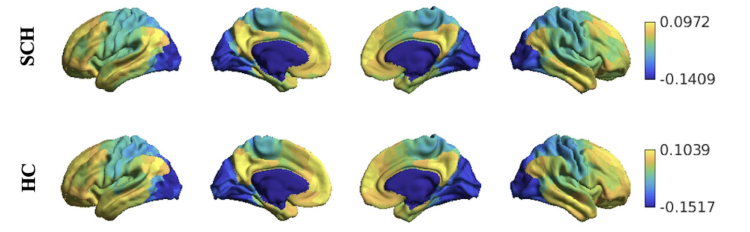
Our new paper on Disrupted cortical organization in schizophrenia based on functional connectivity gradients has been published https://t.co/TdCZ7dbgvv
Our paper was just published in the Canadian Medical Association Journal.
People with cannabis-induced psychosis are at a 241.6-fold higher risk of developing schizophrenia.
Cannabis from the 2000s is not the same as today.