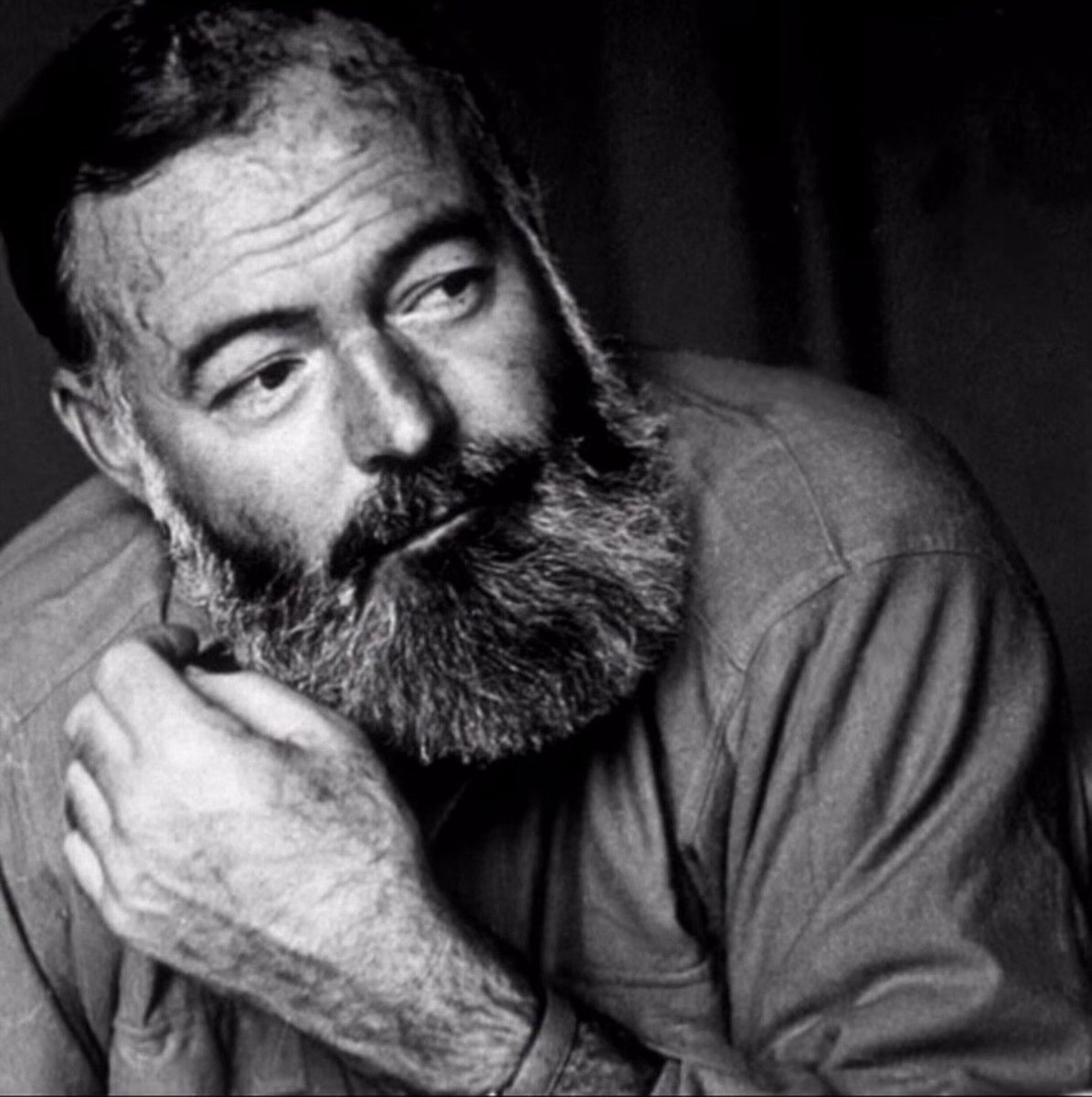
Sometimes Allah closes the road you chose because He intends to take you somewhere your plans could never reach. Dr. Sajid Umar
#CapturedThoughts | When Allah Narrows the Path
Sūrah Yūsuf has always struck me as one of the greatest lessons in understanding Allah's decree.
We often assume that when life comes to an unexpected stop, something has gone wrong.
A door closes. A job is lost. A proposal doesn't work out. A business struggles. A community disappoints US. A hardship arrives that we never anticipated.
Our instinct is to ask, "Why has Allah prevented this?"
Yet Sūrah Yūsuf invites us to ask a different question.
"What if this pause is part of the journey?"
Every major turning point in the life of Yūsuf عليه السلام appeared, at the time, to be a setback.
The well was not the end...
Slavery was not the end...
The prison was not the end...
Had any one of those events been removed from his life, the destination Allah had prepared for him would also have been different.
That has often made me reflect on our own lives.
Perhaps one of the greatest tests of īmān is not believing that Allah can open doors.
It is believing that Allah also guides us through the doors He chooses to close.
The believer understands that Allah's decree is not measured by the comfort of the moment, but by the wisdom of the outcome.
This is why Sūrah Yūsuf is not merely a story about patience.
It is a sūrah about trust.
Trust that Allah sees what we do not.
Trust that His plan extends further than our own.
Trust that what appears to be a delay may, in reality, be divine preparation.
The closing verses of the sūrah remind us that these accounts are not simply history.
They are guidance for people of understanding.
Perhaps that is because every generation will experience moments when life does not unfold according to plan.
In those moments, Sūrah Yūsuf gently reminds us that Allah may narrow the path for a time, only to take us further than we could ever have travelled by our own plans.
And perhaps that is one of the profound lessons of this remarkable sūrah.
If Allah is pleased with you, then even the well, the prison, and every unexpected turn in between can become part of the road that leads exactly where He intended.
Learn more pearls from this phenomenal story here:
https://t.co/M17e9mWKzX
]
Connected, Yet Alone
One of the subtle changes of our time is that we have begun measuring relationships differently.
For much of history, a relationship was measured by presence.
It was the person who visited you when you were unwell, stood beside you during difficulty, celebrated your happiness, and made time for you despite the demands of life.
Today, it is possible to feel socially connected without experiencing much of that at all.
We can know what hundreds of people are doing, while not really knowing how the people closest to us are doing.
We can exchange messages throughout the day, yet go weeks without sitting with a friend or family member over a simple cup of tea.
Technology is undoubtedly one of Allah's blessings when it helps us maintain family ties, benefit others through knowledge, or remain connected across great distances. The issue is not technology itself. The question is whether we have begun allowing digital interaction to replace relationships that were always meant to be lived in person.
The Qur'an repeatedly speaks about companionship in ways that require presence. We see Mūsā asking Allah to strengthen him through his brother Hārūn. We see the Messenger ﷺ and Abū Bakr in the Cave. We see the Anṣār opening their homes to the Muhājirūn. None of these relationships were built merely through exchanging information. They were built through shared lives, shared sacrifice, and shared experiences.
Perhaps this is why the Prophet ﷺ attached such importance to visiting the sick, attending the janāzah, accepting invitations, maintaining family ties, and giving salām.
These are not simply individual acts of worship. Together, they preserve the fabric of a healthy community.
I sometimes wonder whether one of the challenges of our generation is that it has become easier to accumulate contacts than to cultivate companionship. The two are not the same.
As Muslims, we are not only called to stay connected. We are called to be present. Presence cannot be downloaded, and companionship cannot be outsourced to an app.
Perhaps one of the questions we should ask ourselves from time to time is not how many people follow us, but how many relationships we are intentionally nurturing for the sake of Allah.
#CapturedThoughts
Your parents are not background characters
﴿وَقَضَىٰ رَبُّكَ أَلَّا تَعْبُدُوا إِلَّا إِيَّاهُ وَبِالْوَالِدَيْنِ إِحْسَانًا﴾
"Your Lord has decreed that you worship none but Him, and that you show excellence to your parents." (Al-Isrā' 17:23)
One observation has stayed with me for many years.
We naturally think about the passage of time in relation to ourselves. We think about our careers, our families, our ambitions, and the years that lie ahead. Rarely do we pause to consider that, while our lives are moving forward, our parents are moving into a stage of life that Allah specifically draws our attention to in the Qur'an.
It is remarkable that, immediately after commanding His worship, Allah commands excellence towards parents. Then He singles out the period of their old age. It is as though the Qur'an is teaching us that there will come a time when our parents will need us differently from how we once needed them.
Parents are one of Allah's greatest coverings over our lives. Their du'ā' for us is a blessing whose true value is known only to Allah. Their concern for us does not end when we become adults, nor does their happiness at seeing us thrive diminish with age.
In our pursuit of serving our communities, building our careers, and raising our own families, it is easy to assume there will always be another opportunity to visit, another opportunity to sit with them, another opportunity to ask about their health, or simply another opportunity to make them smile.
The Messenger ﷺ taught that despite the immense virtue of serving one's parents in their old age, there are people who will still allow that opportunity to pass them by. That lesson has always struck me, because it reminds us that honouring our parents is not simply a social responsibility. It is one of the greatest acts of worship available to us.
Perhaps one of the most overlooked realities of life is that our parents are not a permanent chapter in it. Allah has entrusted them to us for a time, and He has entrusted us to them for a time. The wise person recognises that this trust should not be taken for granted.
We must demand performance evaluation of our public sector. However at the same time we have to do whatever we can for our country & its people
شکوۂ ظلمت شب سے تو کہیں بہتر تھا
اپنے حصے کی کوئی شمع جلاتے جاتے
i'm in love with this quote:
"if you're persistent, you'll get it. if you're consistent, you'll keep it. and if you're grateful, you'll attract more of it."
Captured thoughts:
Many people soften feedback because they are more concerned with preserving the comfort of the conversation than addressing the issue that needs correction.
But sincere advice is not meant to protect our egos. It is meant to help us grow.
The truth is, many people say they want feedback, but when it comes directly, they become more occupied with how it made them feel than whether it was accurate. And when a person focuses only on the discomfort of advice, they deny themselves the blessing of improvement.
Growth requires two qualities: the courage to advise with sincerity, and the humility to receive advice with honesty.
Exceptional results are not produced in environments where everyone protects feelings and avoids truth. They are produced where people care enough to speak clearly, and are mature enough to listen carefully.
Be a wealthy Muslim. Retire your parents. Fund someone’s Umrah trip. Build Masajid. Sponsor orphans. Fund Dawah. Wealth isn’t evil. Wealth is what will move the ummah forward.
🕋 As-salamu alaykum everyone,
Please take note of this Hajj Hotline service for our hujjaj. The service is dedicated to answering any questions related to Hajj, Umrah, and visiting Makkah and Al-Madinah.
It will remain open until the 15th of Dhul-Hijjah, insha'Allah.
May Allah accept the Hajj of all the hujjaj and make their journey easy and blessed.
@DrNiazAhmadSI Thanks for the update, Sir. However this whole so called process of HEC is absolutely unnecessary red tape causing people thousands of rupees and stress. HEC is not a degree awarding institution itself.
This service must be provided by degree awarding institutes & free of cost.