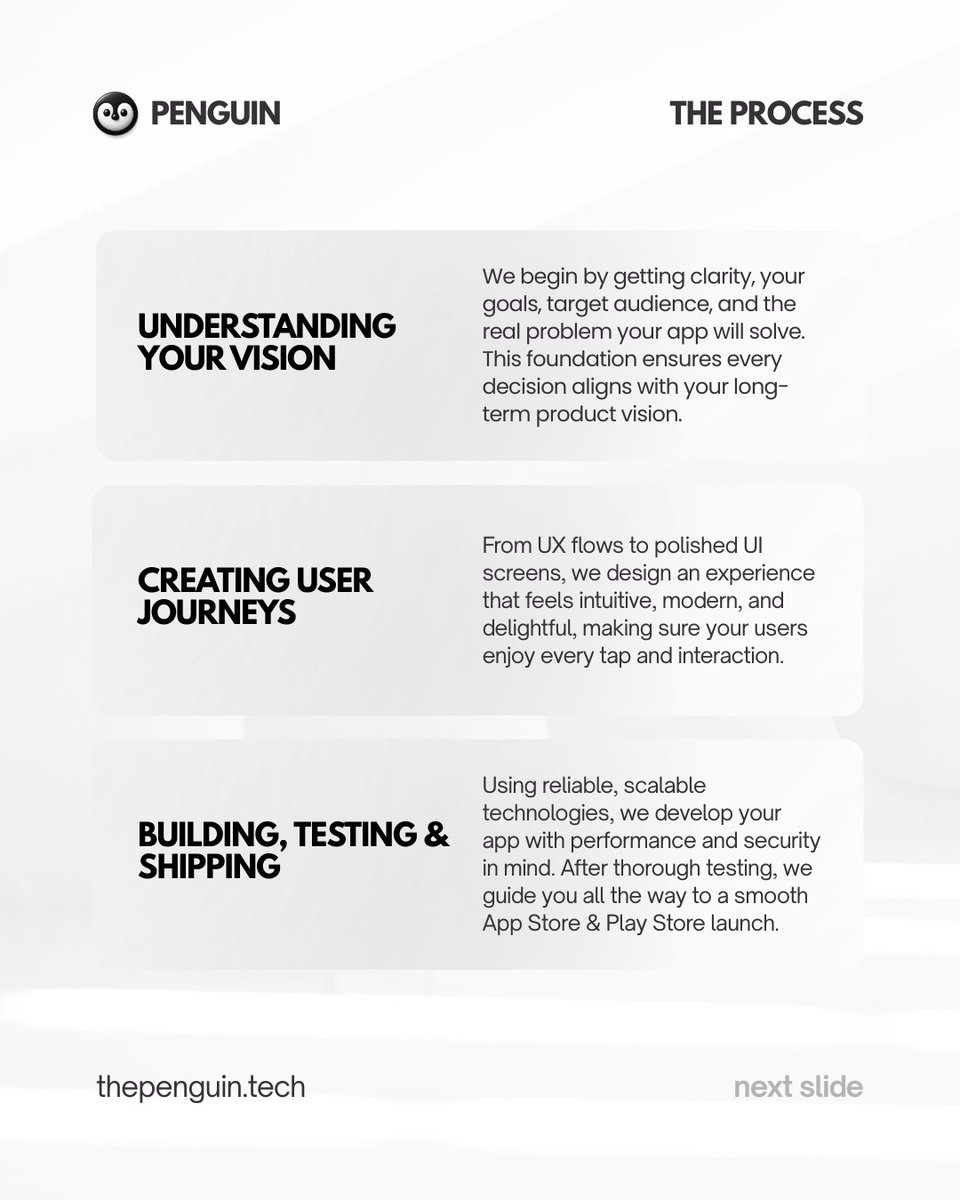
Many of you already know about Penguin, but as we continue to grow and evolve, we felt this is the perfect moment to share a clearer look at who we are, what we do, and where we’re heading.
Who We Are
Penguin is a product-focused engineering studio dedicated to crafting high-quality digital experiences. Whether it’s a simple idea or a full-scale system, we love helping teams turn their vision into something real, reliable, and beautifully built.
What We Do
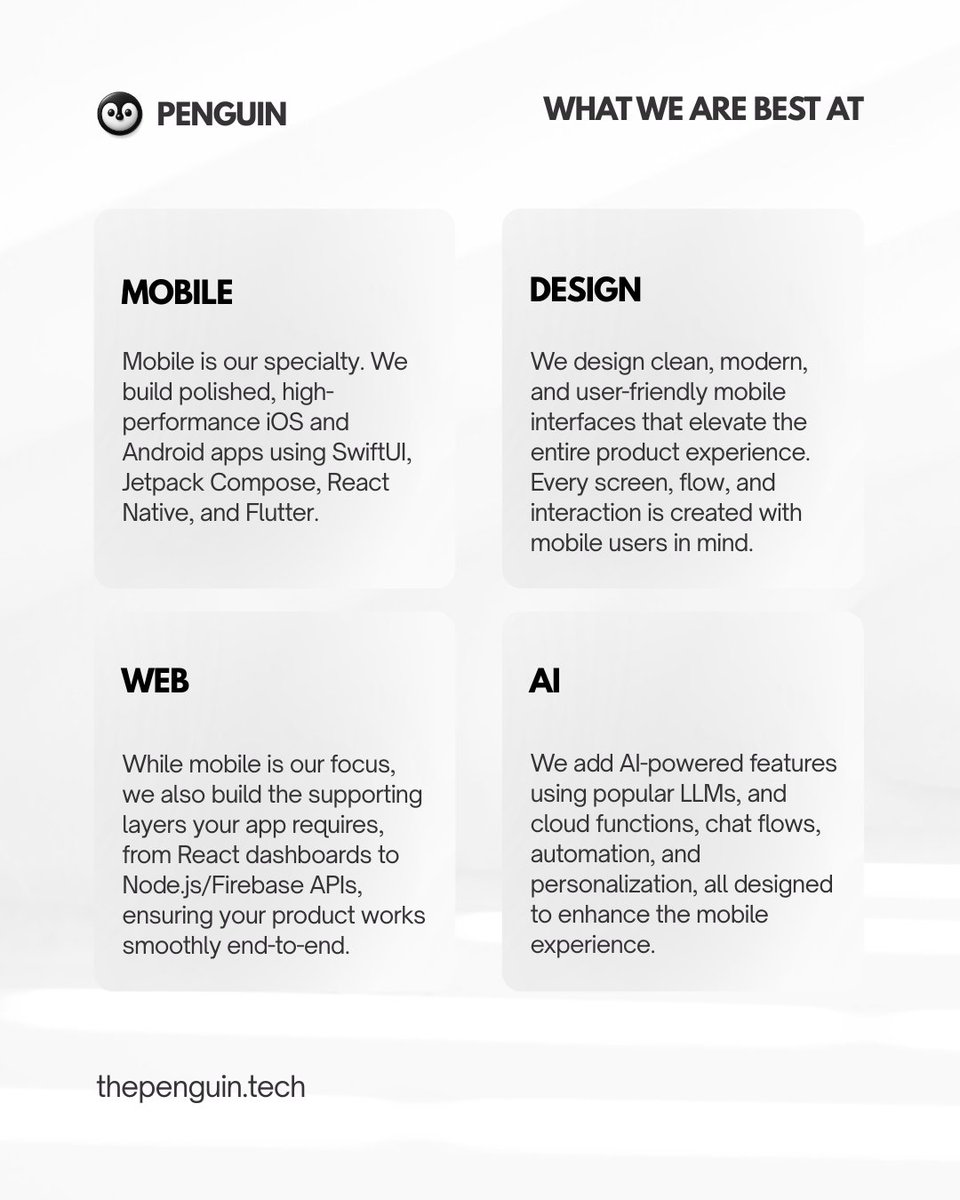
We offer a wide range of services designed for startups, growing companies, and enterprise teams:
Mobile App Development (iOS, Android, Cross-Platform):
SwiftUI • React Native • Jetpack Compose • Flutter
Web Platforms & Dashboards:
React • Next.js • TypeScript
Backend Systems & Cloud Integrations:
Node.js • Firebase • MongoDB • Serverless
AI-Powered Workflows & Assistants:
OpenAI • Claude • Cloud Functions
Product Design:
Figma • Mobile-First UI/UX
We’re excited for 2026 and beyond: new products, stronger partnerships, and a growing team ready to build world-class solutions.
If you or your organization is exploring new digital ideas, whether small or ambitious, Penguin is here to help you bring them to life.
Learn more at: https://t.co/6CNNFT9qA9
#penguin #startups #ideas #products #mobileapps
Swift 6.4.1 is out now! ⚙️ This maintenance release improves compiler stability, enhances dependency resolution in Swift Package Manager, and includes fixes for Foundation and Swift Testing. More here: https://t.co/VZNkTDVtt3
Apple will reject your app if people can create an account but have no way to delete it inside the app. AI tools usually build the sign up screen & skip this one, so it's worth checking before you submit.
#AppStore#AppStoreReview#iOSDevelopment#VibeCoding#Startups#Founders
Hiring one good engineer can take months, and while you wait, the roadmap keeps slipping.
We made a 2-minute video that explains what we do at Penguin in plain words.
🧵
#SoftwareDevelopment#Startups#Engineering
LEAP 2026 was an incredible experience for us.
Over the past few days in Riyadh, we had the opportunity to meet founders, technology leaders, investors, and innovators from around the world.
🧵
#LEAP26#LEAP2026