🚨WATCH: An Israeli officer dumped on the floor a disabled Palestinian man from his wheelchair for trying to help a girl shot by the IDF.
They have no mercy.
Every China story is like: this capitalist hellhole created the elixir of life and demands people's souls in exchange for it.
But then China ruined that market by making the elixir for $5.
Nobody in India has the right to call anyone a "Pakistani." It is completely unacceptable, exposes a deeply prejudiced mindset, and we demand immediate action by @TelanganaCOPs. This individual must face the full wrath of the law.
But a word of caution: One bigot does not define an entire community, irrespective of which community the individual belongs to. Let’s not give polarizing elements exactly what they want by allowing them to exploit our emotions. Their goal is to divide us, make us fight, and exploit that fracture.
Condemn the individual, demand swift action, but let’s not resort to the same profiling we are fighting against. Stay united and let Telangana continue to be a beacon of tolerance and acceptance.
seeing this late when someone sent as I mute tweets if they go big. Classic whataboutery in the thread, and PLEASE DON'T reply/quote this to spoil my mental health. Please educate yourself about Free Palestine/Kashmir, and read on the record state militarization in Kashmir.
same dude gave a solution for traceability on whatsapp without breaking end to end encryption... which isn't possible because end to end encryption as per the signal protocol has plausible deniability baked in.
but then he's IIT madras director and all.
completely unrelated: check out this useful logical fallacy called "appeal to authority".
> can't stop paper leaks
> ends up blocking telegram
blocking telegram totally isn't even possible, telegram is designed in such a way which easily allows people to use proxies and other methods of circumvention.
NewsClick founder Prabir Purkayastha spent 6 months in jail. Now Delhi HC quashed ED's case against him and called it an attack on free press.
Court said,"Not only are present proceedings mala fide, but also an arbitrary attack and abuse of power on free & impartial journalism."
The case against NewsClick & Prabir was brazenly vindictive
Even though he's been acquitted, look at the fallout
Journalists lost jobs. Young reporters treated as criminals. And an important anti-establishment portal permanently silenced
Which was the end game to begin with
🚨 Turns out Meta Ray-Ban glasses ARE actually equipped with facial recognition tech even though Meta said they weren't. Not only do the glasses detect a face, it also automatically encodes the face into a unique biometric signature.
Surveillance creep IS the business model.
Funny how a leader who couldn't wait to position himself as the country's wise guru suddenly has nothing to say while our children are haunted by paper leaks, on-screen marking system, reevaluation concerns, transparency issues, and the rise of private coaching centres.
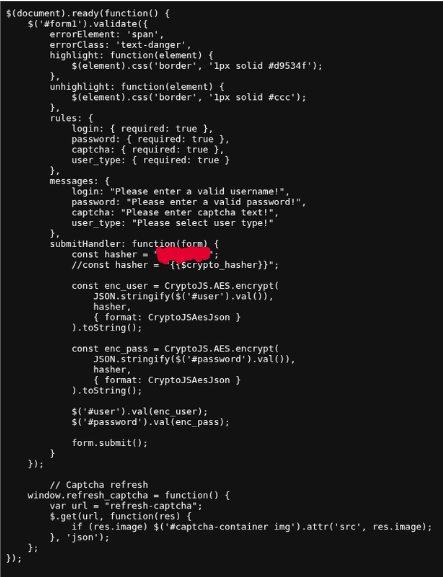
CBSEs DigiLocker portal for schools (https://t.co/O6MRtVUx98) uses client side AES encryption with a hard coded passphrase
all the encryption logic is in a public JS file where anyone can read it
This makes the login encryption easy to copy and not a real security boundary.
300 DPI → 200 DPI.
Robotic scanners → any scanner.
Government tender → rewritten to fit one company.
COEMPT → used mobile phones.
18.5 lakh children → wrongly evaluated.
Dharmendra Pradhan → still in office.
Modi ji → talking about mangoes.
This isn’t negligence. This is the contract. The blurry scans, missing pages, wrong marks; they were engineered.
CBSE answer sheets of 20 lakh Class 12 students are now floating in the public domain. A data breach so massive it would’ve ended careers in any accountable government.
But here, the Prime Minister doesn’t answer. Because the silence itself is the answer.
Children paid ₹500 to see their own answer sheets. Shot on someone’s phone. Uploaded to a leaking server. Evaluated wrong.
Say it plainly: this is corruption using children as collateral.
Meet Vedant Shrivastava, Nisarga Adhikary, and Sarthak Sidhant ,they exposed CBSE in every possible way :
17 years old Vedant Shrivastava :
> Applied for the CBSE re-evaluation process
> Got a different Physics answer sheet
> Posted it on X
> Got labelled "Pakistani" by the BJP IT cell
> Brought CBSE to its knees and proved them wrong
19 years old Nisarga Adhikary :
> Bro hacked the CBSE website
> Reported the vulnerability to them
> But they didn't take any action
> Then bro posted it on X
> Showed everyone that it could be hacked
18 years old Sarthak Sidhant :
> Bro exposed a CBSE tender
> Took it to X
> Wrote a detailed thread
> Explained how the CBSE OSM tender conditions allegedly favoured COEMPT
> And today came on the media
> Exposed them with facts
These three boys are doing what whole media failed to do, all of them took x to expose CBSE .
This is an unbelievable piece of work by Sarthak and something that requires amplification.
Let me explain what he found, in simple terms.
Sarthak is a Class 12 student from the 2025-26 batch, one of the 17 lakh students whose answer sheets went through CBSE's new On-Screen Marking system.
He spent days reading through CBSE's evaluation tenders, scraped all 576 tenders CBSE has issued, and tracked how the rules changed across three versions of the same tender.
The core finding is that the company that won the contract to scan and grade 17 lakh students' answer sheets is Coempt Eduteck.
Coempt used to be called Globarena Technologies. Globarena was the company behind the 2019 Telangana intermediate exam disaster, where software failures led to 3.8 lakh students getting wrong or missing marks, and 23 students died by suicide.
A government committee found systemic failure and negligence. Six months later, Globarena rebranded to Coempt Eduteck.
So a company with that track record won a contract to handle 17 lakh CBSE students. Sarthak's investigation is about how the rules were rewritten to let that happen.
The tender was issued three times.
> First tender, February 2025. It existed, then disappeared from the public GeM portal. Sarthak scraped all 576 CBSE tenders and this one was missing from the archive entirely.
> Second tender, May 2025. Four companies applied including TCS and Coempt. All four failed the technical evaluation. Cancelled.
> Third tender, August 2025. Coempt won. Between the second and third tender, a series of rule changes happened, and every single one made it easier for Coempt to qualify.
Here is what changed, one by one.
01. The old rules disqualified any company with a history of abandoning work, failing to complete contracts, or financial weakness. The new rules deleted this clause entirely. Coempt's Telangana history stopped being a barrier.
02. The old rules disqualified any company that was "blacklisted earlier." The new rules changed this to "currently blacklisted." Because Globarena rebranded after Telangana, removing the word "earlier" effectively erased their past.
03. The rules required Rs 50 crore average turnover over three years. Coempt's exact average came to Rs 50.86 crore. They cleared the bar by less than 1%. Earlier, a smaller company had asked CBSE to lower the bar to Rs 30 crore for fairer competition. CBSE refused. So the bar was kept high enough to block small players, but sat exactly low enough for Coempt to scrape through.
04. Software maturity is measured on the CMMI scale, 1 to 5. The old rules required Level 5. The new rules dropped it to Level 3. Coempt is a Level 3 company.
05. The cooling-off period for engaging retired CBSE officials was cut from two years to one. This makes it easier to use recently retired insiders to influence the process.
06. The old rules required experience with large projects of at least 5 lakh students each. The new rules removed the student count and counted cumulative answer-book volume across small projects instead. Coempt has many small fragmented university contracts. This helped Coempt and hurt TCS.
07. The old rules required bidders to own their own data centre and disaster recovery centre on Indian soil. The new rules allowed third-party MeitY-empanelled cloud hosting. Coempt runs on AWS and Azure. This helped Coempt and hurt TCS, which owns its own data centres. It also means student data is no longer on sovereign, Indian infrastructure.
08. The old rules required the bidder to own or control the complete source code of its software. The new rules deleted this. Coempt's platform runs on Microsoft's proprietary IIS, which they don't own.
09. A last-minute corrigendum, issued right before bid submission, removed CBSE's own power to blacklist the firm if its software failed catastrophically. So even a Telangana-scale failure couldn't get Coempt banned from future government tenders.
10. The penalty structure shifted from punishing mistakes to punishing delays. The old rules fined the vendor for wrong scanning, merged pages, and unscanned books. The new rules dropped those and instead levied Rs 50,000 per day for delays. This incentivises rushed scanning over accurate scanning.
11. The old rules had a hard accuracy threshold, error rate not to exceed 0.5%. The new rules removed this number entirely.
12. The old rules specified proper book and robotics scanners. The new rules just say "sufficient scanners." The definition was vague enough that, as Sarthak notes, the scanning could be done with a phone on a stand.
13. On the security side, the contract required a VAPT (vulnerability and penetration test) certified by CERT-In before go-live, and a restricted beta phase before launch. The system clearly wasn't restricted, because the other researcher, Nisarga, was able to access it and find vulnerabilities four days before go-live. So the mandatory security audit appears to have been bypassed.
These are more than a dozen rule changes, all between the failed tender and the winning tender, all pushing in the same direction, all benefiting the one company with the worst track record in the field.
The security holes Nisarga found last week now have an explanation. The system was built by a vendor that was specifically allowed to skip the security certification, the source code ownership, the data sovereignty, and the quality thresholds the original rules demanded.
Following things need to happen immediately;
1. An immediate CAG audit of the tender process.
2. A parliamentary debate on the topic.
3. An independent investigation into
> Why the first tender vanished?
> Why the disqualification clauses were deleted?
> Why the turnover bar was held exactly where it was?
> Why the security level was dropped?
> Why the blacklisting power was removed at the last moment?
Sarthak, this is genuinely exceptional investigative work. Far better than most journalists with full resources ever manage. Take a bow. :)