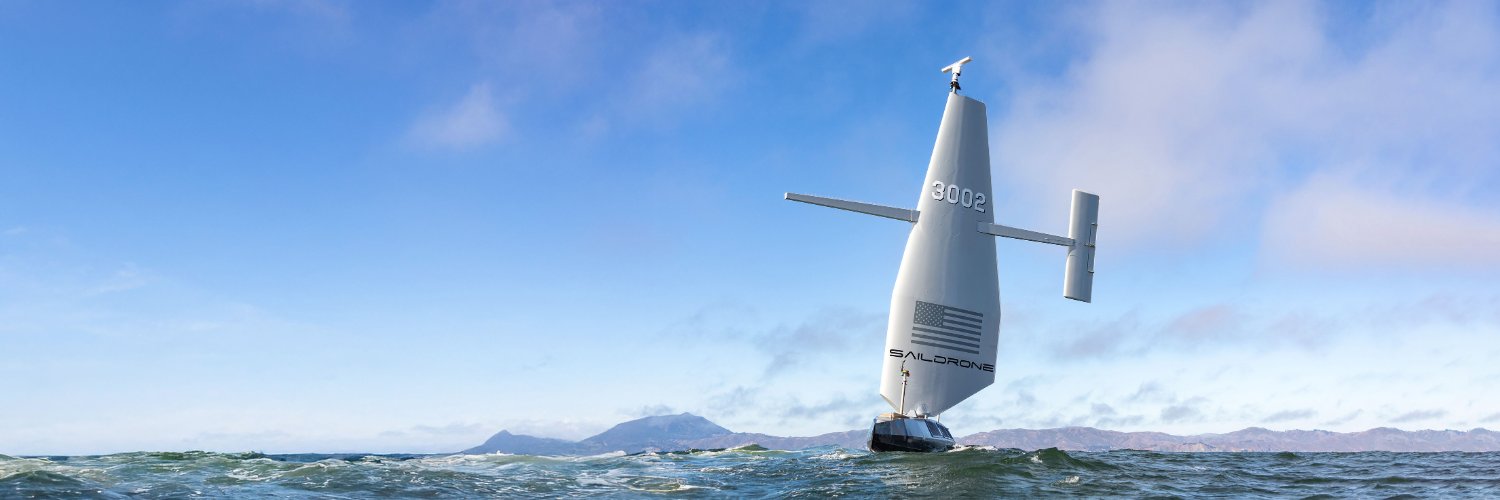
In 30 days, SD-1092 has sailed 3,000+ nm through the Southern Ocean, weathering 8+ m waves and 50+ kt winds. It’s the first of four Saildrone Explorers on a 5-year mission to circumnavigate Antarctica and study ocean carbon exchange.
https://t.co/8wvTYTutYc
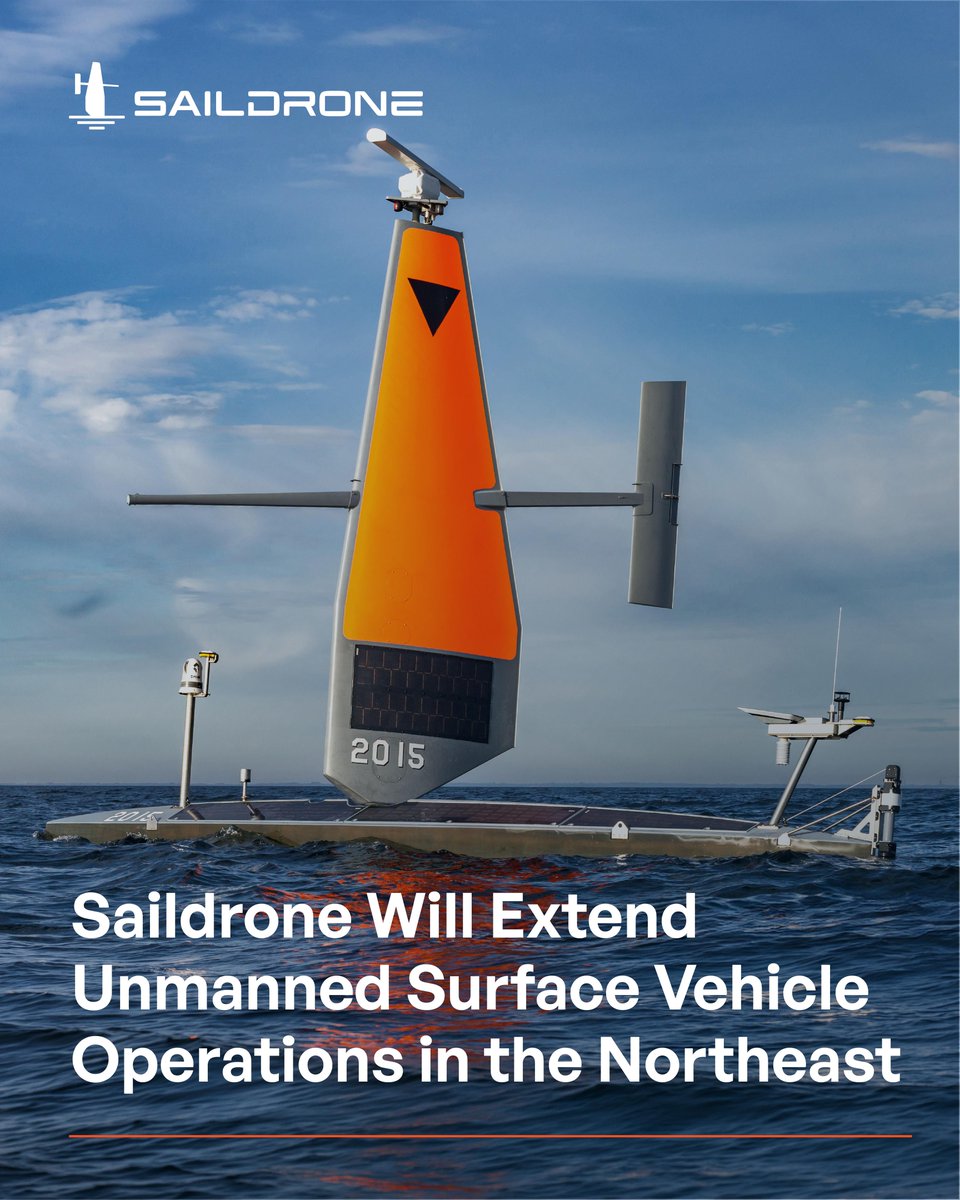
Saildrone will continue supporting the @USCG off New England through the winter! 🇺🇸 An $8.5M contract extension builds on 19,000+ nautical miles sailed this summer, helping the Coast Guard monitor vessel activity and protect US fisheries.
https://t.co/p6hyCQOG8k
Europe's growing maritime security challenges demand greater awareness and sustained presence at sea.
Saildrone is heading to Paris for #EURONAVAL2026, Nov. 3–6, to showcase how our long-endurance USVs help naval forces detect threats and secure strategic waters.
Some of Earth’s deepest seafloor still remains poorly mapped.
Over six months, Saildrone mapped 16k+ sq. nautical miles east of the Mariana Islands, reaching depths of 6,378 m in support of Woolpert and @NOAA.
More on USVs closing critical data gaps: https://t.co/VdRD4y2ubQ
Happy 251st birthday to the @USNavy. ⚓🇺🇸
From safeguarding sea lanes to mapping the seafloor, protecting critical undersea infrastructure, and supporting disaster response, sailors serve the American people in countless ways—at sea and ashore.
JUST IN: Saildrone Explorer SD-1045 passed through the eye of Category 3 Hurricane Isaias, recording wind gusts over 90 knots (103 mph).
This is the same USV that filmed inside Hurricane Sam in 2021, setting a Guinness World Record.
Watch ↓ @NOAA_AOML @noaapmel
Saildrone is heading to the Stanford Advanced Tech Career Fair on Oct. 6.
We’re hiring software engineers, program managers, USV pilots, and more to help build the next generation of autonomous maritime systems.
Find us outside Encina Hall starting at 3 p.m.
Saildrone is BACK in the Southern Ocean. The 1st Explorer has deployed on a 5-year mission to circumnavigate Antarctica and collect carbon-cycle data. Days later, SD-1092 was already in 50-knot winds and 8m+ waves. This is what Saildrone was built for.
https://t.co/mCFKIhaJui
Four Saildrone Voyager USVs are now registered in Denmark and will operate under the Danish flag—the first time Saildrone USVs will operate under a national flag.
The milestone builds on ABS classification and supports continued expansion across Europe.
https://t.co/D8ZOhYuysd
Saildrone was pleased to host Arthur H. Barber, commissioner, and Henry Carroll, senior researcher, on @FutureNavyComm with our partners from Lockheed Martin.
The commission will play a critical role in shaping the composition of the Navy and the role of unmanned systems.
Saildrone is expanding our teams around the world, from our engineering staff at headquarters in California, to our customer-facing teams based in Washington, DC. Come help us build the world’s most operationally proven USV.
Latest opportunities at https://t.co/F4OKTG0Jk4
Saildrone has been awarded a $10M task order by @NavyOceans to conduct bathymetric surveys in the Atlantic.
Only 28.7% of the world’s oceans are mapped to modern standards. High-res seafloor data supports safe nav, submarine ops, and mission planning.
https://t.co/a5FJuNOOfE
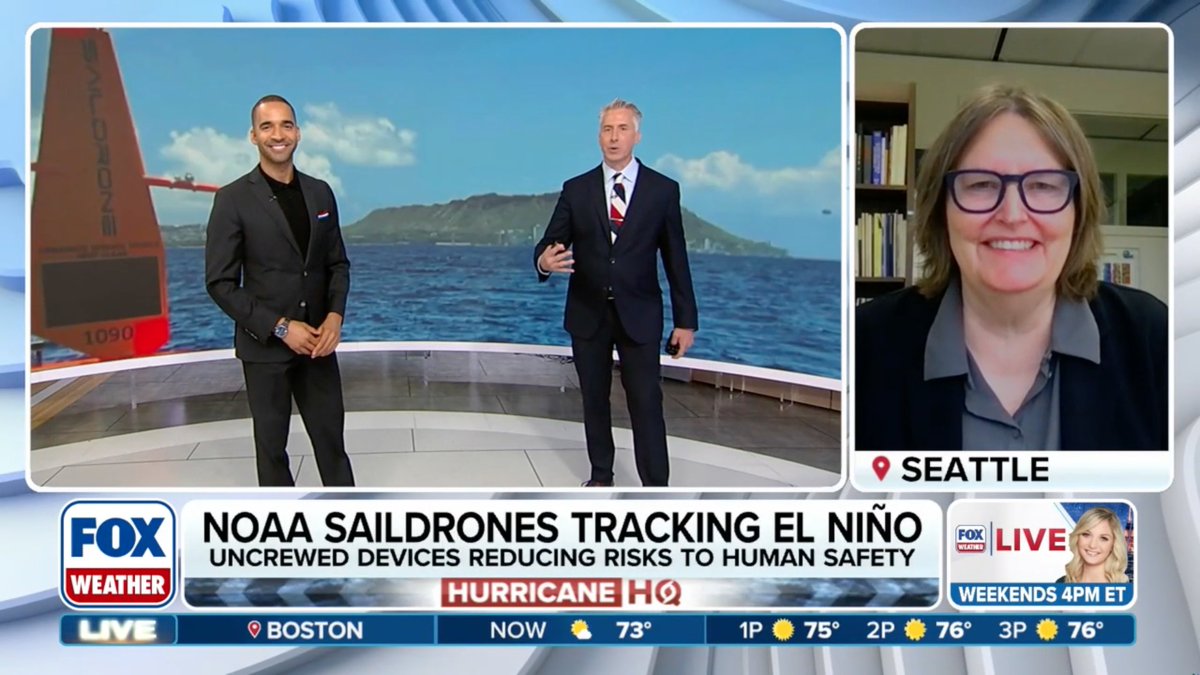
Great interview with @NOAA PMEL’s Dr. Meghan Cronin on @foxweather about our 8th year of observations in the tropical Pacific.
With what could be a historic El Niño developing, Saildrone is collecting critical data to help improve forecasts.
Watch: https://t.co/BP44m2S00x
[VIDEO] @saildrone at DALO 2026: Historic JAGM Firing, Spectre USV & European Expansion
Naval News interviews Robert Kleist, Managing Director of Saildrone Denmark, at DALO Industry Days 2026.
https://t.co/zEwIcLY0f2
Saildrone and @NOAA's PMEL recently deployed 4 Saildrone Explorer USVs to monitor El Niño’s strength, filling in critical data gaps that static infrastructure misses, improving weather forecasts, and strengthening national security.
Read more: https://t.co/R47qPlHRmJ
The Chukchi Sea is one of the most demanding environments in the world. Saildrone is operating there now.
Freezing temperatures, rough seas, ice, extreme remoteness… and a few walruses.
A fun reminder that persistent observation can reveal more than the mission at hand.