جالس اتخيل لو ان ريال مدريد يودع مجموعات الأبطال ويهبط لليورباليغ وبعدها فرانكفورت يجلده في البرنابيو ويطرده منها
وبالمقابل برشلونة يقصي باريس وتشيلسي والسيتي وليفربول ويحقق الأبطال والدوري وكل البطولات الممكنه
تخيلوا بس وش كان بيسوي جمهور برشلونة ؟
This notification is one of the most important fuel documents of the decade.
Let me explain what just happened.
The government charges a tax called excise duty on petrol. This paper says petrol mixed with 22%, 25%, 27% or 30% ethanol will pay zero excise duty.
Zero tax is the government's way of telling oil companies, start blending more ethanol, we will make it worth your investment.
This was coming.
On May 15, the Bureau of Indian Standards quietly notified IS 19850:2026, the official specification for E22, E25, E27 and E30 petrol. So they have mentioned the standard, and then the tax exemption.
But why is the government in such a hurry?
Three reasons;
Reason 1
The programme has been a genuine success on its own terms. India hit 20% blending in 2025, five years ahead of the original 2030 timeline.
Twenty years ago we could barely manage 5%. Crude imports fell, foreign exchange was saved, and over ₹1.18 lakh crore has gone to farmers through ethanol purchases.
For a country that imports most of its oil, every litre of ethanol is a litre of crude oil we did not buy from abroad, making us self-sufficient in our crude oil needs.
Reason 2
There is a supply glut because distilleries went on an expansion spree. India's installed ethanol capacity is close to 20 billion litres a year, with 4 billion more coming, while E20 needs only about 11 to 12 billion litres.
So we have built double the capacity we need. Those plants took loans. They need buyers. The only buyer big enough is the petrol pump.
E20 cannot absorb the supply, so the blend has to go up. The push to E30 is partly climate policy and partly capacity bailout.
Reason 3
Maize has now overtaken sugarcane as the biggest ethanol feedstock, supplying nearly half of all ethanol. The farm lobby behind this programme is now two crops.
But all of this has come at a cost;
When E20 rolled out, regular car owners paid the cost.
A government-funded study by ARAI and Indian Oil found fuel economy dropping up to 6% on E20 depending on the vehicle.
Owners of older cars reported worse.
So even though ethanol is cheaper than petrol. The blending saved money only for oil companies. The pump price you paid did not fall.
On top of that, you got no choice. Most pumps stopped offering plain petrol or E10.
E27 and E30 raise the same questions, with higher stakes. Cars sold in India were made E20-compatible only from around 2023.
There are crores of vehicles on the road before that were never designed for 27 or 30% ethanol. The industry's own target is E30 rollout between 2028 and 2030, which means a huge chunk of today's fleet will still be running when the new fuel arrives.
Brazil is the comparison everyone uses, and it is worth understanding properly.
Brazil runs E27 with nearly universal flex-fuel vehicles. Their cars were built for it over decades. The fuel and the fleet moved together.
So, we are moving the fuel first and hoping the fleet catches up.
So in nutshell, the notification tells oil companies and distilleries to blend more, and it says nothing to the car owners.
Three questions deserve clear answers before E27 petrol shows up at our neighbourhood pump.
1. Will pump prices actually fall this time, since both the ethanol and now the tax are cheaper? Will the zero excise duty gain disappear into oil company margins again?
2. Will older vehicles get a protected option, a pump that still sells E10 or E20 for cars that cannot handle more blending?
3. And will mileage loss be communicated honestly, with numbers, instead of being discovered by drivers at the fuel station?
The ethanol programme is one of the few Indian policies that has been implemented at a break neck pace.
Farmers have earned, imports have fallen, and an entire industry has been built in a decade. That deserves credit.
But going from E10 to E20 strained the system. Going from E20 to E30 with an unprepared vehicle fleet will most likely break it.
30 crore vehicle owners are waiting for answers.
After spending two months with the Samsung S26 Ultra as my main phone, here is my takeaway:
✅ Who is it for?
• You want a phone that feels really comfortable to hold.
• You want an excellent display for both privacy and watching videos.
• You want the most stable and feature rich software experience.
• You need consistent performance for daily tasks and gaming.
⚠️ Who is it not for?
• The absolute best camera: It is very reliable, but it still isn't the best camera phone.
• The best possible battery: It's good, but not the longest lasting flagship out there.
Overall, the S26 Ultra is a near-perfect flagship for most people. It offers a level of peace of mind that no other smartphone in the industry really matches right now.
That tree is mostly water.
A mature baobab stores up to 120,000 liters in its trunk. The "wood" runs 70-80% water by mass, structurally closer to a giant succulent than a hardwood. A freshly felled baobab cubic meter weighs 850 kg. Dried out, the same cubic meter weighs 200 kg. Roughly 650 liters of water leaves the trunk as it sits.
It is a living water tower. Elephants drink from baobabs in drought years. Entire ecosystems survive on what these trunks hold when the rains fail.
1500 years means that sapling was already growing before Charlemagne, before the printing press, before Genghis Khan. The trunk has been holding water in that one spot longer than any standing structure around it.
A mature baobab produces 250+ fruits a year, 30+ kg of food. The global baobab powder market is roughly $9 billion and compounding. A standing baobab is a multi-decade revenue stream that does not stop until the tree does.
And these giants are vanishing. Patrut et al. reported in Nature Plants in 2018 that 9 of the 13 oldest known African baobabs had died or partially collapsed in the prior 12 years, with climate stress the leading suspect. The Panke baobab, ~2,500 years old, came down in 2010-2011.
He traded 1500 years of biology and a multi-decade income stream for one house frame made of fibrous tissue that will rot faster than the tree took to grow a single ring.
Less than 2% of the Great Wall of China looks like the postcards.
The other 98% looks like the photos in this tweet. Crumbling mounds of dirt.
The full thing runs 21,196 km. About half the Earth's equator. But it was built across 2,000 years by more than a dozen dynasties, and only the Ming (1368 to 1644) built it at scale with brick and stone. Everyone before them, the Qin, the Han, the Warring States kingdoms, used whatever was at their feet. Mostly dirt.
The technique is called hangtu, which just means rammed earth. Workers poured soil and gravel into wooden frames and pounded each layer down from 18 cm thick to 13 cm. Then another layer. Then another. In the Gobi desert, where the ground was mostly sand and there was no clay to bind it, builders alternated sand with reed and willow branches. Some of those Han-era walls are still standing 3.2 meters tall after 2,000 years, made entirely from packed sand and sticks.
Then in 1644, the wall stopped having a job. The Ming dynasty fell after a Ming general opened the gates at Shanhai Pass and let the Manchu armies through. The Manchus founded the Qing dynasty and ran China from inside the wall, which meant the wall was now guarding nothing. They also did something the Ming never did. Instead of fighting the Mongols on the other side, they pacified them through trade and diplomacy. Within a few decades, the wall had no enemies left to keep out.
So the maintenance budget that had kept it standing for almost three centuries just ended. For the next 380 years, weather did its work. Farmers carved into the base for fields. Villagers pulled bricks for houses. Salt seeped in and ate the rammed earth from the inside. Even the famous Ming sections lost about 30% of their length this way.
The stone wall in every photo, with watchtowers and stairs, is mostly one strip near Beijing. Badaling is 3.74 km long. The Chinese government picked it to restore in 1957 because it was close to the capital and easy to reach. Over 500 visiting heads of state took photos there. That image is what most of us now picture when we hear "Great Wall." It pulls 70% of all Great Wall tourism, while the other 99.98% of the structure quietly erodes.
The rammed-earth sections that survive are getting help from biology. A 2024 paper studying eight Ming-era earthen walls found that bacteria, moss, and lichen growing on the surface (called biocrusts) make the dirt up to 321% stronger than bare earth. The microbes form a thin living skin that holds soil particles together, blocks rainwater from soaking in, and slows salt damage.
380 years of human attempts at preservation. A layer of moss is doing more work. The world's most famous wall is, mostly, a 21,000 km ruin held together by bacteria.
Most of the Driving problems in our country is because of lack of Driver Education
most drivers don’t know that they should drive between the lane markings.
They also don’t know the difference between broken line and solid line. They don’t understand lane discipline, usage of mirrors and indicator before changing lanes, etc etc.
I propose the Rta should have a compulsory Online Driver Education course of at least 3 hours before issuing a license.
According to @MORTHIndia 7 hours of theory is recommended. Let us at least start with 3 hours for now.
#roadsafety
Gate Score- 750
Result- Rejected
Gate Score- 386
Result- Selected
And we are talking about Defence Research and Development Organisation (DRDO), responsible for developing defence technologies.
Why on Earth there is reservation in DRDO?
The reason behind India's home dominance is simple.
Our quicks out-bowl their quicks.
Our spinners out-bowl their spinners.
Our spinners out-bat their batters 😉 #INDvAUS#BGT2023
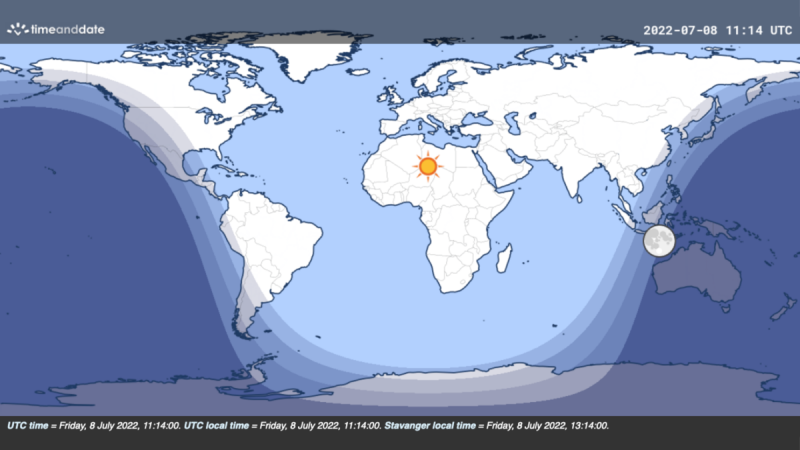
Once a year, for a rare moment at 7:15 AM EDT on July 8th, 99% of the world's population will be in the Sun. About 6.4 billion people in the daytime, while more than 1.2 billion people experience twilight. How cool is that! Source: https://t.co/5fN1IaFR3c
Hippos can’t technically swim
The perfect combination of buoyancy and bone density allows them to “fly” thorough water at speeds of 5mph, (8 kph)
propelling themselves using intermittent ground contact, like astronauts on a moon walk