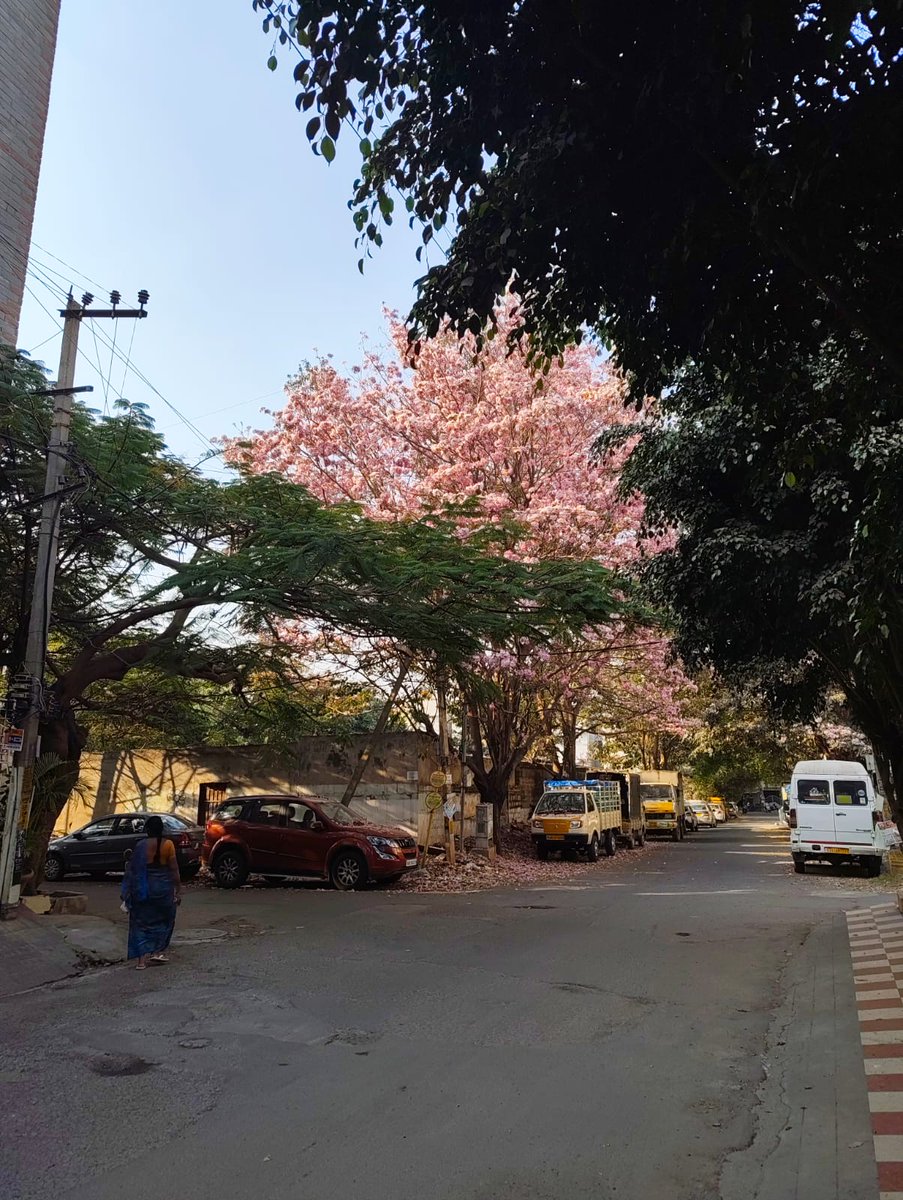
After taking oath at Lok Bhavan, #Karnataka minister Krishna Byre Gowda chose to walk to Vidhana Soudha for the Cabinet meeting instead of adding to #Bengaluru’s traffic woes.
A small gesture that stood out on a day of high-profile movement across the city.
@timesofindia
If people who are not supposed to be experts say something like this, that is fine. It is not their core area. But for people who are supposedly professional investors, this is an astonishing level of ignorance. I do not mean to pick on this gentleman as there are many more such folks. Point is to teach and to learn.
India's PPP conversion rate is 20, quibbles aside. The multiplier to get to 96 is 4.8. Theoretically, if India and US had same incomes the multiplier would be around 1. The reduction of the multiplier as a country grows is called the Balassa Samuelson effect. Some call it the Penn effect. I would also like to acknowledge Jagdish Bhagwati's work in this context.
Now, PPP conversion rate drifts upwards by relative inflation difference and some adjustments. While India is likely to bring down its 4% target inflation before 2047, let us say it remains 4% and US at 2% (though they have been exceeding it.)
That takes 2047 PPP rate to 30 from 20. Now a 240 USDINR then would mean a 8x PPP/MER. Such a number is flat out impossible for an economy-pair like US-India, even less so that by 2047 India will have 35-40% of US incomes adjusted for cost of living and population (like say a Chile today) at only 5% faster growth (RLCU.) Currently India has 13-14% of US incomes.
Now what is an ideal multiple for 35-40% of US income. It depends on global cycle, country scale, deficits etc. But broadly it should be in the 1.5-2.5x region. Which means the rupee should be in the 45-75 region as per this analysis. The midpoint is 60, which is 4 times stronger than the quoted analysis has suggested.
So unless one believes that India will have double digit inflation, US low inflation, India low growth, US high growth and all four together - the quoted number is almost impossible to materialise.
I understand this is boring, step-by-step analysis but this is the only way to understand this phenomenon. Hope it helps.
Warren Buffett has been filing his income tax returns from the age of 13. He is now 95. Not only he is filing returns for last 82 years, he has details and copies of all the 82 returns.
When I was in US, lot of my free time was spent in local library. For a voracious reader like me, the variety and volume of books available were feast to the brain.
That's when I first came across Warren Buffett. I think at that time he was the richest or second richest person on earth. And he built it from the scratch legally. I found it difficult to believe that someone can become richest person in the world purely through legal means. That created a huge impression in me.
I made what my auditor then considered as a weird decision. From the time I started accumulating wealth, I began giving all the information to income tax department. For a few lakhs of rupees wealth, I started submitting cash flow statement, Profit and Loss account and balance sheet along with my IT returns.
My current auditor came into my life around two decades ago. He was surprised when he saw my previous returns with this much details. I explained him why I needed it that way. He was also surprised that from every single bank transaction to all financial transactions were entered and maintained in Tally. I was also keeping in box files all back up papers for each financial year.
Within few years of our relationship, he not only implemented this model for his family but also to some of his willing clients.
After I got married, my wife found it very odd to file income tax returns like this. Convinced her and implemented the same for her too.
Time runs fast.
By God's grace, we are wealthy.
But the interesting part is right from my first income tax return to last year - not only I've records of all IT returns, I also have original statements and documents for all financial years. It's all there in tally too.
I don't have a single rupee of black money. More than investing, in which I'm still a novice, I learned lot of life lessons from Warren Buffett.
I don't want to claim any moral superiority. For many people, especially in developed nations, this practice is very normal. Being honest is probably considered abnormal only in our country.
From my life, I'm convinced that it is possible to become rich through legal means. I'm now 53. If God gives me say another 20 to 25 years of life, I'm confident of creating phenomenal wealth, that too purely through legal means.
Warren Buffett says it is very important as to who you have as role model in life. I've few role models in life and probably he was the first to join the list.
Role model matters.
Building significant wealth through legal means is 100% possible.
The man's software runs in over 10 million cars on the road right now. That alone deserves a tribute.
Here is the great man's story.
Ravi Pandit co-founded KPIT in Pune in 1990, two years before liberalisation, when nobody in India was building software for cars. He came from a family Chartered Accountancy practice, did his master's at MIT Sloan, and instead of staying in finance or moving abroad, he chose to build engineering software for an industry India didn't really have yet.
What he built ended up running inside vehicles made by BMW, Ford, Honda, GM, and most major global automakers. Indian companies usually get to do the back-office work for global firms. KPIT got to do the safety-critical work, the kind of code that has to be reliable enough to not kill people. He spent 35 years earning that level of trust, project by project, contract by contract.
He saw the EV and autonomous mobility shift years before it became obvious. KPIT pivoted hard into software-defined vehicles when most peers were still chasing pure IT services contracts.
The best part was that he kept Pune at the centre of it all. He didn't move the company to Bangalore or to the US. He co-founded the Pune International Centre, which became one of India's most respected policy institutions. He started Janwani and the Zero Garbage Project, which genuinely changed how Pune handled its waste. He supported the Gokhale Institute and the Aga Khan Rural Support Programme. He was the only private-sector member on the National Green Hydrogen Mission's Empowered Group, and recently launched HRIDAY to push hydrogen adoption in India.
He wasn't too social, didn't do podcasts, didn't tweet but he did do was co-write a book called "Leapfrogging to Pole-Vaulting" with R. A. Mashelkar, about how India could skip stages of development instead of just catching up.
I read that book a few years ago and a lot of how I think about Indian companies competing globally came from it.
A genuine builder is gone. The kind who picked unsexy industries, stayed put in his city, did civic work that lasted, and kept his name out of the headlines while doing some of the most consequential engineering work this country has produced.
Rest in peace, sir. Thank you for everything you built, and for showing what was possible from Pune, India. 🇮🇳
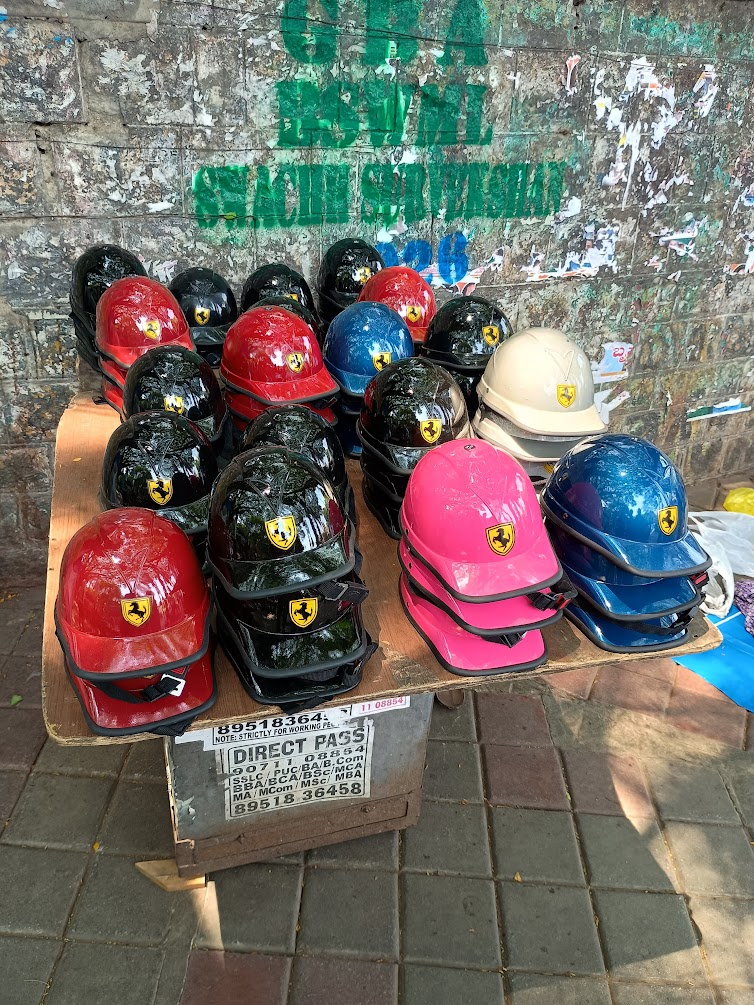
"Form rules over Function" in #india in many cases. Everyone (manufacturers,sellers,buyers,police except #ferrari) knows it is useless, sales and usage continue unabated. #bengaluru#bangalore
First time I read these Golden words in his book Poor Charlie’s Almanac, I didn’t appreciate as much. Over the years, grown to deeply admire their depth. At first they look simple, but they are very deep. Similar sentiments gets echoed in every Indian spiritual text. We all operate on a continuum on these things. Having zero of all these takes you closure to Godly status. How we consciously work on them to get rid of them - reflection, guidance, correction. More one does this, sooner one gets better. It takes years but important is to start to improve quality of life. #spirituality
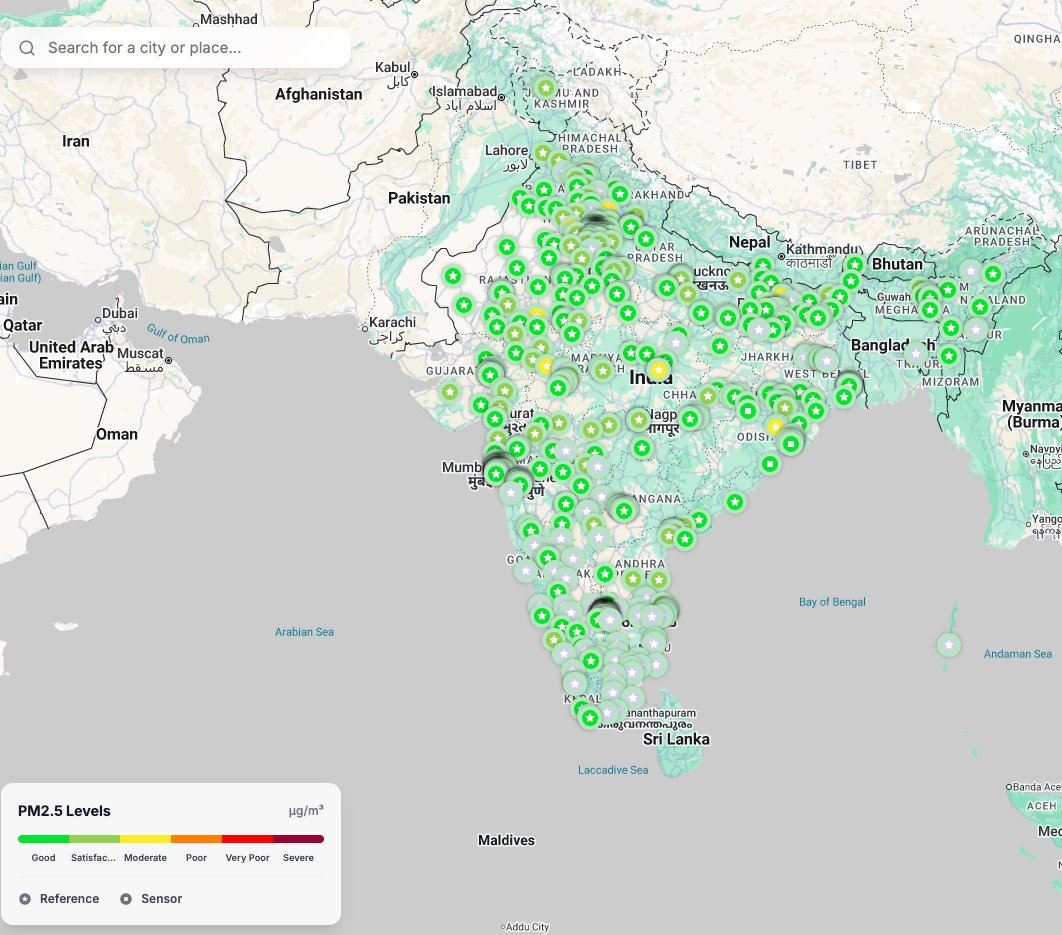
Good air, clean water, and food are fundamental to a good life. In that sense, they should be treated as fundamental rights.
But air quality has been steadily degrading, and it's not really part of the mainstream conversation. That needs to change. Right now, if you look at the site (link in comments), everything looks green. But as we get closer to the end of the year, things will start looking much worse.
Solving air pollution is hard, but the first step is simple: people need to know what they're breathing.
Right now, that's not possible. India does collect air quality data, but it's either locked away, too broad to tell you anything about your locality, or just not published at all. There's no single place a citizen can go to get a clear, neighbourhood-level picture.
So we set out to fix that.
Today, we're launching an open, pan-India air quality platform, built in partnership with leading organisations in the field. The goal: give citizens, schools, local governments, and communities direct access to the data that affects their daily lives.
At @RainmatterOrg , we've been committed to keeping this conversation alive, and this platform is our attempt at making that happen. All the data on the site is free and open, so others can build on top of it.
@harshmadhusudan forgot my backpack on adj.2whlr(nr KR Puram rly stn),reached home 17kms away,realised 3hrs later,went back to the street at 1am. some good samaritan left the backpack at the bar opposite.everything in the wallet intact except the money(that's fine) #gratitude#bengaluru
Nice!,guess which singer has sung the most A R Rahman's songs? Lots of other acoustic features to explore, we should this for #carnaticmusic covering composers,artists over the years.
We analyzed nearly every @arrahman film song ever -- 2,000+ tracks/276 albums/ 34 years -- and built a free interactive repository!
See: https://t.co/iUWv5Dr9Bk
For example: Who is his most frequent singer? And how does that change with time?
@TnagarTornado
Interested in world class #Indian#product,#tech companies,watch https://t.co/16lczTb6yD @atherenergy is a big part of my Indian portfolio,100%+ return in less than a year,will hold for a long time.Many a time,it is not the numbers that matter in #investing
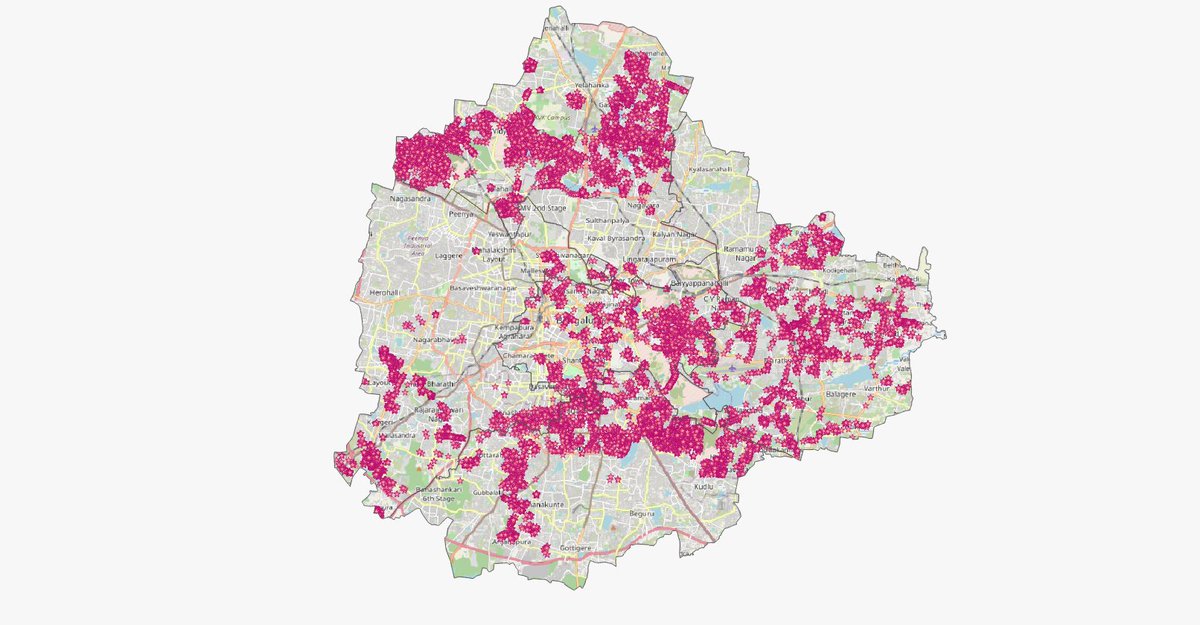
As a big fan of the pink flower blooms in Bengaluru, I try to click pictures of these trees wherever I spot them. In that journey, I got curious and did a little research and plotted it on a map. There are around 27k tabebuia rosea trees in Bangalore currently.