Whatever will be will be.
Whatever happens, I will never regret believing in Nigeria - the Nigeria that funded African independence struggles and absorbed bullets intended for the entire continent , not the useless version of Nigeria that bombs neighbours on behalf of France, and is ruled by a drug dealer who is being blackmailed by at least 2 foreign intelligence agencies.
If Nigeria is home to too many catastrophically stupid people to avoid the destruction that is increasingly looking inevitable in its immediate future, I still have no regrets for believing in the potential that I witnessed with my own 2 eyes. Whether my people are terminally flawed or not, they're still my people.
The demise of Nigeria would only slow down Africa's rise, but not destroy it. Projects like the AES are evidence that Africa will regain its place in the world of the future, whether Nigeria will be part of that future or not. Africa will be fine, with or without Nigeria. And if we disappear, I hope our Sahelian brothers inherit our land and become better custodians of it than we were.
I will always still love my people, even though they don't love themselves. You can't choose your family. It is what it is.
Listen to elders and understand your history. You will know that very few things are happening today for the first time. There was the infamous Anglo-Maasai agreement of 1904 between willing chiefs and british colonizers that scattered the Maa nation
https://t.co/oF1QzHPJ7C
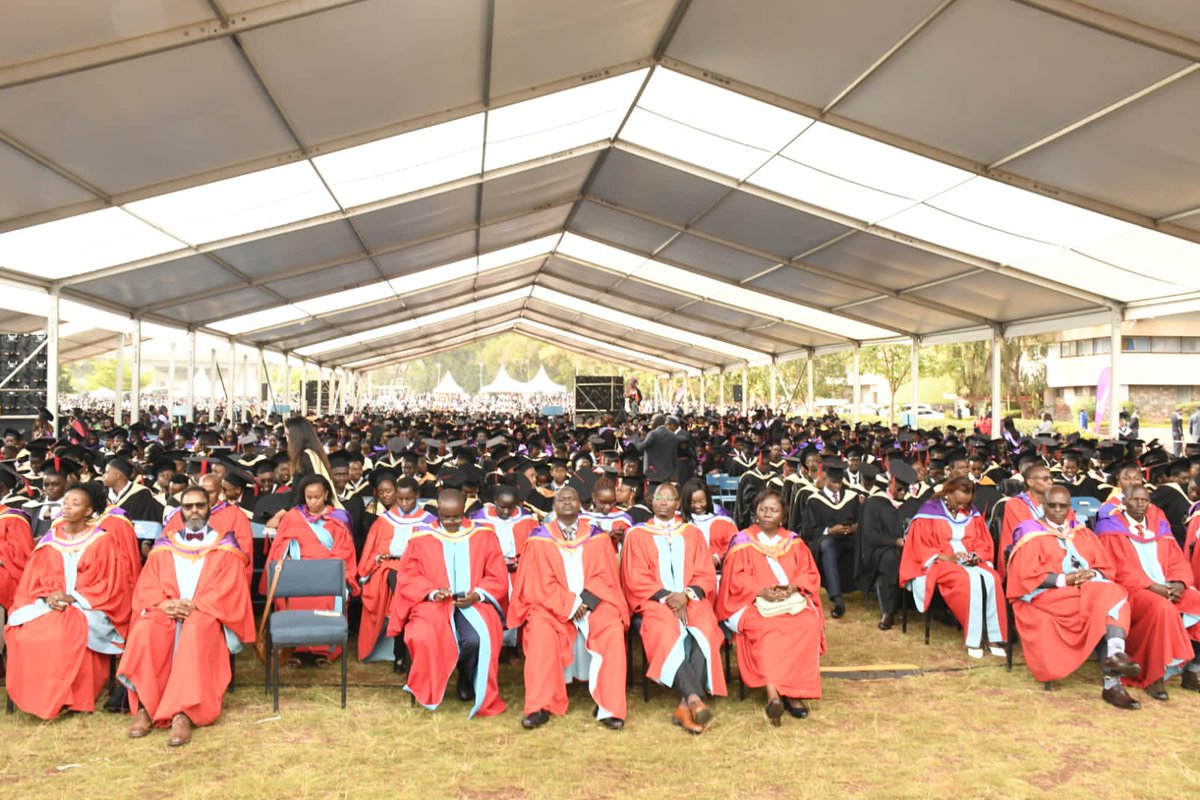
Today, 80 extraordinary individuals are donning their Doctorate caps and embracing the title of "Doctor." 🤩📚 Your hard work and dedication have paid off, and the world awaits your contributions! 🌎🔬 #PhDGraduates#UoNClass2023
Pictured below is a bronze statue of a laboratory mouse knitting a double helix of DNA in order to honor all the mice that were sacrificed for genetic research to develop new drugs to fight diseases. It was designed by Andrew Kharkevich and is located in Siberia, Russia. The monument was completed on July 1, 2013, coinciding with the 120th anniversary of the founding of the city.
The monument commemorates the sacrifice of the mice in genetic research used to understand biological and physiological mechanisms for developing new drugs and curing diseases.
Sculptor Alexei Agrikolyansky, who created the statue, confessed that it was challenging to capture this moment, as the mouse was obviously not human. Nevertheless, he had to produce a character with believable emotions while maintaining anatomical proportions, avoiding it looking like a cartoon character or a real mouse.
The DNA spiral emerging from the knitting needles winds to the left, symbolizing the still poorly understood Z-DNA - representing the scientific research that is yet to be done. In contrast, the more common B-DNA winds to the right.
The very first photograph of DNA was captured by a woman named Rosalind Franklin using X-ray technology, allowing Watson and Crick to accurately characterize the double helix. While they went on to win the Nobel Prize in 1962, Franklin was not credited. Sadly, she had passed away in 1958 from ovarian cancer, most likely caused by the high radiation exposure she endured while working with X-rays to capture the image of the double helix.
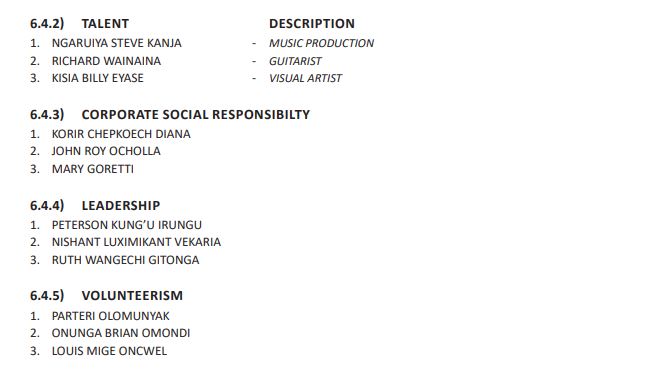
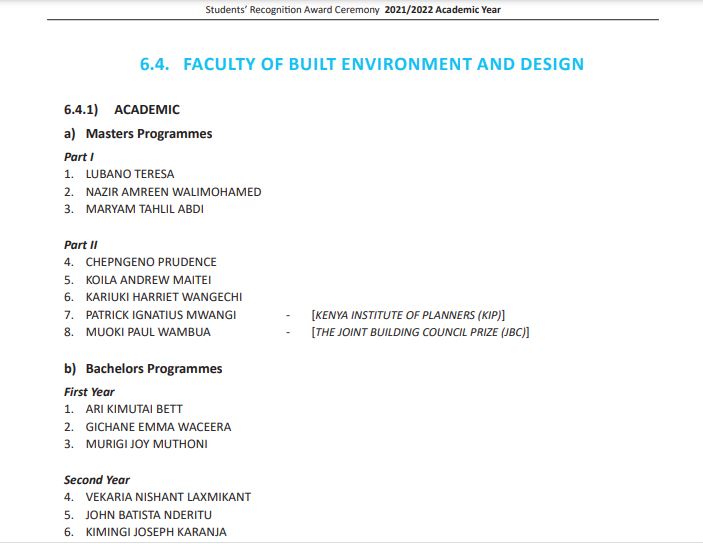
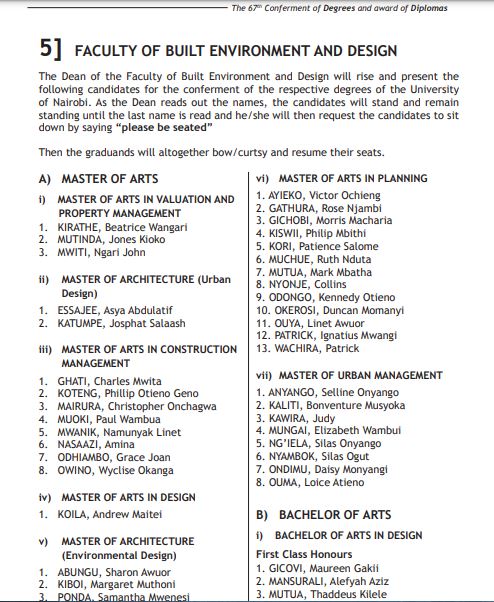
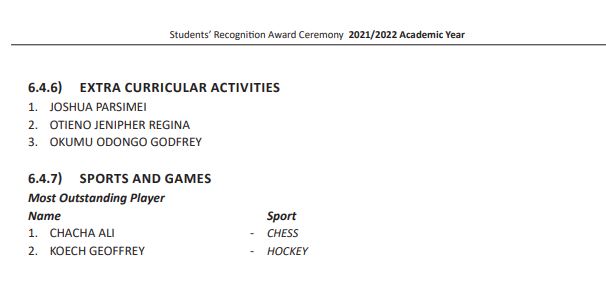
Congratulations to the following students from the Faculty of Built Environment and Design. we salute you for your outstanding performance in various activities. #weareUoN
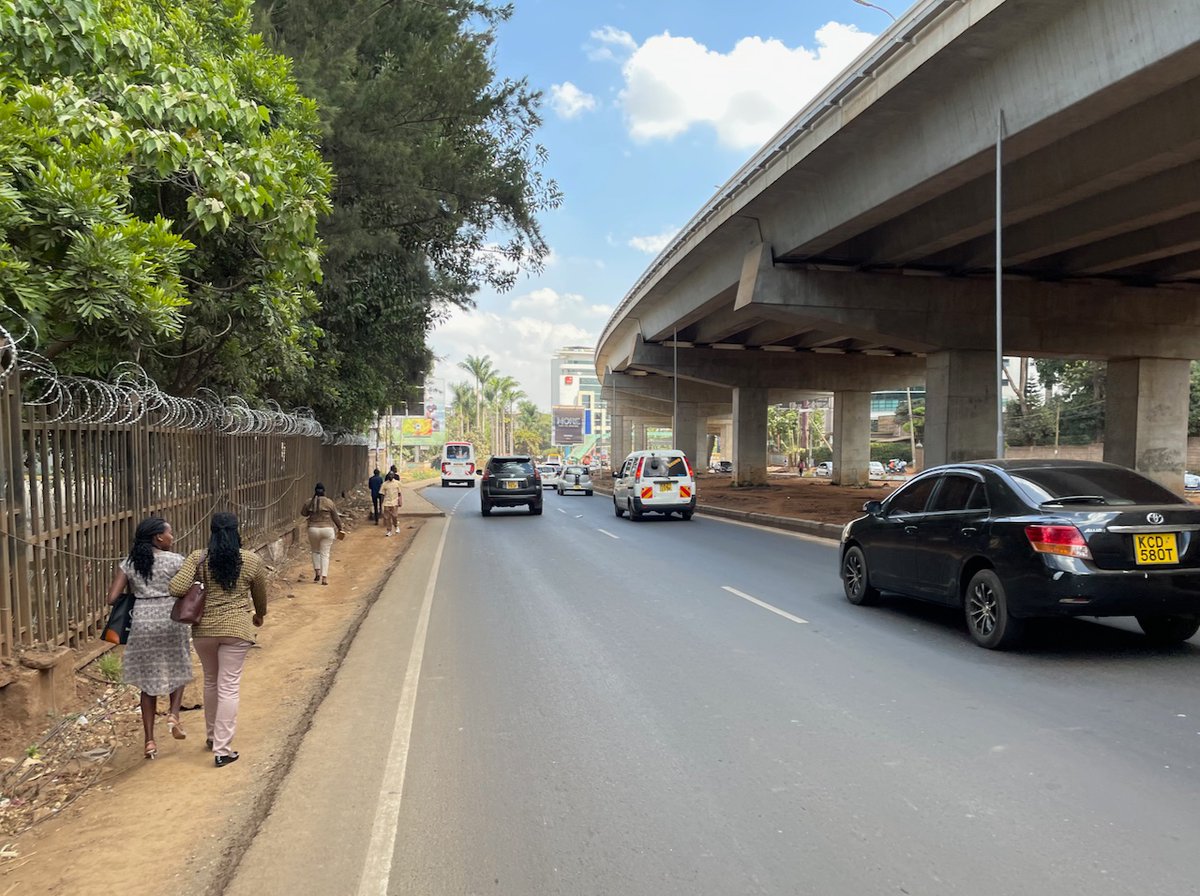
In Nairobi, walking accounts for 40% of daily trips, and public transport, 41%. Only 13% of trips are by car.
We need to start designing streets with dignified space for all. The current iteration of Waiyaki Way doesn't cut it.
@KeNHAKenya@SakajaJohnson@PavementsSafe#SDMUAK
We celebrate each and every individual who has worked tirelessly from the day they were admitted to this great University to today, Graduation Day. Your commitment has paid off!!
Congratulations to the class of 2022 #UoNGraduation#weareUoN