Ibrāhīm ibn Adham (رحمه الله) said:
Sadness is of two types: a sadness that is for you, and a sadness that is against you.
The sadness that is for you is your sadness over the Hereafter and its goodness.
And the sadness that is against you is your sadness over the worldly…
Shaykh al-Hadith Zakariyya Khandlawi رحمه الله said:
"I heard the scholars and the righteous say, and I have witnessed it myself, that whoever fails to respect and honour their teachers is deprived of knowledge, and whoever fails to honour their parents is deprived of provision.
Ibn al-Zamlakāni said :
No Hāfidh like Ibn Taymiyyah had been seen in the previous 500 years.
It is also said that he memorized Riyāḍ al-Ṣāliḥīn by al-Nawawī in a single sitting.
> *قال `ابن` `القيم` - رحمه الله -:*
*" فمن طلب العلم ليُحيي به الإسلام فهو مِن الصديقين ودرجته بعد درجة النُّبوة "*
> *• مفتاح دار السعادة (١٢١/١)*
Ibn al-Qayyim رحمه الله:
Whoever reflects upon the dunya and hereafter will know that he cannot attain one of them except with difficulty,
so let him bare the difficulty for the one that is better and more lasting.
[al-Fawā’id | Pg. 37]
• darkness on the face
• blackness of the heart and grave
• weakness in the body
• deficiency in provision
• hate in the hearts of the creation”
[Ad-Dā Wa Ad-Dawā: 54]
Ibn ‘Abbās رضي الله عنه said:
“Verily with the good deed is:
• a brightness on the face
• a light in the heart
• a vastness in provision
• strength in the body
• love in the hearts of the creation
And verily with the evil deed is:
…
Imam Ibn al-Qayyim رحمه الله:
_“Once wealth is in your possession, but (its love) is not in your heart, then it won’t have an effect on you even if it’s a lot. But once it is in your heart, it affects you even if you have nothing of it in your possession.”_
Madārij as-Sālikeen
Ibn al-Qayyim رحمه الله:
“He values the watchfulness of other members of the creation with his entire heart and every limb. He shies away from the people but does not shy away from Allāh.”
[The Disease & The Cure | Pg. 259]
Ibn Kathīr (رحمه الله) said:
“The first obligation upon the servants is to know that there is none worthy of worship but Allāh alone, without any partners.”
[Tafsīr al-Qurʾān al-Aẓīm (5/277)]
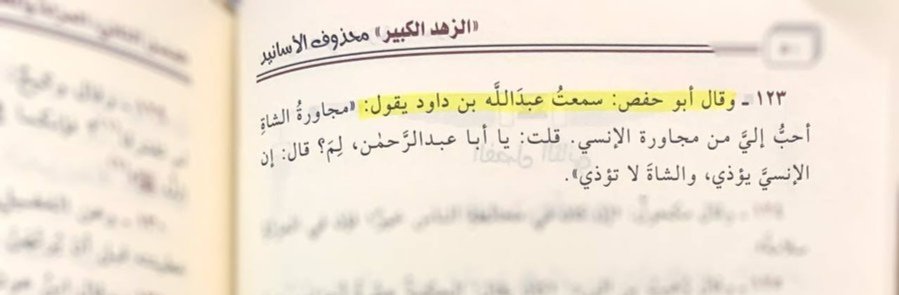
Abu Hafs said: I heard Abdullah ibn Dawud say:
Living beside a sheep is dearer to me than living beside a human.
I said, O Abu Abd al-Rahman, why?
He replied: Because a human causes harm to you, whereas a sheep does not cause harm.
روى البيهقي في مناقب الشافعي(٨٨):
أن الربيع بن سليمان كان بطيء الفهم، فكرر عليه الإمام الشافعي مسألة واحدة أربعين مرة فلم يفهم!
فقام الربيع من المجلس حياء، فدعاه الشافعي في خلوة وكرر عليه حتى فَهِم، وقال له: (يا ربيع لو قدرت أن أطعمك العلم لأطعمتك إياه)