@Variety All my favorite shows of my life, he was involved in - when a show was suddenly better after it was struggling, his name was on it! So much joy!! Friends of mine worked with him and said he was a Prince! RIP! 🥺
I meant to clarify before that this was in Los Angeles. I honestly don’t think that the family she was with before were in it for the money… They were just struggling with having a teenager and were being advised by other foster parents not seeing the long-term ramifications it would have on her!!
This is 💯 TRUE!! We had a foster child move in with us when she was 16. She had been diagnosed with mild depression and was taking 40mg of prosaic a day which doubled the monthly rate. Also, we were told if she didn’t graduate on time, we’d get an extension on the monthly payments. However, if she didn’t graduate on time, she couldn’t go to college for free. So under the Dr. care, we weaned her off the medication which proved wasn’t needed and moved her into a program to get her to finish high school on time. She’s fine now!! The incentive is not to help the children but for the foster families to work the system!!! It’s tragic!!!
The World Cup has turned America into a discovery channel for the rest of the world.
And they are not handling it well.
In the best possible way.
Here is what they are discovering:
Free public restrooms. Europeans pay every time.
Free water at every restaurant. Just appears.
Free refills. Coffee. Sodas. Iced tea. Unlimited.
Free chips and salsa before you even order.
Free warm bread with dinner.
Ice in drinks like civilized people.
Air conditioning everywhere. Not a moral debate. A fact.
Parking lots attached to the actual place you are going.
Drive throughs where the food comes to the car while you sit in it.
Ranch dressing by the gallon.
Tex-Mex that cannot be explained only experienced.
Dental care that actually works.
Buccee’s. There are no words for Buccee’s.
Then they found the grocery stores.
Five of them within one mile.
Each one the size of an aircraft hangar.
Burgers. Steaks. Brisket. Ribs. Pulled pork. Lamb. Veal. Every cut of every animal ever domesticated by human civilization available in one refrigerated aisle at ten in the morning on a Tuesday.
The Germans stood in the meat section for forty five minutes.
In silence.
Processing.
They finally understand why we do not have trains.
We have roads wide enough for the cars we actually drive.
Parking lots the size of small European countries.
Airports in every city worth visiting.
Why would we need trains.
The Germans are taking ranch home by the bottle.
The Dutch found queso and briefly lost the ability to speak.
The Japanese are photographing HEB like it is the Louvre.
The Czechs are weeping in West, Texas.
Welcome to America.
Everything is free, enormous, air conditioned, comes with chips, and has five grocery stores within a mile that will sell you any cut of any animal you have ever imagined.
Write that down. 🦋
In 1951, a 14-year-old Australian boy named James Harrison woke up in a hospital bed with 100 stitches across his chest.
Doctors had just removed one of his lungs. To stay alive, he needed 13 units of donated blood from people he would never meet.
As he recovered, his father sat beside him and explained a simple truth.
"You're only alive because people donated blood."
Those words stayed with James.
Right there in that hospital bed, he made a promise. When he turned 18, he would become a blood donor and give back the gift that had saved his life.
There was just one problem.
James was terrified of needles.
Not uncomfortable with them.
Terrified.
Yet in 1954, the day he became eligible to donate, he walked into a donation center anyway. He sat down, looked away, and let the nurse do her work.
He never watched the needle.
Not then.
Not ever.
What James didn't know was that his blood was extraordinary.
After several donations, doctors discovered that his plasma contained a rare antibody capable of preventing Rhesus disease, a condition that once claimed the lives of thousands of babies.
Before this breakthrough, many pregnancies ended in miscarriage, stillbirth, or severe complications when a mother's immune system attacked her baby's blood cells.
James's blood offered a solution.
Doctors asked if he would switch from regular blood donation to plasma donation. The process took much longer and required frequent visits.
It wasn't a one-time commitment.
It could mean decades.
James thought about his fear.
Then he thought about the children who might be saved.
He said yes.
And he kept saying yes for the next 64 years.
While working as a railway clerk.
After retirement.
During life's happiest moments.
And during its hardest ones.
Even after losing his wife Barbara in 2005, he continued donating.
Appointment after appointment.
Year after year.
The fear never disappeared.
Every visit looked the same.
James stared at the ceiling, talked with nurses, and focused on anything except the needle.
But he always showed up.
In a remarkable twist, his own daughter later needed the Anti-D treatment developed from his blood during pregnancy.
His grandson's life was protected by the very program James had helped make possible.
By May 2018, Australian regulations required him to retire from donating at age 81.
His final donation was unlike any other.
The room was filled with families and mothers holding healthy babies whose lives had been touched by his generosity.
Many fought back tears as they thanked him.
James simply made one last donation and went home.
By then, he had donated 1,173 times.
Medical experts estimate that Anti-D treatments linked to his plasma helped protect around 2.4 million babies across Australia.
Yet James never saw himself as a hero.
"I'm in a safe room, donating blood," he once said. "They give me a cup of coffee and something to nibble on."
That was how he viewed a lifetime of service.
James Harrison passed away peacefully on February 17, 2025, at the age of 88.
He wasn't famous for wealth, power, or extraordinary achievements.
He simply kept a promise he made as a frightened teenager.
And because he did, millions of families were given a future.
Sometimes the greatest heroes are the people who quietly show up, year after year, and choose courage over fear.
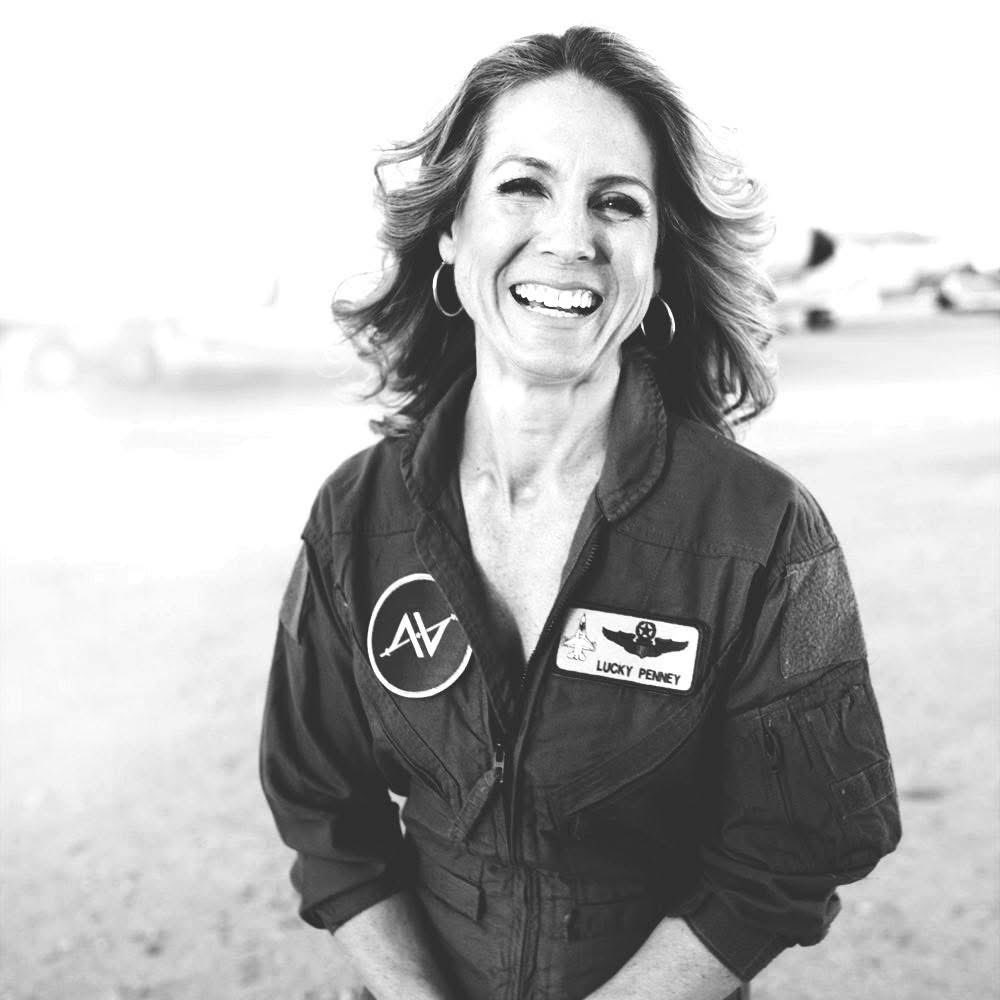
"She climbed into an unarmed fighter jet with orders to ram a hijacked Boeing 757—knowing she wouldn’t survive. She was 26 years old, and she had approximately eight minutes to accept her own death.
Andrews Air Force Base, Maryland. September 11, 2001. 10:00 AM.
First Lieutenant Heather “Lucky” Penney was in the air on a routine training flight when the order came through: return immediately. America is under attack.
When she landed, everything had changed. Both Twin Towers were burning. The Pentagon had been hit. And more hijacked planes were still in the sky.
Then came the worst part—there were no missiles loaded on her F-16. It was a training aircraft. No live weapons. Nothing capable of stopping a passenger jet.
Only one option remained.
“Penney, Sasseville—suit up. NOW.”
Within minutes, she and her commander were sprinting to their jets. Ground crews were still removing safety pins as intelligence came in: another hijacked plane, Flight 93, possibly headed for Washington.
The White House. The Capitol. No one knew which.
But someone had to stop it.
As she climbed into her cockpit, a crew chief looked at her and quietly said, “Good luck, ma’am.” Neither of them said what they both understood.
If they found the aircraft, they might have to ram it.
There would be no second chance. No ejection that could save her. Only impact.
On the radio came the order that defined everything:
“Stop that aircraft by any means necessary.”
She didn’t ask for clarification.
There wasn’t time.
Moments later, her F-16 roared down the runway and lifted into the sky. Within seconds, she was flying over Washington at supersonic speed—sonic booms shaking the city below like distant thunder.
Smoke still rose from the Pentagon.
She searched the sky for a Boeing 757 she might have to destroy with her own jet.
But 200 miles away, something else was happening.
Passengers on Flight 93 had already made their own impossible choice.
They stormed the cockpit.
At 10:03 AM, the plane crashed into a field in Pennsylvania.
All 44 people aboard died—but Washington was saved.
Heather never had to complete her mission.
She circled the capital for hours afterward, protecting a city that had already been spared by strangers who refused to be victims.
When she finally landed, the crew chief was waiting. He looked at her and said quietly, “I didn’t think I’d see you again.”
Neither had she. "
Dr. Joseph Warren died on this day in 1775, and he might be the most important Founding Father you were never taught about.
He was born in Roxbury, went to Harvard, and by his early thirties he was the most sought after doctor in Boston. He inoculated the Adams family against smallpox. He took on apprentices. He treated patients on both sides of the growing fight, redcoats included, because he was a doctor first. He was 34 and a widower raising four small children alone after his wife died in 1773.
He was also the quiet engine of the entire revolution in Massachusetts. He wrote the Suffolk Resolves. He ran the Committee of Safety. He stood up twice to give the Boston Massacre orations, and the second time, with British officers packing the room to intimidate him, the story goes that he climbed in through a window rather than be turned away, then delivered the speech to their faces.
On the night of April 18, 1775, it was Warren who learned the British army was about to march. He sent Paul Revere out one way and William Dawes the other to raise the alarm toward Lexington and Concord. There is no midnight ride without Joseph Warren. People have argued for two centuries about where he got his intelligence, and one long running rumor is that his secret source was close to General Gage himself.
The next morning he didn't sit safe behind a desk. He rode out to the fighting at Lexington and Concord and got into the thick of it. A British musket ball came so close it knocked a pin out of the hair beside his ear.
Three days before Bunker Hill, the Provincial Congress made him a major general. When he walked onto the hill on June 17, the officers there offered to hand him command of the whole field. He refused. He said he had come to fight as a volunteer, not to give orders, and he took a musket and went into the redoubt with the ordinary men, in the most dangerous spot on the line.
The Americans held off two British charges. On the third, low on powder, they were overrun. Warren stayed to cover the retreat and was shot in the head. The British knew exactly who they had killed. They stripped him, ran him through with bayonets, and threw him into a shallow pit with another body. A British officer later bragged that he had stuffed the scoundrel into the ground. General Gage is said to have remarked that Warren's death was worth that of 500 ordinary men.
Ten months later, after the British finally gave up Boston and sailed away, his friends went looking for him. The body was beyond recognition. The only reason they ever found him is that Paul Revere, a silversmith by trade, had once wired a false tooth into Warren's jaw with silver wire. Revere dug through the grave, saw his own work in the teeth, and knew. It is remembered as one of the first forensic dental identifications in American history.
His orphaned children were nearly forgotten too, until people like Benedict Arnold, years before he became a traitor, chipped in money to make sure they were raised and educated.
The most famous painting of the battle, by John Trumbull, isn't really about the battle at all. It's about the death of one man in the smoke.
The doctor who could have commanded an army chose to die in the dirt as a private soldier. He was 34 years old. 251 years ago today. Remember him 🇺🇸
I just recently showed this to my sons who are in their 20s… Mainly because of the Sean Connery performance, not for the movie as a whole. During the slow motion Battleship Potemkin scene, they looked at me like “why are we watching this - is this for real” Needless to say we had a big laugh afterwards… It does not hold up! But Sean Connery and Andy Garcia especially are awesome in this!
@unreMARKLEble Engagement! They know that a ton of people will comment underneath “it’s Catherine Princess of Wales” “Who’s Kate Middleton?“…That helps them increase their engagement. It will stop when people stop correcting them. IMHO
@CBSNews Huh!!! And did she make a huge mistake running in 2016? Maybe she shouldn’t have shut down Bernie? She single handily shut down any hope for a Democrat since 2008!!! She’s really unbelievable!! 🤦🏼♀️
This one is a hard one because so many of them played vital roles, but if you had to pick one, I’d pick George Washington because he literally put his life on the line as Commander the Continental Army and also because he stepped down after the second term which at that time was a huge deal! Jefferson gets a lot of attention for the Declaration, but he also wrote the Virginia Statute for Religious Freedom, which inspired the Constitution to not have a formal religion for the country, which was also a really big deal at the time! They were all pretty amazing to be honest!
Japanese fans cleaned the WHOLE stadium after Japan tied the Netherlands. Hours later, NYC Knicks fans torched buses celebrating their first NBA title since 1973. Same win, opposite
character. Save this and share it with someone who needs to see the contrast.
Japanese fans cleaned the WHOLE stadium after Japan tied the Netherlands. Hours later, NYC Knicks fans torched buses celebrating their first NBA title since 1973. Same win, opposite
character. Save this and share it with someone who needs to see the contrast.
The most profound America 250 commemoration is the arrival of a bunch of Europeans for the World Cup, who enthusiastically and instinctively embrace American culture.