Delighted to announce a new book: 'Lime Bast: Harvesting, Preparation and Use' by Sally Pointer and Chiz Harward. Explore the history, archaeology, production & projects in the remarkable material known since prehistory.
Available now, just in time for the new Lime Bast season!
My online course, 'Introduction to Prehistoric Textiles' is now on its permanent new home and is available for new sign ups!
Learn about tools and techniques from the Palaeolithic through Bronze Ages with lots of practical experiments.
https://t.co/DrBOHJX21l
Why not have a go yourself? Video now up on my YouTube channel. You can use supermarket fruit peel, and these make fabulous gift boxes. Economy friendly, and historical!
https://t.co/6MypKd2B1y
Feel free to share!
I've been in Spain for a very short break, and I took advantage of a windfall fruit from the huge numbers of bitter oranges planted here to make an orange peel box based on Eighteenth century Bergamot Boxes. These are really easy to make & smell so wonderful.
(post 1 of 2)
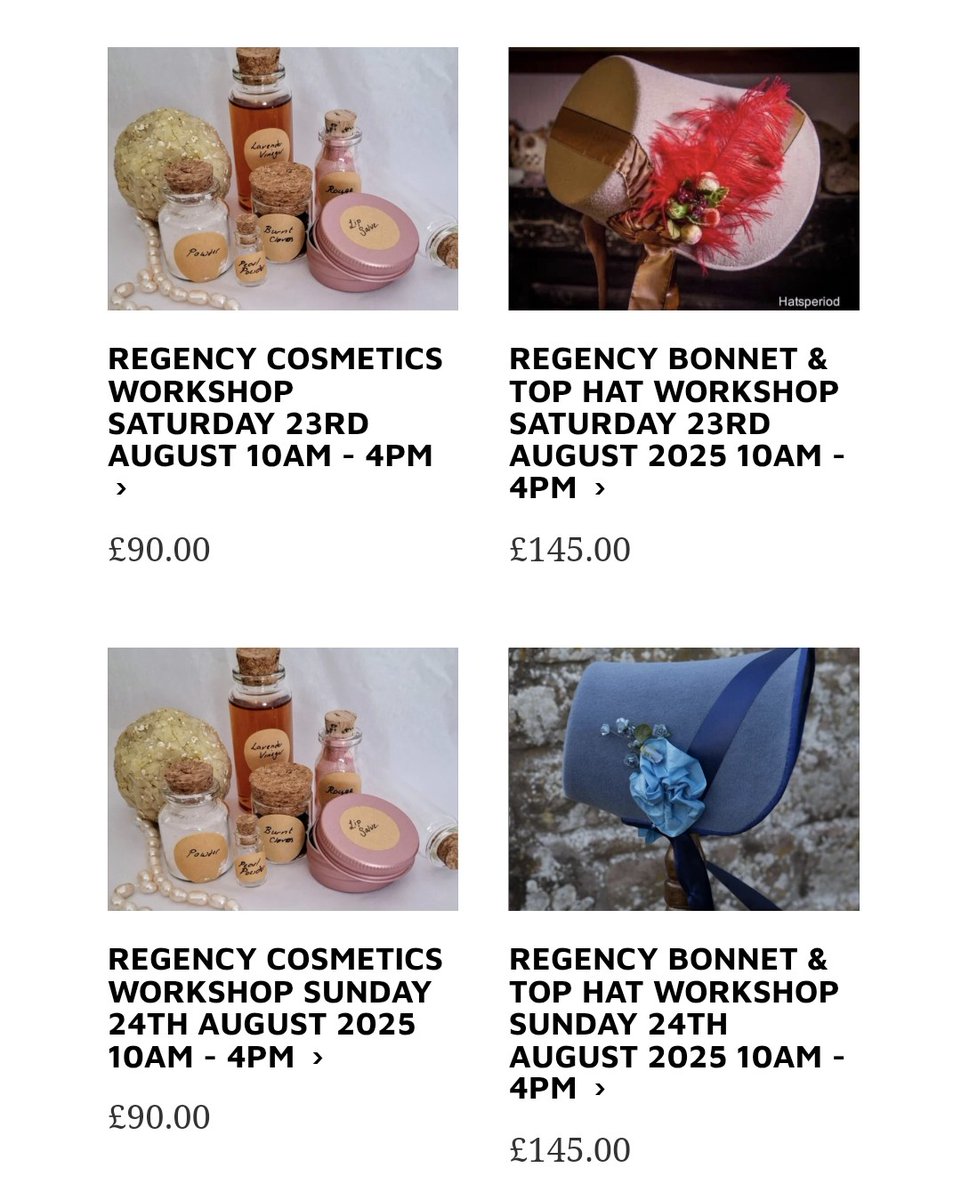
...so you can potentially attend both days & do both workshops or just do the one that appeals the most.
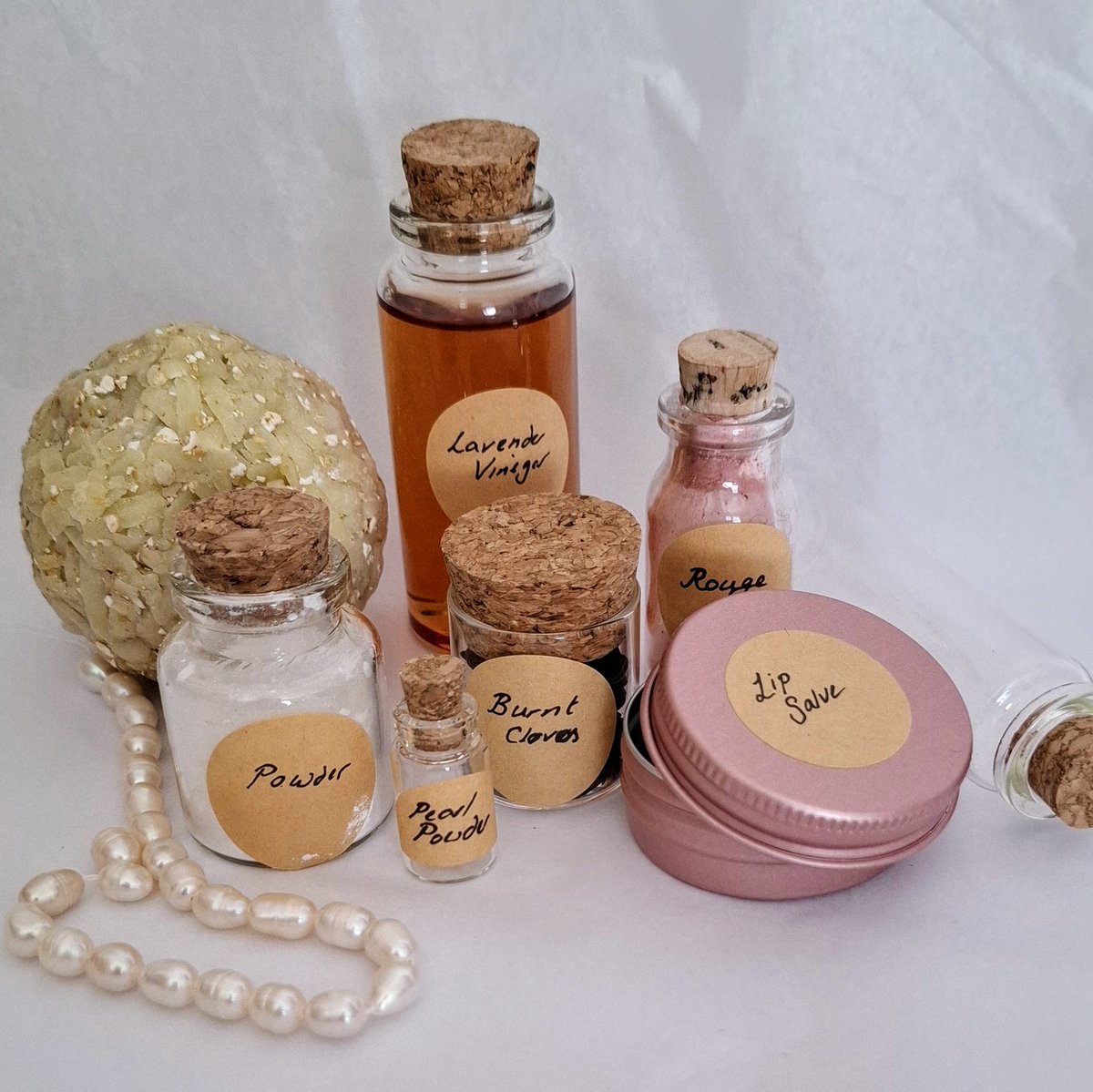
This is a rare opportunity to explore the history of & make your own Regency cosmetics and draws on my ongoing research into make-up through the ages. https://t.co/BHg2ooYf7o
I have such a wonderful workshop announcement for you! In August @berrycroft_hub ( Swindon, UK) not only am I running my in depth Regency Cosmetics course twice over one weekend, Jane Walton from HatsPeriod will be running her Regency Bonnet or Top Hat making workshops too...
New video!
Making a Stone Age Style Needle Case turns a foraged stick into a home for handmade needles. We also consider the continuity of tradition that means very similar cases are found from the palaeolithic through to the medieval period & beyond.
https://t.co/dzBR01xWR6
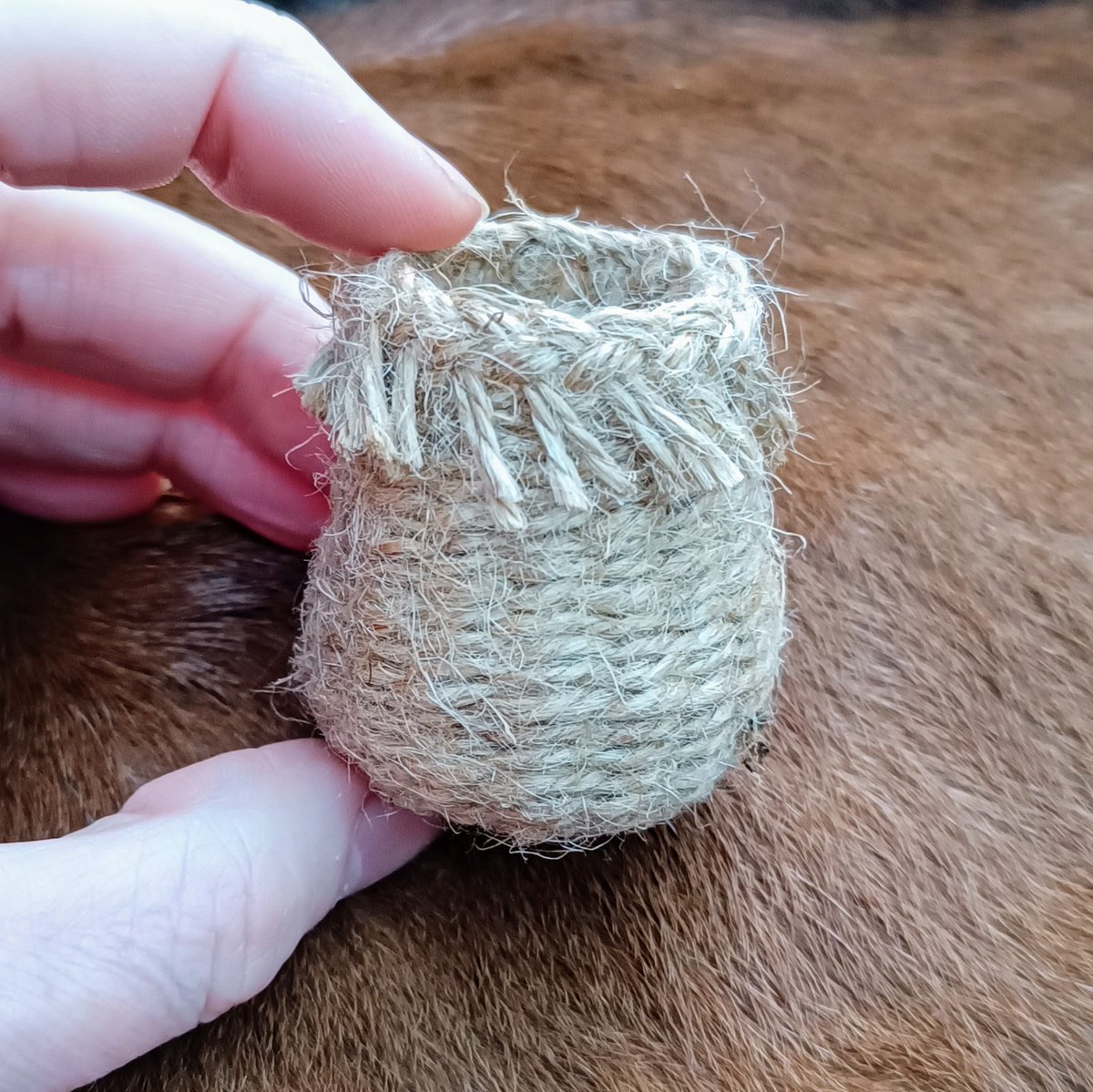
This mini twined basket is inspired by Mesolithic examples but worked in easily obtained garden string.
Fancy joining me? Sign up here (also details of the full class schedule and content) https://t.co/xk5io9cSyV
I'm working on filming the projects for the online 'Introduction to Prehistoric Textiles' class that starts on January 14.
My classes include projects in easily sourced materials as well as the full scale versions in the types of materials used in the past. Here's one of them:
@faellie2 That's true, but here we are looking for the 'smoking gun' that makes people say 'hmm, something specific is happening here, can I replicate it?' rather than just 'the laundry is going well this week'. Bubbles help point people at the reaction taking place.
"The strawberry grows underneath the nettle, And wholesome berries thrive and ripen best Neighboured by fruit of baser quality." (Henry V, Act 1)
I've been out to the lake today & was delighted to see wild strawberries fruiting merrily below stands of very nearly ripe nettle.
For those of you eagerly awaiting the start of the stinging nettle fibre harvesting season like me, this video from a couple of years ago may be of some use.
Find the full Stinging Nettle Uses (food, cordage and textiles) playlist (17 videos currently)at: https://t.co/TbzOC7tX4M
There's a lot on the workbench this week, including a couple of pairs of simple stone-age style shoes. These are inspired by prehistoric examples such as the Areni-1 shoe from Armenia which is the oldest leather shoe currently known at about 5500 years old, but...
...chamois hide, using an awl to punch holes so a needle would easily go through the layers. I wet the leather, tapped all the seams with a hammer-stone to settle them in, & let it dry. I like it so much I'm going to make another one soon with closer reference to the original.
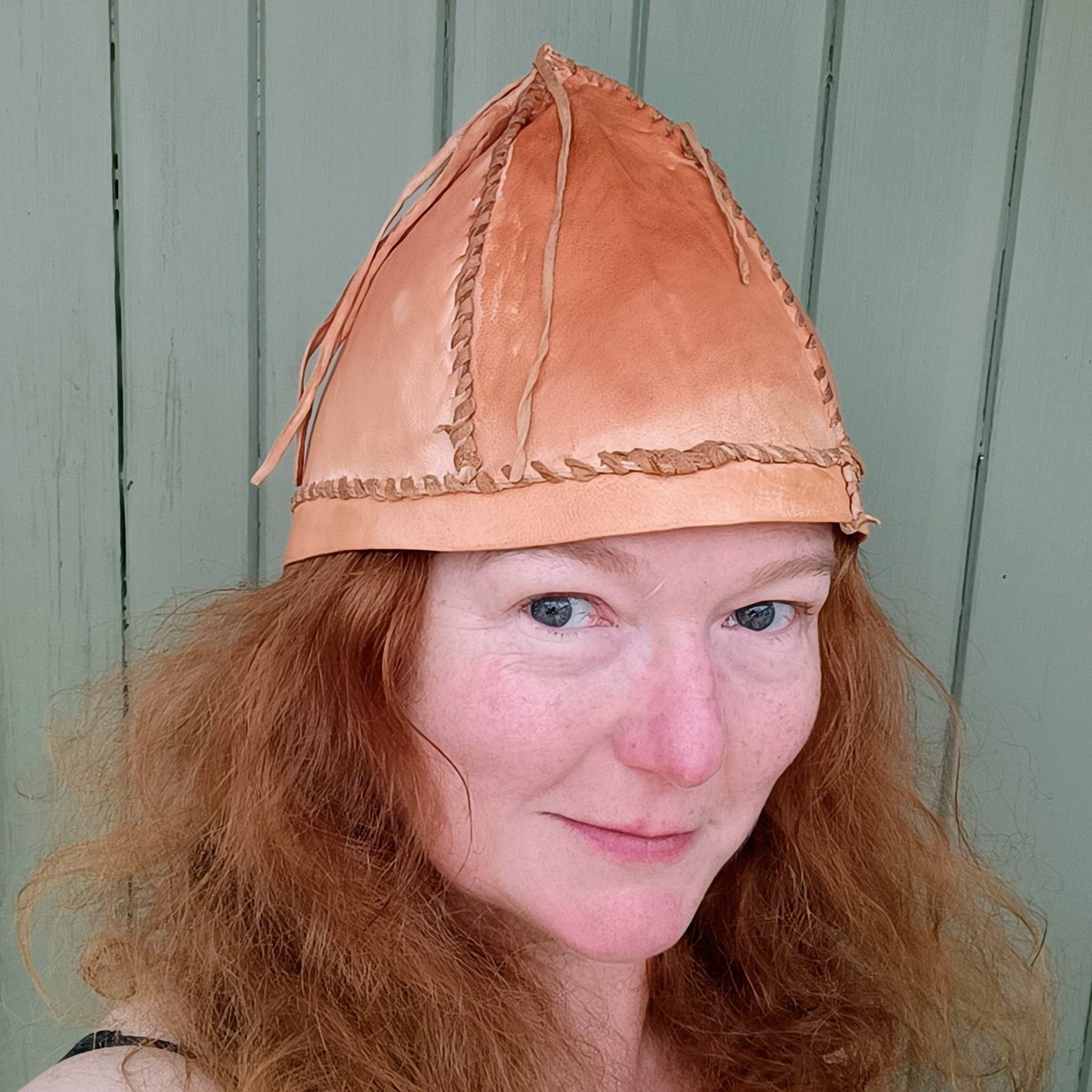
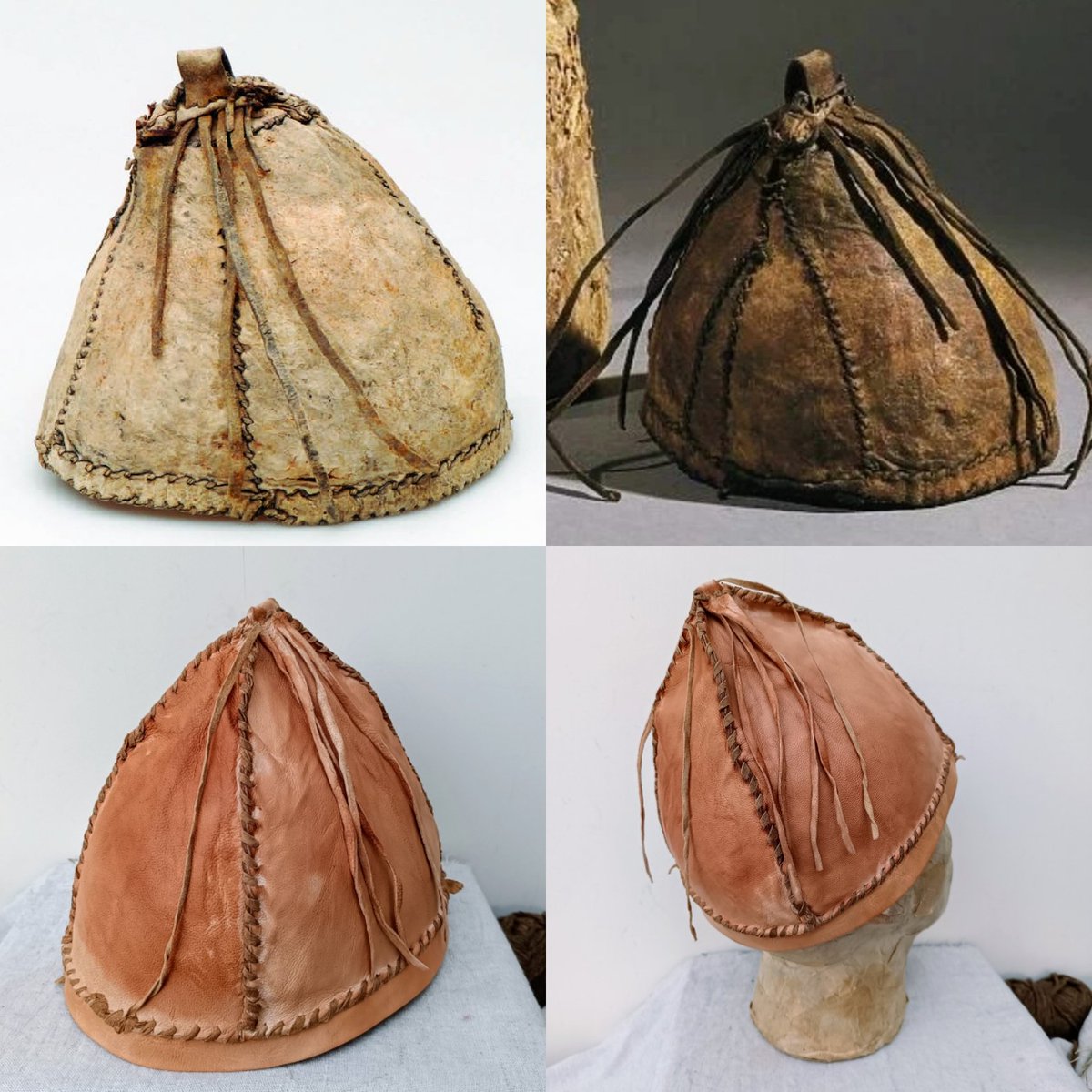
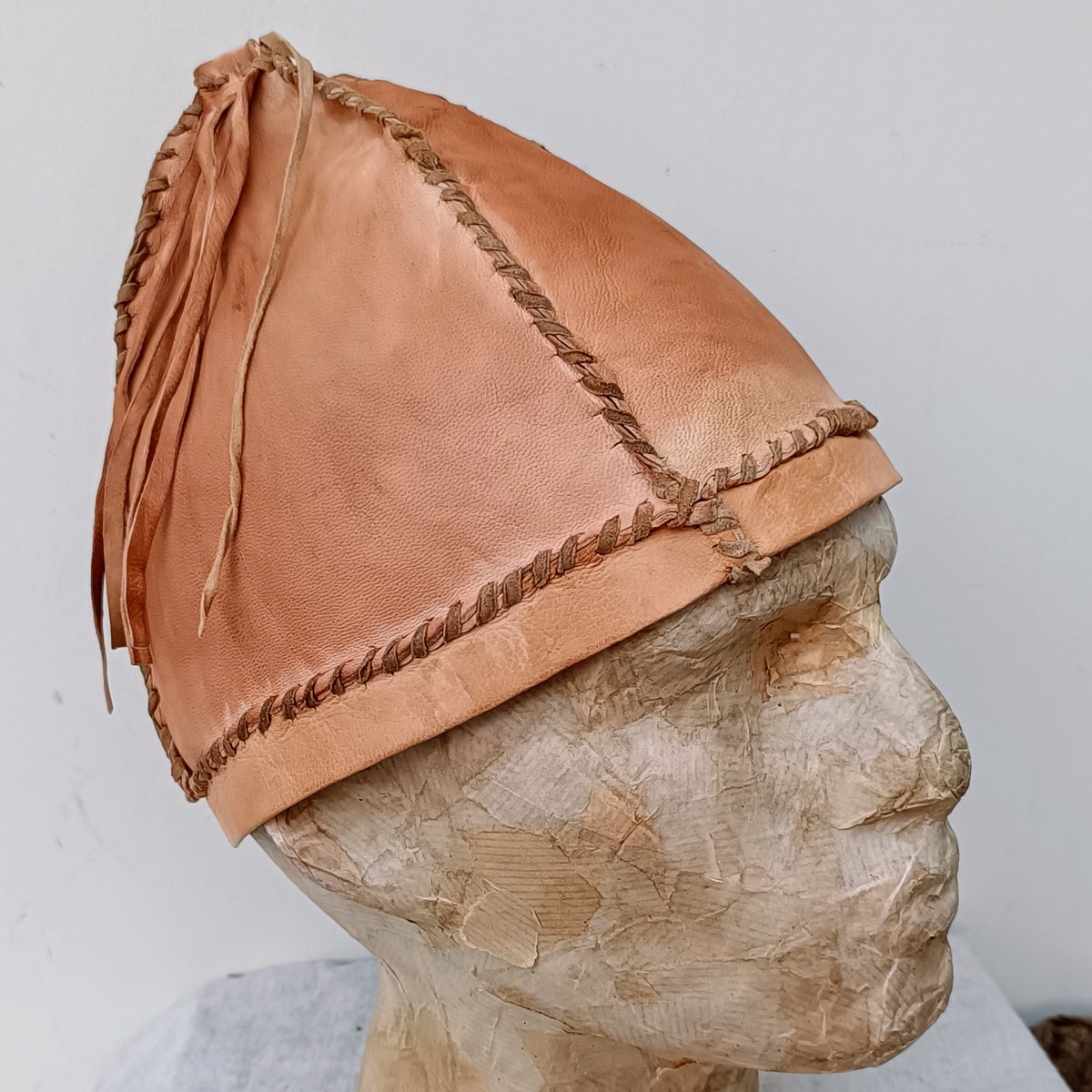
I needed to make a hat suitable for a Bronze Age wearer, & drew inspiration from a conical leather hat with tassel decoration found in the Grünerwerk mine at Hallstatt, c 3500 years old. The original hat would have best fitted a young teenager, raising interesting questions...
...about the age of the workers in these ancient salt mines.
Mine doesn't attempt to be a close copy, I just used the basic structure. I used scraps of veg tanned goat skin left over from making shoes and cordage kit wraps this week, & sewed it together with laces cut from a ...